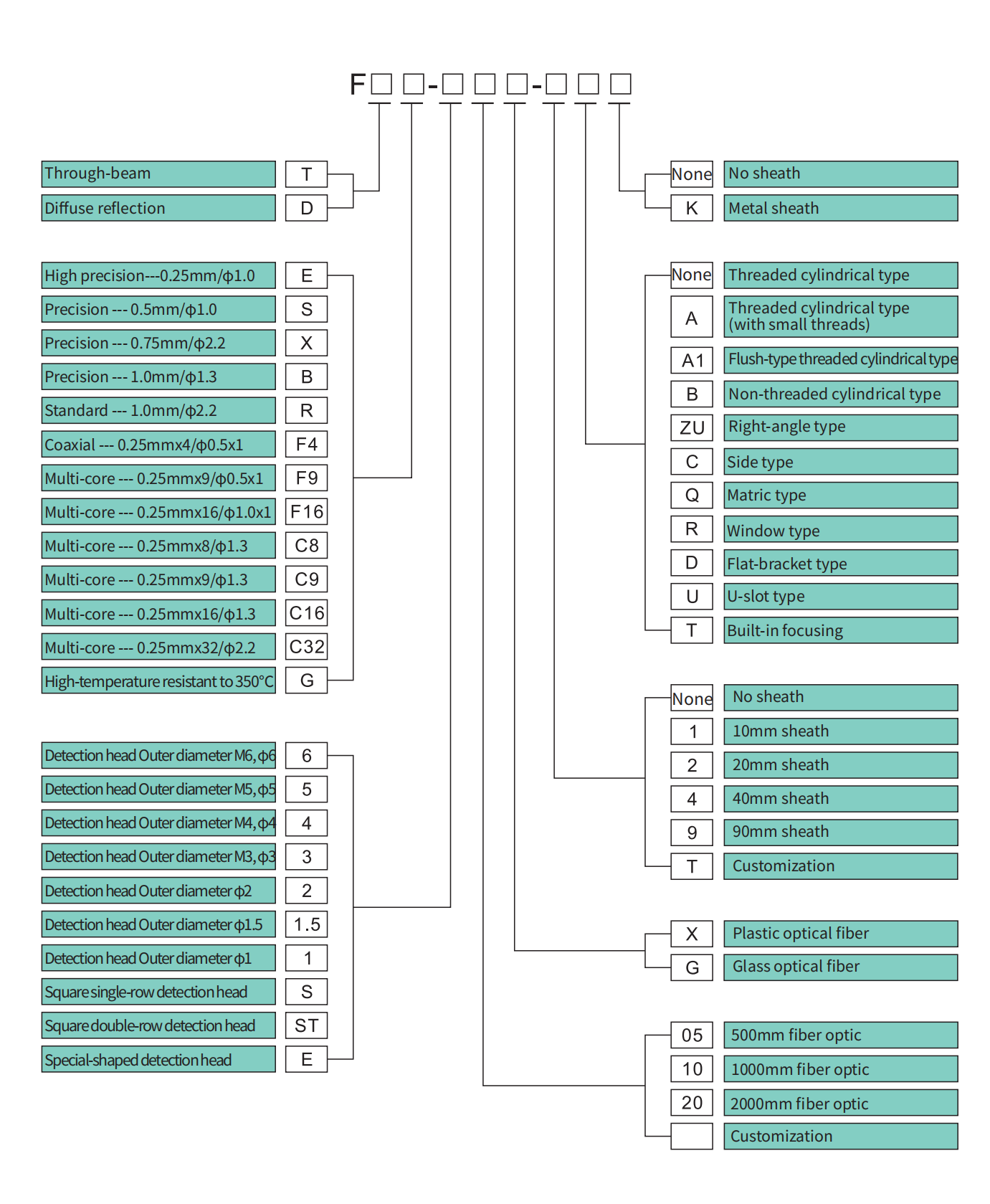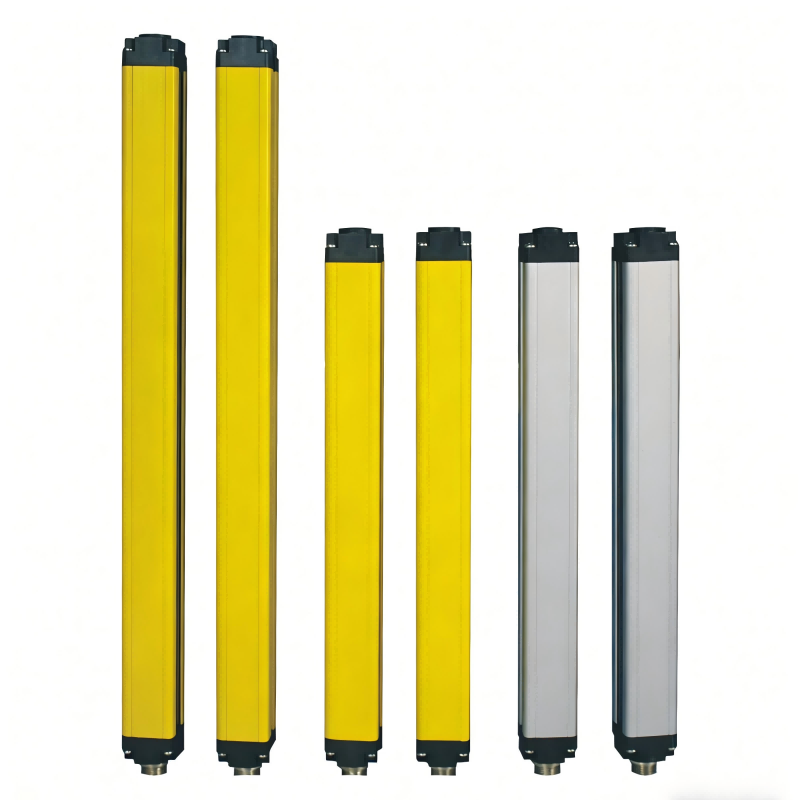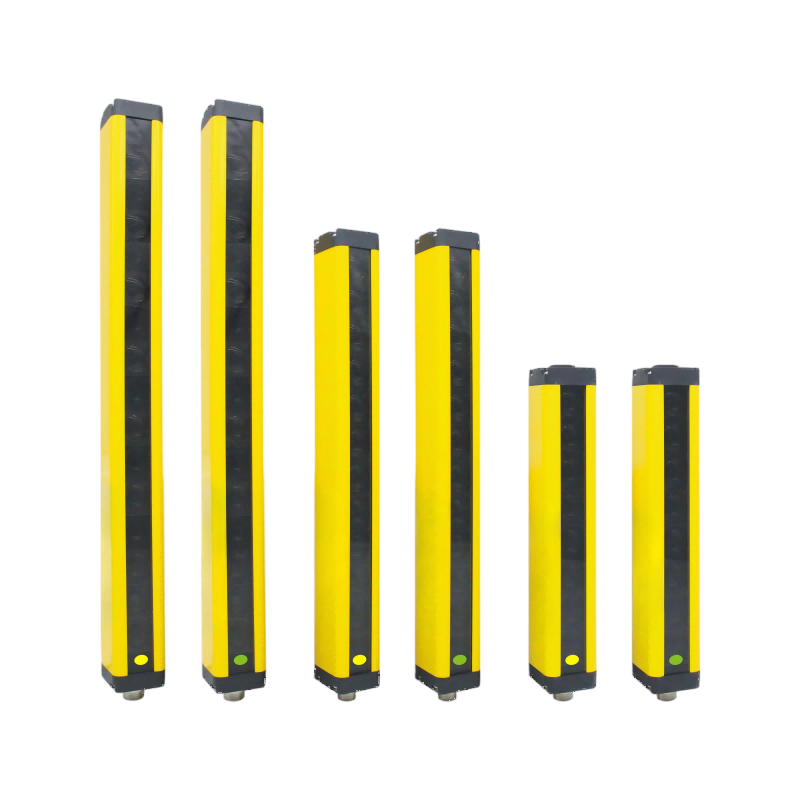
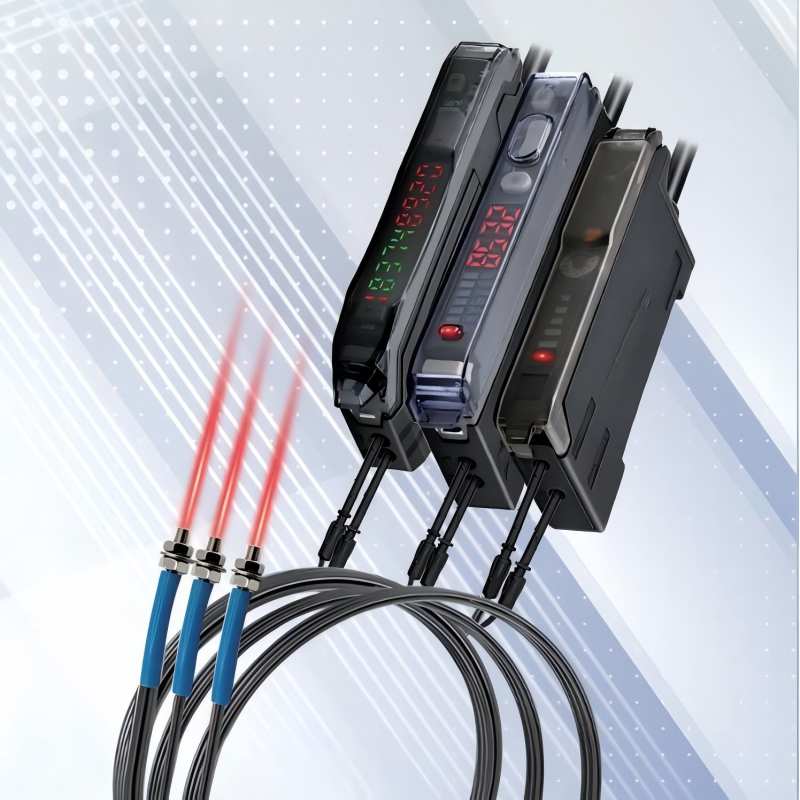
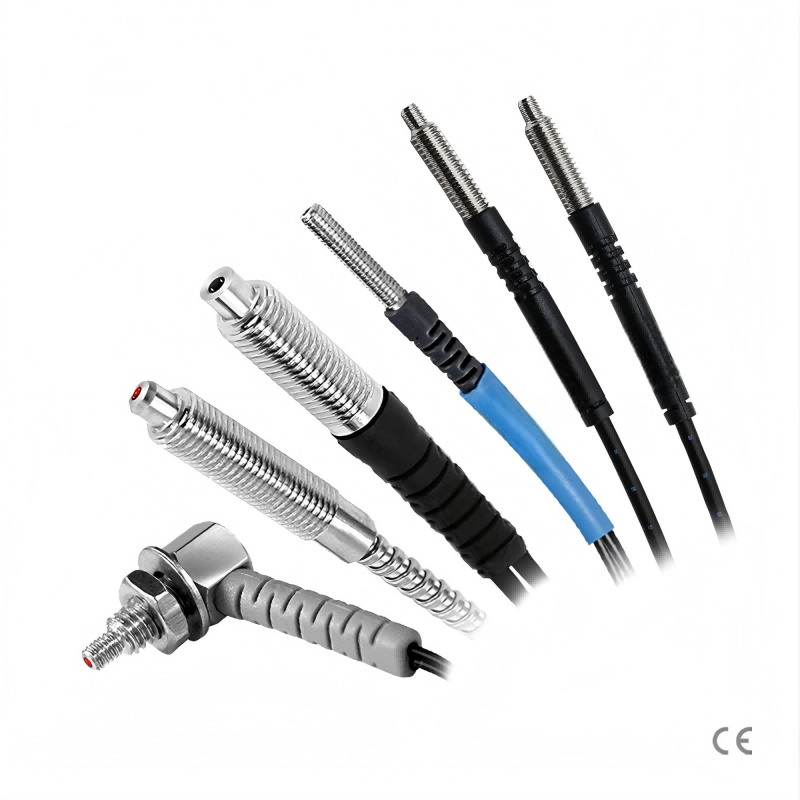
Fiber Optical Cable Sensor offers high flexibility and strong bending resistance, allowing it to be bent repeatedly without loss of performance. Available in multiple types, it is designed to meet a wide range of industrial needs, providing reliable and efficient signal transmission in various environments.
Core Advantages
1. High-Precision Signal Transmission
The Fiber Optical Cable Sensor utilizes fiber optic cables to transmit signals with high accuracy and low loss, ensuring faster response times and fewer delays in real-time processing. The precision of fiber optics allows for exceptional accuracy in detecting even the smallest changes, ideal for automated systems where every millisecond counts.
2.Waterproof and Durable
With its waterproof and rugged design, this sensor is well-suited for harsh industrial environments. Rated with IP67 protection, it is resistant to dust and moisture, making it perfect for both indoor and outdoor applications. Whether exposed to water, chemicals, or extreme temperatures, this sensor is built to withstand the toughest conditions.
3.Non-Electrical Signal Transmission
One of the standout features of the Fiber Optical Cable Sensor is its use of non-electrical signal transmission. This eliminates electromagnetic interference (EMI), making it ideal for environments with high levels of electrical noise. This capability allows for stable and accurate performance even in factories or areas where electrical interference is a concern.
4.Flexible Installation
The Fiber Optical Cable Sensor is designed with flexible installation options in mind. The thin, lightweight fiber optic cables can be routed through tight spaces, making installation easier and more adaptable to different layouts. Whether mounted on machines, robotic arms, or along conveyor belts, it provides a solution that can fit into a variety of setups without requiring extensive modification to existing equipment.
5.Energy Efficient
The sensor operates on minimal power, contributing to an overall reduction in energy consumption within industrial systems. This energy-efficient design helps to reduce operational costs over time, making it an environmentally friendly option for businesses seeking to lower their carbon footprint.