- Motion Control
- Leadshine IDM Series Integrated Smart Motor with Driver | Compact, Plug-and-Play, High Acceleration, Easy Installation
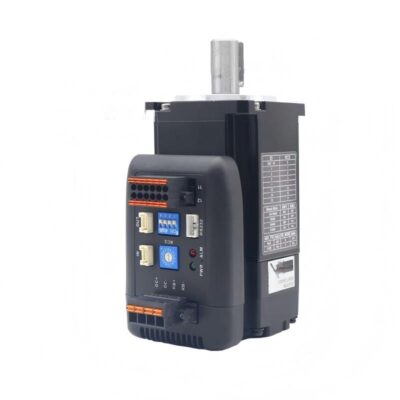
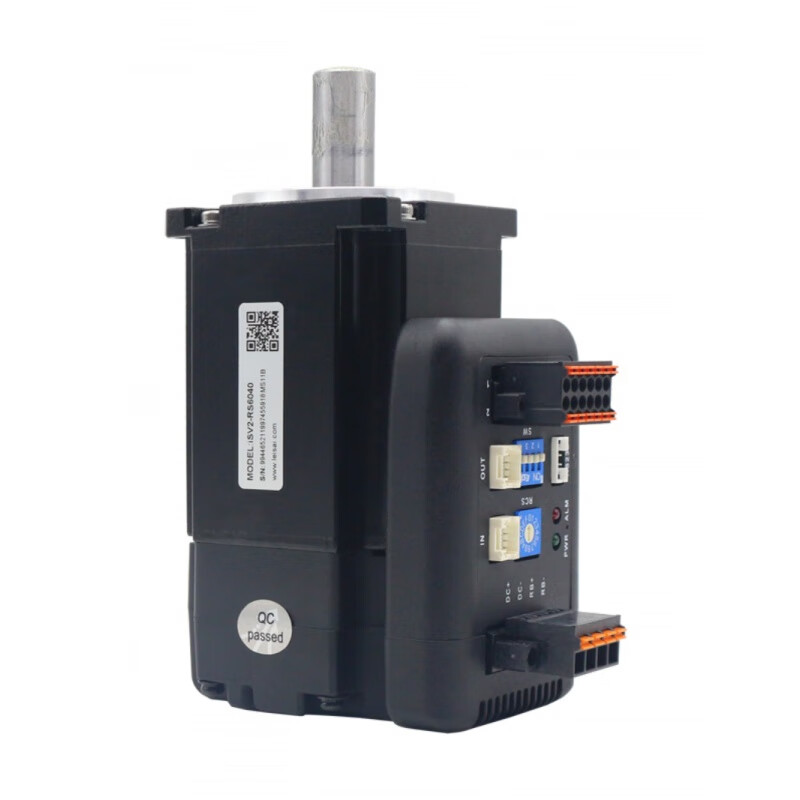
- ISV2 Series Intelligent Integrated Low Voltage Servo Motor – CANopen & RS485 Communication For Automation Solution
- Integrated Closed-Loop Stepper Motor Series Stepper motor + Drive + Controller
- Leadshine 5-Phase Stepper Motors Low Vibration for Optical Communication Modules
- Leadshine 57CME Series Closed Loop Stepper Motor | High Torque Low Heat High Stability & Consistent Performance for Precision Machine
- Leadshine 57CM Series NEMA23 Stepper Motor | High Torque Low Heat High Consistency 0.6-3.1Nm
- Leadshine MC500 PLC | EtherCAT 32-Axis Motion Controller with Dual-Core, IEC 6 Languages for 3C, PV, Lithium Battery, Logistics & Packaging Automation
- Leadshine LC Series Large PLC Controller – CODESYS Platform 256-Axis EtherCAT Motion Controller
- R Series EtherCAT Remote I/O Modules for Flexible and Scalable Industrial Automation
- Siemens AC Servo Motors | High Precision Closed-Loop Motion Control, Synchronous & Induction Motors for Robotics, CNC Machine Tools, Packaging and Semiconductor Equipment
- Panasonic MINAS A6/A7 Series AC Servo Motor 50W-22kW – 23bit Encoder, 3x Overload, IP67, 3.2kHz Response, PLC Compatible for High-Precision Industrial Automation
- Delta Servo Systems Delta PLC
- Linear Motion Module
- Precision Ball Screw Linear Slide Module
- High Precision Ball Screw Slide Table Heavy Duty Linear Module for Industrial Automation CNC Equipment Parts
- Cleanroom Ball Screw Linear Module, Low Particle Release High Rigidity Dustless Linear Actuator for Semiconductor Medical Industrial Automation Equipment
- Industrial Gear Reducer
- High Precision Planetary Gear Reducer With Low Backlash, High Torque Density for Robotics & CNC Automation
- Helical Gear Reducer – Low Noise Heavy Duty Modular Design Industrial Gearbox with Easy Maintenance
- Industrial Modular Helical Gear Reducer – Smooth Transmission, Strong Overload Resistance & Flexible Mounting, Suitable for Chemical, Textile & Heavy-Duty Equipment
- Robotic Arm
- Vision & Sensor Systems
- SICK Vision Sensor for High-Precision Machine High Accuracy Detection & Positioning for Smart Factories & Robotics
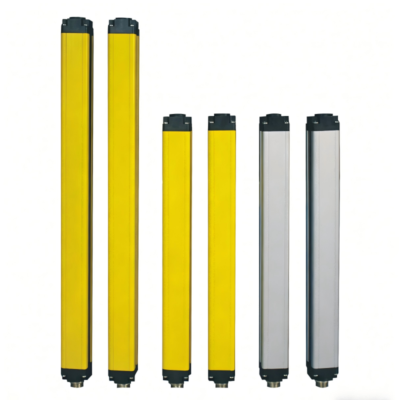
- SICK Photoelectric Sensor Safety Light Curtains – IP67 Safety Protection for Machine Guarding
- Hikvision CU Series Cost-Effective Industrial Camera Built-in ISP Algorithm with WDR GigE Vision & USB3.0 Interface for Industrial Machine Vision
- Pneumatic Components
- Airtac Air Source Treatment Three-in-One Unit Preparation Units Filter Regulator & Lubricator for Industrial Automation Systems
- AIRTAC Solenoid Valve | Direct/Semi-Direct/Pilot Operated, Leak-Proof & Explosion-Proof DN50, Industrial Fluid Control for Automation, Chemical & Mechanical Piping
- Pneumatic Slide Table Cylinder – ±0.01mm Precision Compact Integrated High Rigidity Durable for Automation
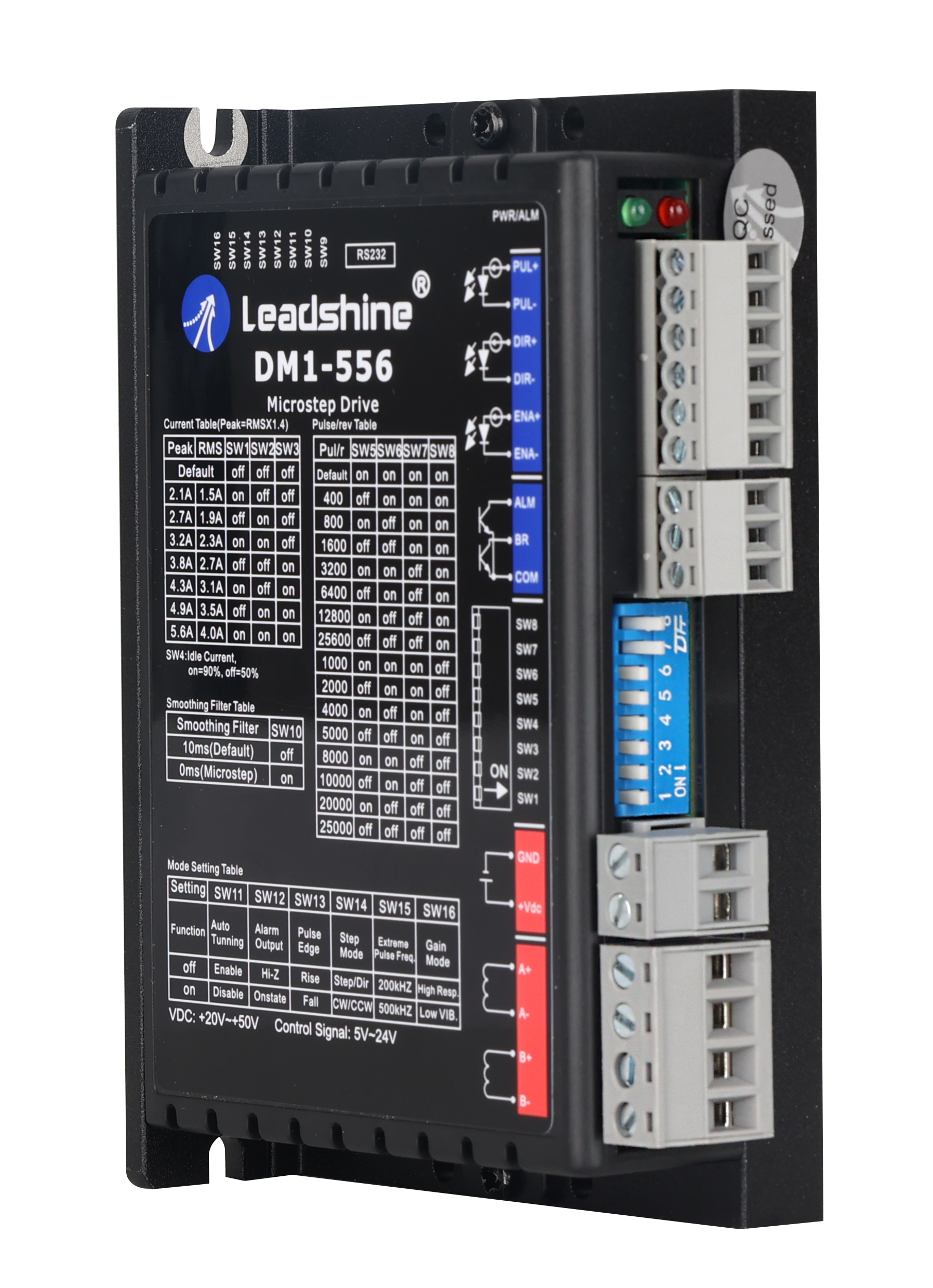
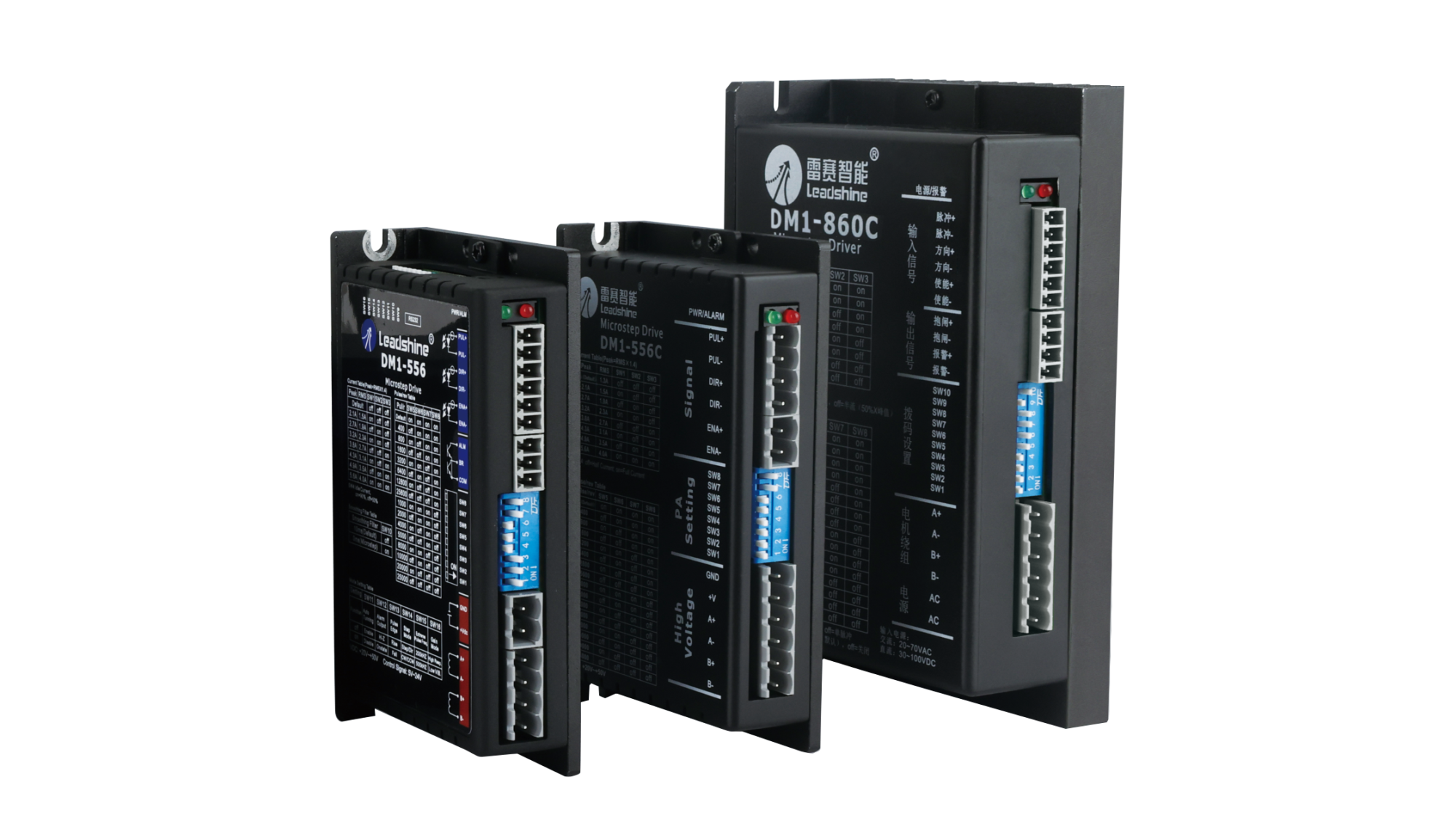
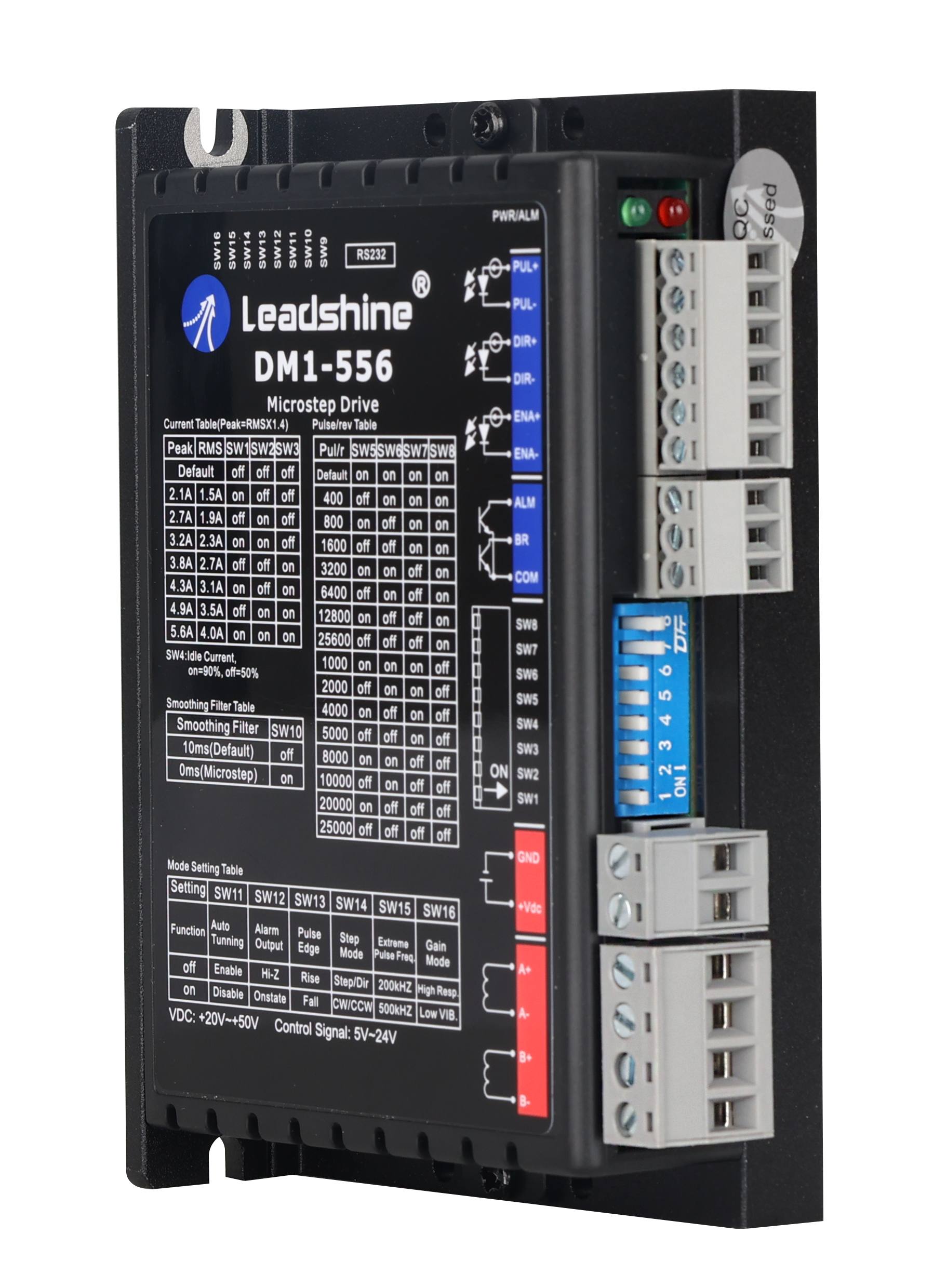
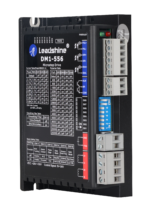
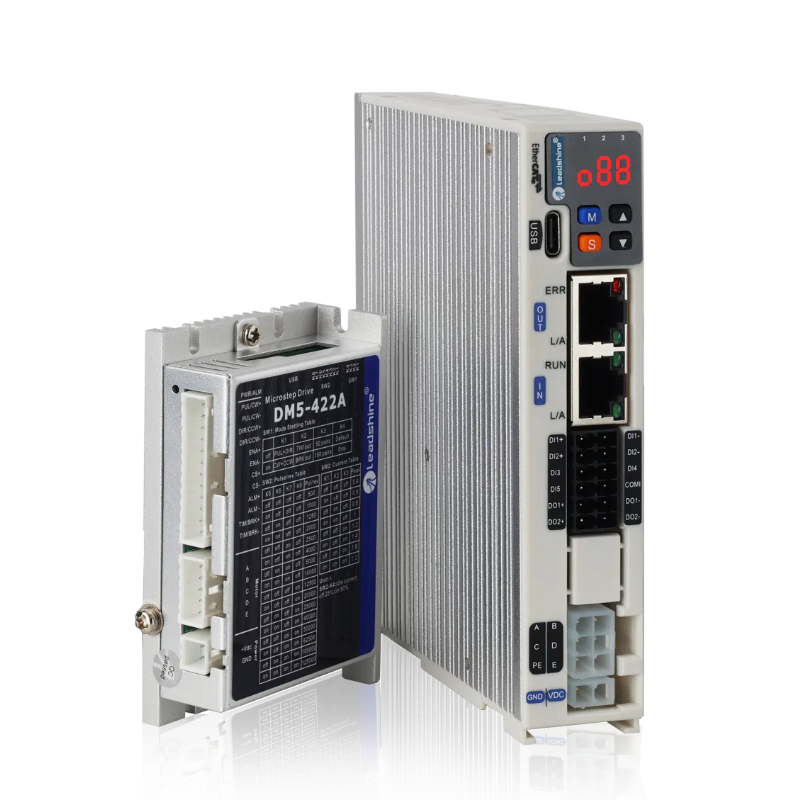
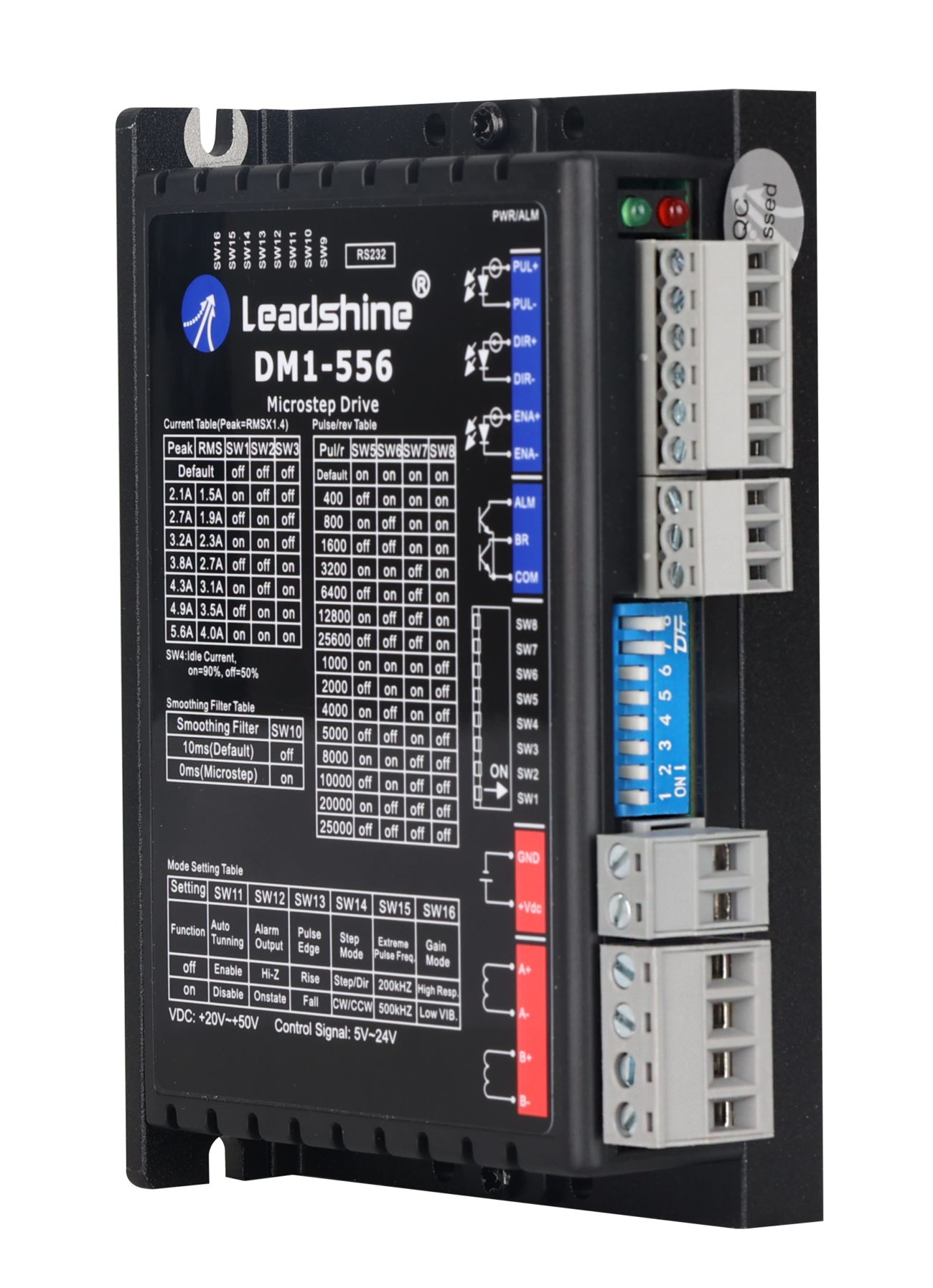
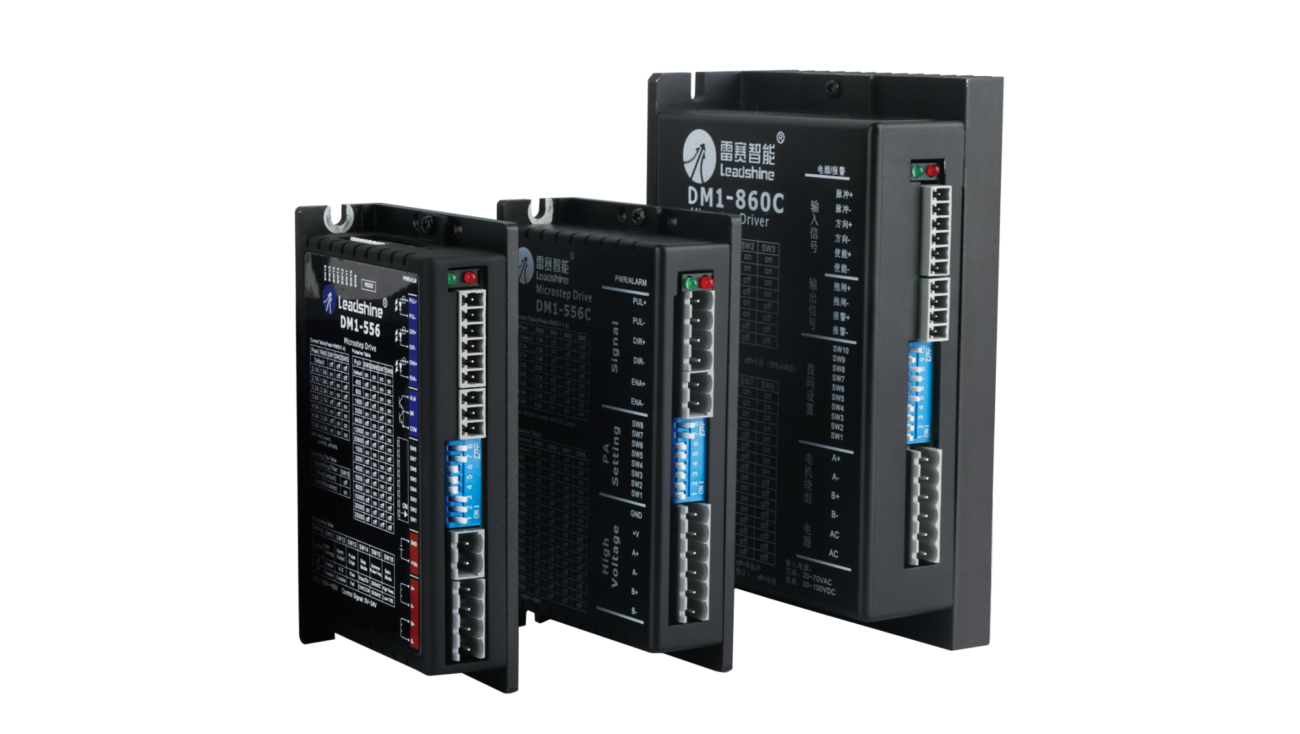
Leadshine DM1 Open-Loop Pulse Stepper Driver
Leadshine DM1 series standard pulse open-loop stepper drivers adopt advanced DSP motor control technology, delivering smoother low-speed operation, lower heat generation, faster acceleration and exceptional stability for precision intelligent manufacturing equipment.
Leadshine DM1 Series belongs to our mature open-loop stepper drive lineup, engineered based on over 20 years of practical stepper drive application experience. Equipped with exclusive dedicated DSP motor control chip and nine pioneering motor control algorithms, this pulse-type stepper driver greatly upgrades motor acceleration capacity, cuts heat buildup of motors and drivers, and drastically suppresses low-speed vibration.
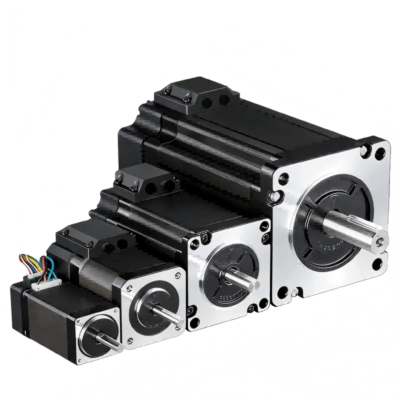
Compatible with 2-phase stepper motors ranging from 20 frame to 130 frame, the DM1 series features outstanding positioning accuracy and rapid response. Every unit comes standard with a debug port, extended function DIP switches and integrated metal heat sink, balancing powerful performance, comprehensive functions and ultra-long operational stability. Designed to empower equipment upgrading for advanced Chinese manufacturing, it serves as a cost-effective & reliable motion control solution for global automated machinery manufacturers.
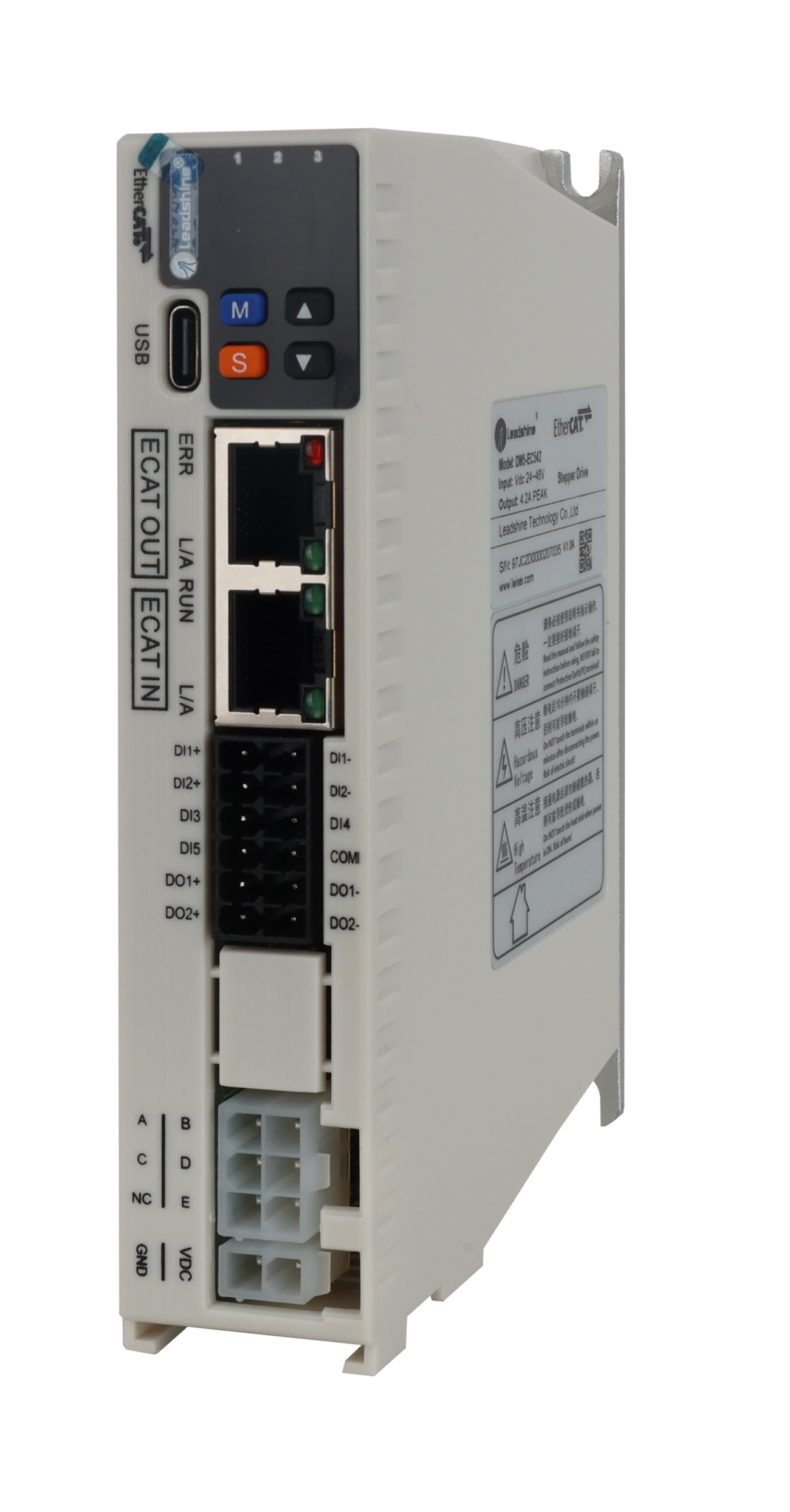
Comparison: Pulse Driver VS Bus Driver(Stepper / Servo Motion Control)
| Comparison: Bus Driver VS. Pulse Driver (Stepper / Servo Motion Control) | ||
| Comparison Category | Bus Driver (Fieldbus / EtherCAT) | Pulse Driver (Pulse & Direction) |
| Definition | A drive that receives motion commands via an industrial fieldbus network (e.g., EtherCAT, PROFINET, RTEX) and controls the motor accordingly. | A drive that converts pulse/direction signals into motor motion; each pulse corresponds to one step or a defined angular increment. |
| Working Principle | The motion controller sends digital command frames over the bus; the drive decodes the frames and regulates current, position, velocity, or torque in real time. | The controller outputs pulse trains (STEP) and a direction signal (DIR); the drive counts pulses and drives the motor by adjusting pulse frequency and duty cycle. |
| Control Modes Supported | CSP (Cyclic Synchronous Position), PP (Profile Position), PV (Profile Velocity), HM (Homing), torque mode — all configurable over the bus (CiA 402 compliant). | Primarily position control via pulse count; velocity control via pulse frequency; limited or no built-in torque/force control. |
| Multi-Axis Capability | Excellent — one bus master can synchronize dozens of axes over a single cable; ideal for coordinated multi-axis motion. | Limited — each axis requires a dedicated pulse output channel; adding axes increases controller I/O cost and wiring. |
| Communication / Transmission Rate | High-speed real-time bus, typically 100 Mbps (EtherCAT); deterministic cycle time down to microseconds. | Pulse frequency typically up to 200 kHz – 4 MHz depending on controller; no data feedback channel by default. |
| Wiring Complexity | Low — daisy-chain or star topology with a single Ethernet cable; reduced cabinet space and labor cost. | High — each axis needs separate STEP/DIR wires, plus limit/home/enable signals; more terminals and longer cabling. |
| Feedback & Diagnostics | Rich — real-time position, velocity, current, temperature, fault codes and status are all readable back from the drive over the bus. | Basic — typically only alarm/ready discrete outputs; limited run-time data visibility without extra wiring. |
| Positioning Precision | High — closed-loop control with encoder feedback transmitted over the bus; supports high-resolution encoders. | Good for open-loop stepping; precision depends on pulse resolution and micro-stepping; prone to step loss without encoder. |
| Speed & Dynamic Response | Fast acceleration, high maximum speed, excellent dynamic performance due to closed-loop current regulation. | Stable speed control and good dynamic performance at low-to-medium speeds; limited at very high speeds. |
| Vibration & Noise | Lower vibration and acoustic noise thanks to closed-loop current control and advanced anti-resonance algorithms. | Can exhibit resonance and noise at certain speeds; requires tuning or dampers; micro-stepping helps smooth motion. |
| Flexibility & Scalability | High — parameters, I/O mapping and control modes are software-configurable; easy to expand or reconfigure axes. | Lower — configuration mostly via DIP switches or dedicated software; hardware changes often needed for expansion. |
| System Cost | Higher per-drive cost, but lower total system cost in multi-axis setups (fewer I/O modules, less wiring). | Lower per-drive cost; cost-effective for single-axis or simple machines, but rises with axis count due to I/O and wiring. |
| Reliability & Risk | A bus communication fault can affect multiple axes simultaneously; requires robust network design and redundancy planning. | Each axis is electrically independent; a single-axis fault does not propagate to other axes. |
| EMI / Electromagnetic Interference | Lower EMI due to digital differential signaling (Ethernet); standardized shielding reduces noise. | Higher EMI from high-frequency pulse trains; often requires shielded cables and filters for clean operation. |
| Typical Applications | Semiconductor equipment, lithium battery production, photovoltaic, 3C electronics, CNC, robotics, packaging, high-end automated production lines. | Labeling machines, conveyors, simple X-Y tables, small CNC, engraving, low-cost automation, single-axis positioning. |
| Best Suited For | Multi-axis synchronized systems requiring high precision, real-time control, remote diagnostics and scalable architecture. | Simple, cost-sensitive single-axis or low-axis-count applications where pulse control is sufficient and wiring is manageable. |
| Conclusion: Both bus and pulse drivers play essential roles in industrial motion control. Bus drivers offer superior flexibility, multi-axis synchronization and diagnostics, making them ideal for complex, high-precision automated systems. Pulse drivers provide a simple, cost-effective and stable solution for single-axis or low-axis-count applications. Selection should be based on control architecture, required precision, number of axes, budget and long-term scalability. | ||
Core Advantages
| Advantage | Technical Benefits | Real-World Impact |
|---|---|---|
| “Three Ultra Performance” | Ultra-smooth operation, ultra-low noise (<45dB at 1000 RPM), ultra-low heating (temperature rise <30°C) | Extended motor/drive lifespan, reduced maintenance costs, improved workplace comfort |
| Automatic Parameter Optimization | Drive self-configures for connected motor, eliminating manual tuning | Faster setup time, reduced engineering effort, consistent performance across motor types |
| Enhanced Acceleration & Torque | Advanced control algorithms maintain torque at high speeds | Shorter cycle times, higher throughput in automated production lines |
| Superior Low-Speed Stability | Anti-resonance technology minimizes mid-range instability and vibration | Improved positioning accuracy (±0.01°), ideal for micro-machining and precision assembly |
| Energy Efficiency | Dynamic current reduction during idle periods reduces power consumption by up to 30% | Lower operational costs, reduced carbon footprint |
| Reliable & Maintenance-Free | Comprehensive protection mechanisms prevent damage from electrical faults | 50,000+ hours MTBF, minimal downtime in critical applications |
Applications
3C Electronics Manufacturing
- PCB assembly: High-precision placement of surface-mount components (0402 and smaller)
- Smartphone production: Camera module alignment, display assembly, and battery insertion
- Precision testing: Automated optical inspection (AOI) systems requiring sub-micron positioning accuracy
Semiconductor & Microelectronics
- Wafer handling: Smooth, vibration-free movement of silicon wafers during lithography and etching processes
- Pick-and-place systems: High-speed, high-precision transfer of delicate semiconductor components
- Probe card positioning: Accurate alignment of test probes with microchip contacts
Machine Tools & Metalworking
- CNC milling/turning: Precise axis control for complex part geometries and fine surface finishes
- Laser cutting/engraving: High-speed, jerk-free motion for intricate patterns and minimal material waste
- Grinding machines: Ultra-smooth operation for mirror-finish surface processing
Renewable Energy & Battery Production
- Solar panel manufacturing: Precise positioning of photovoltaic cells during stringing and lamination
- Lithium battery production: Electrode cutting, cell stacking, and module assembly with tight tolerance control
- Wind turbine components: Precision machining of gearbox parts and blade assembly jigs
Other High-Precision Applications
- Medical devices: Surgical robot arms, diagnostic equipment, and drug delivery systems
- Packaging machinery: High-speed, accurate labeling and filling systems for pharmaceutical and food industries
- Automated test equipment (ATE): Precise positioning of test fixtures for electronic component validation
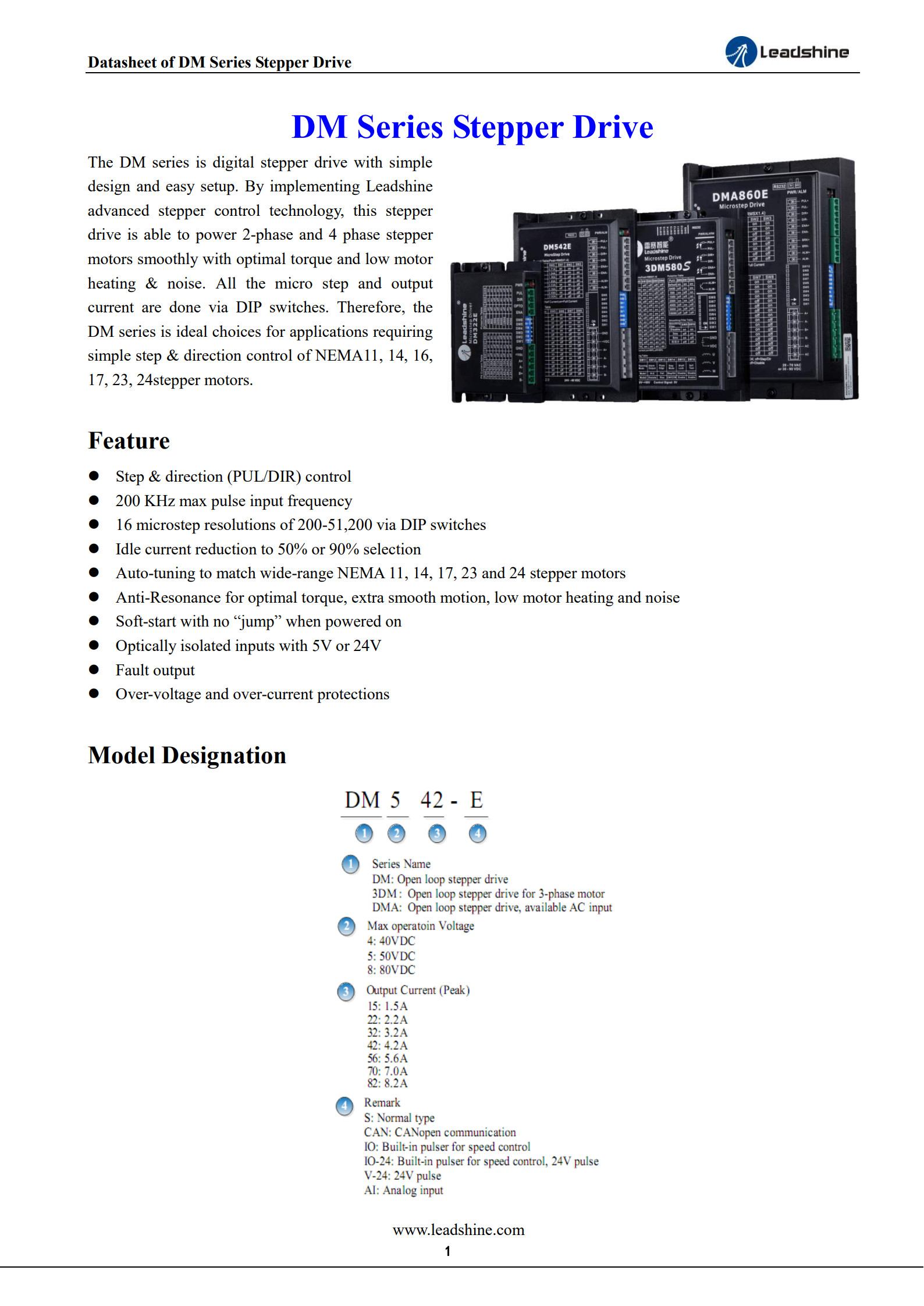

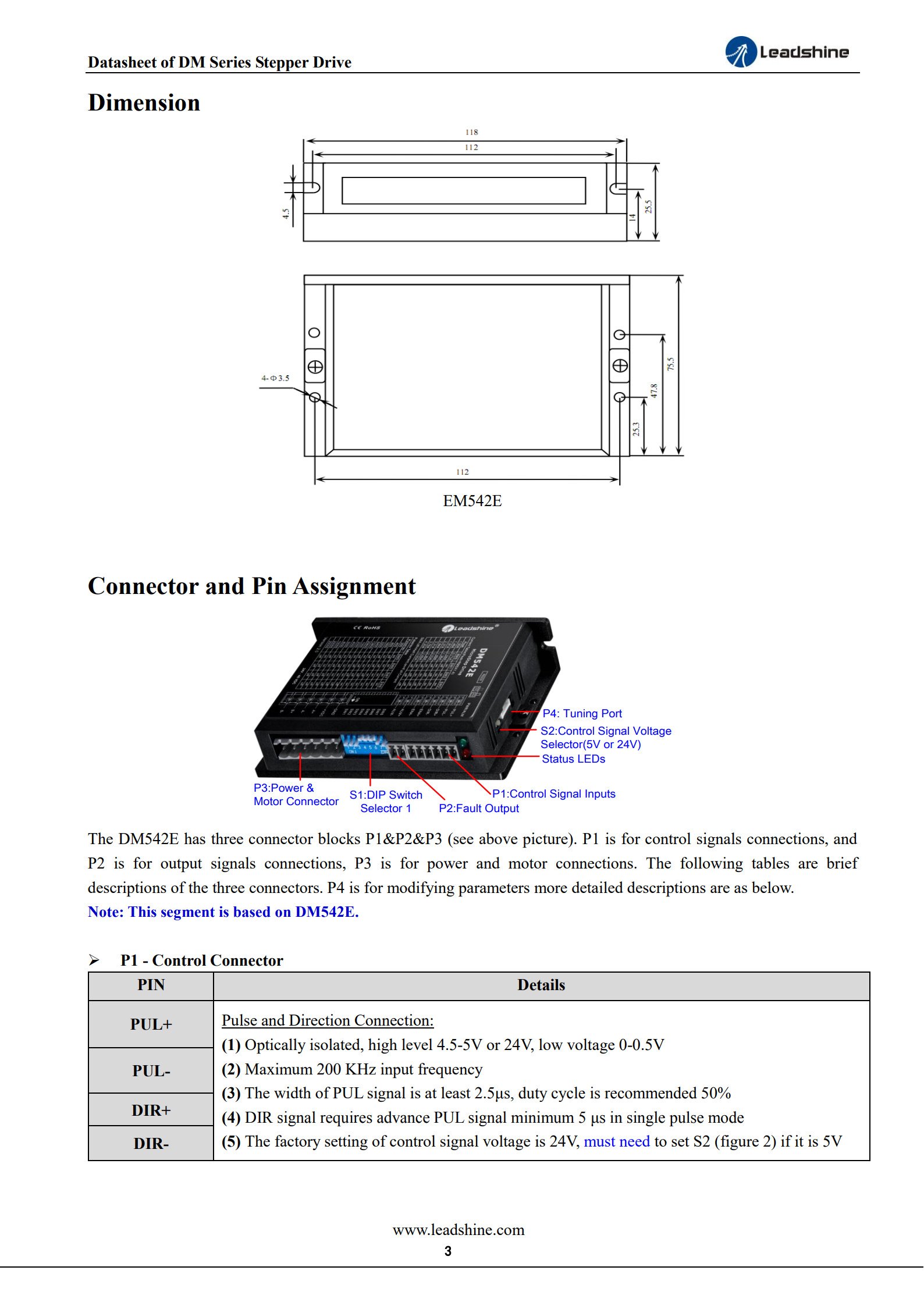
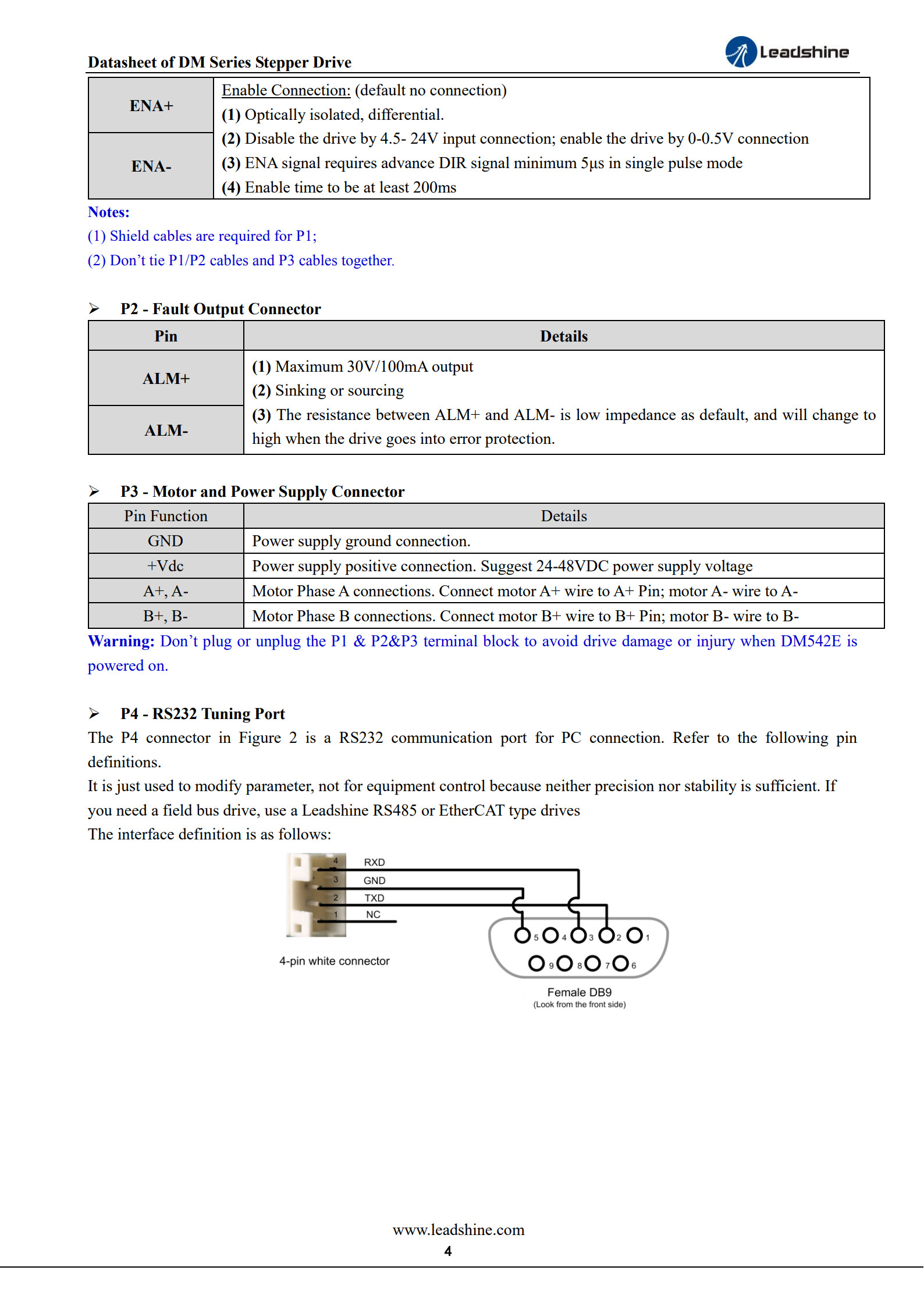
| Model |
DM Series |
|---|---|
| Command Source |
PUL&DIR |
| Operation Voltage (VDC) |
20-50 |
| Output Current (A, Peak) |
2.2-8.3 |
| Input Frequency (KHz, Max.) |
70-200 |
| Logical Voltage (VDC) |
5 or 24 |