- Motion Control
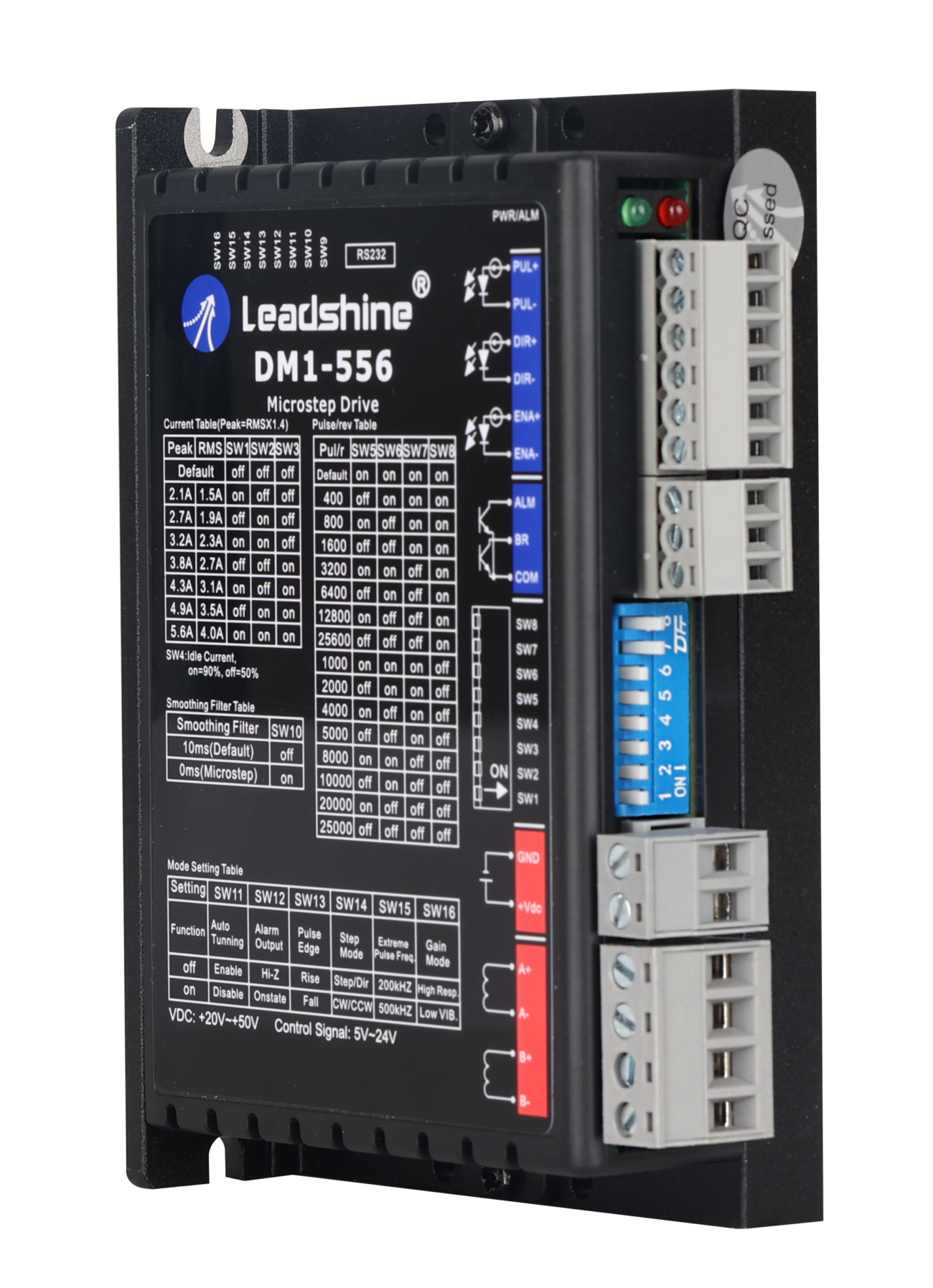
- Leadshine IDM Series Integrated Smart Motor with Driver | Compact, Plug-and-Play, High Acceleration, Easy Installation
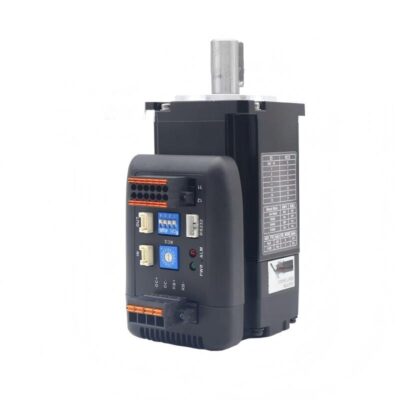
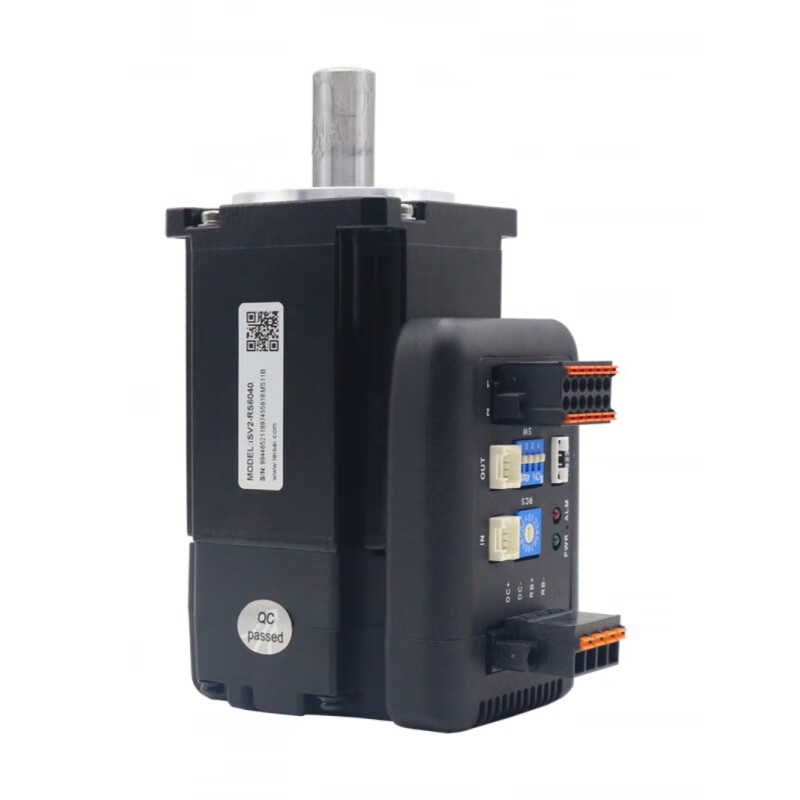
- ISV2 Series Intelligent Integrated Low Voltage Servo Motor – CANopen & RS485 Communication For Automation Solution
- Integrated Closed-Loop Stepper Motor Series Stepper motor + Drive + Controller
- Leadshine 5-Phase Stepper Motors Low Vibration for Optical Communication Modules
- Leadshine 57CME Series Closed Loop Stepper Motor | High Torque Low Heat High Stability & Consistent Performance for Precision Machine
- Leadshine 57CM Series NEMA23 Stepper Motor | High Torque Low Heat High Consistency 0.6-3.1Nm
- Leadshine MC500 PLC | EtherCAT 32-Axis Motion Controller with Dual-Core, IEC 6 Languages for 3C, PV, Lithium Battery, Logistics & Packaging Automation
- Leadshine LC Series Large PLC Controller – CODESYS Platform 256-Axis EtherCAT Motion Controller
- R Series EtherCAT Remote I/O Modules for Flexible and Scalable Industrial Automation
- Siemens AC Servo Motors | High Precision Closed-Loop Motion Control, Synchronous & Induction Motors for Robotics, CNC Machine Tools, Packaging and Semiconductor Equipment
- Panasonic MINAS A6/A7 Series AC Servo Motor 50W-22kW – 23bit Encoder, 3x Overload, IP67, 3.2kHz Response, PLC Compatible for High-Precision Industrial Automation
- Delta Servo Systems Delta PLC
- Linear Motion Module
- Precision Ball Screw Linear Slide Module
- High Precision Ball Screw Slide Table Heavy Duty Linear Module for Industrial Automation CNC Equipment Parts
- Cleanroom Ball Screw Linear Module, Low Particle Release High Rigidity Dustless Linear Actuator for Semiconductor Medical Industrial Automation Equipment
- Industrial Gear Reducer
- High Precision Planetary Gear Reducer With Low Backlash, High Torque Density for Robotics & CNC Automation
- Helical Gear Reducer – Low Noise Heavy Duty Modular Design Industrial Gearbox with Easy Maintenance
- Industrial Modular Helical Gear Reducer – Smooth Transmission, Strong Overload Resistance & Flexible Mounting, Suitable for Chemical, Textile & Heavy-Duty Equipment
- Robotic Arm
- Vision & Sensor Systems
- SICK Vision Sensor for High-Precision Machine High Accuracy Detection & Positioning for Smart Factories & Robotics
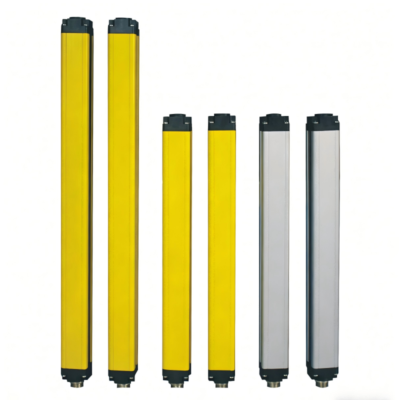
- SICK Photoelectric Sensor Safety Light Curtains – IP67 Safety Protection for Machine Guarding
- Hikvision CU Series Cost-Effective Industrial Camera Built-in ISP Algorithm with WDR GigE Vision & USB3.0 Interface for Industrial Machine Vision
- Pneumatic Components
- Airtac Air Source Treatment Three-in-One Unit Preparation Units Filter Regulator & Lubricator for Industrial Automation Systems
- AIRTAC Solenoid Valve | Direct/Semi-Direct/Pilot Operated, Leak-Proof & Explosion-Proof DN50, Industrial Fluid Control for Automation, Chemical & Mechanical Piping
- Pneumatic Slide Table Cylinder – ±0.01mm Precision Compact Integrated High Rigidity Durable for Automation
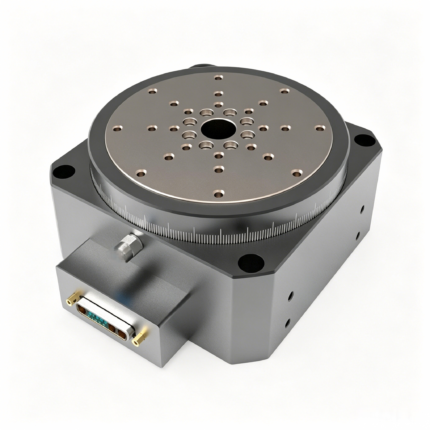
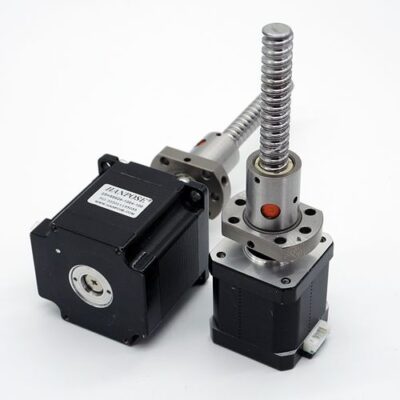
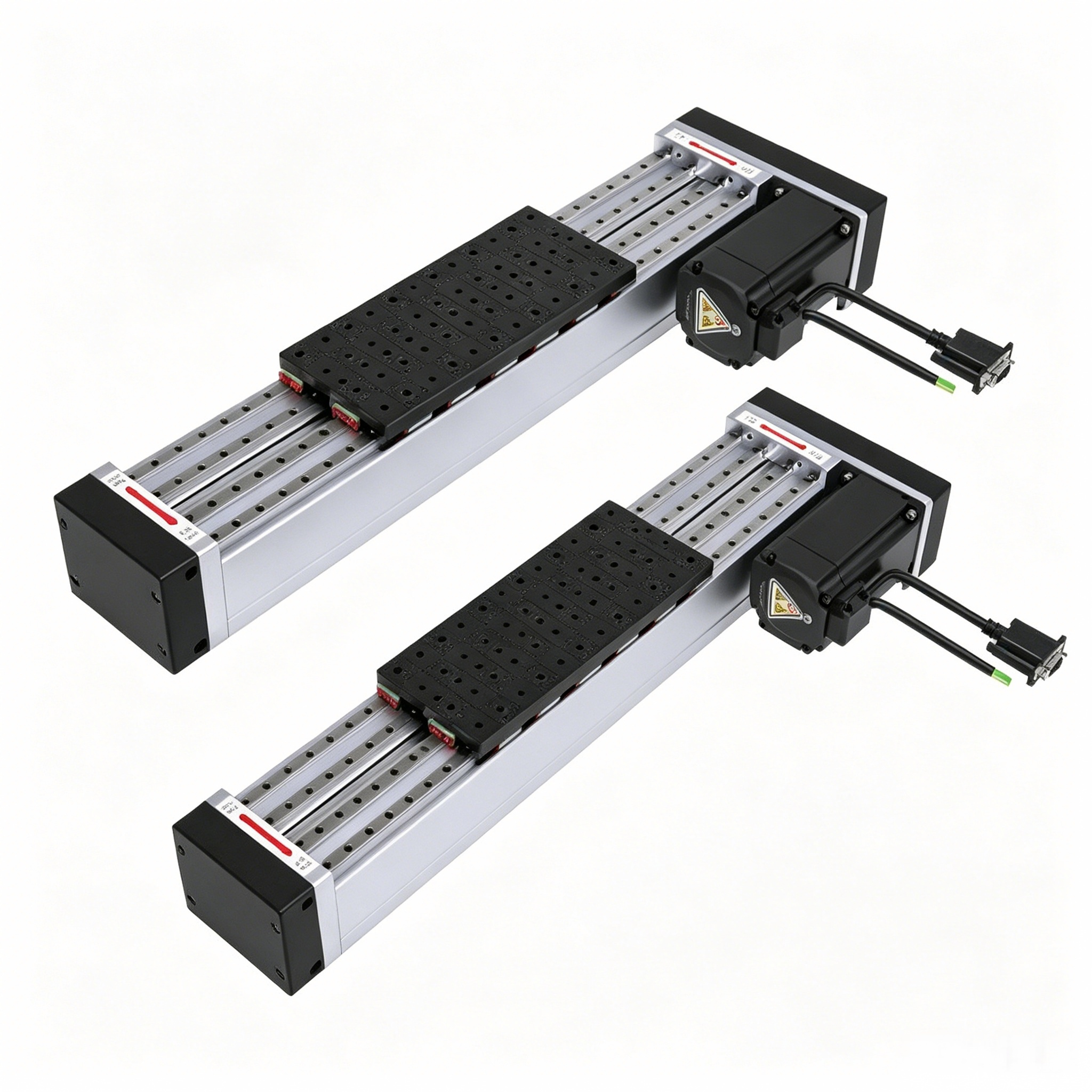
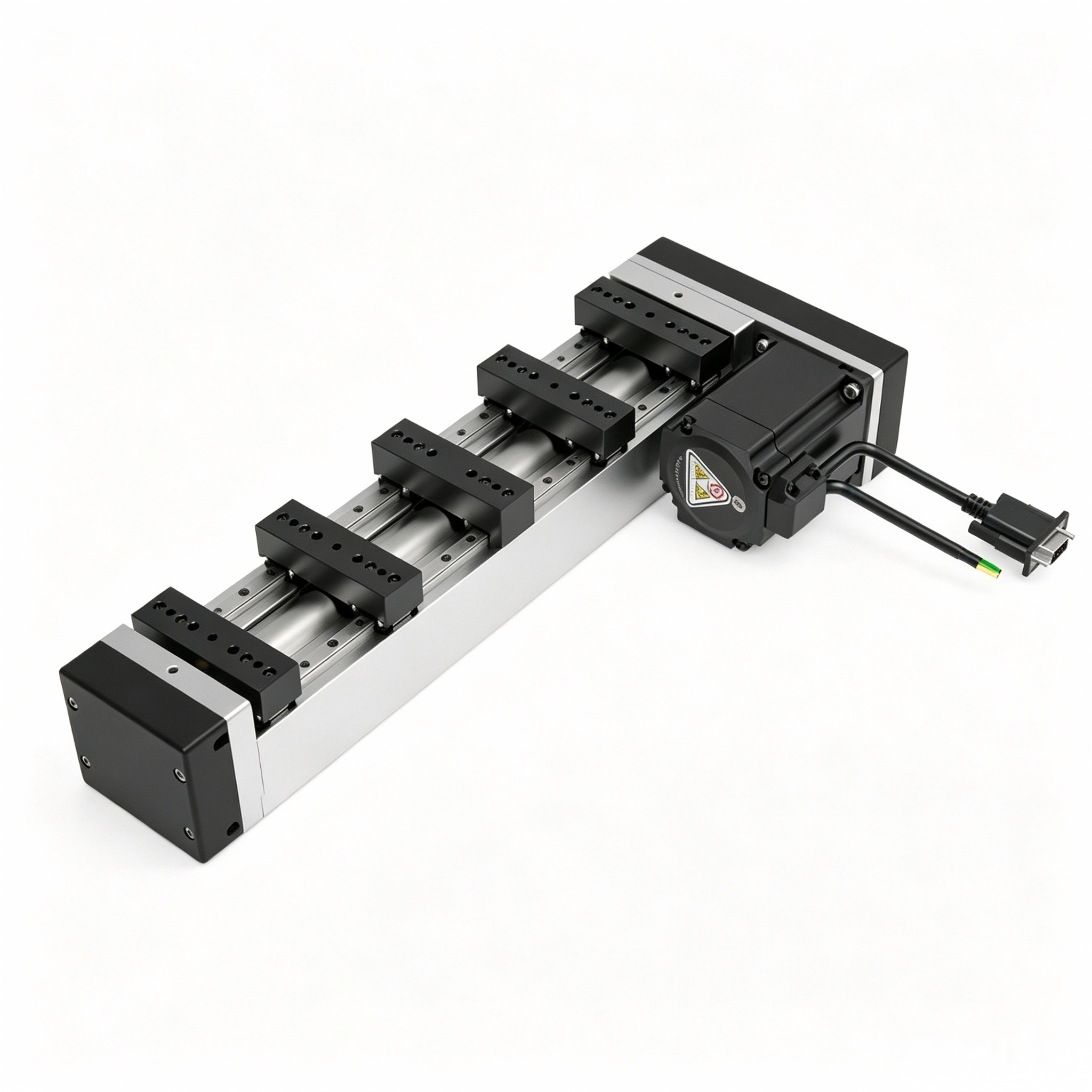
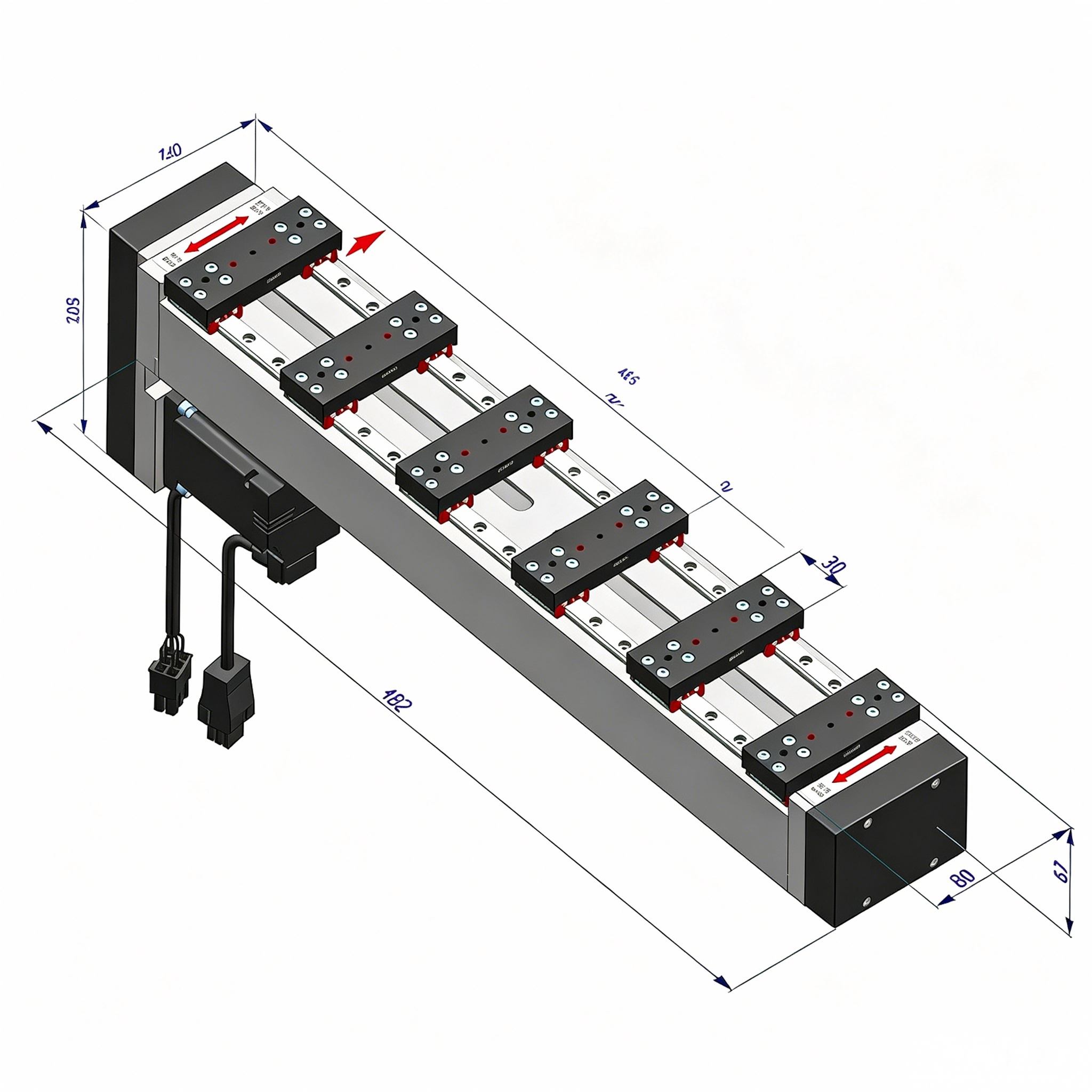
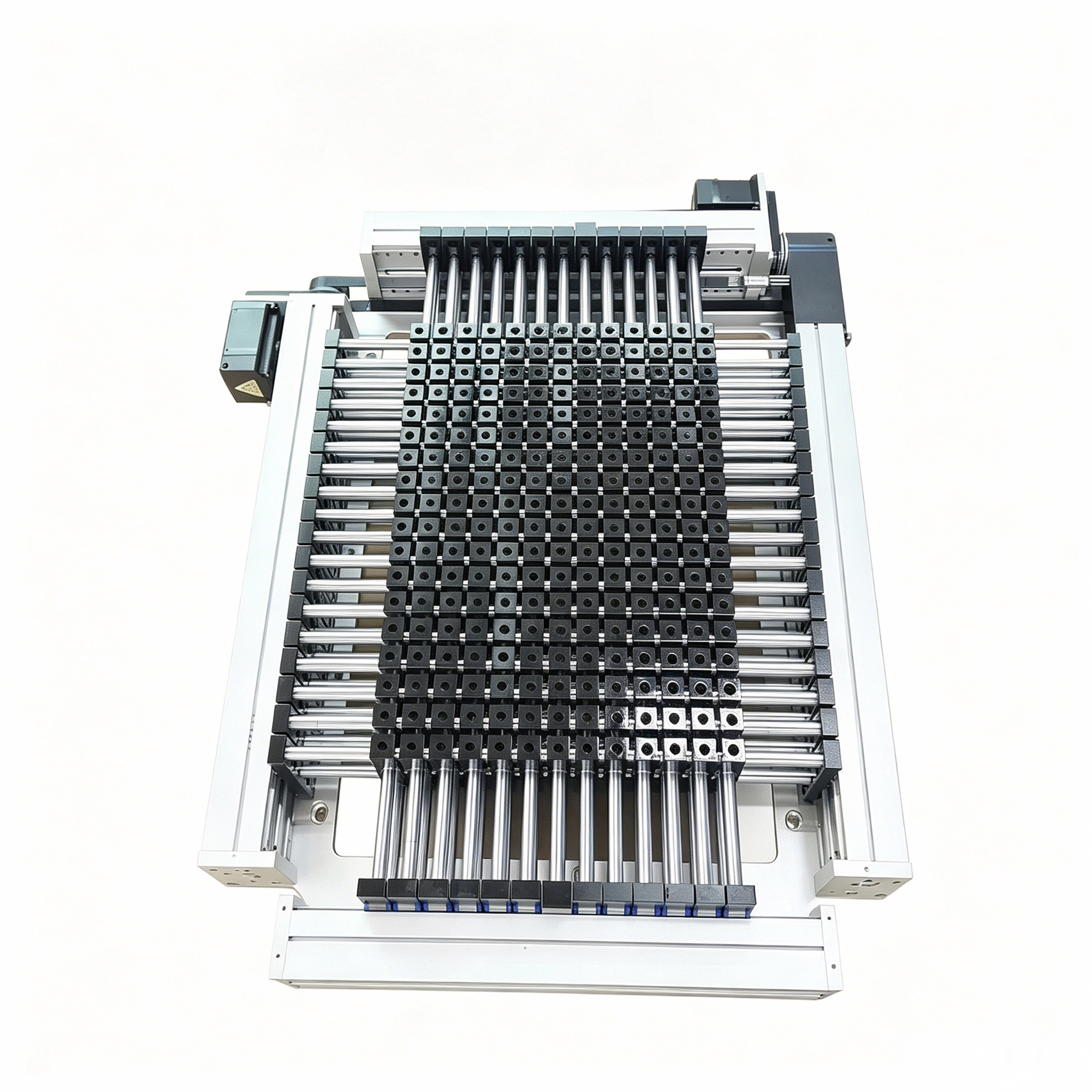
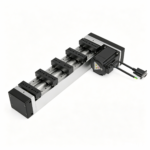
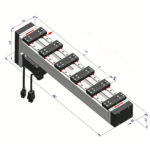
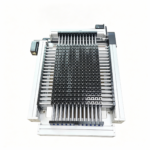
Variable Pitch Module for automatic pitch adjustment, pick and place, packaging, tray loading, assembly and inspection. Servo-controlled multi-position motion for flexible automation. Adjustable Pitch Motion for High-Speed Flexible Automation applications where multiple products, grippers or fixtures need to change their spacing during the same motion cycle.
What Is a Variable Pitch Module?
In a conventional automation line, products are often transferred at a fixed distance.
However, the required spacing can be different at each process:
Feeding Pitch → Pick Pitch → Inspection Pitch → Assembly Pitch → Packaging Pitch
For example, products may arrive closely spaced on a conveyor but need to be separated before entering a packaging machine. Or components may be supplied in a compact tray and need to match a wider fixture layout during assembly.
A variable pitch module automatically changes the distance between multiple working positions to match these different process requirements.
The module can be integrated with:
Servo motors and servo drives
PLC and motion controllers
Robot arms and Cartesian robots
Pick and place systems
Vacuum grippers and electric grippers
Conveyors and indexing systems
Machine vision systems
Packaging and assembly equipment
The result is a more flexible motion platform for multi-product handling and automatic pitch adjustment.
How Does a Variable Pitch Module Work?
The module uses a synchronized mechanical transmission system to control several sliders or working stations.
When the drive mechanism moves, the sliders move simultaneously and change their relative spacing.
Depending on the configuration, the system can provide:
Pitch Expansion
30 mm → 50 mm → 80 mm → 100 mm
Pitch Reduction
100 mm → 80 mm → 50 mm → 30 mm
Synchronized Equal Pitch
50 mm → 50 mm → 50 mm → 50 mm
Unequal Pitch Positioning
30 mm → 60 mm → 100 mm → 70 mm
The pitch movement can be controlled by a servo system and programmed through the PLC or motion controller.
This allows the machine builder to define the required pitch according to the product, tooling and downstream process.
The basic operating sequence can be:
Pick → Move → Change Pitch → Position → Place
The pitch adjustment takes place as part of the handling cycle, eliminating the need for manual repositioning in applications where product spacing must change automatically.
Electronic pitch control has long been used in variable-pitch pick-and-place systems to allow the gripper spacing to be programmed for different tray or process configurations.
Core Advantages
1. Automatic Pitch Adjustment
The product spacing can change automatically during the process.
2. Multi-Position Synchronized Motion
Multiple grippers, vacuum cups or fixtures can move together.
One motion cycle can therefore handle multiple products while maintaining a defined pitch between each position.
3. Flexible Format Changeover
Fixed-pitch automation is normally optimized for one product arrangement.
When the product size or packaging format changes, the machine may require mechanical adjustment or replacement tooling.
A programmable variable pitch system provides another option:
Product A → Pitch Setting A
Product B → Pitch Setting B
Product C → Pitch Setting C
4. High-Speed Pick and Place
Variable pitch technology can be combined with servo motion and high-speed handling systems.
A typical cycle is:
Pick Multiple Products → Change Pitch → Transfer → Place
5. Compact Mechanical Design
A variable pitch module can integrate the spacing adjustment into one multi-position mechanism.
This can help reduce:
Mechanical components
Installation space
Additional transfer stations
Manual adjustment points
Machine complexity
6. Easy Integration with Automation Systems
The module can be designed as a motion component within an existing automation system.
Typical integration:
PLC → Servo Drive → Variable Pitch Module → Gripper / Tooling
It can also work together with:
Robot + Variable Pitch Module + Vacuum Gripper
or:
Conveyor + Vision System + Variable Pitch Module + Packaging Machine
7. Suitable for Custom Automation
Different machines require different:
Number of sliders
Pitch range
Stroke
Payload
Speed
Installation orientation
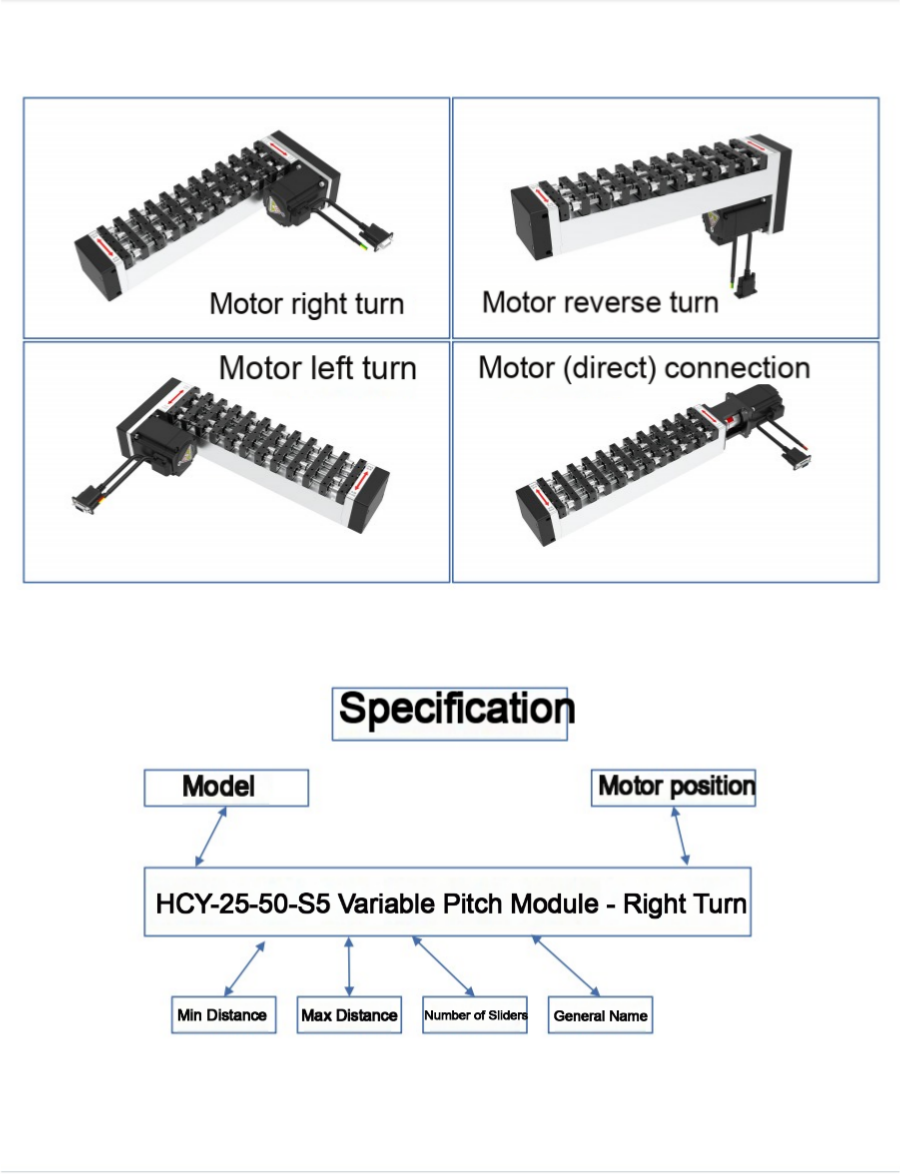
Motor configuration
Gripper layout
Application
Packaging Automation
Pick and Place Automation
Tray Loading and Unloading
Automated Assembly
Machine Vision Inspection
Sorting and Material Handling
Electronics and Semiconductor Handling
Medical and Pharmaceutical Automation
Techinical Specifications
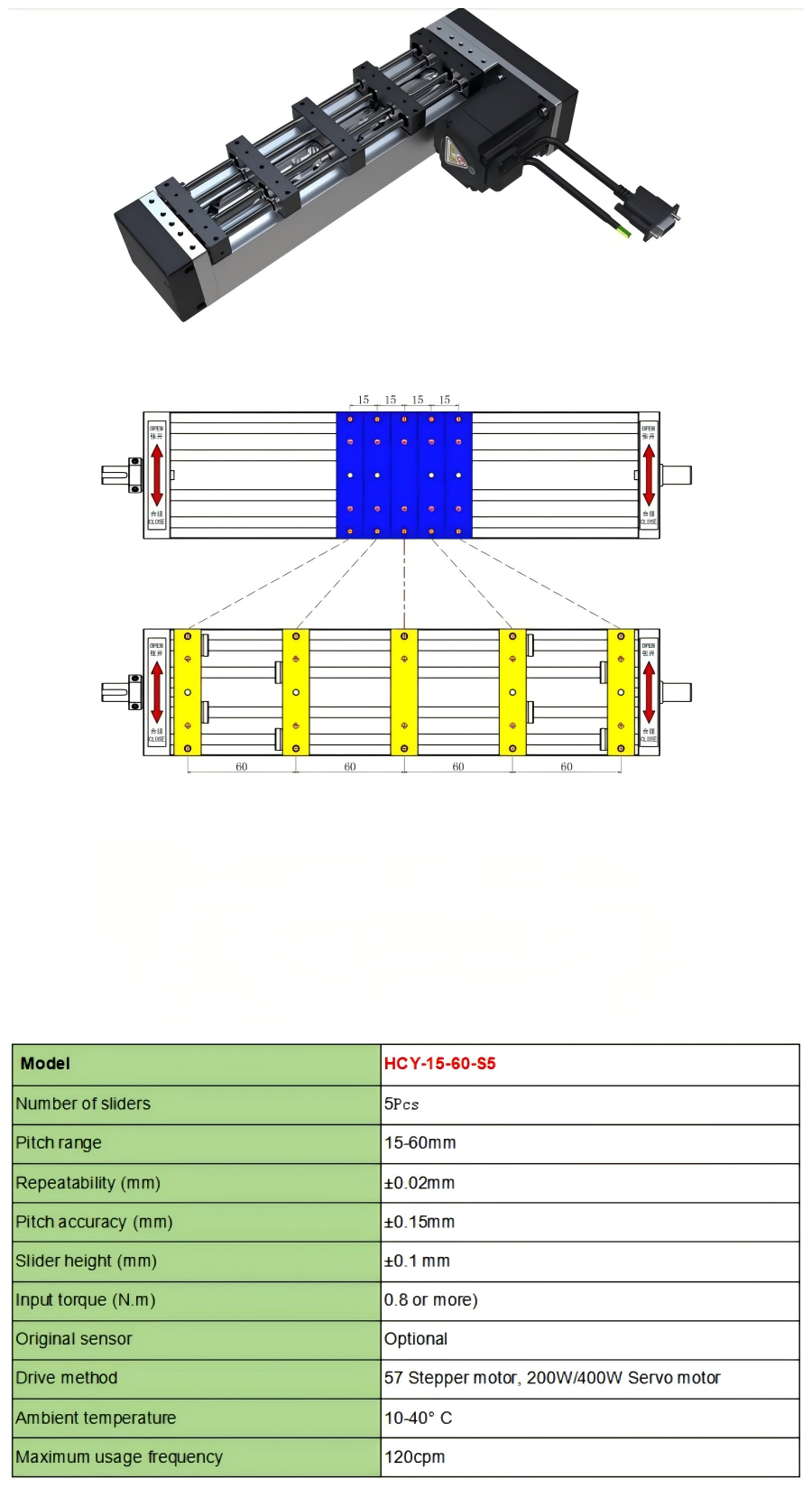
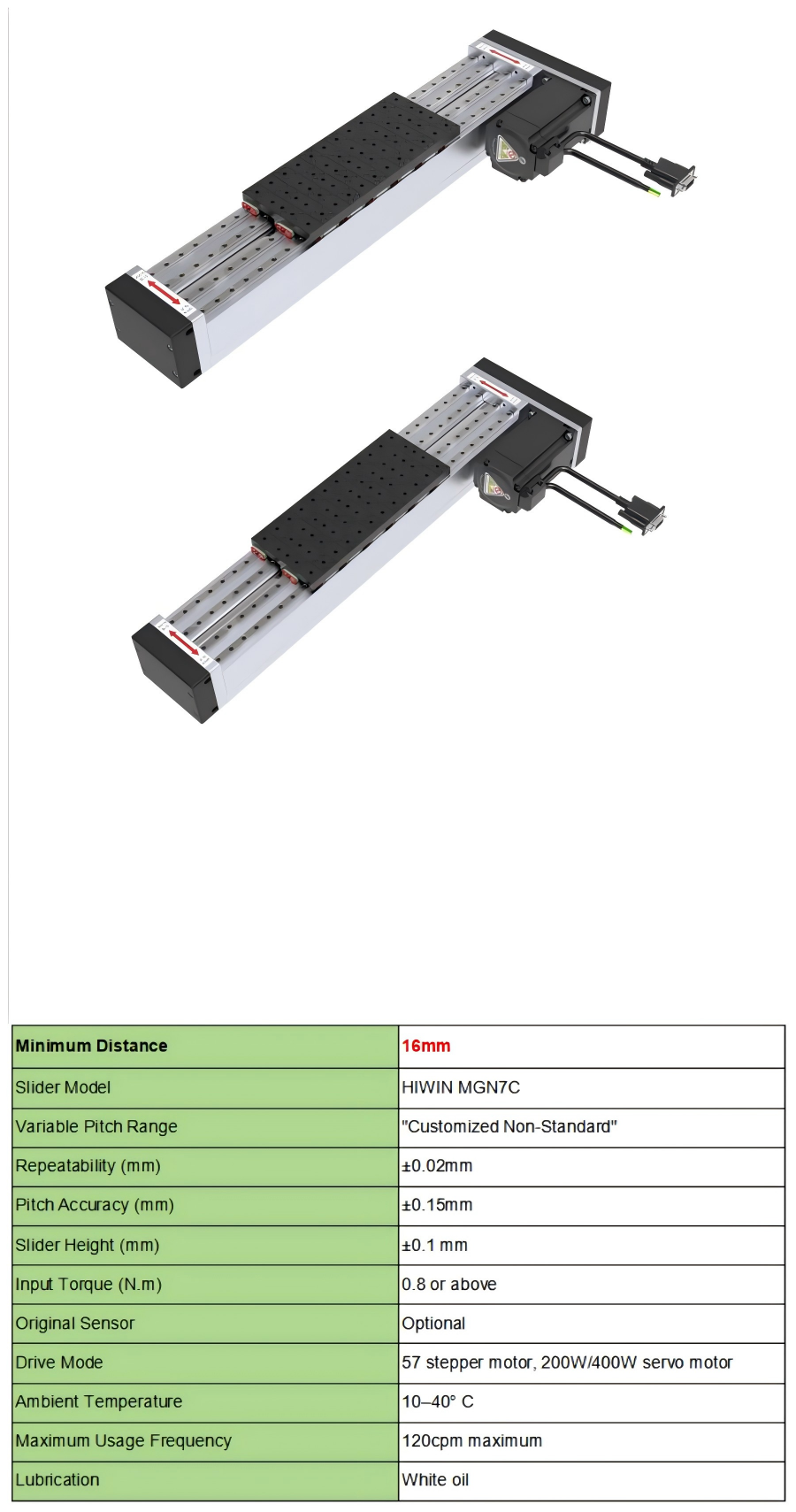
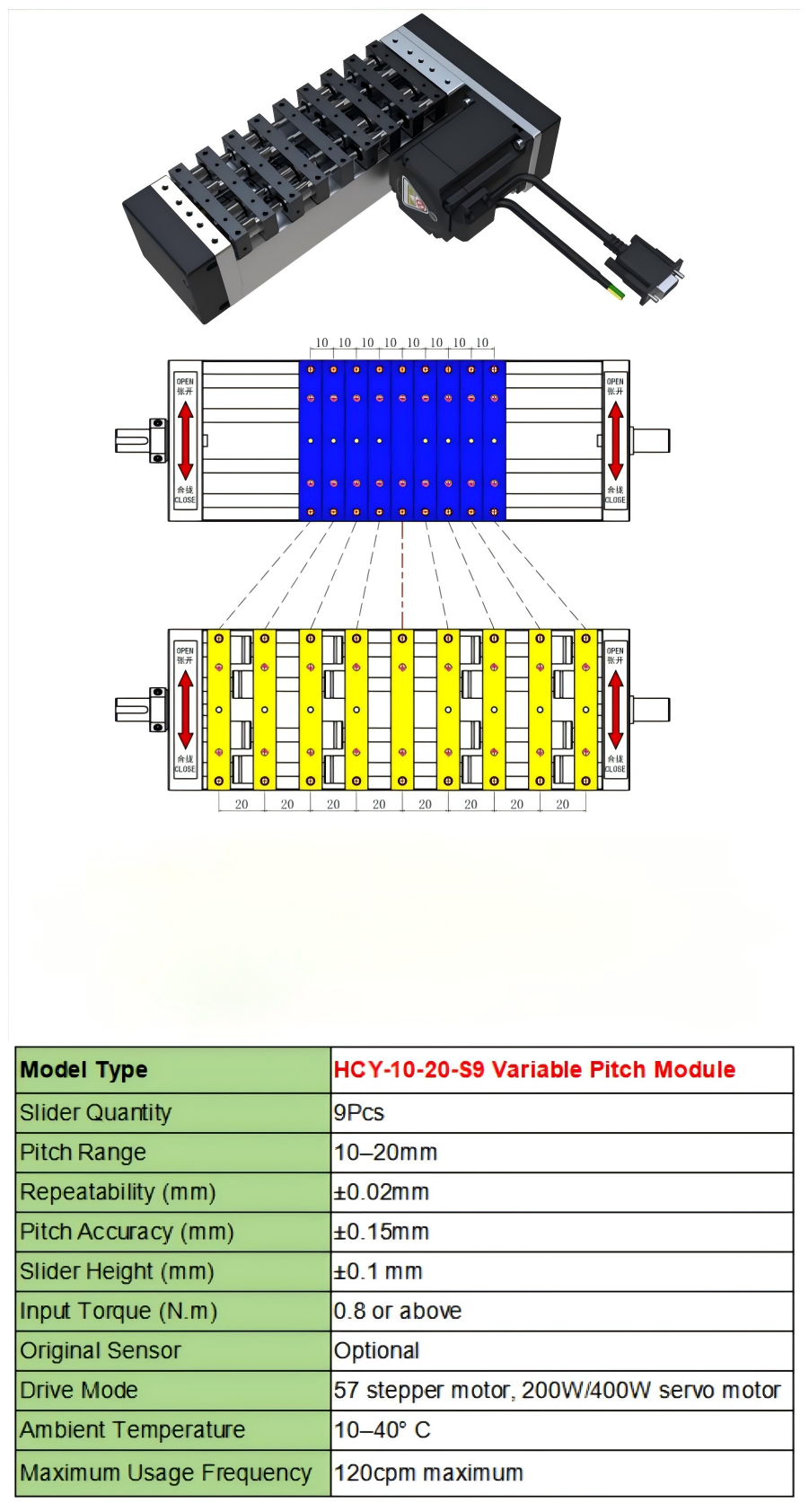
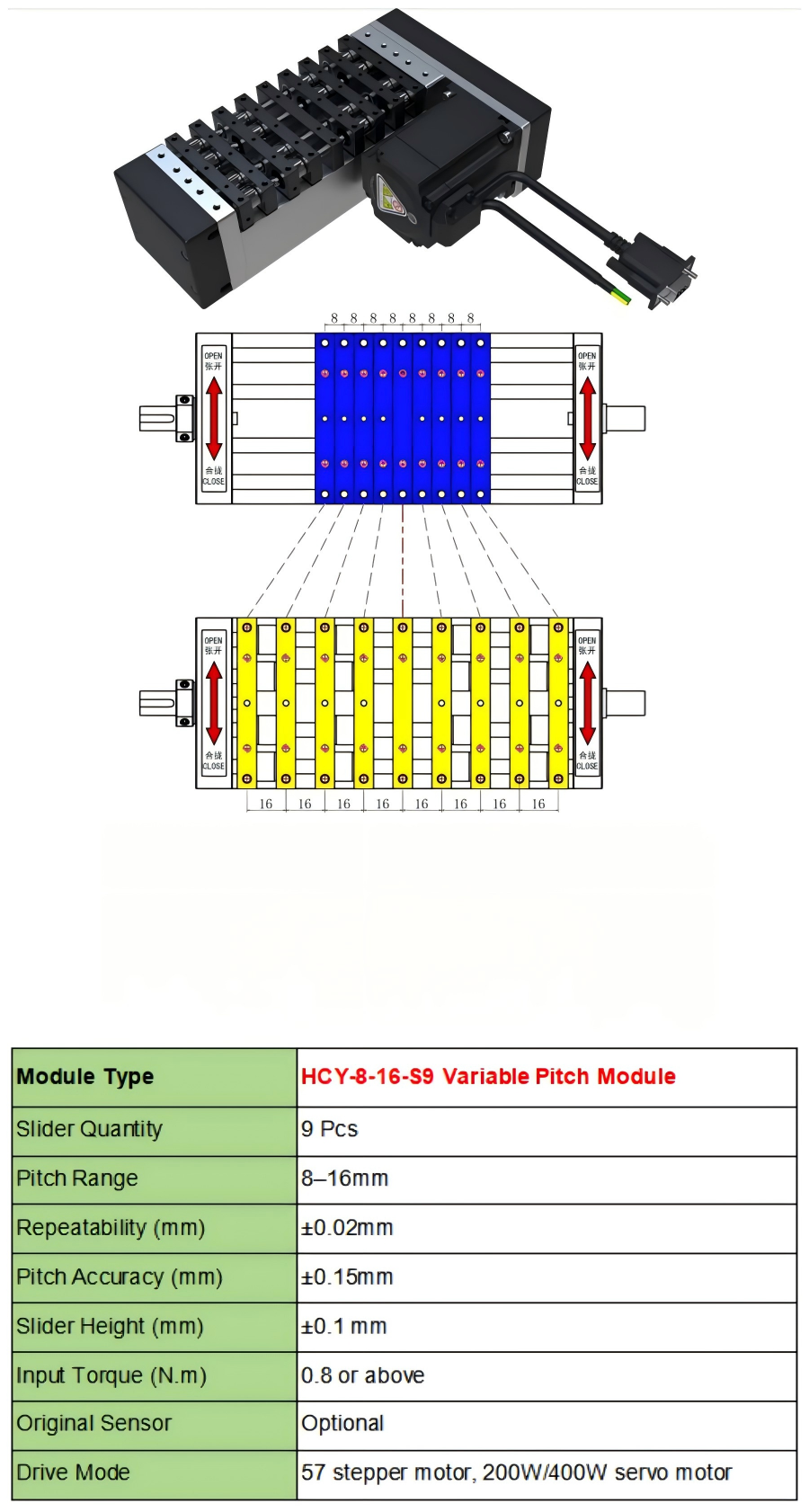
Variable Pitch Module vs. Normal Linear Module
A variable pitch module is designed to move multiple positions while changing the distance between them.
| Feature | Conventional Linear Module | Variable Pitch Module |
|---|---|---|
| Main function | Linear positioning | Pitch and spacing adjustment |
| Number of working positions | Usually one carriage | Multiple sliders / stations |
| Product spacing | Fixed by tooling or process | Adjustable |
| Multi-product handling | Requires additional mechanisms | Integrated multi-position motion |
| Pick & place | Fixed-position transfer | Variable-pitch pick & place |
| Format changeover | Often requires mechanical adjustment | Can be programmed |
| Packaging integration | Transfer / positioning | Pitch matching / product collation |
| Flexible production | Limited by fixed layout | Designed for variable layouts |
| Typical application | Linear transfer | Handling, assembly, inspection, packaging |
The difference is therefore not simply “one moves and the other does not.”
The difference is what the motion system controls.
A standard linear module controls the position of a carriage.
A variable pitch module controls the position and spacing relationship between multiple carriages.
This distinction becomes important when one machine needs to handle several products simultaneously or transfer products between processes with different pitch requirements
Variable Pitch Automation Trends
From Fixed Automation to Flexible Automation
Traditional automation equipment is often designed around one product, one pitch and one process.
That approach works well for stable mass production.
Modern production lines increasingly need to handle:
More product variations + smaller batches + faster changeover + higher automation
This changes the requirements for motion components.
The question is no longer only:
How fast can the machine move?
It is also:
How quickly can the machine adapt?
Variable pitch technology addresses one of the key mechanical requirements of flexible automation: product spacing.
Instead of redesigning the transfer mechanism every time the product format changes, the machine can use programmable pitch adjustment to adapt the working positions.
Current automation solutions are increasingly combining variable pitch mechanisms with servo control, PLCs, robots, conveyors and vision systems for flexible handling and format changeover
The Next Generation of Flexible Pick and Place
The future of pick and place automation is not simply about moving products faster.
It is about handling different products with fewer mechanical changes.
A typical flexible handling system can combine:
Vision System
↓
Robot / Linear Motion
↓
Variable Pitch Module
↓
Smart Gripper
↓
Packaging / Assembly / Inspection
The variable pitch module acts as the mechanical link between different product layouts.
Designed for OEM Automation
It is a motion component designed to become part of the complete automation system.
Before selecting a model, engineers should consider:
Product dimensions
Product weight
Number of products handled per cycle
Input pitch
Output pitch
Required pitch range
Stroke
Cycle time
Positioning accuracy
Gripper type
Servo motor requirements
PLC / controller interface
Installation space
Conveyor and machine interface
FAQ
What is a variable pitch module?
A variable pitch module is a multi-position motion mechanism that automatically changes the spacing between multiple sliders, grippers or workpieces during an automation process.
What is the difference between a variable pitch module and a linear module?
A conventional linear module normally controls the position of one carriage. A variable pitch module controls multiple positions and changes the spacing between them.
Where are variable pitch modules used?
Common applications include pick and place, packaging, tray loading, assembly, machine vision inspection, sorting, electronics handling and flexible manufacturing.
Can a variable pitch module be controlled by a servo motor?
Yes. Servo-driven variable pitch systems can be integrated with PLC and motion-control systems to control pitch position, speed and synchronized multi-position movement.
Can the pitch be changed for different products?
Yes. Depending on the mechanical design and control system, pitch parameters can be configured for different product formats and process requirements.
Why use a variable pitch module in packaging automation?
It allows products to be picked at one spacing and transferred to another spacing, helping match the product arrangement to the requirements of the packaging machine.
Can a variable pitch module work with a robot?
Yes. It can be integrated with robot arms, Cartesian robots, Delta robots, vacuum grippers and other end-of-arm tooling.
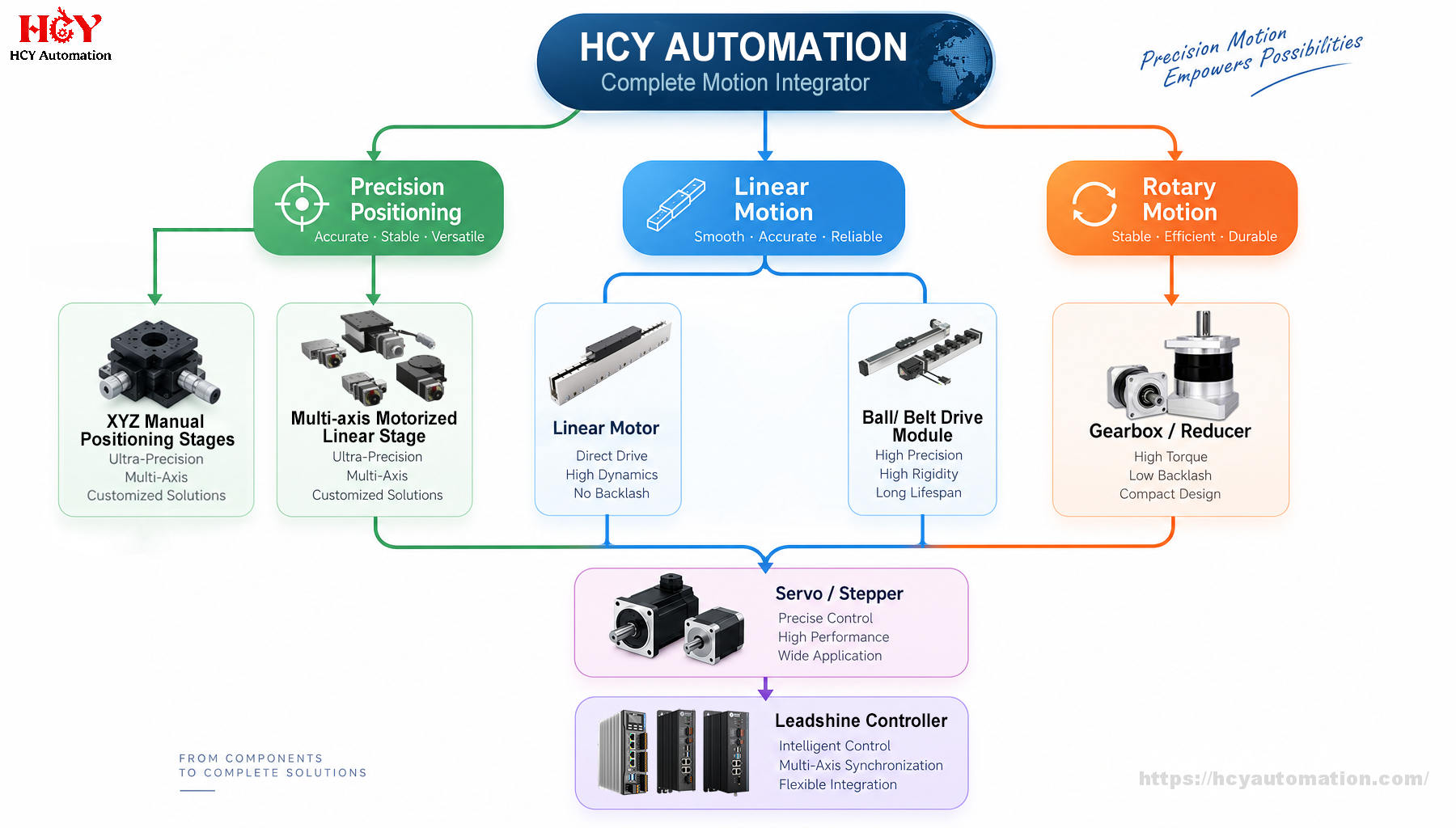
HCY-Your Complete Motion Integrator
HCY accepts customized variable pitch requirements. It is a precision motion solution designed for automated production systems, enabling synchronized spacing adjustment between multiple sliders, grippers, suction nozzles, or workstations. As a versatile industrial automation module, it is ideal for pick-and-place, assembly, sorting, packaging, semiconductor, electronics, and other automated applications.
| Model |
HCY-10-20-S9 Variable Pitch Module |
|---|---|
| Pitch Range |
10-40mm |
| Repeatability(mm) |
±0.02mm |
| Pitch Accuracy(mm) |
±0.15mm |
| Slider Height(mm) |
±0.1mm |
| Input Torque (N.m) |
0.8 or above |
| Original Sensor |
Optional |
| Drive Mode |
57 stepper motor.200w/400w servo motor |
| Maximum Usage Frequency |
120cp mmaximum |