- Motion Control
- Leadshine IDM Series Integrated Smart Motor with Driver | Compact, Plug-and-Play, High Acceleration, Easy Installation
- ISV2 Series Intelligent Integrated Low Voltage Servo Motor – CANopen & RS485 Communication For Automation Solution
- Integrated Closed-Loop Stepper Motor Series Stepper motor + Drive + Controller
- Leadshine 5-Phase Stepper Motors Low Vibration for Optical Communication Modules
- Leadshine 57CME Series Closed Loop Stepper Motor | High Torque Low Heat High Stability & Consistent Performance for Precision Machine
- Leadshine 57CM Series NEMA23 Stepper Motor | High Torque Low Heat High Consistency 0.6-3.1Nm
- Leadshine MC500 PLC | EtherCAT 32-Axis Motion Controller with Dual-Core, IEC 6 Languages for 3C, PV, Lithium Battery, Logistics & Packaging Automation
- Leadshine LC Series Large PLC Controller – CODESYS Platform 256-Axis EtherCAT Motion Controller
- R Series EtherCAT Remote I/O Modules for Flexible and Scalable Industrial Automation
- Siemens AC Servo Motors | High Precision Closed-Loop Motion Control, Synchronous & Induction Motors for Robotics, CNC Machine Tools, Packaging and Semiconductor Equipment
- Panasonic MINAS A6/A7 Series AC Servo Motor 50W-22kW – 23bit Encoder, 3x Overload, IP67, 3.2kHz Response, PLC Compatible for High-Precision Industrial Automation
- Delta Servo Systems Delta PLC
- Linear Motion Module
- Precision Ball Screw Linear Slide Module
- High Precision Ball Screw Slide Table Heavy Duty Linear Module for Industrial Automation CNC Equipment Parts
- Cleanroom Ball Screw Linear Module, Low Particle Release High Rigidity Dustless Linear Actuator for Semiconductor Medical Industrial Automation Equipment
- Industrial Gear Reducer
- High Precision Planetary Gear Reducer With Low Backlash, High Torque Density for Robotics & CNC Automation
- Helical Gear Reducer – Low Noise Heavy Duty Modular Design Industrial Gearbox with Easy Maintenance
- Industrial Modular Helical Gear Reducer – Smooth Transmission, Strong Overload Resistance & Flexible Mounting, Suitable for Chemical, Textile & Heavy-Duty Equipment
- Robotic Arm
- Vision & Sensor Systems
- SICK Vision Sensor for High-Precision Machine High Accuracy Detection & Positioning for Smart Factories & Robotics
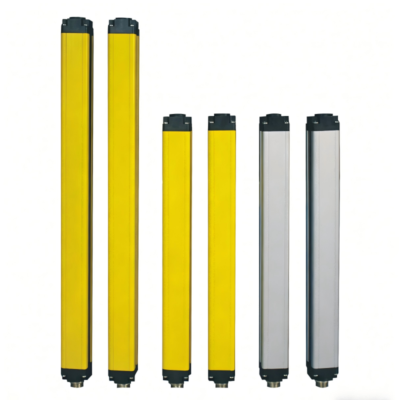
- SICK Photoelectric Sensor Safety Light Curtains – IP67 Safety Protection for Machine Guarding
- Hikvision CU Series Cost-Effective Industrial Camera Built-in ISP Algorithm with WDR GigE Vision & USB3.0 Interface for Industrial Machine Vision
- Pneumatic Components
- Airtac Air Source Treatment Three-in-One Unit Preparation Units Filter Regulator & Lubricator for Industrial Automation Systems
- AIRTAC Solenoid Valve | Direct/Semi-Direct/Pilot Operated, Leak-Proof & Explosion-Proof DN50, Industrial Fluid Control for Automation, Chemical & Mechanical Piping
- Pneumatic Slide Table Cylinder – ±0.01mm Precision Compact Integrated High Rigidity Durable for Automation
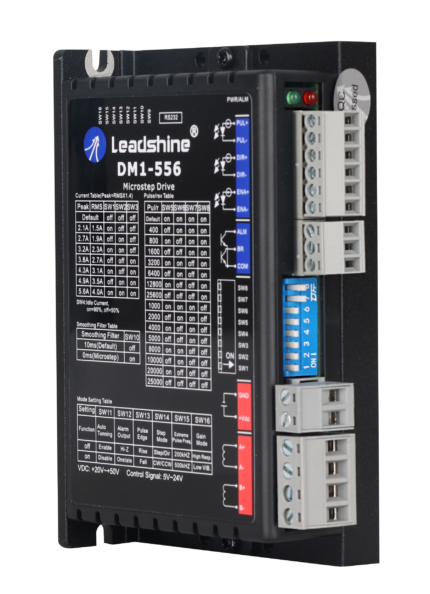
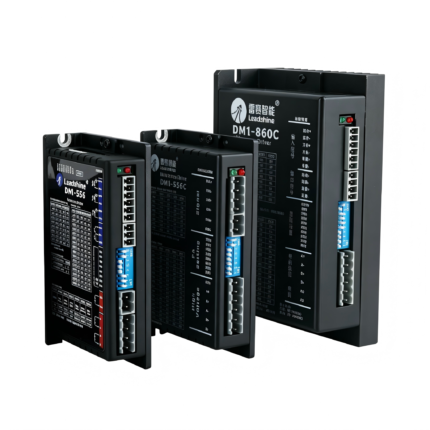
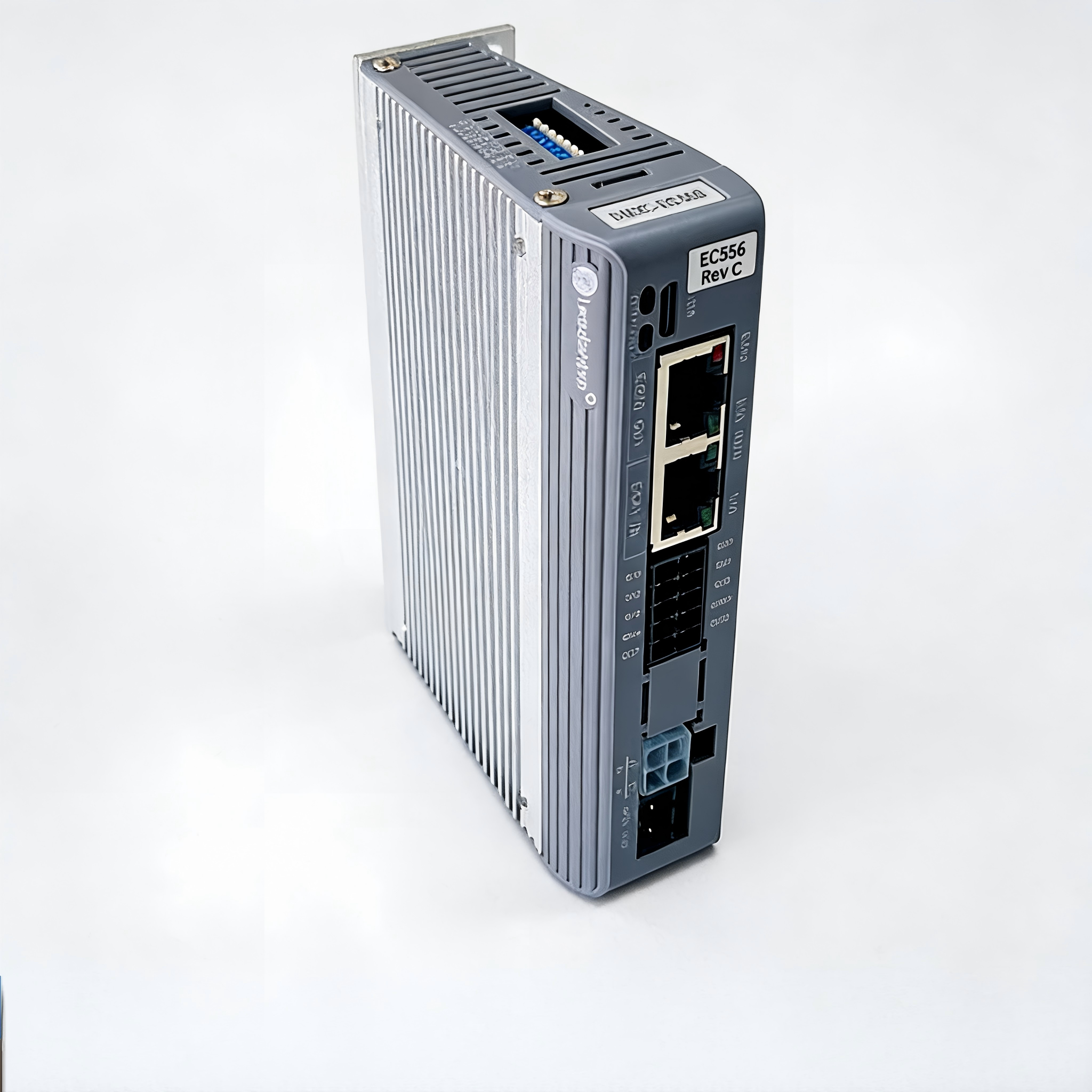
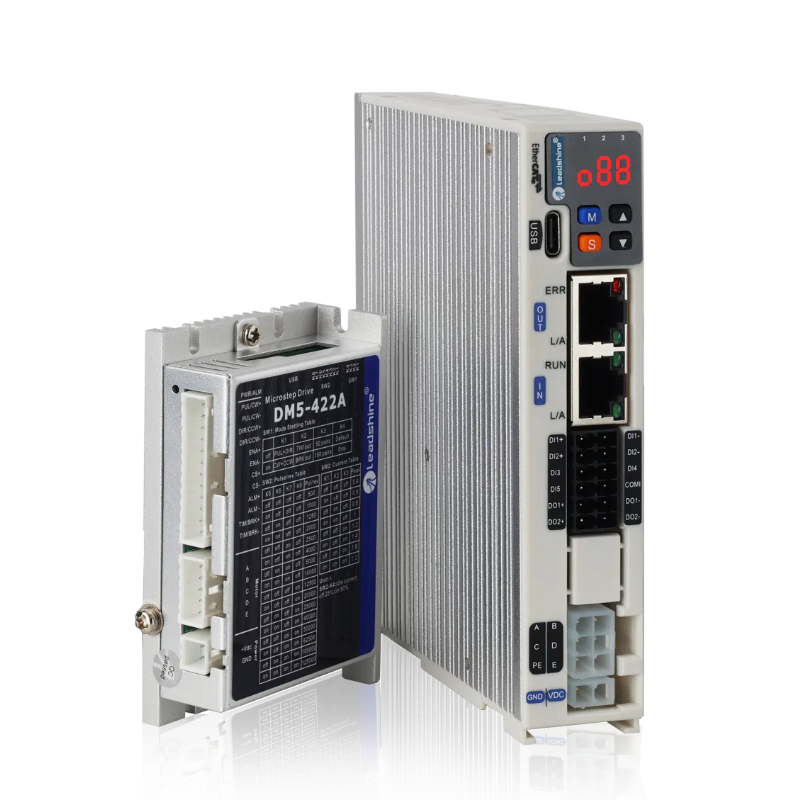
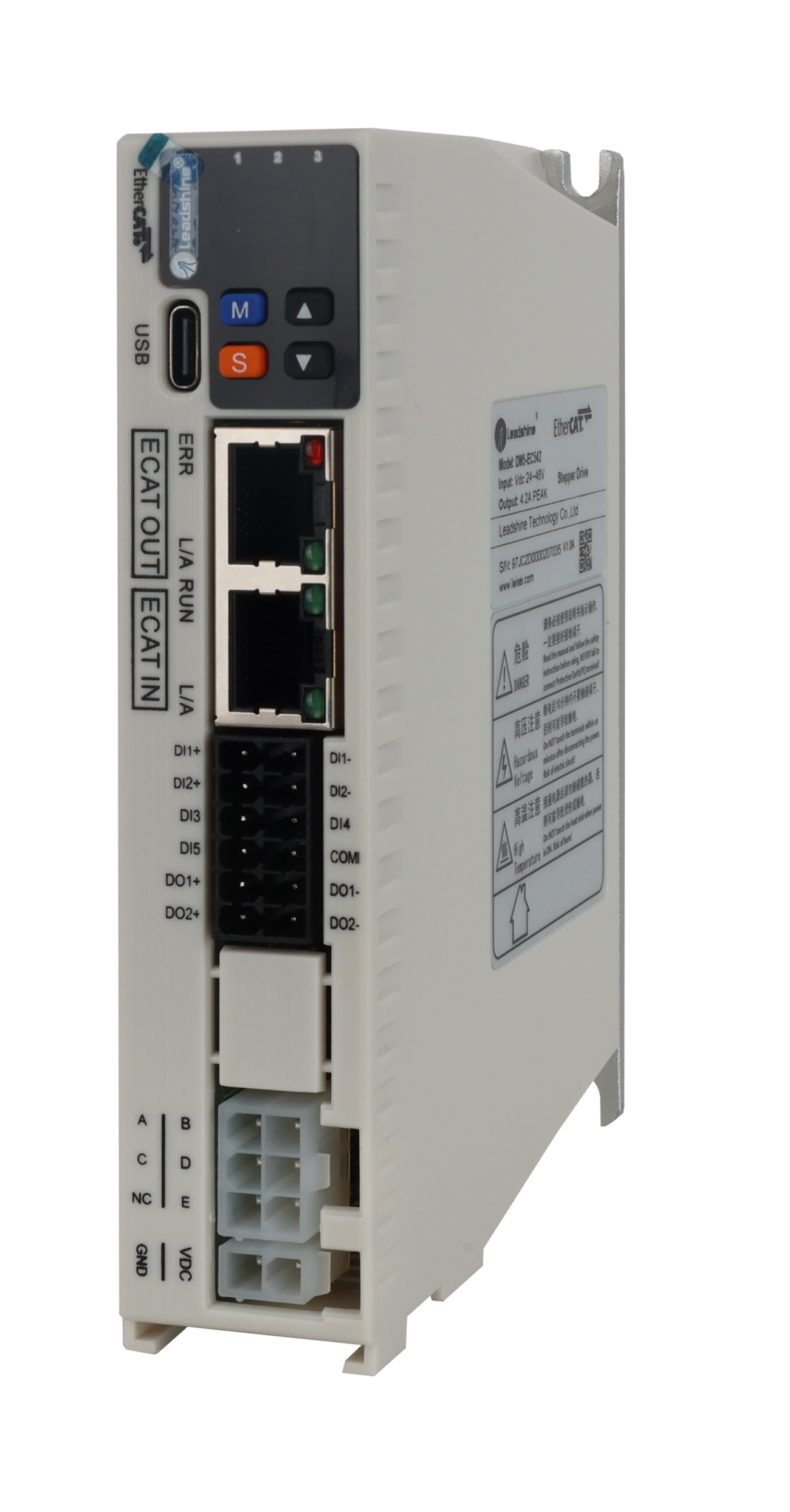
Leadshine DM3C Series EtherCAT Bus Stepper Driver
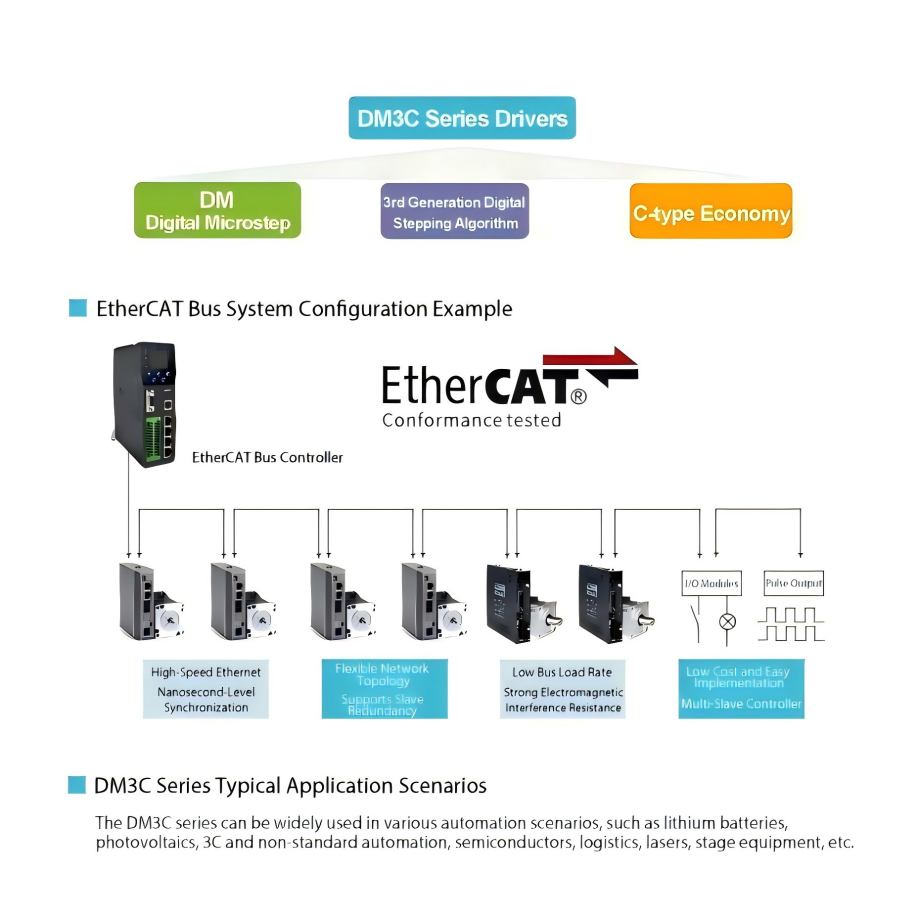
Built upon the stable foundation of DM3E series, Leadshine DM3C is our cost-effective high-speed EtherCAT bus stepper driver optimized for simpler operation and lower overall deployment cost. Compliant with CoE (CANopen over EtherCAT) & CiA402 standards with 100Mbps bus speed and multiple motion control modes, it drastically reduces cabinet space, system complexity and total expenses for multi-axis automation networks.
Independently developed by Leadshine, the DM3C series is an economical high-speed fieldbus digital stepper driver upgraded from the proven DM3E platform. It inherits outstanding operational stability while focusing on user-friendly commissioning and cost advantages for mainstream automation equipment.
This series fully supports CoE (CANopen over EtherCAT) protocol conforming to CiA402 international standard, delivering 100Mbps high-speed bus transmission to enable real-time motion control and synchronous data exchange for multi-axis stepping systems.
Adopting mature, stable EtherCAT industrial bus architecture, DM3C effectively downsizes control cabinets, cuts system wiring costs and simplifies overall system layout, perfectly catering to mass-production automated equipment with moderate precision demands and strict budget control.
Comparison: Bus Driver VS. Pulse Driver (Stepper / Servo Motion Control)
| Comparison: Bus Driver VS. Pulse Driver (Stepper / Servo Motion Control) | ||
| Comparison Category | Bus Driver (Fieldbus / EtherCAT) | Pulse Driver (Pulse & Direction) |
| Definition | A drive that receives motion commands via an industrial fieldbus network (e.g., EtherCAT, PROFINET, RTEX) and controls the motor accordingly. | A drive that converts pulse/direction signals into motor motion; each pulse corresponds to one step or a defined angular increment. |
| Working Principle | The motion controller sends digital command frames over the bus; the drive decodes the frames and regulates current, position, velocity, or torque in real time. | The controller outputs pulse trains (STEP) and a direction signal (DIR); the drive counts pulses and drives the motor by adjusting pulse frequency and duty cycle. |
| Control Modes Supported | CSP (Cyclic Synchronous Position), PP (Profile Position), PV (Profile Velocity), HM (Homing), torque mode — all configurable over the bus (CiA 402 compliant). | Primarily position control via pulse count; velocity control via pulse frequency; limited or no built-in torque/force control. |
| Multi-Axis Capability | Excellent — one bus master can synchronize dozens of axes over a single cable; ideal for coordinated multi-axis motion. | Limited — each axis requires a dedicated pulse output channel; adding axes increases controller I/O cost and wiring. |
| Communication / Transmission Rate | High-speed real-time bus, typically 100 Mbps (EtherCAT); deterministic cycle time down to microseconds. | Pulse frequency typically up to 200 kHz – 4 MHz depending on controller; no data feedback channel by default. |
| Wiring Complexity | Low — daisy-chain or star topology with a single Ethernet cable; reduced cabinet space and labor cost. | High — each axis needs separate STEP/DIR wires, plus limit/home/enable signals; more terminals and longer cabling. |
| Feedback & Diagnostics | Rich — real-time position, velocity, current, temperature, fault codes and status are all readable back from the drive over the bus. | Basic — typically only alarm/ready discrete outputs; limited run-time data visibility without extra wiring. |
| Positioning Precision | High — closed-loop control with encoder feedback transmitted over the bus; supports high-resolution encoders. | Good for open-loop stepping; precision depends on pulse resolution and micro-stepping; prone to step loss without encoder. |
| Speed & Dynamic Response | Fast acceleration, high maximum speed, excellent dynamic performance due to closed-loop current regulation. | Stable speed control and good dynamic performance at low-to-medium speeds; limited at very high speeds. |
| Vibration & Noise | Lower vibration and acoustic noise thanks to closed-loop current control and advanced anti-resonance algorithms. | Can exhibit resonance and noise at certain speeds; requires tuning or dampers; micro-stepping helps smooth motion. |
| Flexibility & Scalability | High — parameters, I/O mapping and control modes are software-configurable; easy to expand or reconfigure axes. | Lower — configuration mostly via DIP switches or dedicated software; hardware changes often needed for expansion. |
| System Cost | Higher per-drive cost, but lower total system cost in multi-axis setups (fewer I/O modules, less wiring). | Lower per-drive cost; cost-effective for single-axis or simple machines, but rises with axis count due to I/O and wiring. |
| Reliability & Risk | A bus communication fault can affect multiple axes simultaneously; requires robust network design and redundancy planning. | Each axis is electrically independent; a single-axis fault does not propagate to other axes. |
| EMI / Electromagnetic Interference | Lower EMI due to digital differential signaling (Ethernet); standardized shielding reduces noise. | Higher EMI from high-frequency pulse trains; often requires shielded cables and filters for clean operation. |
| Typical Applications | Semiconductor equipment, lithium battery production, photovoltaic, 3C electronics, CNC, robotics, packaging, high-end automated production lines. | Labeling machines, conveyors, simple X-Y tables, small CNC, engraving, low-cost automation, single-axis positioning. |
| Best Suited For | Multi-axis synchronized systems requiring high precision, real-time control, remote diagnostics and scalable architecture. | Simple, cost-sensitive single-axis or low-axis-count applications where pulse control is sufficient and wiring is manageable. |
| Conclusion: Both bus and pulse drivers play essential roles in industrial motion control. Bus drivers offer superior flexibility, multi-axis synchronization and diagnostics, making them ideal for complex, high-precision automated systems. Pulse drivers provide a simple, cost-effective and stable solution for single-axis or low-axis-count applications. Selection should be based on control architecture, required precision, number of axes, budget and long-term scalability. | ||
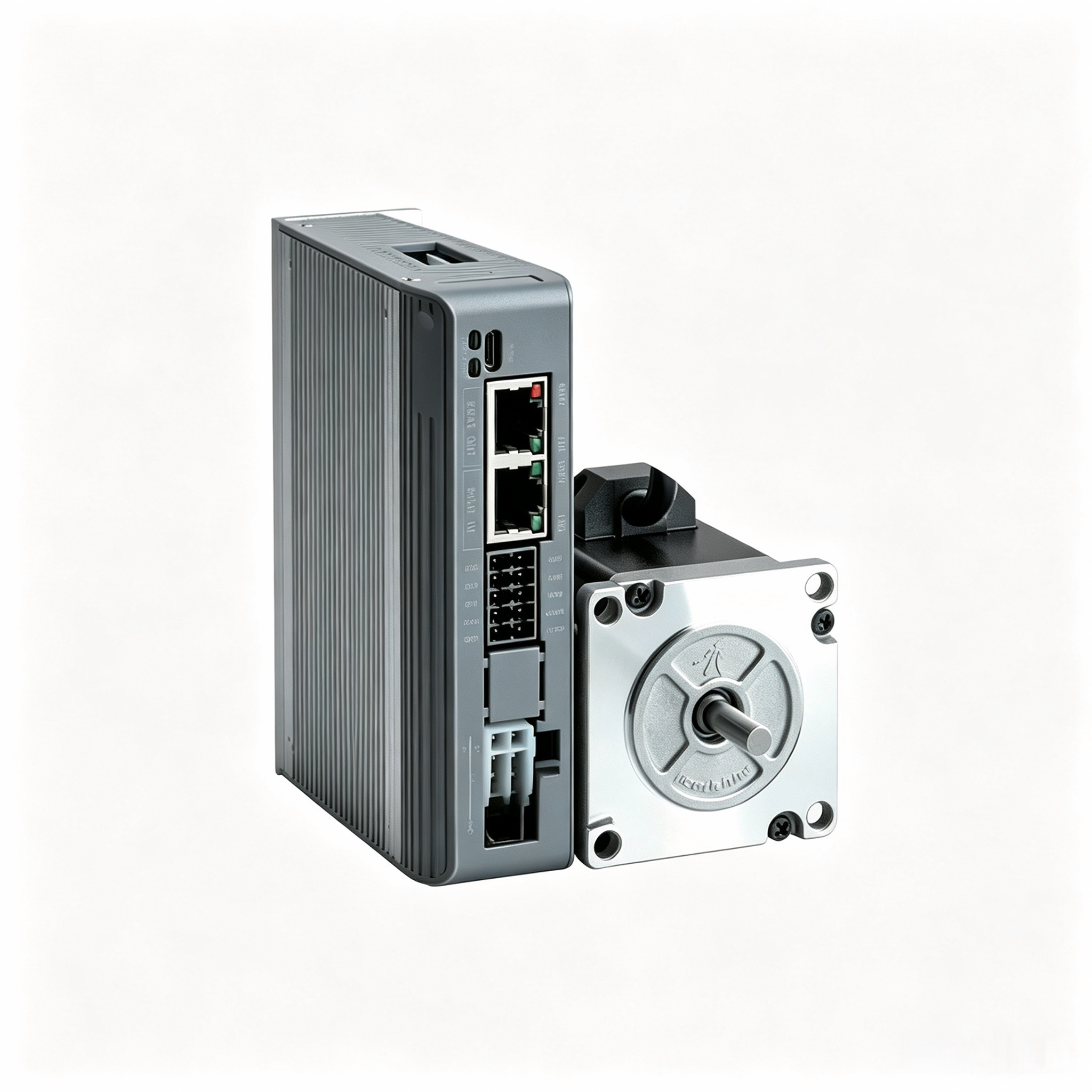
Core Advantages
- Standard EtherCAT & CoE Protocol Support: Compliant with CoE (CANopen over EtherCAT) and CiA402 drive profile, ensuring seamless integration with most EtherCAT masters on the market
- Multiple Control Modes: Supports CSP (Cyclic Synchronous Position), PP (Profile Position), PV (Profile Velocity), and HM (Homing) modes for versatile motion control requirements
- Configurable I/O Interfaces: Provides configurable alarm and position arrival output interfaces for flexible system integration
- Optocoupler Isolated Inputs: High anti-interference capability to ensure stable operation in harsh industrial environments
- Adaptive Vibration Suppression: Different anti-vibration strategies for low and medium speeds ensure smooth operation across the entire speed range
- Built-in Microstepping Algorithm: Achieves high microstepping performance with low microstepping control commands for precise and quiet motion
- Efficient Heat Dissipation: Low heat generation design enhances reliability and extends product lifespan
- Step-Loss Prevention: Advanced control algorithm eliminates step loss for consistent positioning accuracy
- Strong Acceleration Capability: Rapid acceleration/deceleration response for dynamic motion sequences
- Comprehensive Protection Functions: Overvoltage, overcurrent, and thermal protection for maximum system safety
- USB Debugging Port: Easy parameter configuration and monitoring via USB connection to a PCCore Advantages
- 🔧 Enhanced Usability
- Plug-and-Play Integration: Seamless connection with mainstream EtherCAT masters (Omron, Panasonic, Keyence, etc.) for quick system deployment
- Simplified Wiring: Single bus cable replaces multiple signal wires, reducing installation time and costs by up to 70%
- Centralized Control: Unified parameter management and monitoring through the bus system improves operational efficiency
💰 Cost Optimization
- Economical Solution: Cost-effective alternative to servo systems without compromising performance
- Reduced Total Cost of Ownership (TCO): Lower maintenance costs due to high reliability and simplified wiring
- Space Saving: Compact design allows for dense installation, optimizing cabinet space utilization by up to 50%
⚡ High Performance & Reliability
- Real-Time Communication: 100Mb/s EtherCAT bus ensures deterministic data transmission with cycle times as low as 125μs
- Precision Motion Control: Microstepping technology (up to 256 microsteps) enables positioning accuracy down to 0.0015° for most stepper motors
- Stable Operation: Adaptive anti-vibration technology minimizes resonance issues common in stepper systems
- Robust Design: Industrial-grade components and protection features ensure reliable operation in demanding environments
🛠️ Flexible Configuration
- Multiple Control Modes: Switch between CSP, PP, PV, and HM modes to match specific application requirements
- CSP Mode: Ideal for high-dynamic applications requiring continuous position updates
- PP Mode: Perfect for point-to-point positioning tasks with trapezoidal velocity profiles
- PV Mode: Suitable for constant speed applications with adjustable acceleration/deceleration
- HM Mode: Simplifies homing sequences with multiple reference point options
- Customizable I/O: Configurable alarm and position arrival outputs for tailored system integration
- 🔧 Enhanced Usability
Application Industries
1. Lithium Battery Manufacturing
2. Solar Energy Production
3. 3C Electronics & Non-Standard Automation
4. Semiconductor & Laboratory Automation
5. Logistics & Material Handling
6. Laser Processing & Stage Equipment
7.General Industrial Automation
8. CNC machines and milling equipment
9. Pick-and-place robots
10. Packaging and labeling machines
11. Textile and printing machinery