
How Automation Components Work Together in an Automated Production Line?

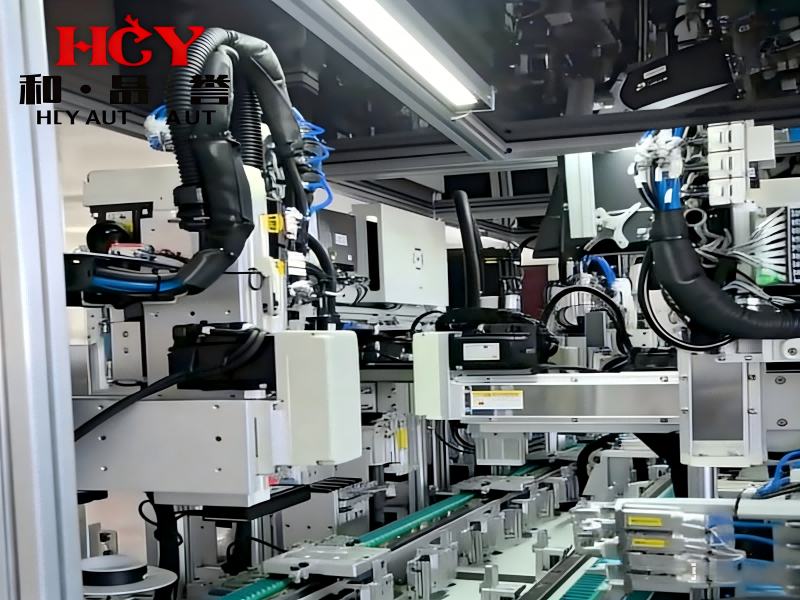
The Basic Working Principle of Automation Components
In an automated production line, automation components typically work together through a structured process that includes detection, control, driving, execution, and feedback. Each component has a specific role within the system.
1. Sensors Detect and Collect Data
The first step in the automation process is data detection. Industrial sensors are responsible for monitoring the production environment and collecting real-time information.
Common types of sensors used in automated production lines include:
Photoelectric sensors
Proximity sensors
Vision inspection systems
Temperature and pressure sensors
These sensors detect important information such as product position, material presence, and equipment status. The collected data is then transmitted to the control system for analysis.
2. PLC Controllers Process and Make Decisions
Once the data is collected, it is sent to the PLC (Programmable Logic Controller) or motion control system.
The PLC acts as the central control unit of the automated production line. Based on the programmed logic, it analyzes the sensor signals and determines the next action.
For example:
If a sensor detects that a product has arrived at a workstation, the PLC will trigger the next operation.
If a fault or abnormal condition is detected, the system can stop the machine automatically.
3. Servo Drives and Motors Provide Motion Control
After receiving commands from the PLC, the system sends control signals to servo drives or motor drives.
These drives regulate the operation of servo motors or stepper motors, controlling key motion parameters such as:
Speed
Direction
Position
Torque
High-performance motion control systems ensure that machines move precisely and smoothly throughout the production process.
4. Actuators Execute the Physical Operations
The controlled motors and actuators perform the actual mechanical actions on the production line.
Typical automation actuators include:
Robotic arms
Pneumatic cylinders
Conveyor systems
Pick-and-place machines
These components handle tasks such as product assembly, material handling, packaging, and transportation.
5. Feedback Systems Ensure Precision and Stability
Modern automated production lines often use feedback systems to maintain high accuracy.
Components such as encoders and feedback sensors continuously monitor the performance of motors and machines. The feedback data is sent back to the controller, allowing the system to adjust operations in real time. #ServoMotor #ServoMotorSolutions #PrecisionServoMotor #IndustrialServoMotor #CNCServoMotor #RoboticsServoMotor #AutomationServo #PackagingServoMotor#LinearModule#LinearStage#LinearActuator#LinearMotion
This creates a closed-loop control system, ensuring consistent product quality and stable production.
Typical Workflow of an Automated Production Line
The collaborative workflow of automation components can be summarized as follows:
Sensors detect information from the production environment
PLC controllers analyze and process data
Drives control motors and motion systems
Actuators perform mechanical operations
Feedback systems monitor and optimize performance