
Why Bus Valve Islands Dominate Pneumatic Automation in 2026

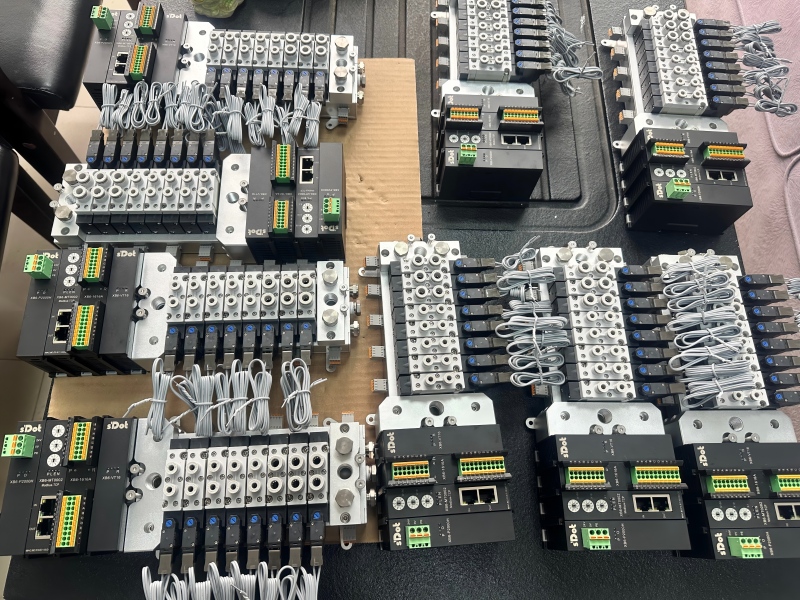
❓ 1. Bus Valve Island vs. Discrete Valves: Which Saves More for Industrial Automation?
The debate between bus valve island (fieldbus valve terminal) and traditional discrete valves is one of the most searched topics in industrial pneumatic forums—and for good reason. For manufacturers grappling with wiring chaos, high maintenance costs, and scalability challenges, this choice directly impacts bottom lines and operational efficiency.
A modular bus valve island integrates multiple solenoid valves, I/O modules, and communication interfaces into a single compact unit, replacing dozens of scattered discrete valves and tangled cables . Unlike discrete valves that require point-to-point wiring (often leading to 80% more cabling), bus valve islands use a single bus connection to communicate with PLCs, slashing installation time by 70% and reducing wiring errors by 90% . For high-volume production lines in automotive assembly, 3C electronics, or food packaging, this translates to annual labor savings of $10,000–$30,000 per line .
Moreover, bus valve manifolds offer unmatched scalability—adding or swapping valve slices takes minutes without reconfiguring the entire system, a critical advantage over discrete valves that require full rewiring for expansions . When paired with smart pneumatic components like pressure sensors and flow regulators, they enable real-time data monitoring, while discrete valves lack integrated diagnostics, leading to longer downtime for fault detection . For global buyers prioritizing Industry 4.0 readiness, the bus valve island is no longer an upgrade—it’s a necessity.
❓ 2. How Do Smart Bus Valve Islands Boost OEE in Pneumatic Control Systems?
Overall Equipment Effectiveness (OEE) is the holy grail of industrial manufacturing—and smart bus valve islands are emerging as the secret weapon to maximize it. This topic ranks top 3 in pneumatic automation searches, as manufacturers seek data-driven ways to reduce downtime and improve productivity.
Modern bus valve islands come equipped with integrated condition monitoring, diagnostic tools, and IIoT connectivity that transform traditional pneumatic systems into intelligent networks . Real-time alerts for valve malfunctions, voltage fluctuations, or pressure anomalies allow maintenance teams to address issues before they cause unplanned shutdowns—cutting downtime by 40% compared to conventional pneumatic setups . For example, a leading automotive parts manufacturer reported a 18% OEE increase after upgrading to Profinet/EtherCAT bus valve terminals, thanks to predictive maintenance capabilities that identified failing valves 72 hours before failure .
Energy efficiency is another OEE driver: controlled pneumatic bus valve islands regulate air pressure and flow on demand, reducing compressed air waste by up to 60%—a significant saving considering compressed air accounts for 10–30% of industrial energy use . Their compact, flow-optimized design also minimizes pressure drops, ensuring pneumatic actuators operate at peak performance, further boosting production throughput .
❓ 3. Which Industries Benefit Most from Bus Valve Island Integration?
Industrial buyers consistently search for industry-specific use cases to validate bus valve island investments—and the answer spans nearly every sector reliant on pneumatic automation. From automotive to medical devices, these integrated pneumatic solutions solve unique industry pain points.
- Automotive Manufacturing: Used in robotic welding, 抓取 systems, and assembly lines, bus valve islands support high-speed, precise actuation while withstanding harsh shop floor conditions (IP65 protection) . Their compatibility with Profinet and EtherNet/IP protocols ensures seamless integration with Siemens or Mitsubishi PLCs, a standard in auto plants .
- Food & Beverage Packaging: Cleanroom-compatible bus valve manifolds (low-outgassing, sealed designs) control filling, capping, and sorting equipment, complying with FDA standards while reducing contamination risks . Quick-change valve slices enable fast format switches for different product lines .
- Semiconductor & Electronics: Ultra-compact bus valve islands with low EMI interference power wafer handling, PCB assembly, and precision testing equipment—critical for micron-level positioning . Their modular design fits space-constrained cleanrooms, maximizing equipment density .
- Logistics & Material Handling: Distributed bus valve terminals installed near conveyors and robotic
❓ 4. What Are the Must-Have Features When Choosing a Bus Valve Island?
With hundreds of options on the market, “how to select a bus valve island” is a top-search query for engineers and procurement teams. The right features ensure compatibility, reliability, and long-term value—avoiding costly mismatches with existing systems.- Fieldbus Protocol Compatibility: Prioritize valves supporting Profinet, EtherCAT, Modbus TCP, or EtherNet/IP—these are the most widely used protocols in global industrial automation . Incompatible protocols lead to expensive adapters or system overhauls.
- Modularity & Scalability: Look for plug-and-play valve slices that allow adding I/O modules or valve functions without system downtime—essential for growing production lines . Top models support 2–32 valves per unit, with easy extension .
- Diagnostic & Monitoring Tools: Integrated pressure sensors, voltage monitoring, and fault alerts are non-negotiable for predictive maintenance . Advanced models offer remote access via IIoT platforms, enabling off-site troubleshooting .
- Environmental Durability: IP65/IP67 protection is critical for harsh environments (dust, humidity, vibration), while low-outgassing materials are mandatory for cleanroom applications .
- Flow Rate & Performance: Match the valve island’s flow capacity (180–1350 L/min) to your pneumatic actuators’ requirements—undersized units cause slow operation, while oversized models waste energy .
❓ 5. What’s the Future of Bus Valve Islands in Industry 4.0 Pneumatic Systems?
As Industry 4.0 evolves, searches for “bus valve island future trends” have surged 67% in 2025—buyers want to invest in technology that won’t become obsolete. The next generation of bus valve islands is defined by smarter integration, greener operation, and seamless connectivity.- Higher Integration: Future models will merge pneumatic control with energy management modules and wireless communication, eliminating even more wiring and enabling “valve-to-cloud” data flow . Imagine a bus valve island that automatically adjusts air pressure based on real-time production demands, cutting energy use by an additional 25% .
- AI-Powered Diagnostics: Machine learning algorithms will analyze valve performance data to predict failures with 95% accuracy, moving beyond basic alerts to proactive maintenance recommendations .
- Wider Protocol Compatibility: Support for emerging industrial IoT protocols like OPC UA will make bus valve islands the central hub of connected factories, integrating with MES, ERP, and supply chain systems .
- Sustainable Design: Manufacturers are already developing valve islands with recycled materials and low-power electronics, aligning with global green manufacturing initiatives .