
2026 Industrial Automation Breakthrough: How Variable Pitch Modules Are Redefining Smart Manufacturing?

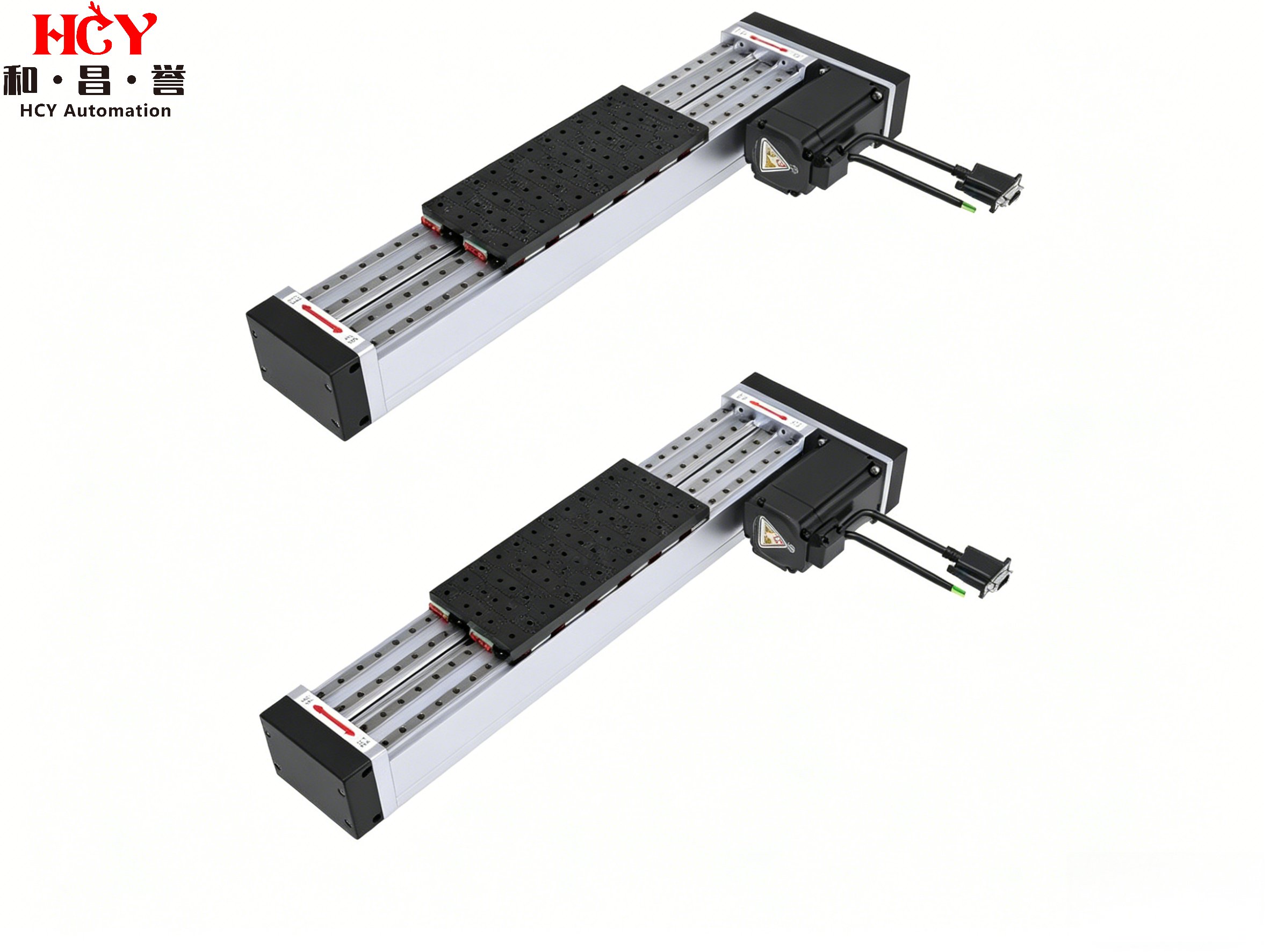
In the era of global smart manufacturing and high-precision production, variable pitch linear stages (also called variable pitch modules) have become irreplaceable core components, revolutionizing precision motion control across 3C electronics, semiconductor, lithium battery, and medical automation industries. Unlike traditional fixed-pitch linear modules, variable pitch stages integrate ultra-high precision, flexible spacing adjustment, and modular scalability—making them the top choice for manufacturers aiming to boost efficiency, reduce costs, and achieve intelligent production in 2026.
Three Core Performance Advantages of Variable Pitch Linear Stages
1. Ultra-High Precision & Stable Positioning: Micron-Level Accuracy for Critical Applications
Variable pitch linear stages are engineered for industry-leading precision, with repeat positioning accuracy ranging from ±0.01mm to ±0.025mm—outperforming standard linear motion systems. Powered by servo or stepper motors paired with precision ball screws, these stages feature closed-loop control via integrated encoders or linear scales, enabling real-time position feedback and error correction even at high speeds. The dual-screw design enhances load capacity and anti-deflection performance, while high-rigidity 6063-T5 aluminum profiles ensure structural stability (max deflection of 2.8mm at 600mm span, meeting L/200 deformation standards). This level of precision is non-negotiable for semiconductor wafer handling, 3C component assembly, and laser cutting—where micron-level errors risk product failure.
2. Flexible Pitch Adjustment & Multi-Slider Collaborative Control
A standout feature of variable pitch modules is their ability to support both equidistant and non-equidistant pitch changes, with a minimum pitch of 9mm and a typical range of 10–104mm. This flexibility eliminates the need for frequent mechanical retooling, adapting seamlessly to diverse workpiece sizes and production processes. Additionally, these stages can be configured with 6–18 sliders, enabling synchronous or independent motion via EtherCAT/CAN bus communication (spacing error ≤0.05mm). Ideal for multi-station automated lines—such as mobile phone lens arrangement, lithium battery cell sorting, and IVD pipetting—this collaborative control significantly boosts production efficiency and line flexibility.
3. High-Speed Response & Durable, Low-Maintenance Design
Variable pitch linear stages deliver exceptional dynamic performance: no-load speeds up to 1–2m/s, full-load speeds of 230mm/s, and a fastest opening/closing cycle of just 2 seconds (including start/stop). Built for 24/7 industrial operation, they offer unmatched durability: 500,000 cycles without cracks under dynamic loads, 23% lower lifecycle maintenance costs than steel alternatives, and 100% recyclable aluminum construction. With an operating temperature range of -10°C to 60°C and protection levels up to IP67, these stages thrive in harsh environments—from cleanrooms to heavy-industry workshops.
2026 Key Trends: Variable Pitch Modules Shaping the Future of Automation
As industrial digital transformation accelerates, variable pitch linear stages are at the forefront of three defining trends:
1. AI & IoT Integration for Smart Motion Control
In 2026, smart variable pitch modules will increasingly integrate AI motion control algorithms and IoT connectivity. AI optimizes motion trajectories to reduce vibration and enhance precision, while cloud-based monitoring enables remote diagnostics, predictive maintenance, and adaptive parameter adjustment. This transforms traditional mechanical modules into interconnected smart components, powering data-driven decision-making in smart factories.
2. Miniaturization & Lightweight Design for Compact Equipment
Driven by the miniaturization of 3C, medical, and semiconductor devices, 2026 will see miniature variable pitch linear stages (some as narrow as 50mm) that maintain ultra-high precision while reducing footprint and weight. Lightweight aluminum structures and optimized mechanics lower inertia, further improving dynamic response and energy efficiency—perfect for compact automated equipment and precision instruments.
3. Modular Customization for Industry-Specific Needs
Global manufacturers demand tailored automation solutions, and variable pitch modules excel in modular design. In 2026, users can customize travel lengths (e.g., 500mm), drive types (servo/stepper), installation orientations (horizontal/vertical), and protection levels to match unique application requirements. This modularity shortens development cycles, cuts costs, and enables rapid deployment across industries—from consumer electronics to new energy and medical automation.
Conclusion
Variable pitch linear stages are set to dominate 2026 industrial automation, combining ultra-high precision, flexible pitch adjustment, and smart connectivity to solve core manufacturing challenges. As smart factories evolve, these modules will become the backbone of efficient, high-quality production—empowering enterprises to stay competitive in a global market. Whether you’re optimizing a 3C assembly line, upgrading semiconductor handling systems, or building medical automation equipment, investing in advanced variable pitch modules is a strategic move to future-proof your operations.