
Linear Motor vs Ball Screw Module: Durability, Precision & Full Comparison

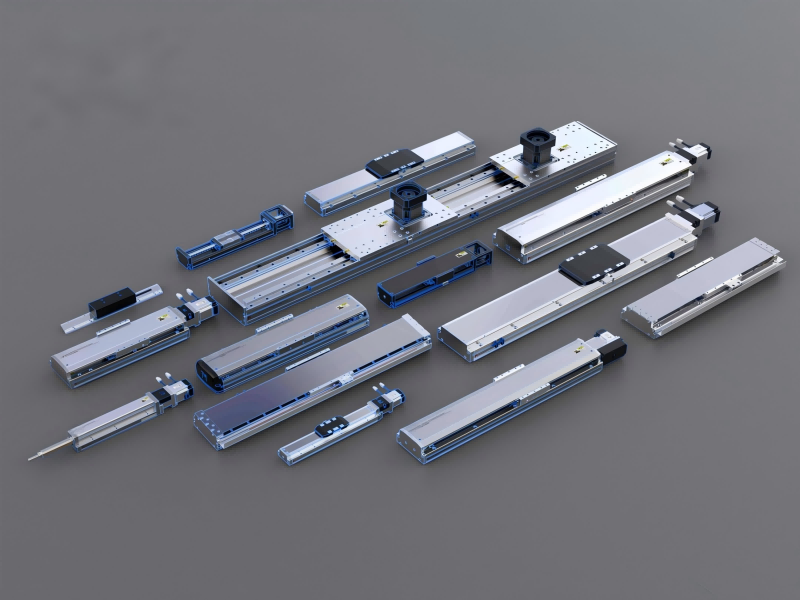
Linear Motor vs Ball Screw Module: Durability, Precision & Full Comparison
Lifespan Showdown: Durability Determined by Working Principle
Linear Motor (Non-contact Type)
It operates through electromagnetic levitation with zero physical friction and wear. Its theoretical service life can reach up to 100,000 hours.
Ball Screw Module (Wear-resistant Type)
It relies on mechanical cooperation between balls and screw threads. The typical service life is only 30,000 to 50,000 hours.
The Science Behind Wear & Loss Mechanism
- Mechanical Wear
Ball screw modules suffer continuous friction between balls and raceways, requiring regular grease replacement and maintenance.
- Electromagnetic Loss
Linear motors face potential magnet demagnetization and insulation degradation of coils under high-temperature operation.
- Environmental Impact
Dust accelerates ball screw abrasion; humid environments easily corrode the circuit system of linear motors.
Core Working Principle Difference
Ball Screw Module Principle
Linear Motor Module Principle
Precision Performance Comparison
- Linear Motor: Repeat positioning accuracy up to ±1μm, even sub-micron level (±0.001mm) with stable long-term precision.
- Ball Screw Module: Limited by mechanical backlash and long-term wear, repeat positioning accuracy is normally around ±0.01mm, and precision gradually declines with running time.
Speed & Dynamic Response
- Linear Motor Module: Free from mechanical inertia restriction, max speed reaches 5–10 m/s, acceleration up to 5–10G with ultra-fast dynamic response.
- Ball Screw Module: Restricted by critical screw speed, max speed is only 1–2 m/s, acceleration below 1G; high-speed operation easily causes vibration and temperature rise.
Lifespan & Daily Maintenance
- Linear Motor Module: Non-contact operation with no wearing parts. Service life exceeds 10 years, nearly maintenance-free with only regular cleaning required.
- Ball Screw Module: Contact transmission with wearing balls and screws; periodic lubrication and overhaul are mandatory, with relatively shorter overall lifespan.
Application Scenarios & Economic Analysis
Typical Applications
Linear Motor Module
Ideal for scenarios requiring ultra-high precision, high speed and cleanness: semiconductor packaging & inspection, precision laser cutting/welding, high-speed sorting, medical equipment, long-stroke and multi-axis complex motion systems.
Ball Screw Module
Suitable for medium speed, heavy load and cost-sensitive scenarios: metal plate cutting, heavy object handling, dispensing & pressing, general automation equipment.
Cost Comparison
- Initial Cost: Ball screw module has mature supply chain with much lower upfront investment and higher cost performance.
- Total Cost of Ownership (TCO): Although linear motor has higher purchase cost, its long lifespan, low maintenance and high production efficiency reduce long-term operating costs, making it more economical for 24/7 continuous production lines.
Selection Guide & Industry Future Trends
- Performance Priority: Choose linear motor for ultra-high precision, high speed and nanometer-level positioning.
- Load & Budget Priority: Ball screw module is reliable and cost-effective for heavy load, medium speed and limited budget.
- Environment & Maintenance: Linear motor excels in dust-free, vacuum and pollution-free environments; ball screw needs regular maintenance which may increase long-term labor costs.
Conclusion