Ball Screws & Linear Motion Systems: The Future of Automation in 2026 and Beyond
In the era of Industry 4.0 and smart manufacturing, linear motion systems have evolved from simple mechanical components to intelligent, connected, and ultra-precise motion solutions that form the backbone of modern automation. Among these technologies, ball screws continue to dominate the market with a 42.54% revenue share in 2024 while simultaneously undergoing transformative innovations to meet the demands of next-generation industrial applications. This article explores the latest trends shaping ball screw technology and their critical role in driving automation forward, providing actionable insights for engineers, manufacturers, and technology enthusiasts alike.
📈 Market Growth: Unprecedented Demand for Precision Motion
The global ball screw market is experiencing robust growth, with projections showing:
- 2026 market size: USD 1.65-24.5 billion (varies by segment)
- CAGR (2026-2032): 3.18%-7.24% across different analyses
- Key drivers: Industrial automation adoption (40%), semiconductor equipment demand (30%), robotics integration (25%), and precision machine tool upgrades (20%)
This growth is fueled by the electrification of everything trend, as industries replace hydraulic and pneumatic systems with energy-efficient electromechanical solutions that offer better precision, control, and sustainability.
🔬 5 Transformative Trends Reshaping Ball Screw Technology
1. Smart Integration: From Passive Components to Intelligent Assets
The most significant shift in ball screw technology is the integration of IoT connectivity and embedded sensors for real-time performance monitoring and predictive maintenance:
- 52% of leading manufacturers now offer smart linear motion systems with IoT capabilities
- Embedded sensors track temperature, vibration, load, and wear to predict failures before they occur
- AI-powered analytics reduce unplanned downtime by up to 40% while extending component lifespan by 25%
- Cloud connectivity enables remote diagnostics and performance optimization across global production networks
“The future of ball screws is not just about moving parts—it’s about moving data,” says Maria Chen, Senior Motion Control Engineer at HIWIN Technologies. “Smart ball screws are becoming the eyes and ears of automated production lines.”
2. Precision Evolution: From Micron to Sub-Nanometer Accuracy
As manufacturing requirements push the boundaries of precision, ball screw technology is making quantum leaps:
- Ultra-precision C0/C1 class (sub-micron to nanometer accuracy) products are now mainstream in semiconductor and aerospace applications
- Advanced grinding techniques achieve surface finishes of Ra 0.02 μm, reducing friction and improving repeatability
- Preload optimization through digital twin simulations eliminates backlash and enhances positioning accuracy by 30%
- Planetary roller screws are gaining traction in high-load applications, offering 3x higher load capacity than traditional ball screws with comparable precision
This precision revolution is critical for emerging technologies like 3D printing of electronics, advanced medical device manufacturing, and quantum computing component production.
3. Design Innovation: Miniaturization, Modularity, and Material Science
Ball screw design is evolving to meet the dual demands of space efficiency and performance:
- Miniaturization trends have reduced component sizes by 40% while maintaining load capacity, enabling integration into compact robotics and medical devices
- Modular designs allow for quick configuration changes, reducing machine downtime by 50% during retooling
- Advanced materials like carbon fiber-reinforced polymers and ceramic composites are replacing traditional steel, offering:
- 30% weight reduction
- 20% higher corrosion resistance
- 15% improved thermal stability
- Sealed and maintenance-free assemblies are now standard in 35% of new products, eliminating lubrication requirements and extending service intervals by 3x
4. Performance Enhancement: Speed, Load, and Energy Efficiency
Modern ball screws are breaking performance barriers while becoming more sustainable:
- High-speed designs now achieve linear velocities of 10 m/s with acceleration up to 5g, matching the performance of linear motors in many applications
- High-load ball screws with innovative thread profiles handle up to 1000 kN axial loads, replacing hydraulic systems in heavy machinery
- Energy efficiency improvements have reduced power consumption by 41% compared to traditional designs, aligning with global sustainability goals
- Hybrid drive architectures combine ball screws for high-load tasks with linear motors for high-speed operations, optimizing performance and cost
5. Application Expansion: From Traditional Industries to New Frontiers
Ball screws are expanding beyond their traditional strongholds into exciting new markets:
| Industry | Key Applications | Growth Drivers |
|---|
| Semiconductor & Electronics | Wafer handling, chip assembly, inspection equipment | 30% annual growth in advanced packaging technologies |
| Automotive | Battery manufacturing, EV assembly lines, precision welding | Electrification of vehicles and demand for lightweight components |
| Medical Devices | Surgical robots, diagnostic equipment, drug delivery systems | 9.01% CAGR driven by minimally invasive procedures |
| Renewable Energy | Wind turbine blade adjustment, solar panel positioning | Shift toward sustainable energy production |
| Aerospace | Satellite positioning systems, aircraft component manufacturing | Demand for lightweight, high-precision components |
⚙️ The Synergy of Ball Screws and Linear Motion Modules
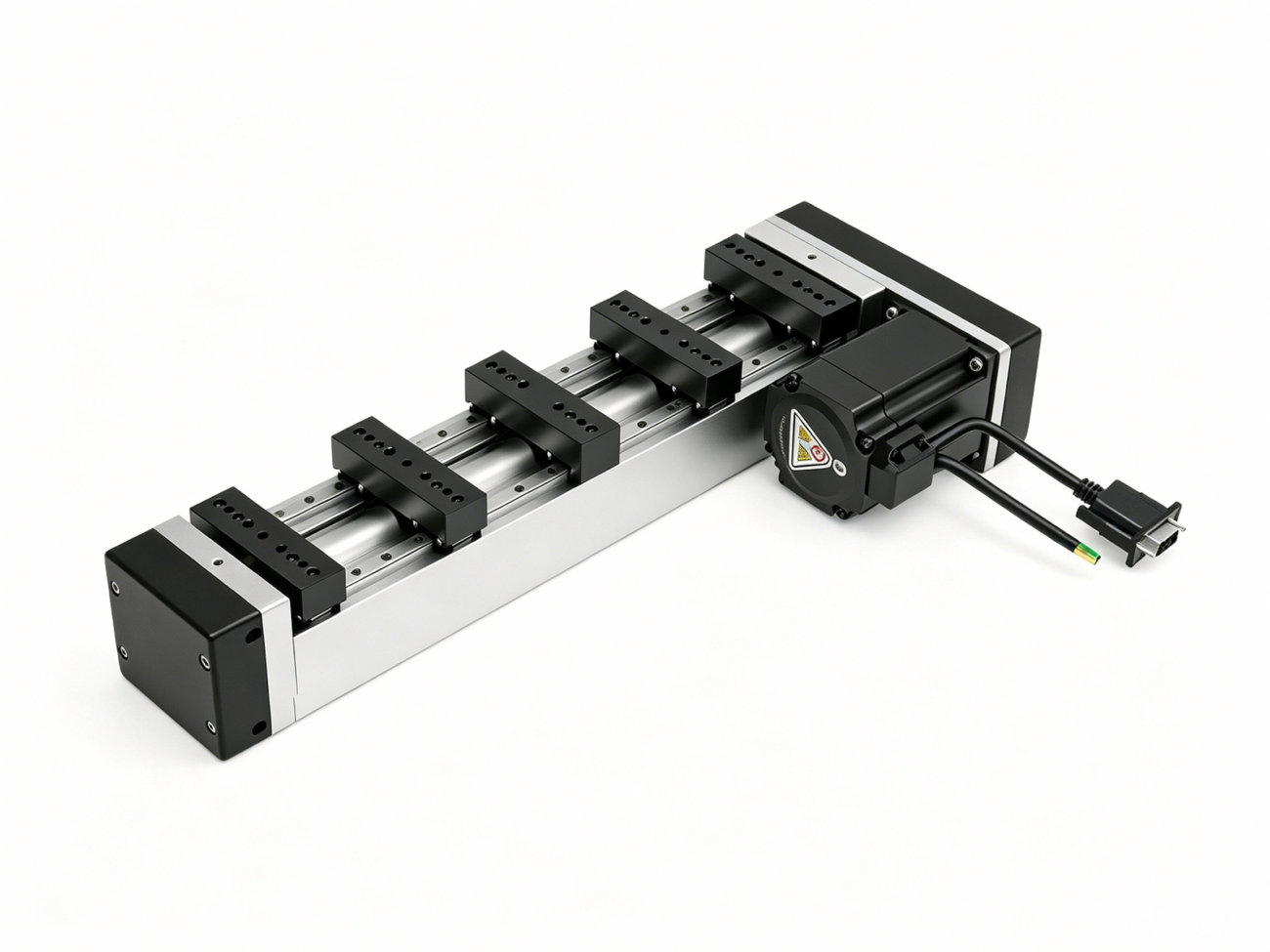
Linear motion modules—pre-assembled systems integrating ball screws, guides, motors, and controllers—are becoming the preferred solution for machine builders seeking:
- Plug-and-play integration reducing engineering time by 60%
- Guaranteed performance through pre-tested, optimized components
- Scalability from single-axis to multi-axis systems with minimal design changes
- Cost efficiency through volume production and standardized interfaces
The latest generation of linear motion modules incorporates AI-driven motion control algorithms that optimize performance in real time, adapting to varying loads, speeds, and environmental conditions. This self-optimizing capability ensures consistent precision and efficiency even in dynamic manufacturing environments.
🆚 Ball Screws vs. Linear Motors: Finding the Optimal Solution
While linear motors offer advantages in certain high-speed, high-acceleration applications, ball screws maintain their dominance in most industrial scenarios due to:
- Cost efficiency: 30-50% lower total cost of ownership compared to linear motors
- Higher load capacity: Particularly effective in applications exceeding 500 kg loads
- Superior energy efficiency at moderate speeds and loads
- Simpler integration with existing motion control systems
- Lower sensitivity to contamination in harsh industrial environments
The future lies in application-specific optimization rather than technology competition, with many manufacturers adopting hybrid approaches that combine the best of both technologies.
🚀 Future Outlook: What to Expect by 2030
Looking ahead, the ball screw and linear motion industry will be defined by:
- Digital Twin Integration: Every ball screw will have a virtual counterpart for real-time performance simulation and predictive maintenance
- Additive Manufacturing: 3D-printed ball nuts with optimized internal geometries will reduce weight by 50% while improving ball circulation efficiency
- Self-Healing Materials: Advanced coatings will automatically repair minor surface damage, extending service life by 40%
- Autonomous Calibration: AI-powered systems will automatically adjust preload and alignment to maintain precision despite wear and environmental changes
- Global Standardization: New ISO standards for smart linear motion systems will ensure interoperability across manufacturers
🎯 Key Takeaways for Industry Professionals
- Invest in smart ball screw technology to future-proof your automation systems and gain a competitive edge in predictive maintenance capabilities
- Consider modular linear motion systems to reduce design time and improve scalability for future production changes
- Evaluate hybrid drive solutions that combine ball screws and linear motors for optimal performance and cost efficiency
- Prioritize energy-efficient designs to reduce operational costs and meet sustainability goals
- Partner with suppliers that offer comprehensive support for integration, calibration, and maintenance of advanced motion systems
As automation continues to evolve, ball screws remain the backbone of precision motion control, adapting to new challenges and opportunities through constant innovation. By staying ahead of these trends, manufacturers can unlock new levels of productivity, precision, and sustainability in their operations.
Would you like me to add a “How to Choose the Right Ball Screw for Your Application” checklist (covering load, speed, precision, environment, and maintenance factors) to help readers make informed decisions?