
Servo Rigidity & Inertia Ratio Guide 2026: 7 Secrets to Resonance-Free Precision & 30% Faster Cycles for CNC & Robotics

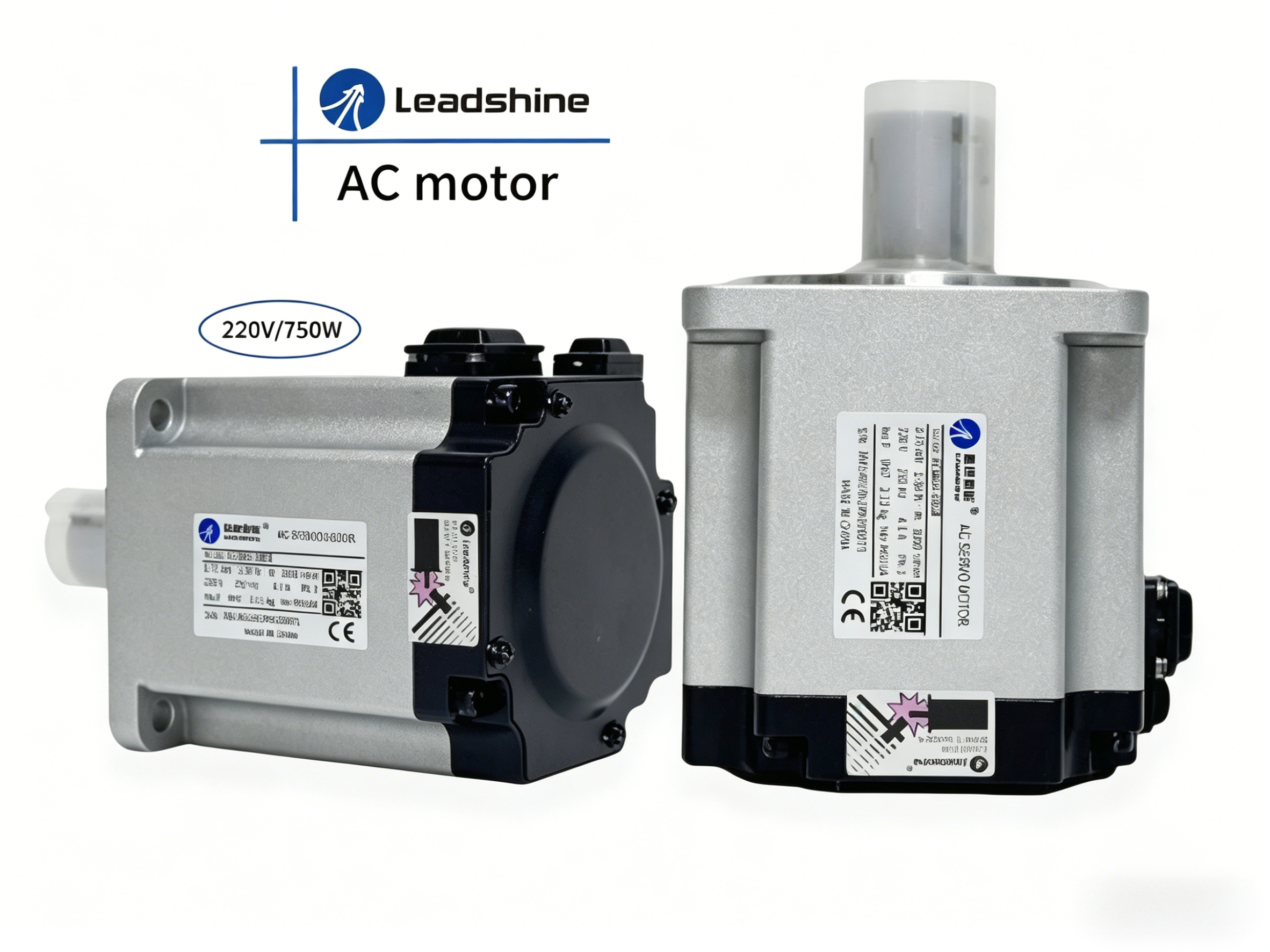
Servo Motor Rigidity vs Inertia Ratio: The Definitive Guide to Optimizing Dynamic Performance, Stability, and Precision (2026)
Master the critical relationship between servo rigidity and inertia ratio to eliminate resonance, boost response speed, and maximize control accuracy in your industrial automation systems.
⚙️ What Are Rigidity and Inertia Ratio?
Rigidity (also called stiffness) measures a servo system’s ability to resist external disturbances and maintain precise position control . It’s primarily adjusted through servo controller gains (proportional gain, velocity gain), with higher rigidity enabling faster response but increasing resonance risk .
Inertia Ratio (IR) is the mathematical relationship between load inertia (JL) reflected to the motor shaft and motor rotor inertia (JM):
IR = JL / JM
This ratio defines how well the motor can accelerate/decelerate the load and directly impacts system stability and dynamic performance .
🤝 The Critical Interplay: Rigidity × Inertia Ratio
While rigidity and inertia ratio are distinct parameters, their interaction determines your servo system’s ultimate performance:
| Inertia Ratio Condition | Effect on Rigidity | System Consequences |
|---|---|---|
| IR Too High (>10:1) | Reduces effective rigidity | Sluggish response, overshoot, oscillation, poor tracking |
| IR Well-Matched (≤3:1 for precision) | Enables safe high rigidity settings | Fast response, minimal overshoot, stable operation |
| Rigidity Too High with mismatched IR | Amplifies mechanical resonance | Violent 抖动,instability, potential damage |
| Flexible Mechanical Coupling | Limits usable rigidity regardless of IR | Elastic deformation, positioning errors, resonance |
Core Principle: Proper inertia matching is the foundation for utilizing high rigidity settings effectively . Without it, increasing rigidity often leads to instability rather than improved performance .
📉 How Inertia Ratio Impacts System Dynamics
1. Stability and Resonance Risk
- Higher inertia ratios lower the system’s natural frequency, restricting servo bandwidth
- When IR = 5 with flexible transmission, even moderate gains can cause severe vibration
- Direct-coupled (rigid) systems tolerate higher IR (up to 10:1), while flexible couplings (belts, rubber joints) require IR < 5:1
2. Dynamic Response Performance
- Small IR (<3:1): Ideal for high-speed, precision positioning (packaging, sorting, robotics)
- Medium IR (3:1–10:1): Suitable for general industrial applications (CNC, material handling)
- Large IR (>10:1): Results in slow acceleration, significant overshoot, and positioning lag
3. Rigidity Tuning Feasibility
- Rigid Connections: Permit higher gains even with IR up to 10:1
- Flexible Connections: Elasticity creates “non-rigid” behavior, making high rigidity settings counterproductive
🛠️ Engineering Best Practices for Optimal Performance
Recommended Inertia Ratio Ranges by Application
| Application Type | Maximum Inertia Ratio | Key Benefits |
|---|---|---|
| High-precision contouring (CNC machining, semiconductor) | ≤3:1 | Exceptional accuracy, minimal following error |
| High-speed positioning (pick-and-place, packaging) | ≤3:1 | Rapid acceleration/deceleration, short settling time |
| General industrial automation | ≤5:1 to 10:1 | Balanced performance and cost |
| Heavy load applications | >10:1 requires gearbox | Reduced reflected inertia (IR ∝ 1/G² where G = gear ratio) |
Step-by-Step Tuning Methodology
- Calculate Load Inertia: Accurately compute JL by summing all rotating components’ inertia, properly reflected through any transmission system
- For gearboxes: JL (reflected) = JL (actual) / G²
- For belt drives: Consider both pulley and load inertia
- Select Appropriate Motor: Choose a motor with JM that keeps IR within recommended ranges for your application
- Rigidity Adjustment Process:
- Start with conservative gain settings (low rigidity)
- Gradually increase proportional/velocity gains until minor resonance appears
- Add notch filters or adjust integral gains to suppress resonance
- Verify performance under actual load conditions
- Troubleshooting Resonance:
- If vibration occurs, first check mechanical connections (tightness, alignment)
- Evaluate transmission flexibility (consider rigid couplings where possible)
- Reassess inertia matching before reducing gains