- Motion Control
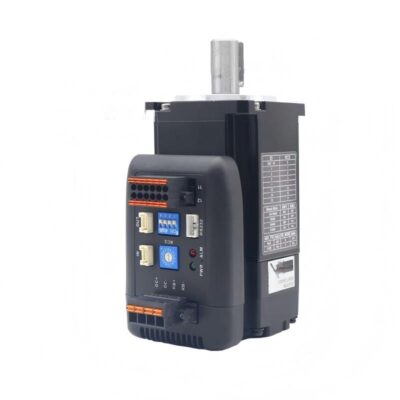
- Leadshine IDM Series Integrated Smart Motor with Driver | Compact, Plug-and-Play, High Acceleration, Easy Installation
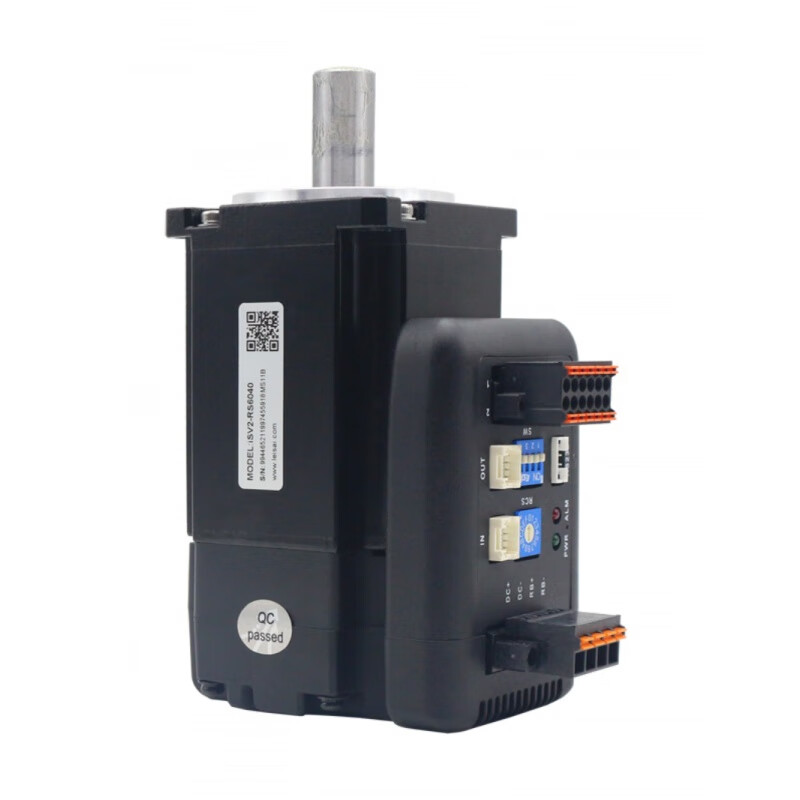
- ISV2 Series Intelligent Integrated Low Voltage Servo Motor – CANopen & RS485 Communication For Automation Solution
- Integrated Closed-Loop Stepper Motor Series Stepper motor + Drive + Controller
- Leadshine 5-Phase Stepper Motors Low Vibration for Optical Communication Modules
- Leadshine 57CME Series Closed Loop Stepper Motor | High Torque Low Heat High Stability & Consistent Performance for Precision Machine
- Leadshine 57CM Series NEMA23 Stepper Motor | High Torque Low Heat High Consistency 0.6-3.1Nm
- Leadshine MC500 PLC | EtherCAT 32-Axis Motion Controller with Dual-Core, IEC 6 Languages for 3C, PV, Lithium Battery, Logistics & Packaging Automation
- Leadshine LC Series Large PLC Controller – CODESYS Platform 256-Axis EtherCAT Motion Controller
- R Series EtherCAT Remote I/O Modules for Flexible and Scalable Industrial Automation
- Siemens AC Servo Motors | High Precision Closed-Loop Motion Control, Synchronous & Induction Motors for Robotics, CNC Machine Tools, Packaging and Semiconductor Equipment
- Panasonic MINAS A6/A7 Series AC Servo Motor 50W-22kW – 23bit Encoder, 3x Overload, IP67, 3.2kHz Response, PLC Compatible for High-Precision Industrial Automation
- Delta Servo Systems Delta PLC
- Linear Motion Module
- Precision Ball Screw Linear Slide Module
- High Precision Ball Screw Slide Table Heavy Duty Linear Module for Industrial Automation CNC Equipment Parts
- Cleanroom Ball Screw Linear Module, Low Particle Release High Rigidity Dustless Linear Actuator for Semiconductor Medical Industrial Automation Equipment
- Industrial Gear Reducer
- High Precision Planetary Gear Reducer With Low Backlash, High Torque Density for Robotics & CNC Automation
- Helical Gear Reducer – Low Noise Heavy Duty Modular Design Industrial Gearbox with Easy Maintenance
- Industrial Modular Helical Gear Reducer – Smooth Transmission, Strong Overload Resistance & Flexible Mounting, Suitable for Chemical, Textile & Heavy-Duty Equipment
- Robotic Arm
- Vision & Sensor Systems
- SICK Vision Sensor for High-Precision Machine High Accuracy Detection & Positioning for Smart Factories & Robotics
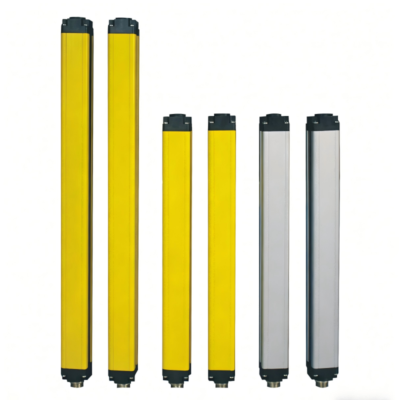
- SICK Photoelectric Sensor Safety Light Curtains – IP67 Safety Protection for Machine Guarding
- Hikvision CU Series Cost-Effective Industrial Camera Built-in ISP Algorithm with WDR GigE Vision & USB3.0 Interface for Industrial Machine Vision
- Pneumatic Components
- Airtac Air Source Treatment Three-in-One Unit Preparation Units Filter Regulator & Lubricator for Industrial Automation Systems
- AIRTAC Solenoid Valve | Direct/Semi-Direct/Pilot Operated, Leak-Proof & Explosion-Proof DN50, Industrial Fluid Control for Automation, Chemical & Mechanical Piping
- Pneumatic Slide Table Cylinder – ±0.01mm Precision Compact Integrated High Rigidity Durable for Automation
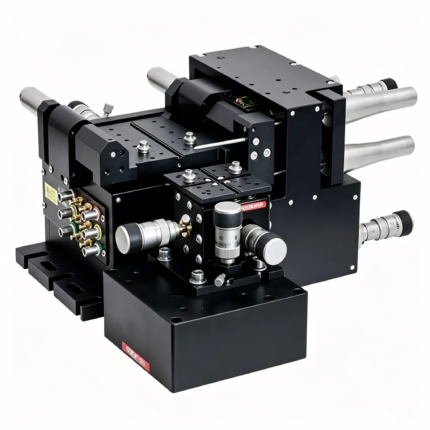
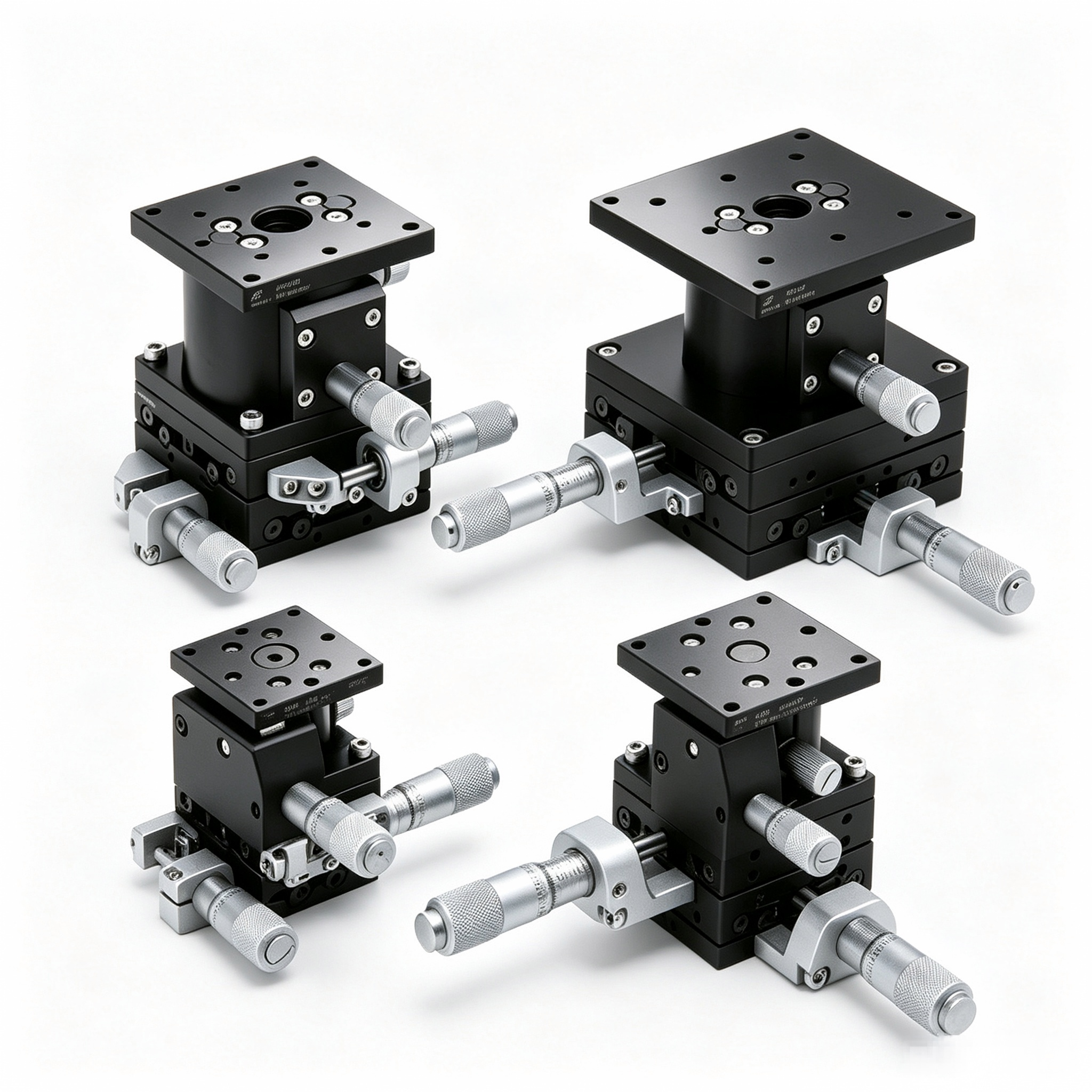
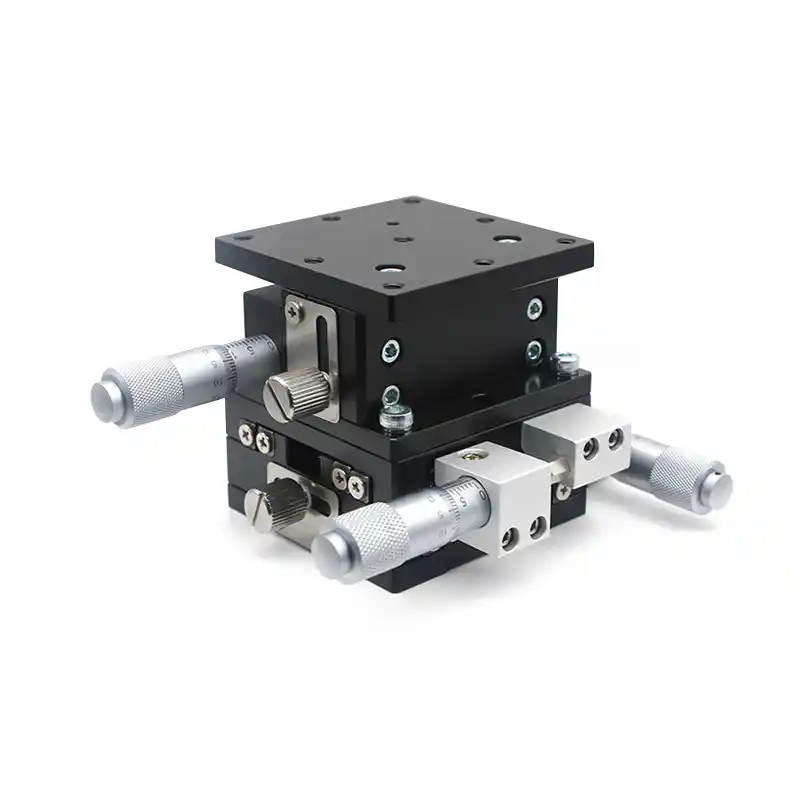
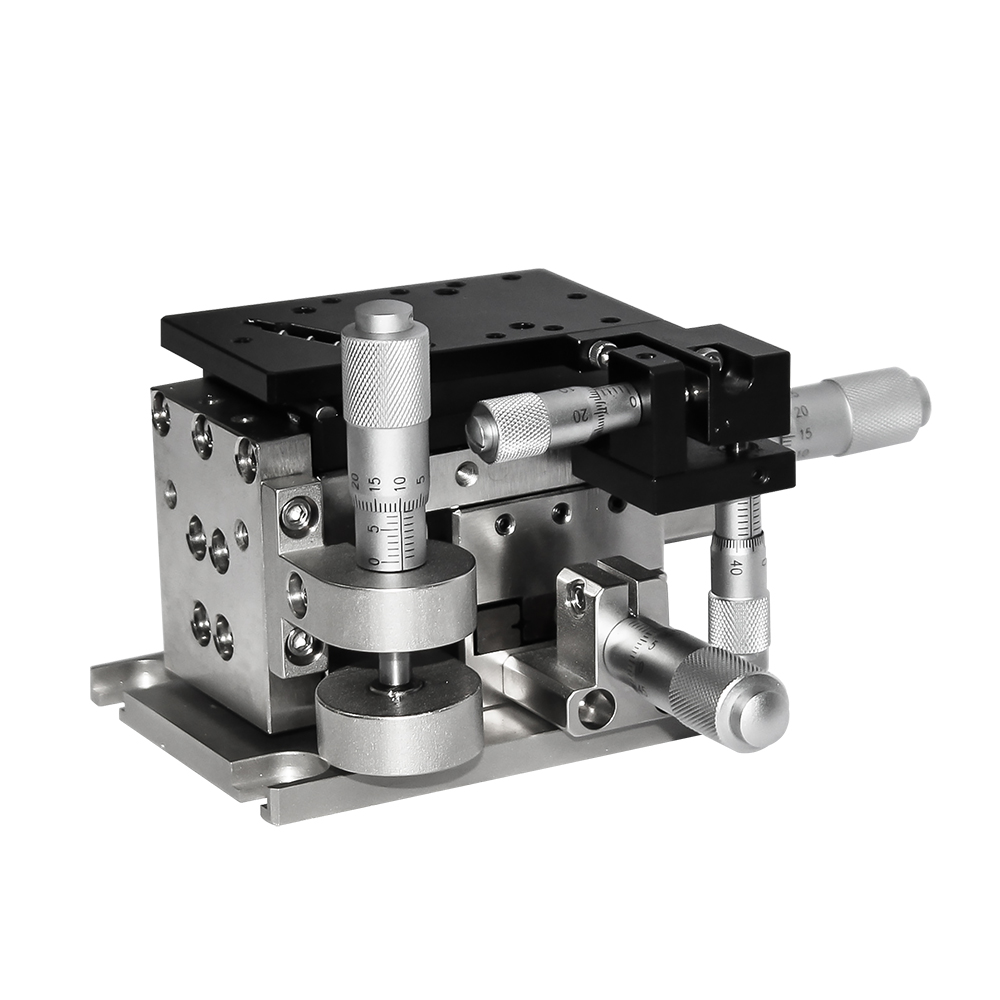
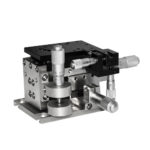
Manual linear translation stages deliver micron-level precise positioning with zero electromagnetic interference, ideal for optical calibration, fiber coupling and precision laboratory applications without power supply
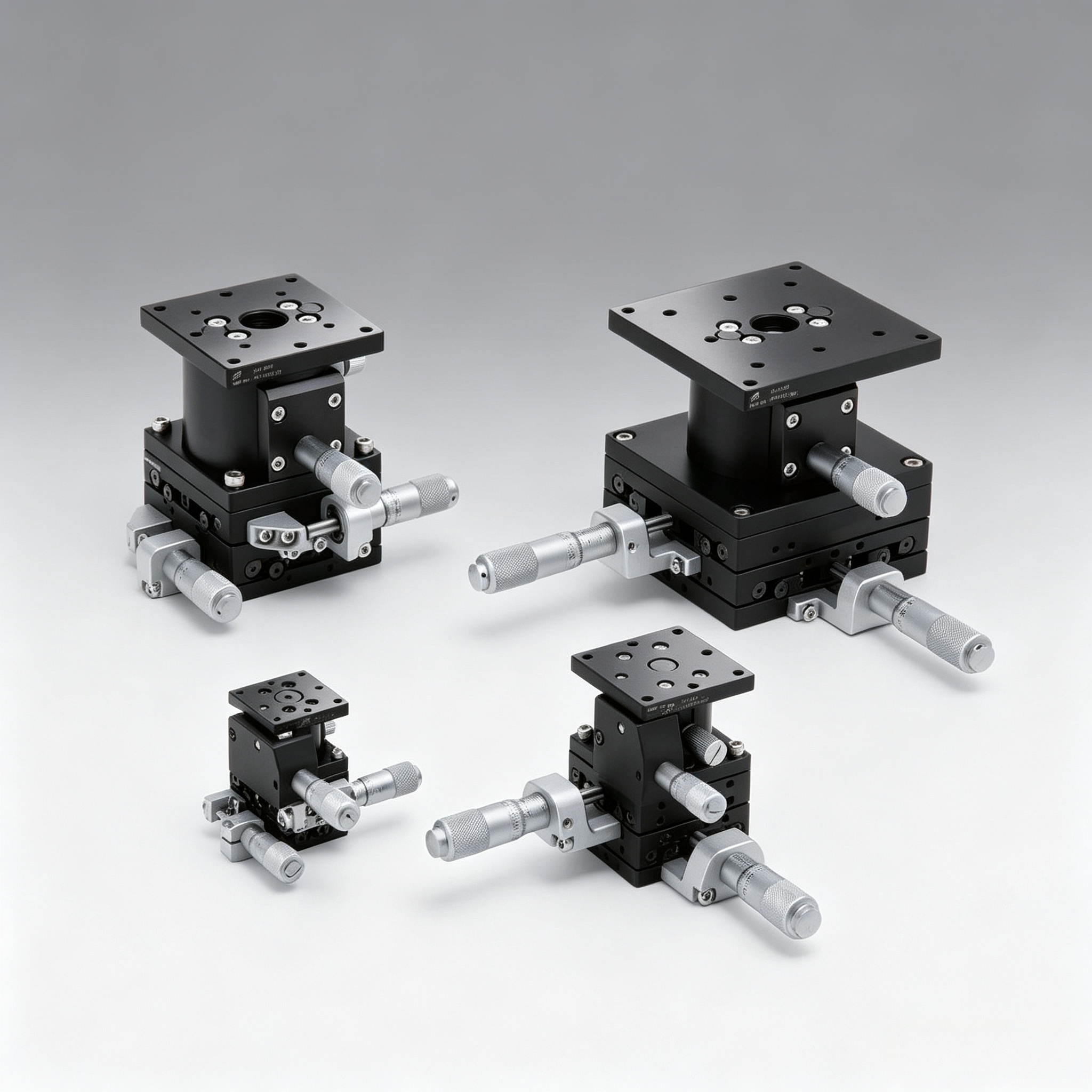
Manual linear stages are precision mechanical positioning modules designed for accurate linear displacement of objects in planar and spatial dimensions. Assembled with base, sliding block, guide rail, handwheel and locking mechanism, they adopt dovetail grooves or cross roller rails paired with fine-tuning lead screws to achieve ultra-precise manual adjustment.
Different from electric linear slides, these manual positioning platforms require no power input and generate no electrical noise, which will never disrupt faint laser signals during optical path calibration. Built upon high-precision machining and assembly craftsmanship, the slide runs steadily and backlash-free along the rails. Equipped with micrometer barrels and micrometer screws for tiny incremental displacement tuning, our stages boast compact size, easy integration and long-term operational stability.
Developed by HCY Automation, our multi-angle high-precision manual displacement stages serve as essential foundational motion components for fine positioning scenarios across numerous precision industries.
Core Advantages
- Zero Electromagnetic Interference
No circuit noise or electromagnetic radiation, perfectly protects weak laser signals, the top choice for optical path alignment and fiber coupling work.
- Micron-Level Ultra High Positioning Accuracy
Premium cross roller guides and fine pitch lead screws ensure backlash-free, smooth movement and subtle incremental adjustment.
- No Power Required & Easy Integration
Battery-free design, compact and lightweight structure, convenient to install and combine with other optical equipment.
- Solid & Durable Structure
Sturdy base + reliable locking device fixes position firmly to avoid offset after adjustment, outstanding long-running stability.
- Flexible Manual Fine Tuning
Handwheel plus micrometer head dual adjustment mode, simple operation, no complicated programming needed.
- Cost-Effective Solution
Lower cost than motorized stages, excellent value for static precision calibration without automated cycles.
Manual Linear Stage VS Motorized Linear Stage — Comparison
| Manual Linear Stage VS Motorized Linear Stage — Comparison | |||
| Comparison Dimension | Manual Linear Stage | Motorized Linear Stage | Best Suited For |
| Power Supply | No power required; fully hand-operated | Requires external power supply and motor driver | Manual: field / lab setups without power; Motorized: automated production lines |
| Electromagnetic Interference (EMI) | Zero EMI; no circuit noise, ideal for weak laser / fiber signals | Generates EMI and electrical noise that may interfere with sensitive optical signals | Manual: photonics, fiber coupling, optical alignment; Motorized: non-optical automation |
| Positioning Accuracy | Micron-level via micrometer screw / differential head; depends on operator skill | Sub-micron to nanometer repeatability with closed-loop encoder feedback | Manual: static precision calibration; Motorized: high-repeatability dynamic positioning |
| Control Method | Handwheel / micrometer manual adjustment; DIP or mechanical lock | Pulse / IO / bus control via PLC, motion controller or PC software | Manual: simple one-off adjustment; Motorized: programmable multi-axis motion |
| Automation Level | Manual only; no automated cycles | Fully automated; supports program recipes, batch cycles and remote control | Manual: R&D, prototyping, low-volume; Motorized: mass production, 24/7 operation |
| Motion Speed | Low; limited by manual turning speed | High; configurable velocity, acceleration and trapezoidal motion profiles | Manual: static alignment; Motorized: high-throughput pick & place, scanning |
| Cost | Low cost; simple mechanical structure, no electronics | Higher cost; includes motor, encoder, driver and controller | Manual: budget-sensitive labs / startups; Motorized: ROI-driven production |
| Footprint & Integration | Compact, lightweight, easy to stack and integrate into optical breadboards | Larger due to motor, coupling and cable management; requires wiring | Manual: space-limited optical benches; Motorized: cabinet / gantry systems |
| Programming Required | No programming; plug-and-play mechanical operation | Requires parameter tuning, motion programming and driver configuration | Manual: users without motion-control expertise; Motorized: engineering teams |
| Heat Generation | No heat generation during operation | Motor and driver generate heat; may require cooling in long-run scenarios | Manual: thermally sensitive optical experiments; Motorized: general automation |
| Response Time | Slow; depends on operator reaction and handwheel turns | Fast; millisecond-level response to control signals | Manual: non-time-critical setup; Motorized: real-time / high-cycle tasks |
| Load Capacity | Low to medium; constrained by manual drive torque and structure | Medium to high; motor torque supports heavier payloads | Manual: light optical components; Motorized: heavy fixtures / multi-axis stages |
| Repeatability | Moderate; operator-dependent, lower batch consistency | Excellent; closed-loop feedback ensures high batch-to-batch repeatability | Manual: single-point calibration; Motorized: repetitive manufacturing steps |
| Maintenance | Minimal; periodic lubrication of guide rail only | More maintenance; motor, encoder, driver and cabling require periodic check | Manual: long-life low-upkeep use; Motorized: scheduled maintenance programs |
| Typical Applications | Optical experiments, fiber coupling, laser alignment, university labs, semiconductor wafer manual fine-tuning, biomedical microscopy | Automated inspection, 3C assembly, laser engraving, PV / lithium battery production, semiconductor handling, CNC machining | Choose based on automation need, EMI sensitivity and throughput target |
| Ideal Use Case Summary | Precision static alignment where EMI-free, low-cost and compact manual tuning is prioritized | Dynamic, high-throughput, programmable positioning where speed and repeatability dominate | — |
Application Fields
precision manual linear stages are widely adopted in precision positioning industries worldwide:
- Optical Experiments & Laser Calibration
- Optical Fiber Coupling & Photonic Communication Equipment
- Semiconductor Wafer Fine Positioning
- Precision Industrial Inspection & Machining
- Biomedical Microscopy Sample Manipulation
- University Research & Teaching Laboratories
What is difference between different types of manual linear stages?
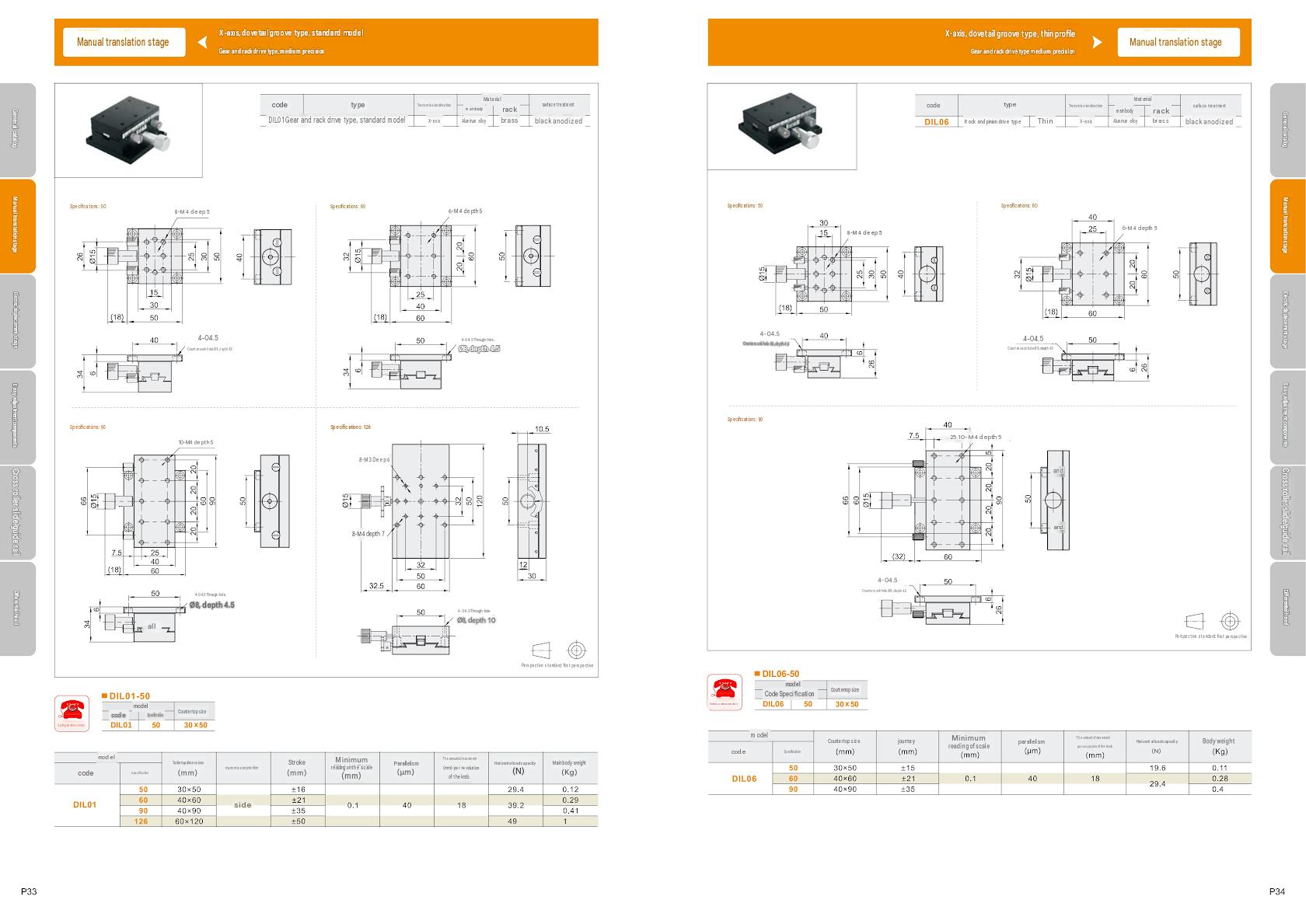
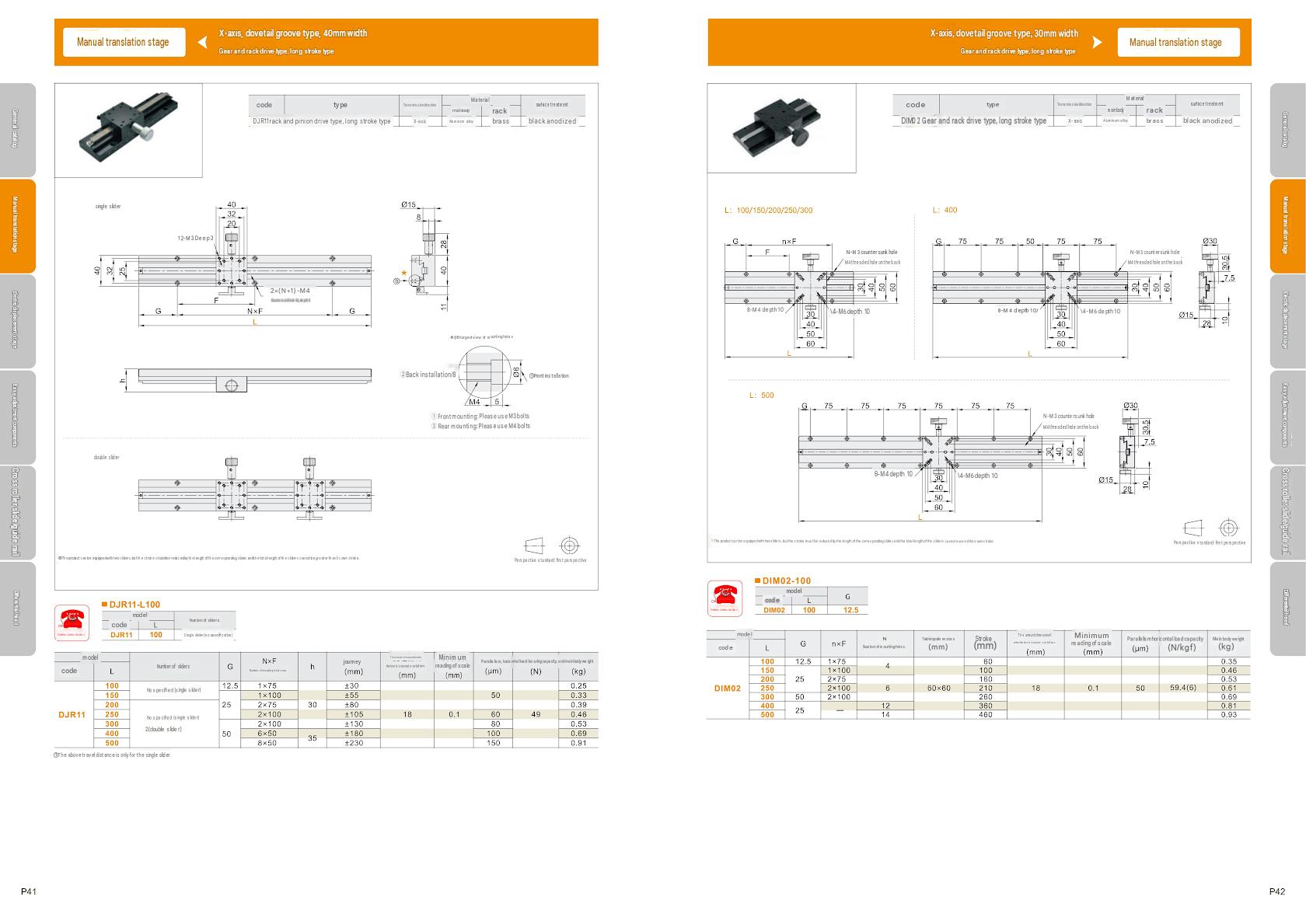
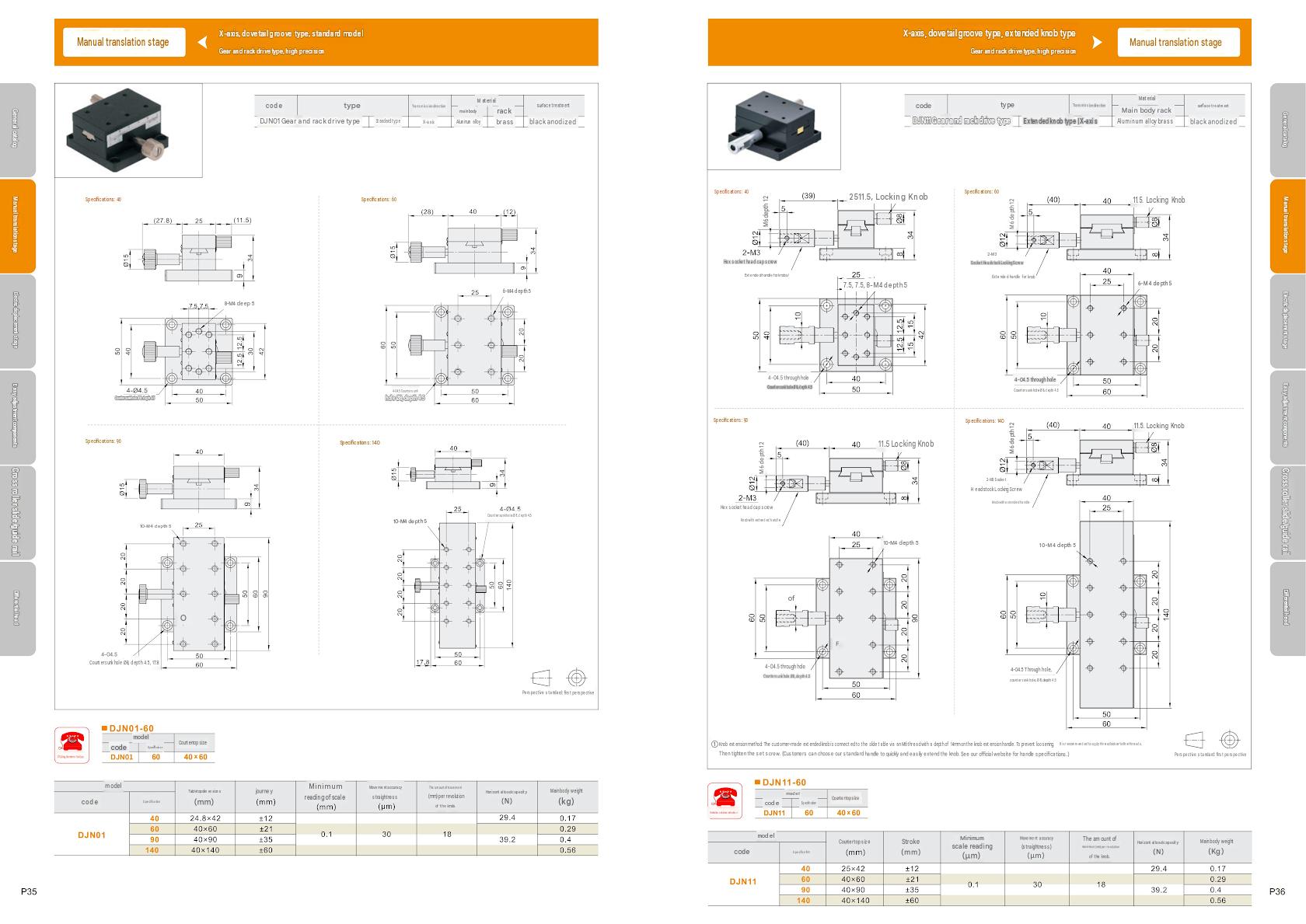
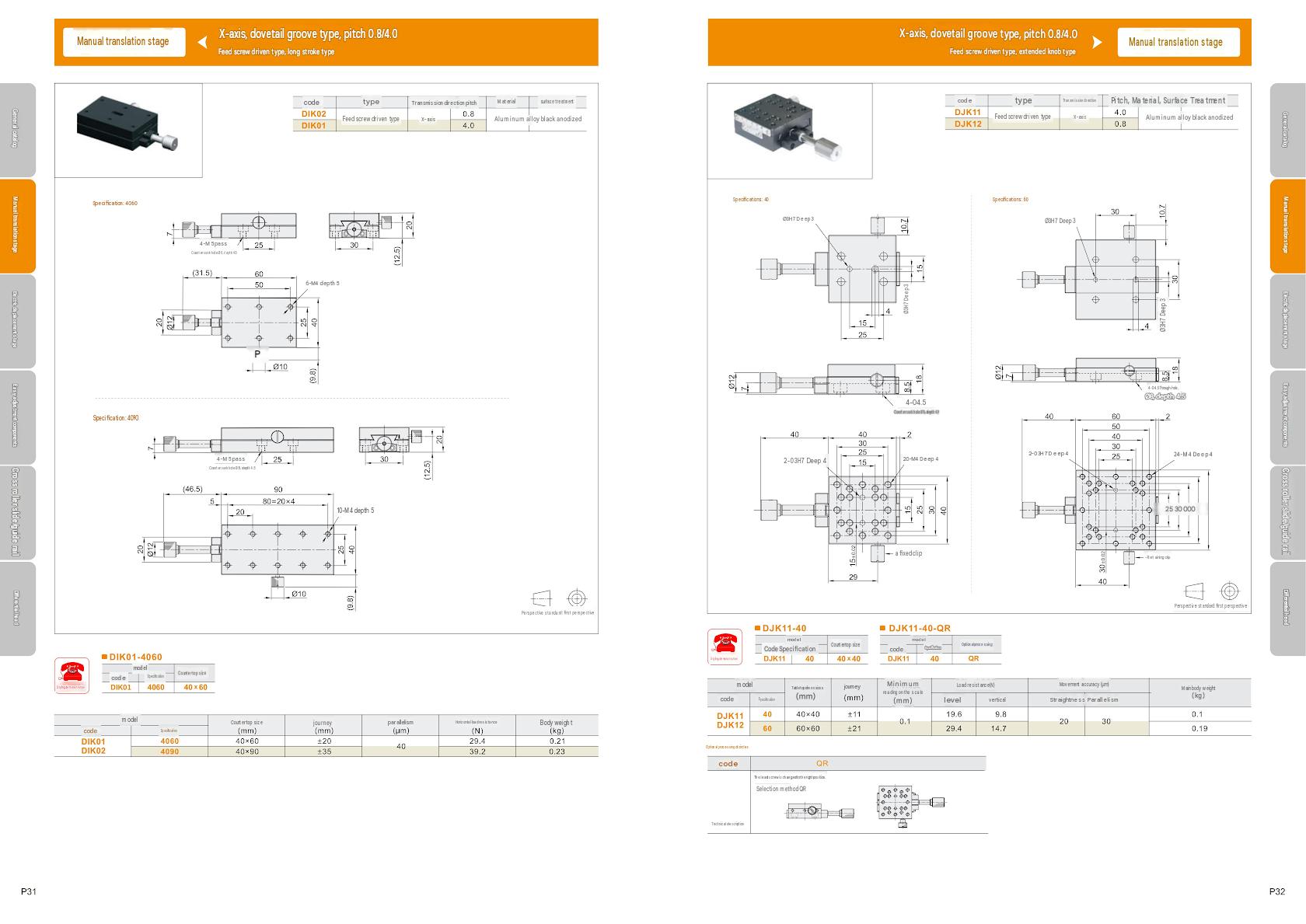
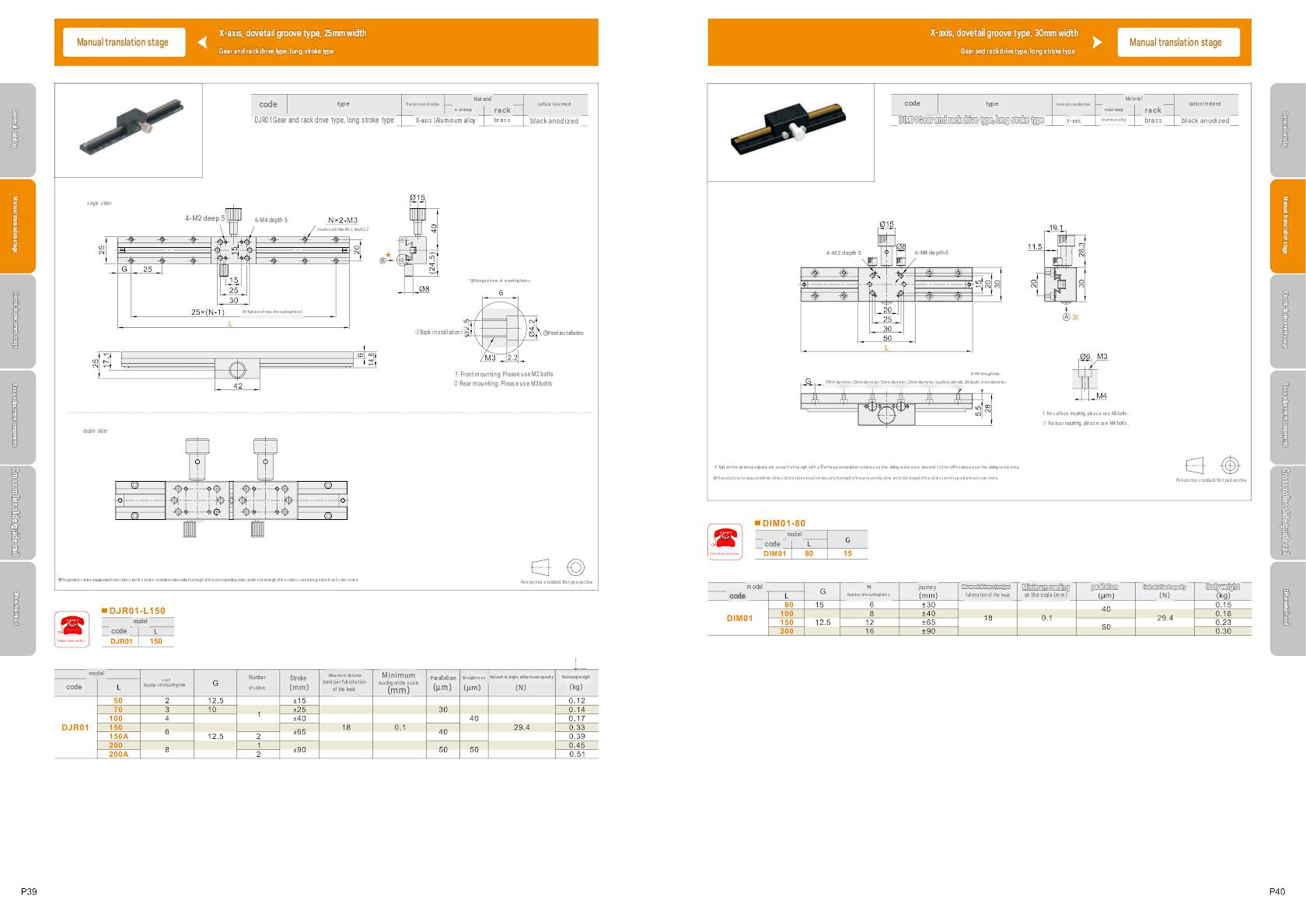
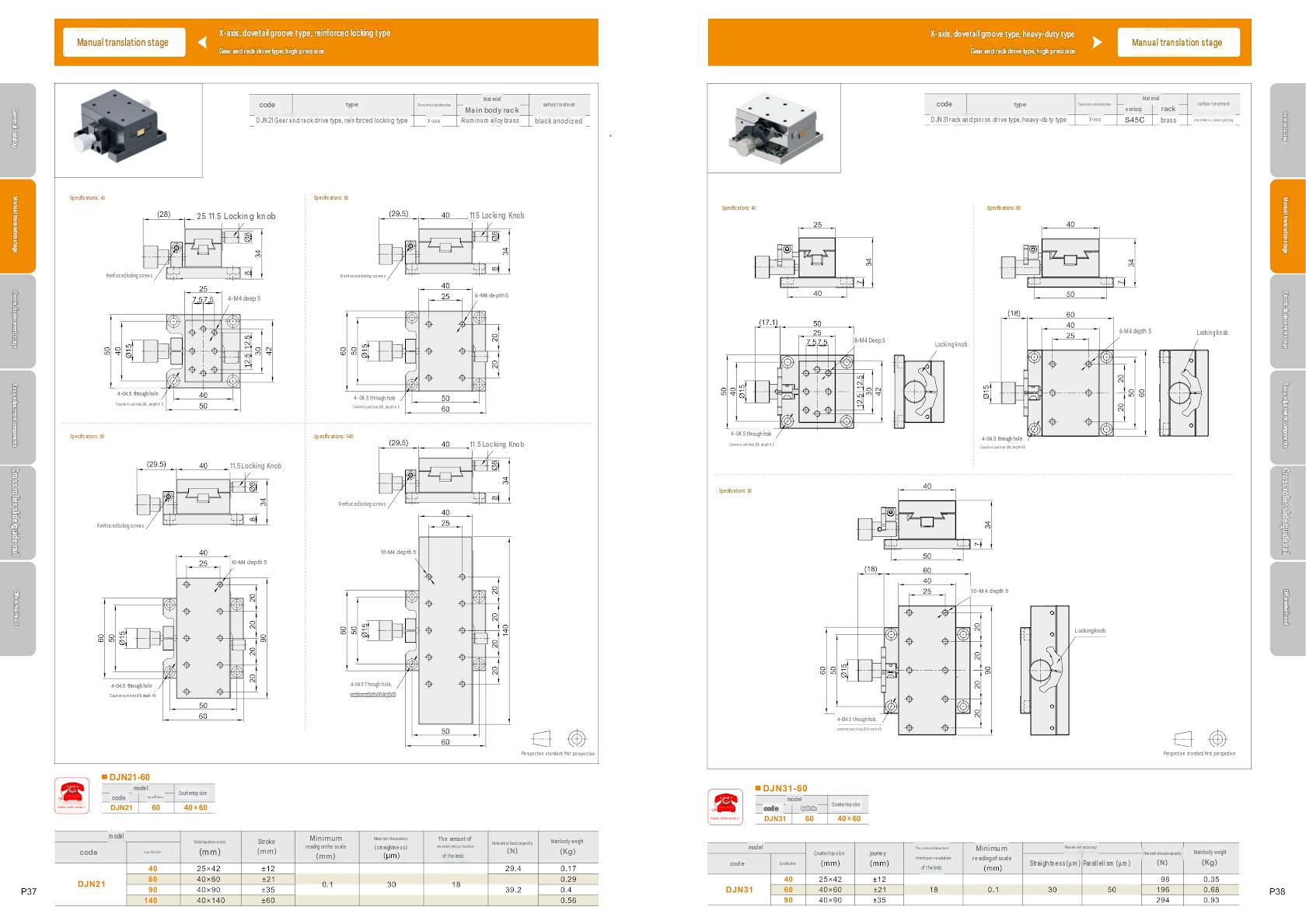
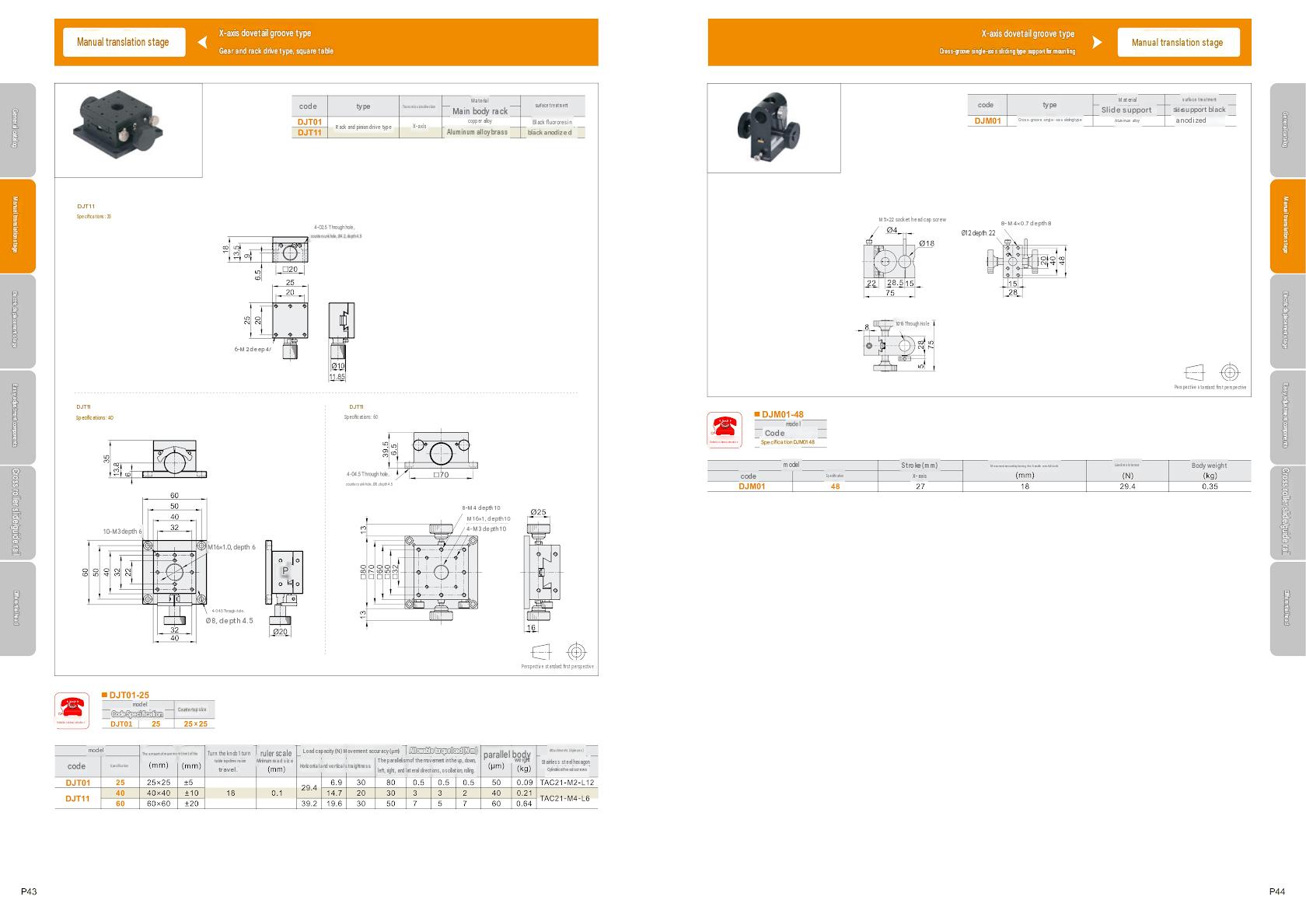
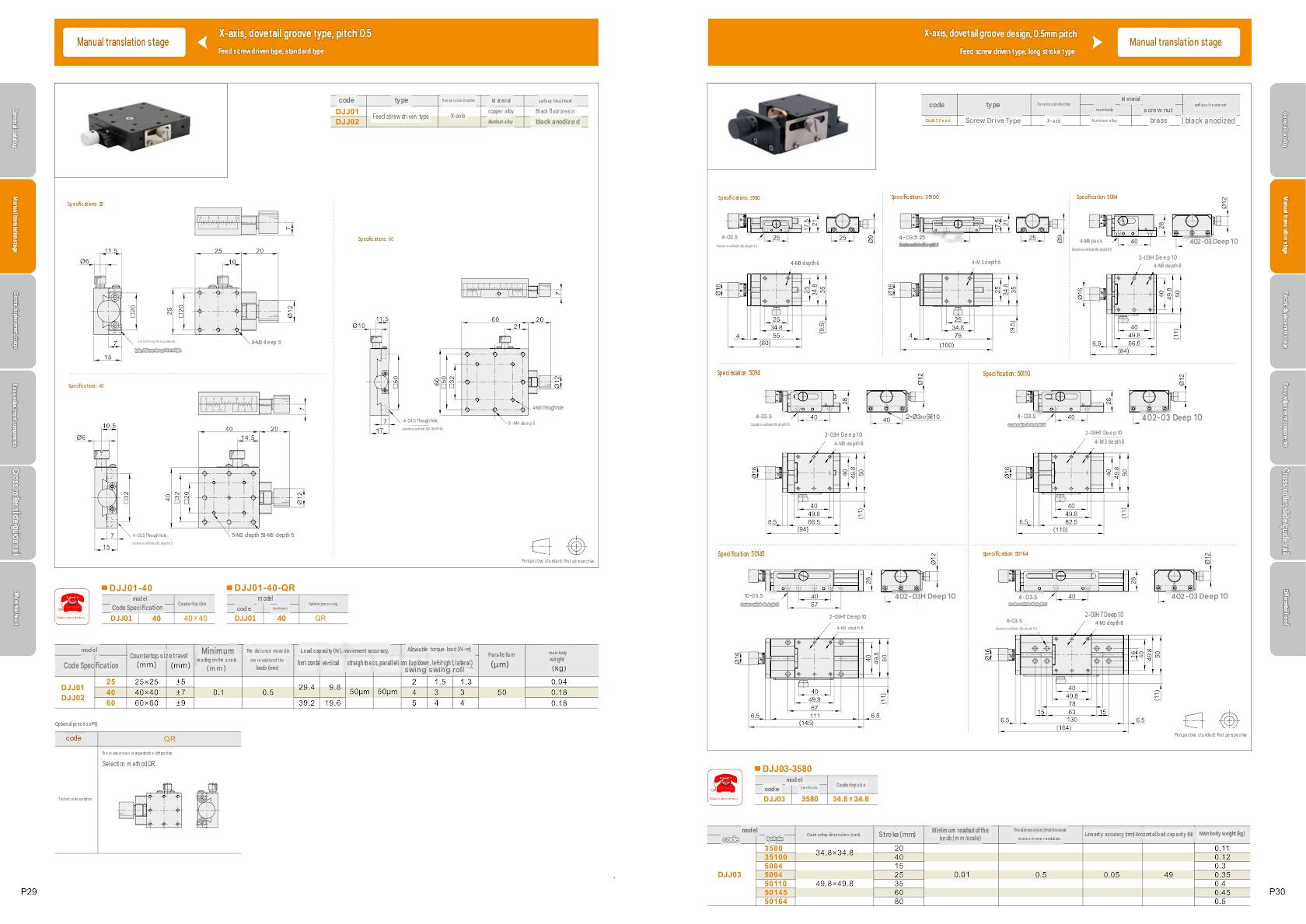
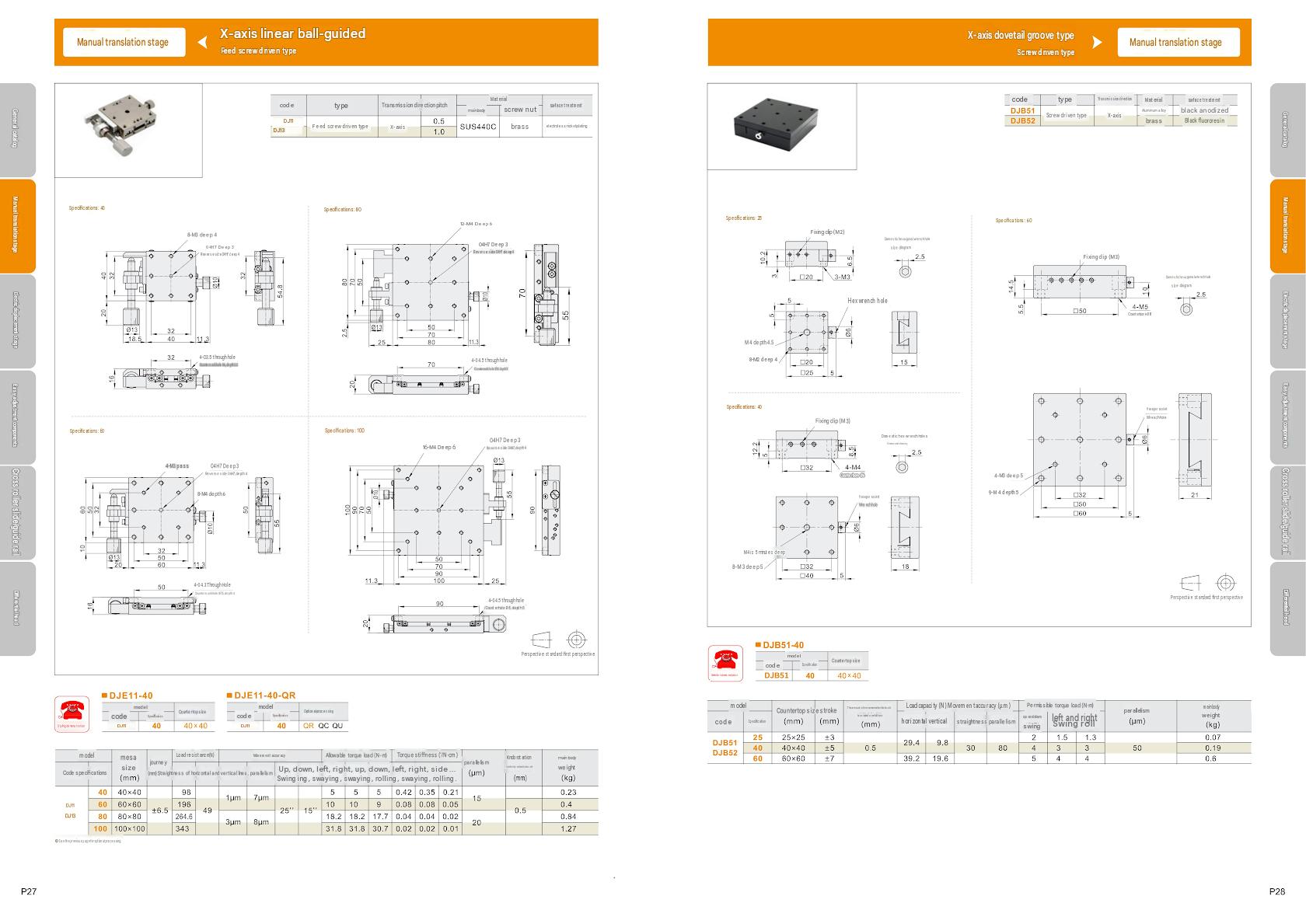
| Model |
HCY21-140,HCYLL-L250 |
|---|---|
| Size |
25 / 30 / 40 mm |
| Stroke |
15-180mm |
| Travel per Knob Rev. (mm) |
18 |
| Horizontal Load Capacity |
98~343N |
| Weight |
0.12 ~ 0.93 kg |
| Straightness (μm) |
30-50 |
| Parallelism (μm) |
29.4-50 |
| Surface Treatment |
Black Hard Anodizing |