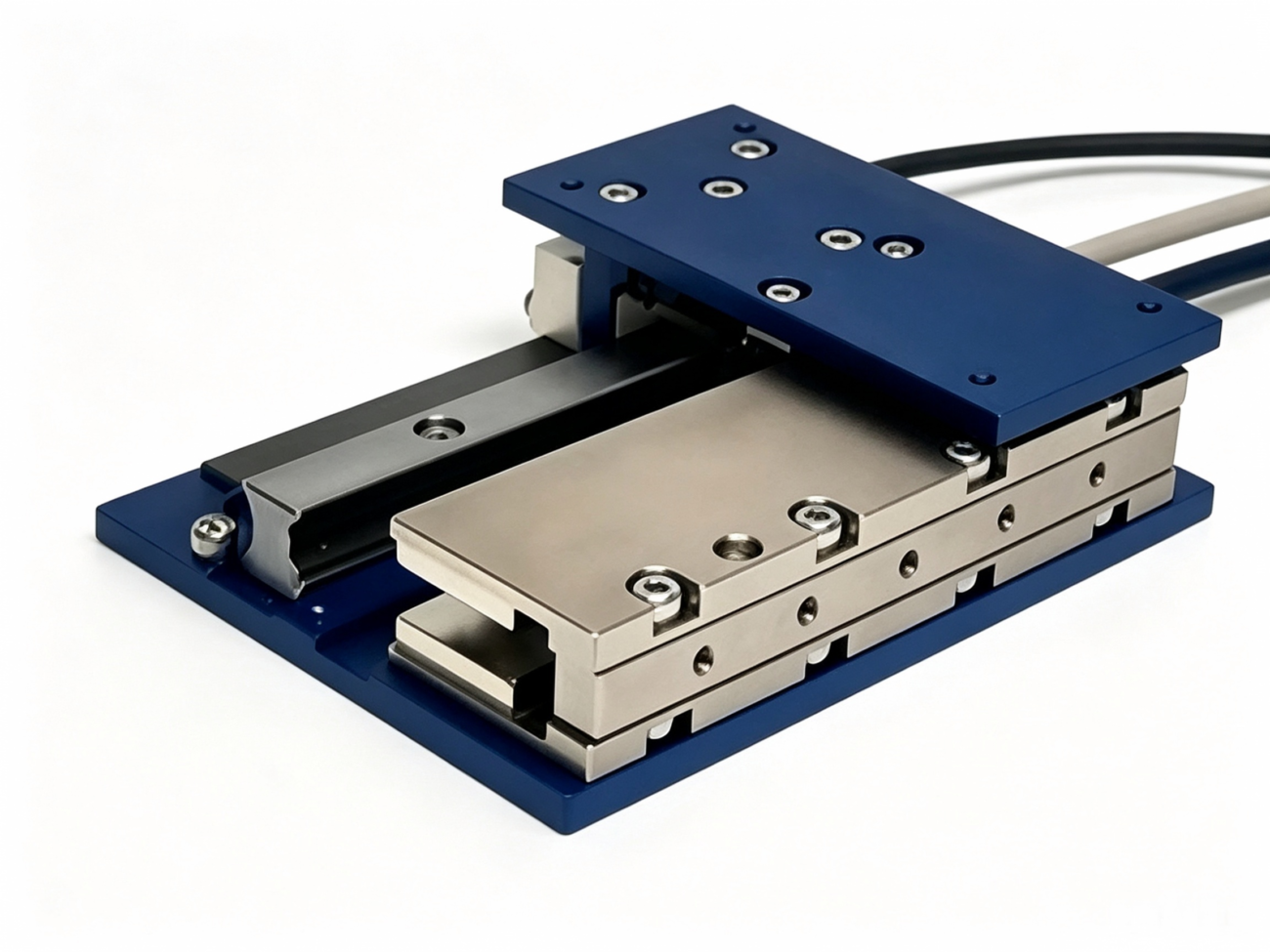
Linear Motor Drive Types: Bus-Based and Pulse-Based Servo Drives
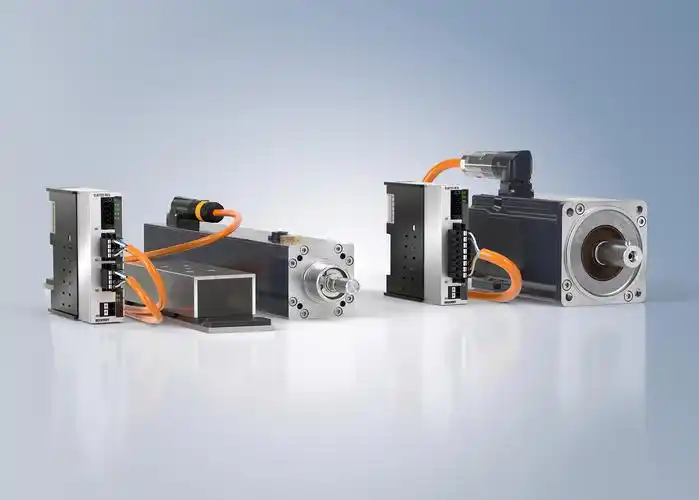
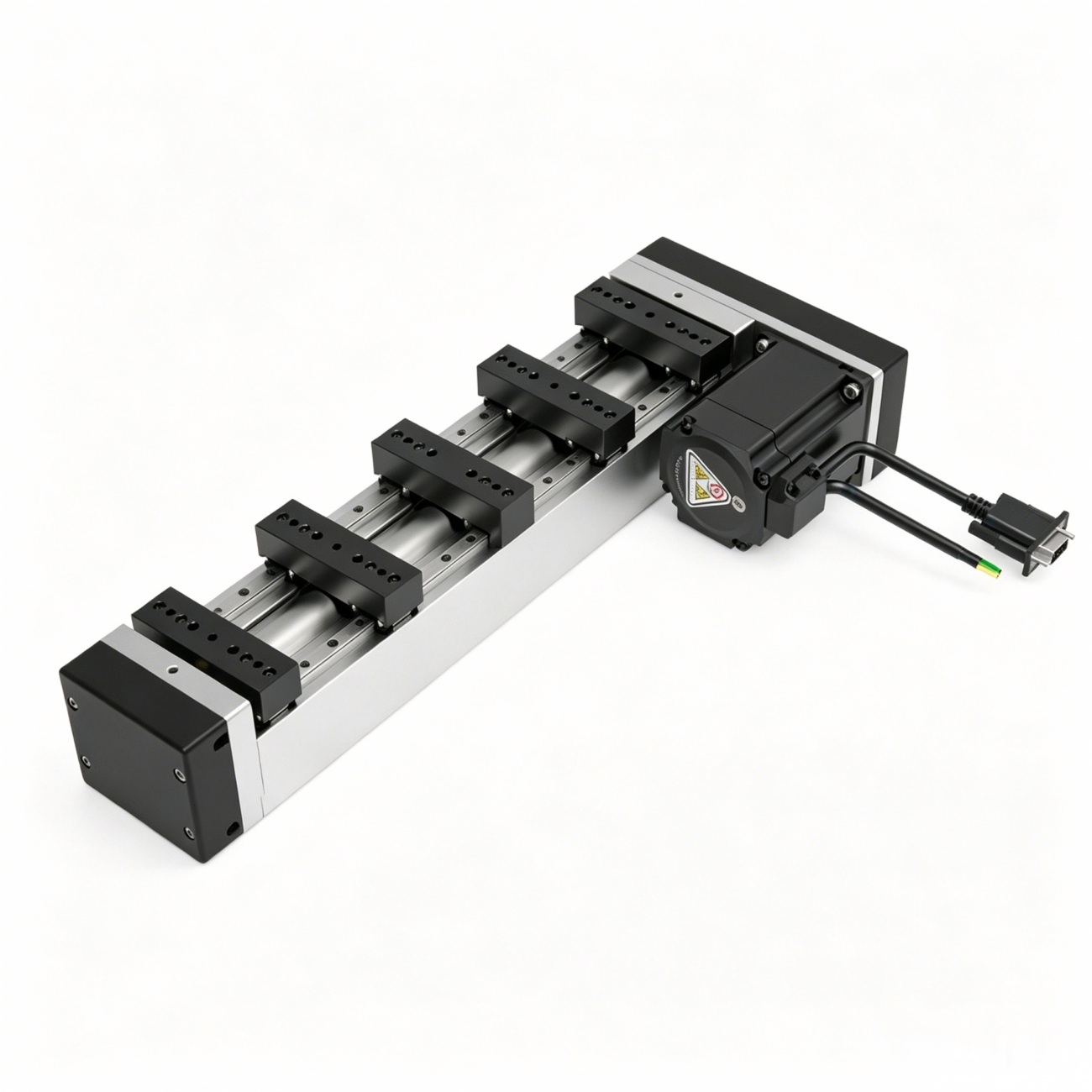
A linear motor drive is a critical component of a direct-drive motion control system. It controls the current, force, speed, and position of a linear motor, allowing the motor to achieve smooth and precise linear movement.
For industrial linear motor applications, servo drives are the primary drive solution, especially when high positioning accuracy, stable velocity control, fast response, and high acceleration are required.
Servo drives for linear motors can be further classified according to their communication and command interfaces. The two common configurations are:
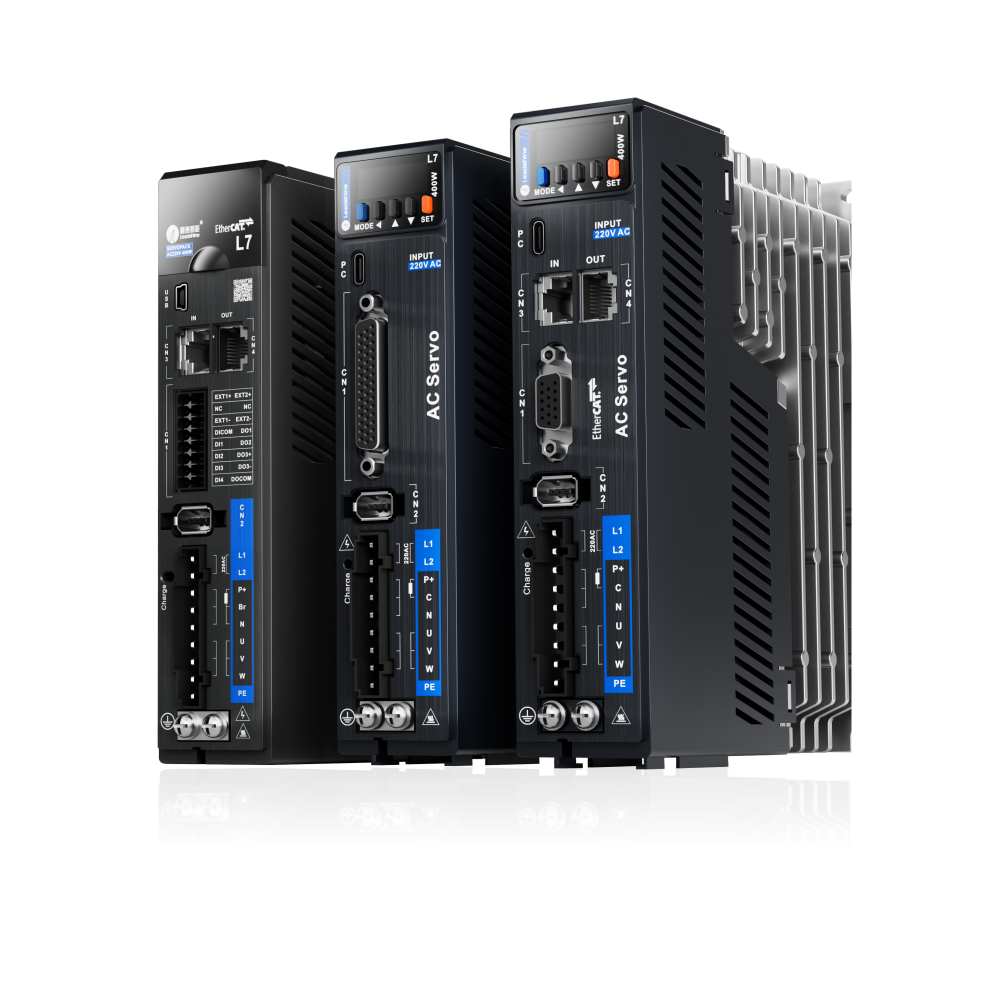
Bus-Based Servo Drives
Pulse-Based Servo Drives
Choosing between a bus-based and pulse-based servo drive depends on the machine controller, required synchronization, motion performance, number of axes, and system architecture.
What Is a Servo Drive for a Linear Motor?
A servo drive for a linear motor is an electronic device that precisely controls the electrical current supplied to the linear motor.
The servo drive works together with a motion controller and feedback device to create a closed-loop motion control system.
A typical system is:
PLC / Motion Controller→ Servo Drive → Linear Motor → Mechanical Load
with position feedback:
Linear Encoder → Servo Drive / Motion Controller
The servo drive controls:
Motor current
Electromagnetic force
Speed
Position
Acceleration
Deceleration
Motor commutation
Encoder feedback
For high-precision linear motion, the servo drive is particularly important because the quality of current and feedback control directly affects the motor’s positioning and dynamic performance.
Main Types of Servo Drives for Linear Motors
For industrial linear motor systems, servo drives can primarily be divided into two categories according to the command or communication interface:
1. Bus-Based Servo Drives
2. Pulse-Based Servo Drives
Both types can be used in linear motion systems, but they are designed for different control architectures.
1. Bus-Based Servo Drives
A bus-based servo drive communicates with the PLC or motion controller through an industrial communication network.
Common industrial bus protocols include:
EtherCAT
PROFINET
EtherNet/IP
CANopen
In a bus-based architecture, the controller communicates motion commands and status information through the industrial network.
How to Select the Right Servo Drive for a Linear Motor
The drive should be selected based on both the motor specifications and the application requirements.
Motor Parameters
Check:
Motor voltage
Continuous current
Peak current
Motor resistance
Motor inductance
Force constant
Back EMF
Motion Requirements
Consider:
Maximum speed
Acceleration
Continuous force
Peak force
Stroke
Duty cycle
Positioning accuracy
Repeatability
Feedback
Confirm:
Encoder type
Encoder resolution
Encoder interface
Maximum feedback frequency
Communication
Determine whether the machine requires:
EtherCAT
PROFINET
EtherNet/IP
CANopen
Pulse/Direction
Common Applications of Linear Motor Servo Drives
CNC Machine Tools
Linear motor servo drives can provide high-speed and high-precision axis movement.
They are suitable for applications requiring rapid acceleration and accurate positioning.
Automated Production Lines
Servo-driven linear motors can be used for:
Pick-and-place
Assembly
Material handling
Sorting
Inspection
Stable velocity and precise positioning can improve machine cycle time and repeatability.
Precision Inspection
Linear motor stages are used in:
Machine vision
Dimensional inspection
Optical inspection
Metrology
Automated testing
High-precision servo control helps maintain stable and repeatable movement.
Semiconductor Equipment
Semiconductor equipment places high demands on motion performance.
Linear motor servo systems can be used for:
Wafer inspection
Wafer handling
Precision positioning
Die bonding
Packaging
Optical and Photonics Equipment
Applications include:
Fiber alignment
Optical component positioning
Lens positioning
Photonics testing
Laser alignment
Smooth motion and high-resolution feedback are especially important in these applications.
Frequently Asked Questions
What are the two main types of servo drives for linear motors?
Servo drives for linear motor applications can commonly be categorized by their command interface as:
Bus-based servo drives and pulse-based servo drives.
What is a bus-based servo drive?
A bus-based servo drive communicates with a PLC or motion controller through an industrial communication network such as EtherCAT, PROFINET, EtherNet/IP, or CANopen.
What is a pulse-based servo drive?
A pulse-based servo drive receives motion commands through pulse and direction signals from a PLC or motion controller.
Which is better: EtherCAT or pulse control?
For complex multi-axis and high-performance motion systems, EtherCAT and other real-time industrial networks can offer significant advantages in synchronization and communication.
For simpler machines, pulse control can provide a straightforward and cost-effective solution.
Can both bus and pulse servo drives control linear motors?
Yes, provided the servo drive supports the specific linear motor’s electrical characteristics, commutation method, and feedback requirements.
What servo drive is best for a high-precision linear motor?
A high-performance servo drive with suitable linear encoder feedback is generally preferred for demanding precision applications.
The exact drive should be selected according to the motor’s current, voltage, speed, force, encoder, and communication requirements.
Final Conclusion
The performance of a linear motor depends not only on the motor itself but also on the servo drive and feedback system.
For industrial linear motor applications, servo drives are the key drive solution for high-precision motion control.
According to the command interface, servo drives can generally be divided into:
Bus-Based Servo Drives
and
Pulse-Based Servo Drives
Bus-based servo drives are particularly suitable for multi-axis, real-time, and advanced automation systems, while pulse-based servo drives can be an effective solution for simpler positioning applications and existing pulse-controlled machines.
For high-precision applications, the complete system should be considered:
Linear Motor + High-Performance Servo Drive + Linear Encoder + Motion Controller
The right combination can provide:
High Positioning Accuracy + Smooth Motion + Precise Speed Control + Fast Dynamic Response
If you are selecting a servo drive for a linear motor, our engineering team can evaluate your application and help match the appropriate servo drive, linear motor, encoder, and control architecture.
Provide your motor model, continuous and peak force, maximum speed, acceleration, stroke, encoder type, and controller interface, and we can recommend a suitable bus-based or pulse-based servo drive solution for your application.
HCY Automation delivers integrated solutions across motion control, linear motion, robotics, machine vision, pneumatic systems, and precision gearboxes to help global manufacturers build smarter, faster, and more reliable production lines. Our engineering team helps you select and integrate the right motion control, robotics, and automation components for your specific application.