Applications, Benefits, and How to Choose the Right Motion Platform
As semiconductor manufacturing and laser processing technologies continue to advance, industrial equipment manufacturers are facing increasingly demanding requirements for motion accuracy, speed, repeatability, and operational stability.
From wafer inspection and precision positioning to laser cutting, welding, and marking, every movement matters. Even minor positioning deviations or unwanted vibrations can affect processing quality, product consistency, and overall production efficiency.
This is where linear motor stages play an important role.
Unlike conventional motion systems that rely on ball screws, belts, or gear-driven transmission, linear motor stages use direct electromagnetic drive to move a load along a linear axis. By eliminating intermediate mechanical transmission components, they offer high dynamic response, smooth motion, and excellent positioning performance.
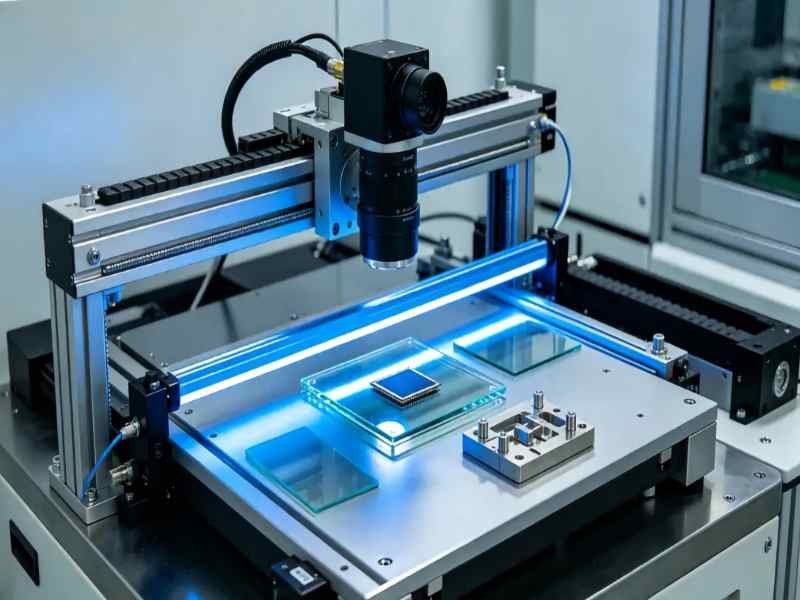
Today, linear motor platforms are widely used in semiconductor equipment, laser processing systems, optical inspection machines, and other high-precision automation applications.
In this article, we explore how linear motor stages work, their key advantages, and how they support precision motion control in semiconductor manufacturing and laser processing.
1. Why Linear Motor Stages Are Important in High-Precision Automation
Traditional linear motion systems typically use mechanical transmission components such as ball screws, timing belts, and rack-and-pinion drives.
While these solutions remain practical for many industrial applications, mechanical contact, backlash, friction, and transmission deformation can become limitations when equipment requires higher speeds, faster acceleration, and more precise positioning.
A linear motor works differently.
It converts electromagnetic energy directly into linear motion, driving the moving platform without requiring a mechanical transmission mechanism between the motor and the load.
This direct-drive design offers several advantages:
1.1 High Positioning Accuracy and Repeatability
Without intermediate mechanical transmission components, linear motor stages eliminate transmission backlash associated with gears and reduce errors caused by mechanical wear and deformation.
When combined with high-resolution linear encoders and suitable motion controllers, they can achieve excellent positioning accuracy and repeatability.
This makes them suitable for applications such as wafer inspection, optical measurement, precision laser processing, and semiconductor equipment positioning.
Actual positioning performance depends on the motor, encoder resolution, mechanical structure, control system, thermal management, and installation conditions.
1.2 High Speed and Dynamic Response
Linear motors provide direct electromagnetic thrust, allowing the moving platform to accelerate and decelerate rapidly.
Compared with conventional screw-driven systems, they can support high-speed motion without the rotational speed limitations associated with long ball screws.
This is particularly valuable for:
- High-speed wafer scanning
- Laser cutting and marking
- Optical inspection
- Precision positioning systems
- Automated semiconductor handling equipment
1.3 Smooth Motion and Low Mechanical Wear
Because linear motors do not require ball screws, belts, or gears for transmission, they eliminate many sources of mechanical contact and transmission wear.
Coreless linear motors are particularly useful in applications requiring smooth, low-cogging motion, especially at low speeds.
This characteristic helps reduce vibration and motion disturbances in precision inspection and processing equipment.
1.4 Flexible Multi-Axis Motion Configuration
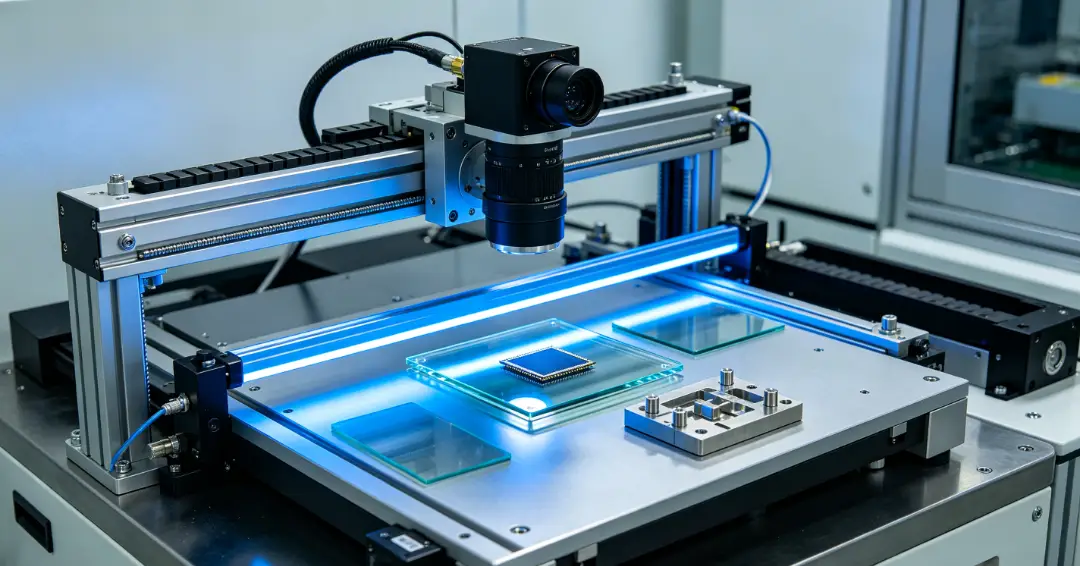
Linear motor stages can be integrated into single-axis, XY, XYZ, and multi-axis motion platforms.
With suitable mechanical design and motion control, multiple axes can work together to execute synchronized movements and complex trajectories.
This flexibility makes linear motor platforms suitable for customized automation equipment where standard motion modules may not meet the required performance or installation constraints.
2. Applications of Linear Motor Stages in Semiconductor Manufacturing
Semiconductor manufacturing involves multiple processes that require highly controlled movement, including wafer handling, lithography, inspection, measurement, and packaging.
As semiconductor devices become smaller and manufacturing processes become more sophisticated, motion systems must deliver higher precision, better stability, and improved throughput.
Linear motor stages provide an effective motion solution for many of these applications.
2.1 Wafer Handling and EFEM Systems
In semiconductor manufacturing, wafers must be transferred between different processing and inspection stations while maintaining strict requirements for cleanliness and handling accuracy.
An Equipment Front End Module (EFEM) is commonly used to manage wafer loading, unloading, and transfer between wafer carriers and semiconductor process equipment.
Linear motion systems can be integrated into wafer handling equipment to provide controlled horizontal or vertical movement, depending on the mechanical architecture.
Combined with wafer handling robots, precision sensors, and motion controllers, these systems help achieve reliable wafer positioning and automated transfer.
For semiconductor applications, the motion platform may need to consider:
- Cleanroom compatibility
- Particle generation control
- Repeatable positioning
- Compact mechanical design
- Cable management
- Vacuum or specialized environmental requirements, where applicable
The complete handling system must be designed around the wafer size, transfer path, equipment layout, and cleanliness requirements.
2.2 Wafer Inspection and Precision Scanning
Wafer inspection is one of the most demanding applications for precision linear motion systems.
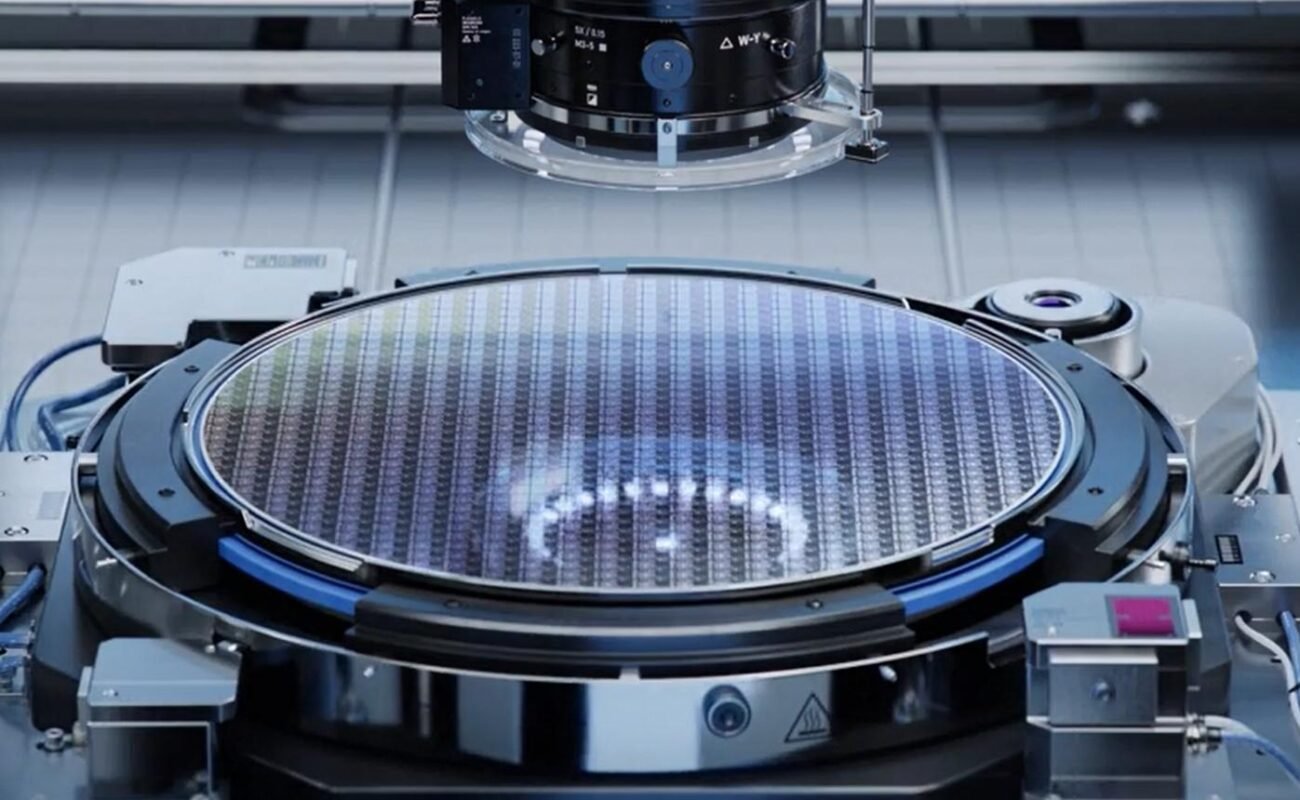
During inspection, optical cameras, laser sensors, or other measurement devices scan the wafer surface to identify defects, contamination, scratches, and dimensional deviations.
A linear motor stage moves the wafer or inspection optics along a precisely controlled path.
Its high-speed scanning capability and smooth motion help improve inspection efficiency while maintaining consistent measurement conditions.
Typical applications include:
- Wafer surface inspection
- Defect detection
- Optical metrology
- Thickness measurement
- Surface profile measurement
- Precision alignment
For these systems, encoder feedback, motion stability, vibration control, and synchronization with the inspection equipment are essential.
2.3 Lithography and Precision Positioning
Lithography is a critical process in semiconductor manufacturing, where extremely precise positioning and synchronized motion are required.
Advanced lithography systems use highly specialized wafer stages and reticle stages to control the relative position between the wafer and exposure optics.
Linear motor technology is an important part of many advanced direct-drive positioning architectures.
Depending on the system design, linear motors can provide:
- High acceleration and deceleration
- Precise trajectory control
- High dynamic response
- Repeatable positioning
- Synchronized multi-axis movement
Advanced lithography equipment may require specialized air-bearing stages, precision metrology, vibration isolation, and sophisticated control algorithms. A conventional linear motor module should not be considered a direct replacement for these highly integrated positioning systems.
2.4 Semiconductor Packaging and Testing
In semiconductor packaging and testing equipment, precise positioning is required for die bonding, wafer probing, component alignment, and automated inspection.
Linear motor stages can be used to move wafers, substrates, optical inspection devices, or processing heads.
Their fast response and programmable motion profiles help reduce positioning time and improve equipment productivity.
Typical applications include:
- Wafer probing systems
- Die bonding equipment
- Precision dispensing
- Chip alignment
- Optical inspection
- Automated testing systems
For high-throughput applications, the combination of linear motor stages, high-resolution encoders, and synchronized motion control is particularly valuable.
3. Applications of Linear Motor Stages in Laser Processing
Laser processing is another important application area for high-precision linear motion platforms.
Whether the process involves cutting, welding, marking, or surface treatment, the laser beam and workpiece must maintain an accurately controlled relative position throughout the processing path.
The motion system directly affects processing accuracy, edge quality, marking consistency, and production efficiency.
Linear motor stages offer high acceleration, smooth movement, and excellent dynamic response, making them suitable for laser equipment that requires both speed and precision.
3.1 Laser Cutting
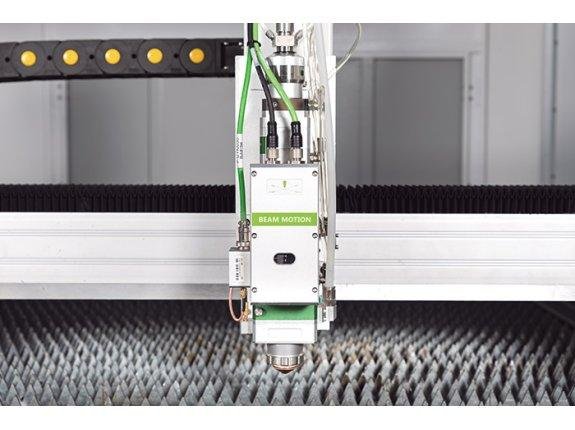
In laser cutting systems, the laser head or workpiece needs to move along a programmed trajectory while maintaining a consistent processing position.
Linear motor stages can provide high-speed, precise movement, particularly in applications involving small components, intricate contours, and demanding processing tolerances.
Typical applications include:
- Precision metal cutting
- Thin-sheet laser cutting
- Micro-component processing
- Electronic component cutting
- Precision cutting of industrial materials
High dynamic response allows the platform to accelerate and decelerate quickly when following complex cutting paths.
This helps reduce non-processing time and supports more efficient production.
The final cutting quality also depends on laser power, beam characteristics, focusing optics, cutting parameters, mechanical rigidity, and motion control.
3.2 Laser Welding
Laser welding requires accurate synchronization between the laser beam and the workpiece.
For applications such as battery manufacturing, electronic components, precision metal parts, and automotive components, maintaining a stable processing trajectory is essential.
Linear motor stages can provide controlled movement for laser welding heads or workpieces.
Their advantages include:
- Smooth and continuous motion
- High-speed trajectory tracking
- Fast acceleration response
- Reduced mechanical transmission backlash
- Flexible multi-axis integration
In automated welding equipment, linear motor platforms can be integrated with vision positioning systems and laser control systems to support more accurate and repeatable welding operations.
3.3 Laser Marking and Engraving
Laser marking equipment is widely used for product identification, traceability, serial numbers, QR codes, and industrial branding.
In high-speed marking systems, the motion platform must move the laser head or workpiece accurately and consistently.
Linear motor stages are suitable for applications requiring:
- High-speed scanning
- Precise positioning
- Consistent marking patterns
- Complex trajectory execution
- Repeatable processing results
For large-format laser marking systems, a linear motor platform can provide an extended working range while maintaining controlled motion performance.
3.4 Laser Micromachining and Precision Processing
Laser micromachining involves processing very small features on materials such as metals, ceramics, glass, and electronic substrates.
Typical processes include micro-drilling, fine cutting, surface texturing, and precision ablation.
These applications often require low-vibration motion, fine positioning resolution, and stable movement at different speeds.
Coreless linear motors can be particularly useful in systems where smooth motion and low cogging are important.
When integrated with high-resolution feedback devices and suitable optical systems, linear motor stages can support demanding precision laser processing applications.
4. How to Choose the Right Linear Motor Stage for Semiconductor and Laser Equipment
Selecting a suitable linear motor stage involves more than comparing motor specifications.
The entire motion system must match the application requirements, including mechanical structure, load conditions, positioning performance, and environmental constraints.
Here are several important factors to consider.
4.1 Positioning Accuracy and Repeatability
First, determine the actual positioning requirements of the equipment.
Positioning accuracy and repeatability are not the same.
- Positioning accuracy describes how closely the actual position matches the commanded position.
- Repeatability describes how consistently the system returns to the same position under the same conditions.
For semiconductor inspection and precision laser processing, both parameters should be evaluated.
Encoder resolution, calibration, thermal stability, mechanical rigidity, and control performance all influence the final result.
4.2 Stroke and Payload
The required travel distance and moving load directly affect motor selection and platform design.
A longer stroke may require additional consideration of structural rigidity, cable management, thermal behavior, and motor sizing.
The payload calculation should also include the weight of the workpiece, fixtures, laser head, cameras, sensors, and other moving components.
4.3 Speed and Acceleration
Different applications have different motion profiles.
For example:
- Wafer inspection may require fast scanning with stable velocity.
- Laser cutting may require rapid acceleration and precise contour tracking.
- Precision alignment may prioritize smooth, controlled movement over maximum speed.
The required peak speed, acceleration, deceleration, and cycle time should all be considered during system design.
4.4 Motor Type and Platform Structure
Different linear motor technologies offer different performance characteristics.
For example:
- Ironless linear motors: Suitable for applications requiring smooth movement, low cogging, and precise low-speed control.
- Iron-core linear motors: Often suitable for applications requiring higher thrust and acceleration.
- U-channel linear motors: Offer a compact structure with a channel-style magnetic design, suitable for various precision automation configurations.
The appropriate motor type depends on thrust requirements, thermal conditions, available installation space, and motion performance.
4.5 Environmental Requirements
Semiconductor and laser equipment may operate under different environmental conditions.
Depending on the application, the platform may need to consider:
- Cleanroom compatibility
- Vacuum compatibility
- Temperature variation
- Dust and contamination control
- Cooling requirements
- Electromagnetic interference
- Vibration isolation
Not every standard linear motor platform is suitable for cleanroom or vacuum applications. Special materials, sealing arrangements, cable routing, lubrication choices, and thermal management may be required.
5. Customized Linear Motor Platforms for Precision Automation
In many semiconductor and laser processing applications, standard linear motion products cannot fully satisfy the equipment requirements.
Equipment manufacturers may need customized solutions based on specific stroke lengths, payloads, installation dimensions, motion profiles, and environmental conditions.
A customized linear motor platform can integrate multiple components into a complete motion solution, including:
- Linear motor and magnetic track
- Precision linear guideways
- High-resolution linear encoder
- Motion controller and servo drive
- Cooling system, where required
- Mechanical mounting structure
- Cable management system
- Multi-axis motion configuration
For example, an XY linear motor stage can be designed for wafer inspection or laser processing equipment, while a multi-axis positioning platform may be required for more complex automated operations.
The goal is not simply to achieve higher motor performance, but to ensure that the entire motion system works reliably within the equipment.
At HCY Automation, we focus on industrial automation, linear motion, motion control, and precision positioning solutions.
With engineering capabilities covering mechanical design, electrical engineering, and automation integration, we support equipment manufacturers and system integrators with linear motor stages, linear motion platforms, and customized motion solutions.
From motor selection and mechanical configuration to motion control integration, we work with customers to develop solutions that match their actual equipment requirements.
6. The Future of Linear Motor Technology in Semiconductor and Laser Equipment
As semiconductor manufacturing moves toward more advanced processes and laser processing continues to expand into precision manufacturing, the demand for high-performance motion systems will continue to grow.
Several trends are shaping the future of linear motor platforms.
Higher motion precision: More advanced encoder technologies, improved mechanical structures, and sophisticated control algorithms are helping motion systems achieve better positioning performance.
Higher production efficiency: Faster acceleration, optimized motion profiles, and synchronized multi-axis control help reduce cycle times in automated equipment.
More intelligent motion control: Integration with industrial automation systems, machine vision, and real-time monitoring enables more flexible and adaptive production processes.
More customized platform designs: Different industries require different combinations of stroke, payload, speed, accuracy, and environmental compatibility. Customized linear motor platforms will continue to play an important role in specialized equipment development.
Conclusion
Linear motor stages are becoming increasingly important in semiconductor manufacturing and laser processing because they provide direct-drive motion, high dynamic response, smooth movement, and excellent positioning performance.
From wafer handling and inspection to laser cutting, welding, and precision marking, they offer equipment manufacturers a flexible motion solution for demanding automation applications.
However, achieving the desired performance requires more than selecting a high-performance motor. Mechanical design, encoder feedback, motion control, thermal management, and environmental conditions must all be considered as part of the complete system.
Whether you are developing semiconductor inspection equipment, laser processing machines, or other high-precision automation systems, choosing the right linear motor platform is an important step toward improving equipment performance and production efficiency.
Looking for a customized linear motor stage for your application?
Contact HCY Automation to discuss your requirements for stroke, payload, speed, positioning accuracy, and installation dimensions. Our engineering team can help evaluate a suitable linear motion solution for your equipment.