Linear Motors: Core Performance Advantages & Dominant Application Trends in Modern Industrial Automation
As professional linear motor manufacturer, we break down direct-drive performance strengths vs ball screw/belt drive, plus 2026 Industry 4.0 application trends for semiconductor, laser, medical & precision automation.
As a specialized linear motor manufacturer integrating R&D, production and customized OEM/ODM solutions, we analyze the inherent performance strengths of linear motors and the latest industrial adoption trends to help machine builders, automation engineers and procurement teams make better motion control design decisions.
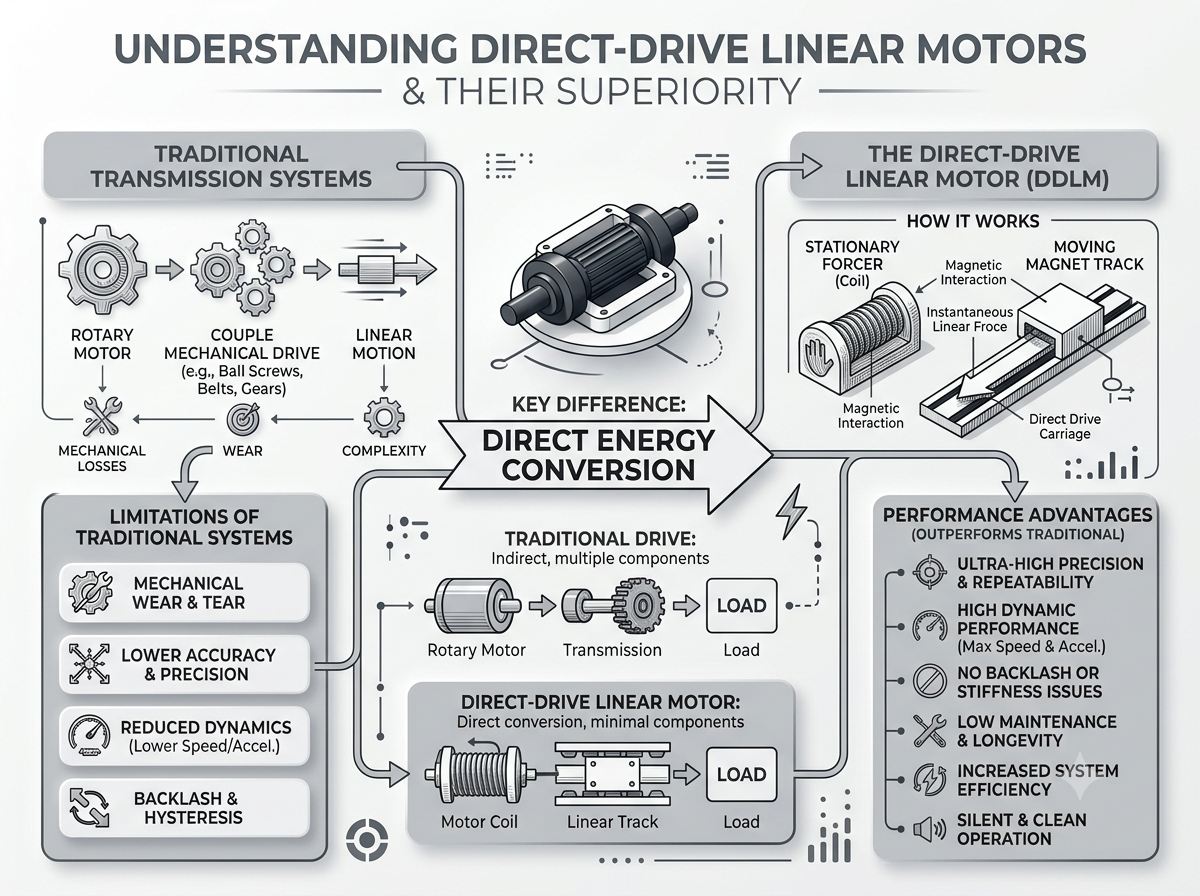
1. What Is a Direct-Drive Linear Motor & How It Outperforms Traditional Transmission
A linear motor can be visualized as an “unfolded rotary servo motor”. It converts electromagnetic energy directly into straight-line thrust without intermediate conversion components such as ball screws, couplings, gears or timing belts.
Traditional rotary-to-linear systems must overcome rotating shaft inertia, screw friction and belt elastic deformation, creating unavoidable precision loss, speed limits and mechanical wear. Linear motors eliminate all these pain points via direct drive, becoming the mainstream high-end motion solution for precision automation.
2. 6 Core Performance Advantages of Linear Motors (Engineer-Focused)
2.1 Zero Backlash & Nanometer-Level Position Repeatability
No screw nut clearance, belt stretch or gear play exists in direct-drive linear motor systems. Matched with high-resolution linear encoders, positioning repeatability reaches ±0.1μm, far exceeding the 2–5μm limit of ball screw modules.
This stable precision eliminates contour errors during high-speed continuous motion, critical for wafer inspection, PCB laser cutting and micro assembly.
2.2 Ultra-High Speed & Extreme Acceleration to Boost Throughput
Linear motors feature ultra-low moving mass inertia, supporting maximum speed up to 10m/s and acceleration over 10G. Compared with ball screw drives (max acceleration ~1–2G), linear motors cut axis cycle time by 50%–80% for high-frequency pick-and-place, flying cutting and rapid indexing.
For mass production automation lines, higher acceleration directly lifts hourly output and production efficiency.
Force transmission relies on air-gap electromagnetic interaction, with zero friction wear on the thrust output path. Unlike ball screws that require regular lubrication, screw nut replacement and thermal compensation, linear motors only need routine guide rail inspection.
Equipment owners slash downtime and spare parts costs, delivering obvious total cost of ownership advantages over 5–10 years of continuous operation.
Ironless linear motor designs greatly reduce cogging force, delivering ultra-smooth low-speed operation without resonance jitter. The fully sealed, dust-free structure complies with ISO Class 1–3 cleanroom standards, perfectly matching semiconductor, medical device and optical inspection production environments with strict particle control requirements.
2.5 Fast Servo Response & Superior Dynamic Tracking Performance
Linear motors feature high servo bandwidth with millisecond-level signal response. During variable speed switching, following error remains extremely low, avoiding overshoot and position deviation that often plague ball screw axes under high dynamic loads. This stable tracking performance guarantees consistent machining and inspection quality.
2.6 Compact Structure, Easy Integration with Smart Factory Systems
Without bulky screw support bearings and transmission auxiliary parts, linear motor linear stages occupy smaller installation space. They seamlessly connect with industrial IoT, servo drives and real-time monitoring sensors, supporting data collection for predictive maintenance — a core requirement of Industry 4.0 smart factories.
3. Linear Motor vs Ball Screw / Belt Drive: Key Performance Comparison
Linear Motor
Precision: ±0.1μm repeatability, zero backlash
Dynamic: 5–10G acceleration, max speed 10m/s
Maintenance: Almost no wear, long service life
Vibration: Low cogging, smooth high-speed motion
Best for: High precision, high throughput, cleanroom automation
Precision: Poor repeatability, severe elastic deformation
Dynamic: Medium speed, large positioning offset after long running
Maintenance: Frequent belt tension adjustment & replacement
Best for: Low-precision long-stroke simple handling equipment
4. Global Automation Trends Driving Mass Linear Motor Adoption (2026–2034)
Industry data shows over 65% of newly launched high-end automation equipment adopts linear motor direct-drive axes as standard configuration. Five core vertical sectors fuel market growth:
PCB laser drilling, glass cutting, phone screen assembly and automated testing rely on fast cycle motion. Linear motors drastically improve laser cutting edge smoothness and pick-and-place production capacity, widely adopted by laser machine and electronics automation builders worldwide.
4.3 Medical Automation & Biochemical Precision Testing
Surgical robotic axes, CT scanning platforms, micro sample dispensing and laboratory testing equipment require stable, low-noise precision motion. Linear motors’ non-polluting, low-vibration design fully meets medical industry safety standards.
High-speed milling, micro engraving and multi-axis assembly robots leverage linear motors’ dynamic advantages to eliminate machining chatter and shorten production cycles, upgrading traditional CNC equipment performance.
4.5 Smart Factory Industry 4.0 Digital Motion Control
Factories shifting toward full automation and digitalization prioritize motion systems with real-time data feedback. Linear motors integrate seamlessly with servo control systems, supporting intelligent monitoring, fault diagnosis and unmanned production line operation — the core trend for next-generation manufacturing.
5. Linear Motor Types We Supply as a Professional Manufacturer
As a China-based linear motor manufacturer, we provide full-series customized direct-drive solutions for global equipment clients:
Iron Core Linear Motors: High thrust, suitable for heavy-load high-speed automation
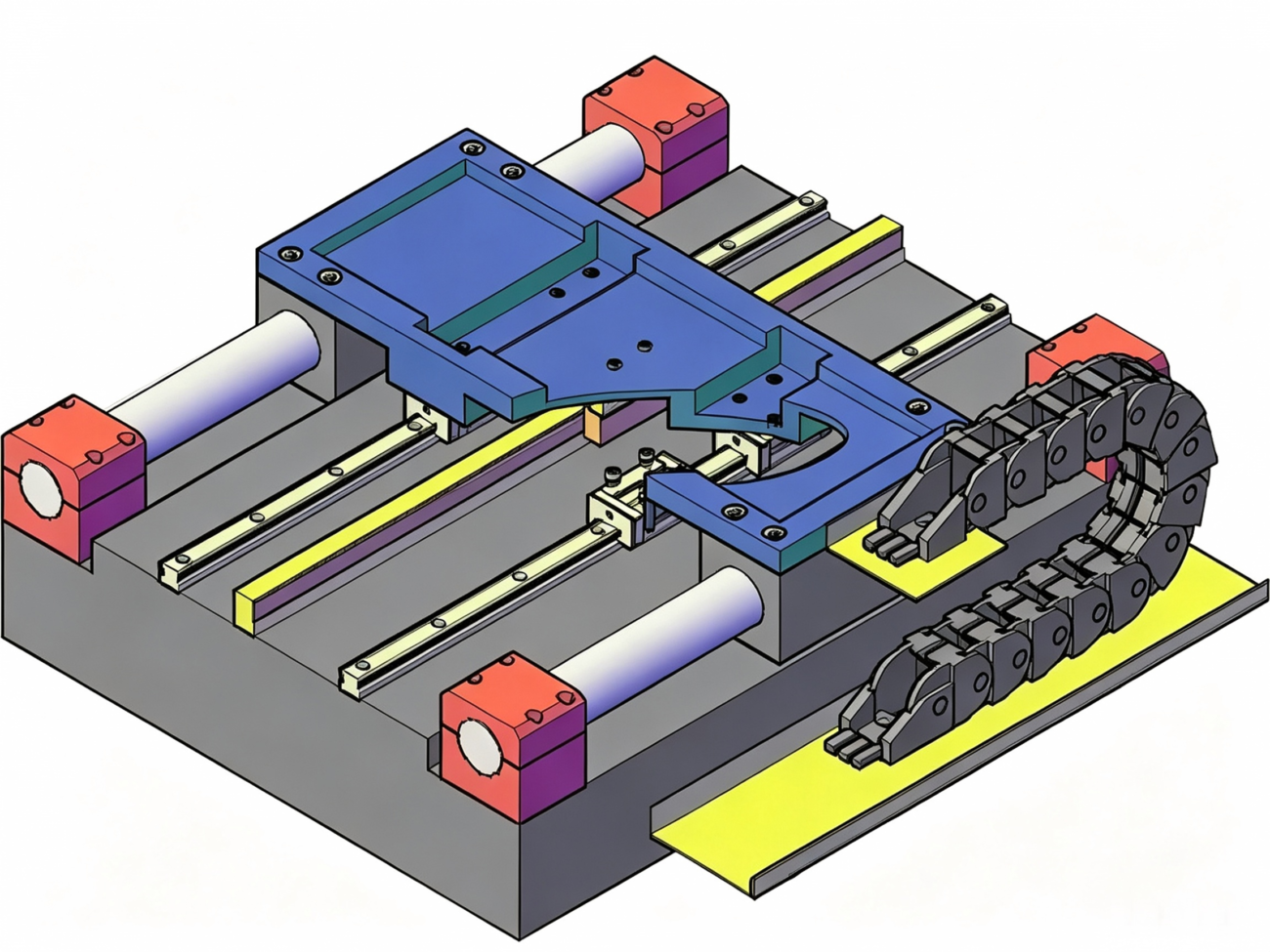
Ironless U-channel Linear Motors: Ultra-low cogging, cleanroom precision applications
Tubular Linear Motors: Compact size, short-stroke precision positioning
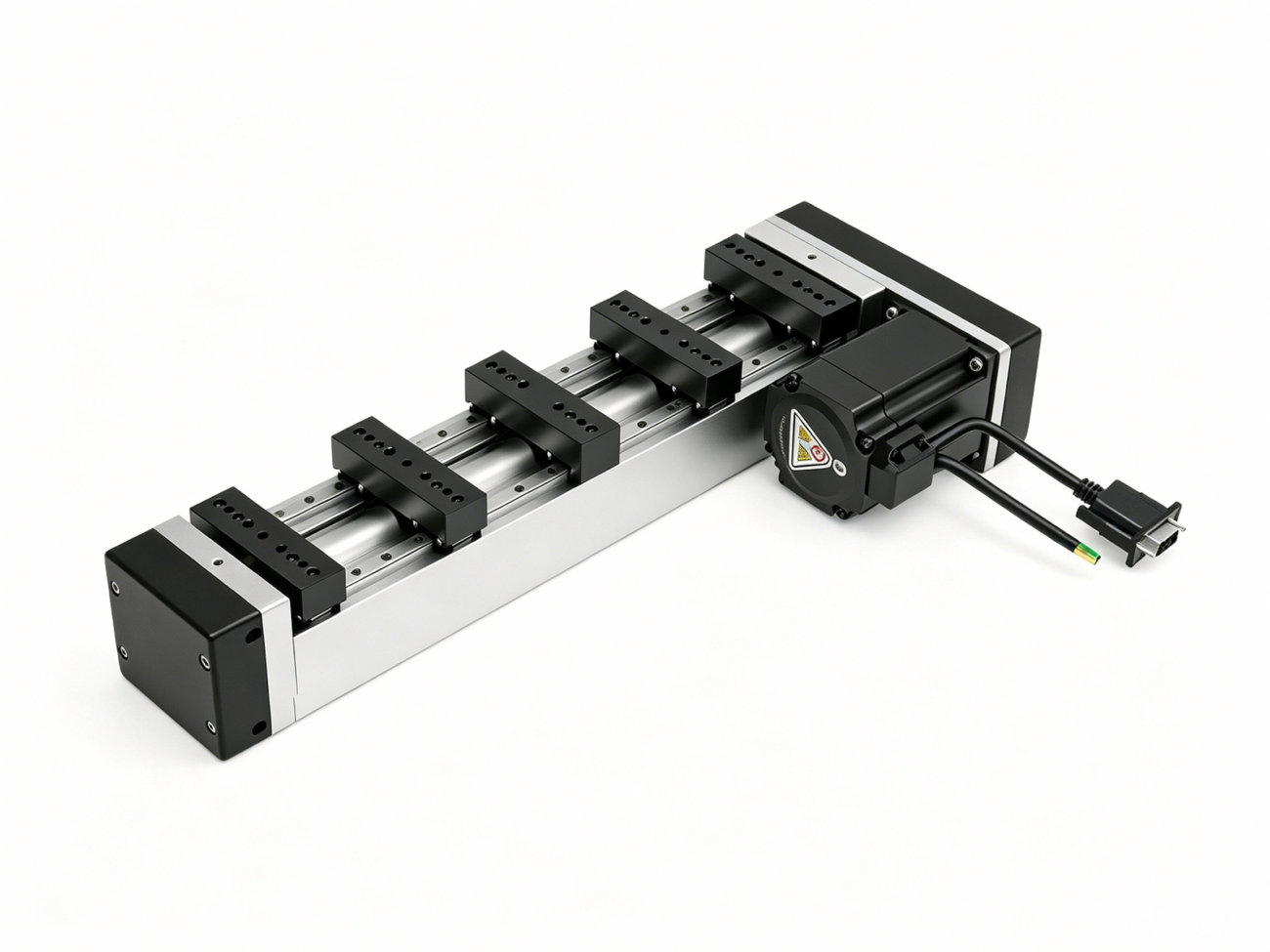
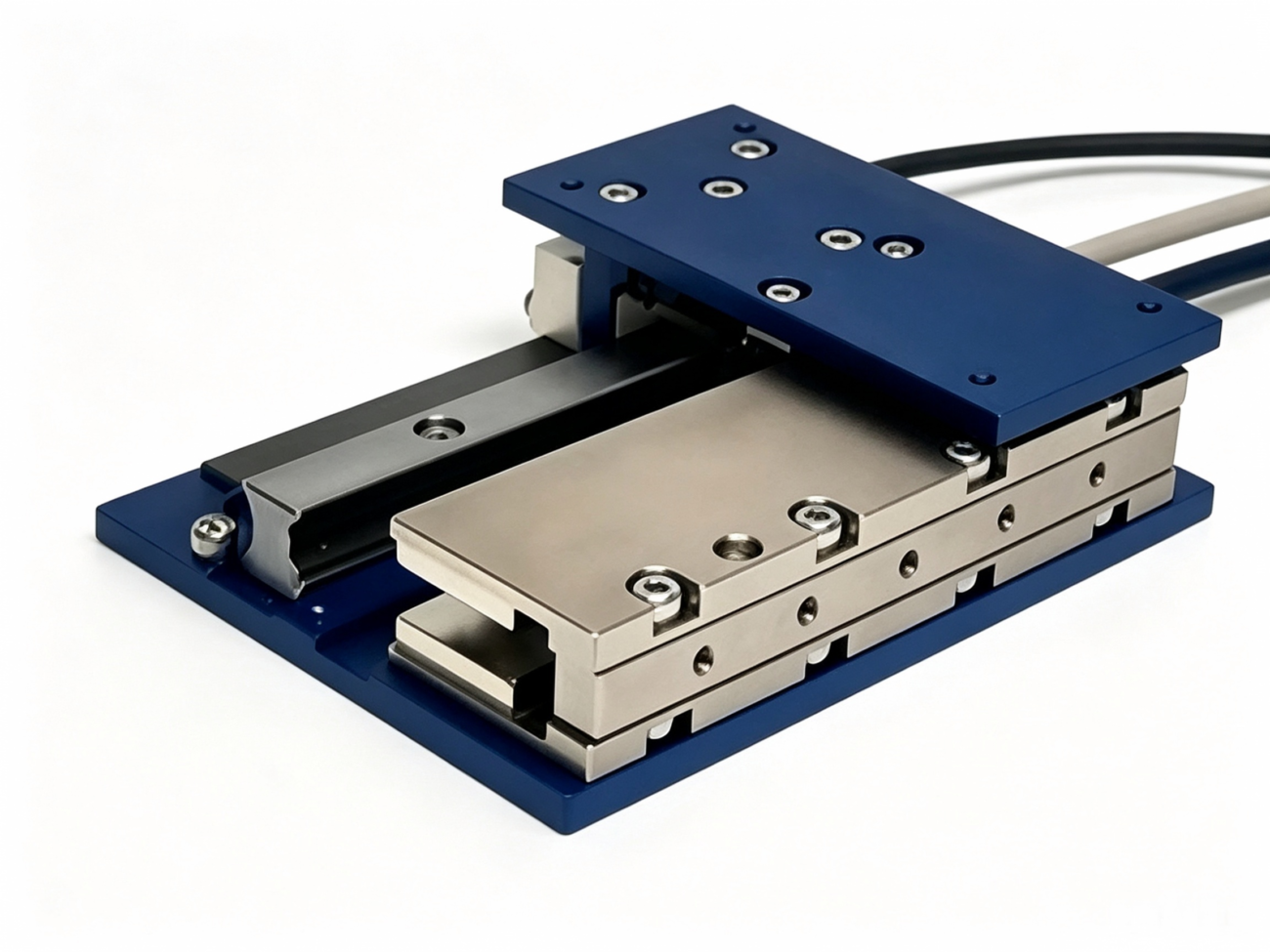
Integrated Linear Motor Stages: Pre-assembled with linear encoder, guide rail and mounting base, plug-and-playWe support OEM, ODM custom stroke, thrust, winding parameter and structural modification, matching all mainstream servo drive brands.
6. How to Choose the Right Linear Motor for Your Automation Machine
Three key factors for motor selection:
Dynamic indicators: Required acceleration, max speed and cycle time
Load conditions: Moving mass, continuous thrust and peak force demand
Application environment: Cleanroom grade, temperature, stroke length and precision tolerance
Our engineering team offers free linear motor selection guides and technical datasheets for machine design reference.
7. Conclusion & Custom Linear Motion Solution Inquiry
Against the backdrop of global manufacturing upgrading, linear motor direct-drive technology is the definitive motion control trend replacing traditional mechanical transmission systems. Its unmatched precision, dynamic performance and low maintenance cost create long-term competitive advantages for automation equipment manufacturers.
HCY Automation delivers integrated solutions across motion control, linear motion, robotics, machine vision, pneumatic systems, and precision gearboxes to help global manufacturers build smarter, faster, and more reliable production lines. Our engineering team helps you select and integrate the right motion control, robotics, and automation components for your specific application.