Understanding the Role of Solenoid Valves in Modern Pneumatic Automation
In modern industrial automation, solenoid valves are one of the most important control elements for converting electrical signals into mechanical pneumatic actions. From automotive assembly lines and semiconductor equipment to packaging machinery and intelligent manufacturing systems, solenoid valves provide fast, reliable, and precise control of compressed air flow.
A solenoid valve is an electrically operated valve that uses an electromagnetic coil to control the opening and closing of an air or fluid passage. When an electrical signal is applied, the coil generates a magnetic field that moves the internal plunger or armature, allowing compressed air to flow through the valve. When the signal disappears, the valve returns to its original position through a spring mechanism.
In a modern pneumatic system, solenoid valves are not used as isolated components. Instead, they work together with Pneumatic Components, controllers, sensors, actuators, and communication modules to create complete automation solutions. These integrated systems are widely applied in hydraulics & pneumatics, factory automation, automotive production, robotics, and industrial machinery.
HCY Automation provides advanced industrial automation solutions, including pneumatic control products, motion control components, and integrated automation systems. As an authorized distributor of pneumatic airtac products, HCY Automation supplies high-quality airtac valves, pneumatic actuators, and automation components for global industrial customers.
What Are Solenoid Valves Used For?
The primary purpose of solenoid valves is to control the direction, pressure, and flow of compressed air or other fluids in an automated system. They act as the electronic switching element inside a pneumatic circuit, allowing PLC controllers or industrial computers to operate mechanical devices automatically.
The most common applications of solenoid valves include:
Application Area
Function of Solenoid Valves
Automotive manufacturing
Control pneumatic actuators, assembly tools, and production robots
Packaging machinery
Control cylinders for filling, sealing, labeling, and sorting
Factory automation
Manage automated movement and positioning systems
Medical equipment
Control air pressure and fluid flow
Food processing
Provide hygienic pneumatic operation
Semiconductor equipment
Enable precise motion control
In a typical automation system, solenoid valves receive signals from a PLC or industrial controller. The valve then directs compressed air toward a Pneumatic cylinder or air cylinder, causing linear movement.
For example, when a PLC sends an ON signal, a directional pneumatic control valve activates and supplies compressed air to one side of a cylinder. The cylinder rod extends and completes a mechanical operation. When the signal changes, the valve reverses airflow and retracts the actuator.
This simple operating principle allows solenoid valves to control thousands of automated processes with high reliability.
The Relationship Between Solenoid Valves and Pneumatic Components
A complete pneumatic automation system consists of multiple interconnected parts. Solenoid valves serve as the control center, while other pneumatic components perform energy conversion and mechanical movement.
Among these components, the actuator is usually a pneumatic cylinder or air cylinder, while solenoid valves determine how the actuator operates.
A typical automation structure is:
Compressed Air Source → Air Treatment → Solenoid Valves → Pneumatic Cylinder → Mechanical Motion
Different machines require different combinations of pneumatic cylinder parts, air cylinder parts, and valve configurations. For example:
High-speed assembly machines may use compact valves with miniature pneumatic cylinders.
Heavy industrial equipment may require larger pneumatic actuators and durable valve terminals.
Precision automation systems may combine miniature pneumatic piston designs with advanced electronic valve control.
How Solenoid Valves Improve Pneumatic Circuit Performance
A pneumatic circuit is a controlled pathway that manages compressed air movement between valves and actuators. In traditional systems, each valve may require separate wiring, creating complex installation challenges.
Modern solenoid valves solve this problem by integrating electrical control and pneumatic switching functions.
A basic pneumatic control structure includes:
Component
Function
Compressor
Generates compressed air
Filter regulator
Controls air quality and pressure
Solenoid valves
Electrically control airflow
Pneumatic cylinder components
Convert air energy into motion
Sensors
Provide feedback signals
PLC
Controls operation logic
A basic pneumatic circuit may only contain one cylinder and one valve. However, complex industrial systems may contain hundreds of solenoid valves connected through advanced communication networks.
With modern automation technology, companies increasingly use:
electro pneumatic circuit
pneumatic logic circuit
pneumatic logic gates
cascade pneumatic circuit
These technologies improve machine flexibility and reduce troubleshooting time.
Valve Terminal Technology: The Next Generation of Solenoid Valve Control
Traditional pneumatic systems often require many individual wires connecting each valve to the controller. As machines become larger and more intelligent, this approach creates problems including:
Complex wiring
Higher installation costs
Difficult maintenance
Limited scalability
Valve terminal technology was developed to solve these challenges.
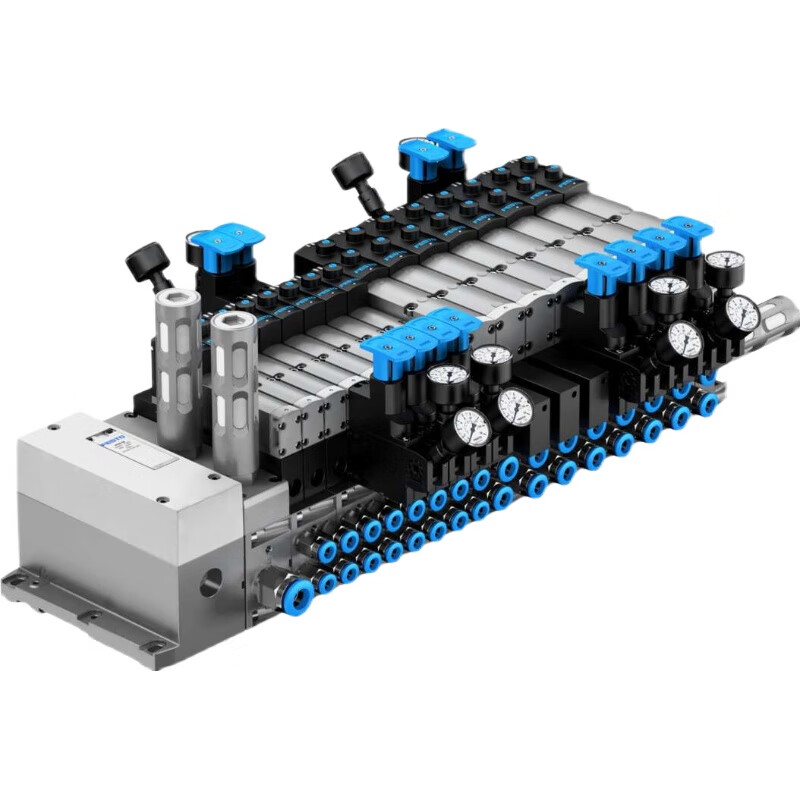
A valve terminal, also called a valve manifold, integrates multiple solenoid valves, signal modules, and communication interfaces into one compact control unit.
Modern valve terminals include:
Multipole connector valve terminals
Fieldbus valve terminals
Modular valve terminals
Programmable valve terminals
These systems are widely used in automotive, heavy industry, and smart manufacturing.
The earliest valve terminal design used multipole connectors. Instead of connecting every individual solenoid valve separately, multiple valves could share one electrical connection.
The advantages include:
Reduced wiring complexity
Faster installation
Lower maintenance requirements
Improved system reliability
A multipole valve terminal connects PLC signals, sensors, and solenoid valves through a single cable system.
Compared with traditional pneumatic control methods, this design eliminates additional junction boxes and reduces installation time.
For small and medium automation equipment, multipole valve terminals remain a practical and cost-effective solution.
Fieldbus Valve Terminal: Intelligent Network Control
With the development of Industry 4.0, modern factories require intelligent communication between machines and control systems.
Fieldbus valve terminals allow solenoid valves to communicate directly with PLC systems through industrial networks.
Common protocols include:
PROFINET
EtherCAT
Ethernet/IP
CANopen
The benefits of fieldbus valve terminals include:
Feature
Advantage
Digital communication
Reduced electromagnetic interference
Remote diagnostics
Faster troubleshooting
Modular expansion
Easy system upgrades
Reduced wiring
Lower installation cost
Fieldbus systems are especially valuable in automotive manufacturing, where hundreds of pneumatic operations must work together with high precision.
HCY Automation provides integrated pneumatic automation solutions using advanced valve terminal technology, helping manufacturers improve production efficiency and reduce downtime.
As manufacturing requirements become more complex, factories need automation systems that can adapt quickly to changing production demands. This is why modular valve terminal technology has become increasingly important.
A modular valve terminal combines multiple solenoid valves, electrical modules, communication interfaces, and control units into a flexible platform. Unlike traditional fixed pneumatic assemblies, modular systems allow users to add or remove valve sections according to application requirements.
The main advantages of modular valve terminals include:
Feature
Industrial Benefit
Flexible configuration
Supports different numbers of valves and I/O modules
Easy expansion
Allows future machine upgrades
Compact design
Saves installation space
Integrated diagnostics
Reduces maintenance time
Network compatibility
Supports Industry 4.0 automation
In a modern factory, modular valve terminals can connect multiple pneumatic components, including cylinders, sensors, and actuators, while reducing the complexity of the overall pneumatic system components.
For example, an automotive production line may require different pneumatic actions for welding, positioning, gripping, and assembly. Instead of installing hundreds of individual valves, engineers can install centralized modular valve terminals that control all pneumatic operations efficiently.
Solenoid Valves in Automotive Manufacturing Applications
The automotive industry is one of the largest users of solenoid valves because vehicle production requires thousands of repetitive and precise pneumatic movements.
Typical applications include:
Body assembly lines
Welding equipment
Robotic gripping systems
Door and window testing systems
Brake system testing
Battery production equipment
In automotive factories, solenoid valves control pneumatic actuators that perform fast and accurate movements.
For example:
A robotic assembly station may use a pneumatic cylinder to clamp a component into position. The PLC sends a signal to the solenoid valve, which directs compressed air into the cylinder. The actuator extends, holds the component, and retracts after assembly is completed.
This process requires reliable valve response, stable airflow, and precise control.
For automotive safety applications, pneumatic systems may also integrate components such as:
pneumatic disc brake
pneumatic disk brake
pneumatic cylinder brake
These systems require high-quality hydraulic and pneumatic components to ensure safe and consistent operation.
Solenoid Valves in Heavy Industry Applications
Heavy industries such as metal processing, mining equipment, and construction machinery operate in demanding environments. These industries require durable automation components capable of handling vibration, dust, temperature changes, and continuous operation.
In these applications, solenoid valves are used for:
Material handling systems
Press machines
Conveyor controls
Hydraulic and pneumatic control systems
Industrial lifting equipment
A reliable valve system improves productivity by ensuring that pneumatic actuators operate consistently.
Heavy industrial machines often combine:
hydraulic and pneumatic hub
hydraulic and pneumatic components
Advanced pneumatic control modules
The combination of hydraulic and pneumatic technologies allows engineers to select the best solution for different mechanical requirements.
While hydraulics provide high force output, pneumatic systems offer:
Faster response
Cleaner operation
Lower maintenance
Easier installation
Therefore, solenoid valves remain a key component in hybrid industrial systems.
Solenoid Valves and Pneumatic Cylinders
The relationship between solenoid valves and cylinders is fundamental in pneumatic automation.
A cylinder cannot operate automatically without a control valve. The valve determines:
Air direction
Cylinder movement
Operating speed
Motion sequence
Common actuator types include:
Standard Pneumatic Cylinder
A standard pneumatic cylinder provides reliable linear movement for industrial machinery.
Applications include:
Assembly equipment
Packaging machines
Material transfer systems
Miniature Pneumatic Cylinder
A miniature pneumatic cylinders design is used when installation space is limited.
These compact actuators are common in:
Electronic assembly machines
Medical equipment
Small automation devices
Pneumatic Rotary Actuator
Rotary pneumatic devices use compressed air to create rotational movement.
They are often controlled by compact solenoid valves in automated positioning systems.
Miniature Pneumatic Motor
A miniature pneumatic motor provides rotational power for small automation applications requiring lightweight and explosion-safe operation.
Understanding Pneumatic Cylinder Parts and Valve Integration
A complete actuator assembly includes many components. Understanding air cylinder parts and pneumatic cylinder parts helps engineers design efficient automation systems.
The performance of a pneumatic actuator depends on the compatibility between the cylinder and the solenoid valves.
Incorrect valve selection may cause:
Slow cylinder movement
Reduced force
Air consumption problems
Unstable operation
Therefore, selecting suitable pneumatic valve parts and actuator specifications is essential for system efficiency.
Pneumatic Logic and Control Technologies
Modern pneumatic automation has evolved beyond simple ON/OFF control. Advanced systems use pneumatic logic technologies to improve flexibility.
A pneumatic logic circuit uses pneumatic signals instead of traditional electrical control methods.
Common logic functions include:
AND operation
OR operation
Sequential control
Timing control
These functions can be created using:
pneumatic logic gates
Mechanical valves
Pressure sensors
Control modules
Although PLC-based control dominates modern factories, pneumatic logic remains useful in environments where electrical systems may not be suitable.
Examples include:
Explosion-risk areas
Chemical processing facilities
Simple machine automation
Simple Pneumatic Circuit and Basic Automation Examples
A simple pneumatic circuit usually contains:
Air compressor
Filter regulator
Solenoid valve
Cylinder
Control switch
Example operation:
Operator presses a button.
Electrical signal activates the solenoid valve.
Valve directs compressed air to the cylinder.
Cylinder extends.
Signal changes and cylinder retracts.
A more advanced cascade pneumatic circuit uses multiple control stages to complete complex sequences.
For example:
Cylinder A extends → Cylinder B moves → Cylinder C returns → System resets
Such sequences are common in automated production equipment.
Push Button and Foot Pedal Pneumatic Control Systems
Not every pneumatic machine requires electronic control. Some simple systems use manual pneumatic controls.
A push button pneumatic valve allows operators to manually control airflow by pressing a button.
Applications include:
Small assembly equipment
Manual production stations
Testing machines
A pneumatic foot pedal valve allows hands-free operation.
Typical applications include:
Welding equipment
Clamping systems
Workshop machinery
Although these solutions are simpler than PLC-controlled solenoid valves, they remain valuable for cost-effective automation.
Choosing the Right Solenoid Valve Supplier
Selecting the correct supplier is critical because valve quality directly affects machine reliability.
Professional pneumatic components suppliers should provide:
Stable product quality
Technical support
Custom solutions
Fast delivery
Engineering assistance
Leading brands in the pneumatic industry include:
Brand
Country
Product Strength
FESTO
Germany
Advanced industrial pneumatic solutions
SMC
Japan
Precision pneumatic components
AIRTAC
China
Cost-effective industrial automation products
HCY Automation works with leading pneumatic manufacturers and is an authorized distributor of AIRTAC products.
Through cooperation with AIRTAC, HCY Automation provides:
airtac valves
Pneumatic cylinders
Valve terminals
Air preparation units
Industrial automation solutions
For customers searching for reliable pneumatic components ltd solutions, HCY Automation offers professional technical consultation, product selection support, and customized automation recommendations.
HCY Automation Valve Terminal Solutions for Modern Industrial Automation
As industrial automation continues moving toward intelligent manufacturing and Industry 4.0, the demand for integrated pneumatic control systems continues to grow. Traditional pneumatic systems with separate valves, independent wiring, and complex control cabinets are gradually being replaced by compact, networked, and modular solutions.
HCY Automation focuses on providing advanced industrial automation products, including solenoid valves, valve terminals, motion control components, and complete pneumatic solutions. By combining reliable components with engineering expertise, HCY Automation helps manufacturers improve productivity, reduce installation costs, and achieve more efficient machine control.
For customers requiring high-performance pneumatic systems, HCY Automation offers:
Integrated valve terminal solutions
Fieldbus-controlled pneumatic modules
Modular automation components
Customized pneumatic assemblies
Technical support for system integration
As an authorized AIRTAC distributor, HCY Automation supplies reliable pneumatic airtac solutions, including airtac valves, cylinders, and related automation products. These products are widely used in manufacturing industries requiring stable operation, competitive pricing, and global supply capability.
Why Choose HCY Automation for Pneumatic Control Components?
Selecting the right automation partner is essential for achieving long-term equipment reliability. HCY Automation provides more than individual components; it delivers complete automation support from product selection to system implementation.
Key advantages include:
HCY Automation Advantage
Customer Benefit
Authorized AIRTAC distributor
Genuine products and reliable supply
Professional automation experience
Accurate component selection
Complete pneumatic portfolio
One-stop purchasing solution
Customized engineering support
Optimized machine performance
Global service capability
Faster communication and delivery
For manufacturers, automation integrators, and equipment builders, choosing experienced pneumatic components suppliers reduces project risks and improves overall system performance.
Solenoid Valves and Industry 4.0 Smart Manufacturing
The future development of solenoid valves is closely connected with intelligent manufacturing.
Modern factories require pneumatic systems that can provide:
Real-time monitoring
Remote diagnostics
Predictive maintenance
Data communication
Flexible production changes
Advanced valve terminals equipped with fieldbus communication allow solenoid valves to become intelligent network devices rather than simple switching components.
Through industrial communication protocols, engineers can monitor:
Valve operating status
Electrical faults
Pressure abnormalities
Communication errors
Maintenance requirements
This transformation supports smart factory development and improves equipment availability.
Comparison: Traditional Solenoid Valve Systems vs Smart Valve Terminal Systems
Feature
Traditional System
Smart Valve Terminal System
Wiring method
Individual wiring
Multipole or fieldbus connection
Installation complexity
High
Lower
Diagnostics
Limited
Real-time monitoring
Expansion capability
Difficult
Modular expansion
Maintenance
Longer downtime
Faster troubleshooting
Industry 4.0 compatibility
Limited
Excellent
Modern manufacturers increasingly select integrated valve terminals because they simplify machine design while improving operational efficiency.
How to Select the Correct Solenoid Valve Solution
Choosing suitable solenoid valves requires evaluating several technical factors.
1. Operating Pressure
Different applications require different pressure ranges.
Engineers should consider:
Working pressure
Maximum pressure
Air supply stability
2. Flow Rate Requirement
The valve flow rate determines actuator speed.
Large cylinders require higher flow valves, while compact systems may use smaller valves.
3. Valve Configuration
Common configurations include:
2-way solenoid valves
3-way solenoid valves
4-way solenoid valves
5-way directional valves
The selection depends on actuator requirements.
4. Communication Method
Modern systems may choose:
Direct electrical connection
Multipole connection
Fieldbus communication
For complex automation lines, fieldbus valve terminals provide better scalability.
5. Environmental Conditions
Industrial environments may require:
High protection ratings
Temperature resistance
Vibration resistance
Corrosion protection
HCY Automation helps customers select suitable solenoid valves according to machine requirements and operating conditions.
Maintenance Tips for Solenoid Valve Systems
Proper maintenance extends the service life of pneumatic equipment.
Recommended practices include:
Maintain Clean Air Supply
Compressed air quality directly affects valve performance.
Install:
Filters
Regulators
Lubricators when required
Check Pneumatic Valve Parts Regularly
Inspect:
Valve seals
Electrical connectors
Internal components
Air leakage points
Monitor Cylinder Performance
Abnormal cylinder movement may indicate:
Valve failure
Pressure problems
Damaged pneumatic cylinder components
Use Original Replacement Parts
Using compatible pneumatic cylinder parts and genuine valve components ensures stable operation.
Applications of Solenoid Valves Across Different Industries
The versatility of solenoid valves makes them suitable for many industries.
Packaging Industry
Packaging machines use solenoid valves for:
Product positioning
Filling control
Sealing operations
Sorting mechanisms
Electronics Manufacturing
Precision equipment uses compact valves with:
miniature pneumatic cylinders
Sensors
Small actuators
Food and Beverage Industry
Pneumatic systems provide:
Clean operation
Fast response
Easy maintenance
Automotive Industry
Automotive production relies heavily on:
Valve terminals
Pneumatic actuators
Robotic systems
Automated assembly equipment
Medical Equipment
Compact pneumatic solutions use:
Mini valves
Precision actuators
Controlled airflow systems
The Future of Pneumatic Automation Components
Although electric motion systems continue developing, pneumatic technology remains essential because of its simplicity, durability, and cost efficiency.
Future pneumatic automation components will focus on:
Smaller designs
Lower energy consumption
Intelligent communication
Predictive maintenance
Modular architecture
Advanced solenoid valves will continue to serve as the connection between digital control systems and mechanical movement.
Manufacturers will increasingly combine:
Smart valve terminals
Industrial networks
Sensors
Artificial intelligence monitoring
to create highly efficient automation systems.
Solenoid Valves Are the Foundation of Modern Pneumatic Automation
So, what are solenoid valves used for?
The answer is simple: solenoid valves are used to electronically control compressed air flow and automate mechanical movement in industrial systems.
From a simple pneumatic actuator to a complete smart factory, solenoid valves provide the essential control function that connects electrical intelligence with pneumatic power.
They work together with:
Pneumatic Components
Pneumatic cylinder
air cylinder
pneumatic control valve
pneumatic system components
pneumatic circuit
pneumatic cylinder parts
pneumatic air cylinder parts
to create reliable automation solutions.
The evolution from traditional valves to fieldbus-based modular valve terminals has greatly improved industrial efficiency. Modern valve terminal technology reduces wiring complexity, improves diagnostics, and supports flexible production systems.
HCY Automation delivers professional pneumatic automation solutions, offering high-quality products from trusted manufacturers including FESTO, SMC, and AIRTAC. As an authorized AIRTAC distributor, HCY Automation provides dependable airtac valves, pneumatic control products, and customized automation solutions for customers worldwide.
Whether you need individual solenoid valves, complete valve terminals, or integrated pneumatic automation systems, HCY Automation can help you build a more efficient, reliable, and intelligent manufacturing solution.
Contact HCY Automation today for professional support on pneumatic control systems, valve terminals, and industrial automation components.
HCY Automation delivers integrated solutions across motion control, linear motion, robotics, machine vision, pneumatic systems, and precision gearboxes to help global manufacturers build smarter, faster, and more reliable production lines. Our engineering team helps you select and integrate the right motion control, robotics, and automation components for your specific application.