What Is a Variable Pitch Module? A Complete Guide to Working Principles, Applications, and Selection
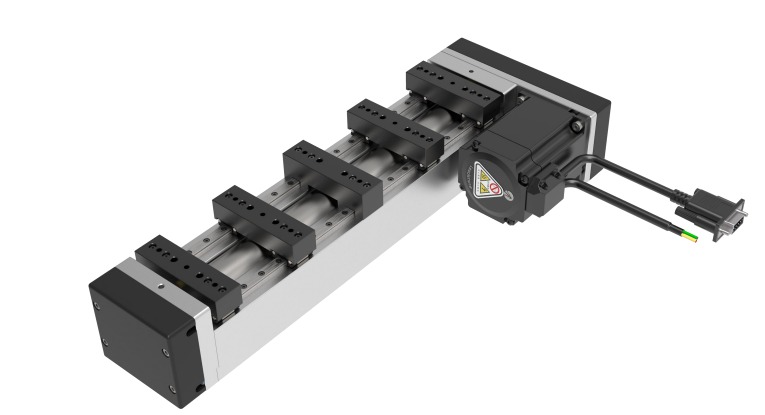
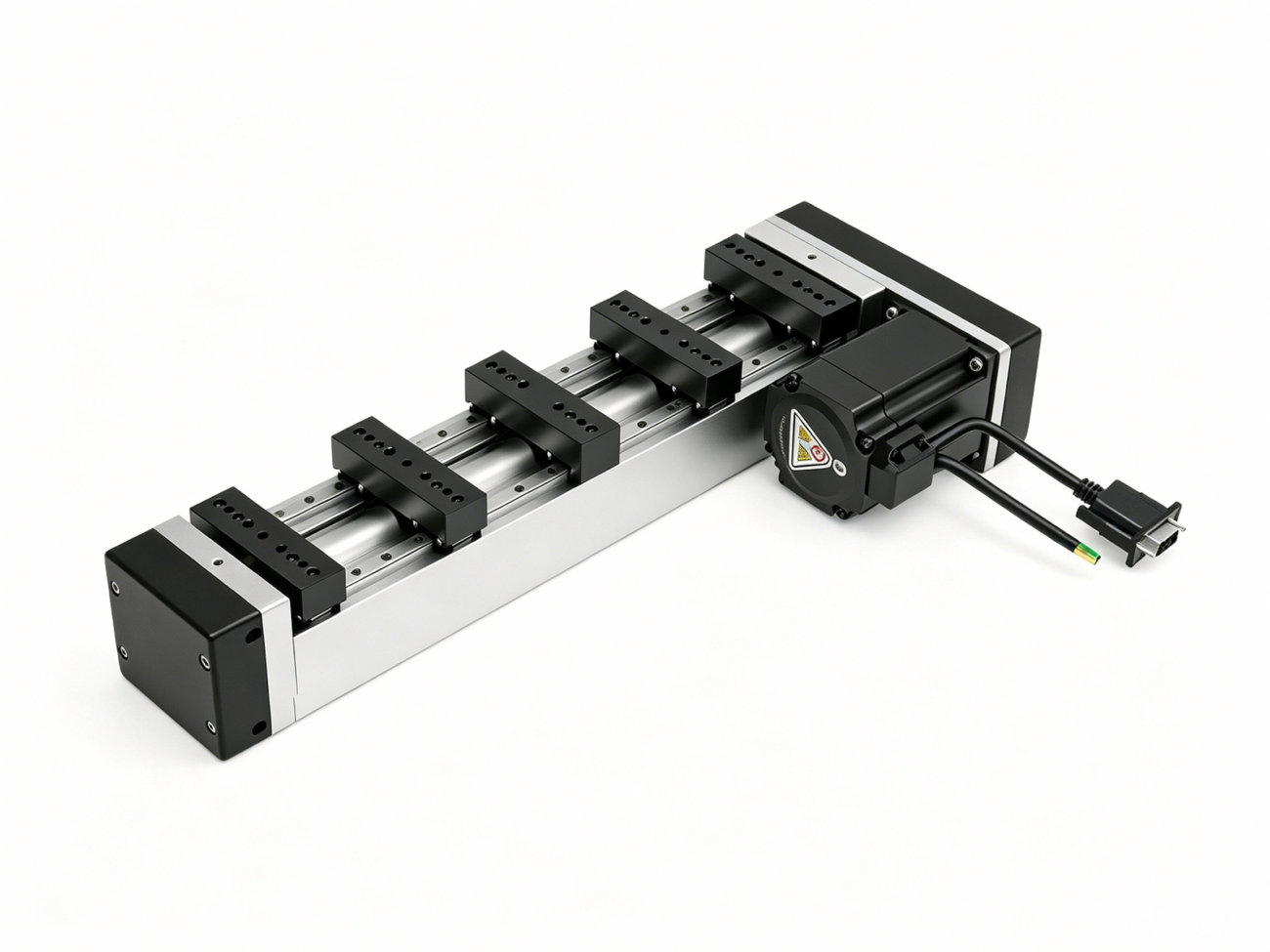
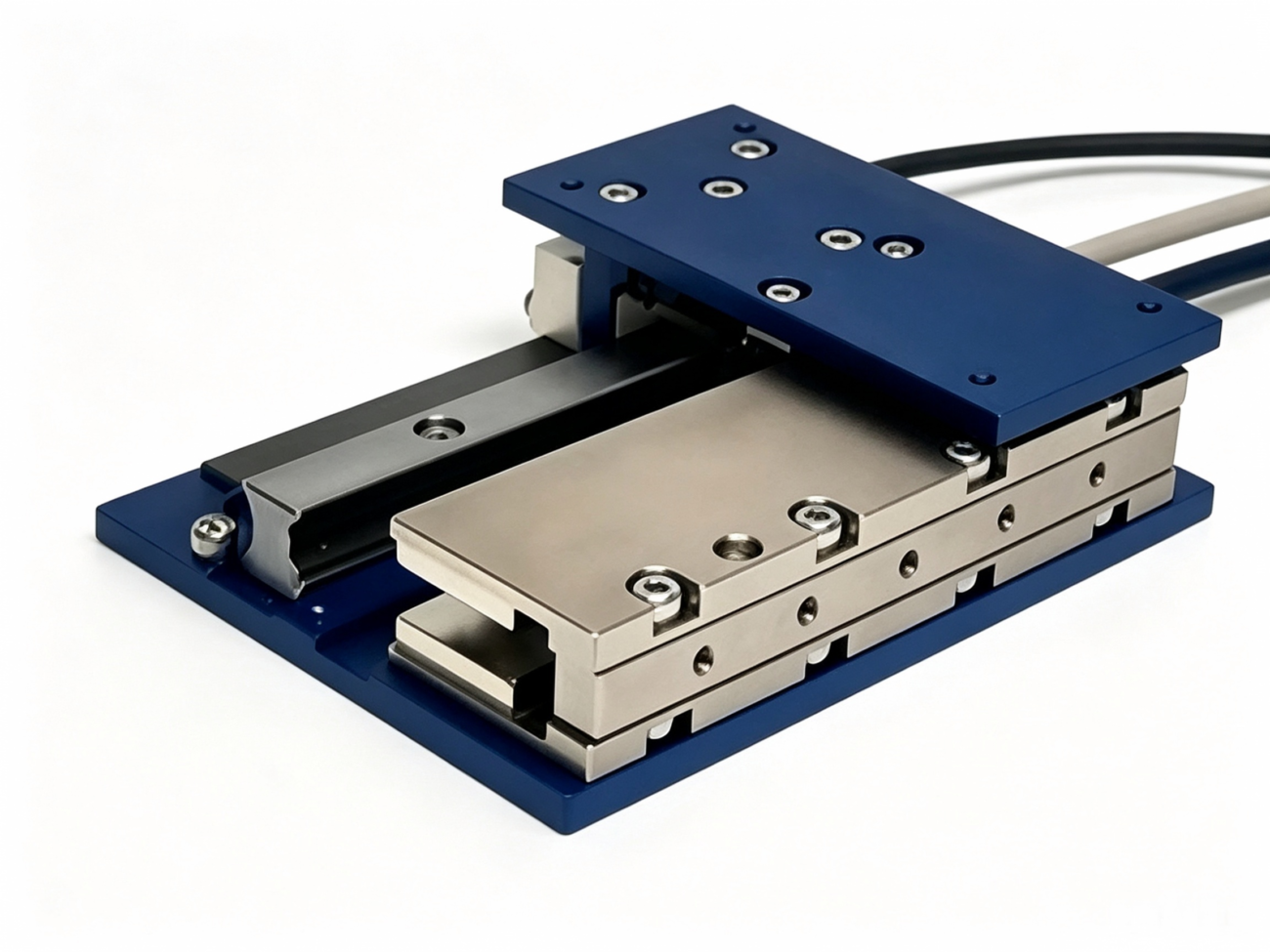
TheVariable Pitch Module is a precision motion solution that enables synchronized spacing adjustment between multiple sliders, grippers, suction nozzles, or workstations in automated production systems. HCY Automation provides custom multi-station variable pitch modules with flexible station quantities, pitch ranges, dimensions, and slider configurations to meet different automation requirements,include a 57 stepper motor, 200 W servo motor, and 400 W servo motor, while the sensor configuration is optional.
What Is a Variable Pitch Module? Multi-Station Variable Pitch Module
A variable pitch module is a mechanical motion component that changes the spacing between multiple sliders or tooling positions.
Instead of manually adjusting each position, the module allows multiple positions to move together according to the required pitch.
For example, an automation system may need to handle several products simultaneously:
Pick → Change Pitch → Transfer → Place
The products may need to remain relatively close together during one operation and move farther apart for another process.
A variable pitch module provides the mechanical movement required for this type of spacing adjustment.
The HCY configuration described in this article uses 20 sliders.
The specified pitch range is:
8 mm → 60 mm
This gives the system a much wider pitch adjustment range than a mechanism designed only for a single fixed spacing.
The 20-slider configuration can be considered for applications involving multiple components, tooling positions, grippers, or vacuum cups that need coordinated pitch adjustment.
The actual number of sliders, pitch range, and tooling configuration can be customized according to the application.
HCY Variable Pitch Module Specifications
Parameter
HCY Variable Pitch Module
Module Type
Variable Pitch Module Slider
Slider Quantity
20 pcs
Pitch Range
8–60 mm
Repeatability
±0.02 mm
Pitch Accuracy
±0.15 mm
Slider Height
±0.1 mm
Input Torque
0.8 Nm or above
Original Sensor
Optional
Drive Mode
57 Stepper Motor / 200 W Servo Motor / 400 W Servo Motor
Customization
Available
These specifications describe the current configuration. Actual specifications can be adjusted according to the requirements of a specific automation project.
What Does the 8–60 mm Pitch Range Mean?
Pitch refers to the center-to-center distance between adjacent sliders or tooling positions.
For the HCY Adjustable Pitch Module, the specified range is:
Minimum pitch: 8 mm
Maximum pitch: 60 mm
The relatively wide adjustment range allows the same basic mechanism to accommodate different spacing requirements.
For example, an automation system may require a compact arrangement during product pickup and a wider arrangement during downstream placement.
The actual usable pitch also depends on the dimensions of the product and tooling.
At a small pitch such as 8 mm, the designer should check the physical clearance between:
Products
Grippers
Vacuum cups
Mounting plates
Cables
Sensors
Adjacent tooling
At a larger pitch such as 60 mm, the designer should consider the overall stroke and machine envelope.
Why 20 Sliders?
The number of sliders is an important design parameter in a variable pitch system.
A 20-slider configuration allows multiple products or tooling positions to be adjusted together rather than using a separate positioning mechanism for every position.
This type of arrangement can be useful in multi-position handling, assembly, inspection, sorting, and transfer systems.
However, the required number of sliders depends on the machine layout. HCY can evaluate different slider quantities when the standard 20-slider configuration does not match the application.
Repeatability: ±0.02 mm
The HCY Variable Pitch Module has a specified repeatability of:
±0.02 mm
Repeatability describes how consistently the mechanism can return to the same position under the specified operating conditions.
This is important in applications where the pitch adjustment is repeated over many production cycles.
For example, if the machine repeatedly returns to a programmed pitch, consistent positioning helps maintain the same relative arrangement between the tooling positions.
Repeatability should be evaluated together with the actual process tolerance and tooling accuracy.
Pitch Accuracy: ±0.15 mm
The specified pitch accuracy is:
±0.15 mm
Pitch accuracy and repeatability describe different characteristics.
Repeatability: consistency when returning to the same position.
Pitch accuracy: how closely the actual pitch corresponds to the target pitch.
For applications involving precise product alignment, both specifications should be considered.
The required accuracy also depends on the downstream process. A packaging application may have different requirements from a precision assembly or inspection application.
Slider Height: ±0.1 mm
The specified slider height is:
±0.1 mm
This can be important when multiple tooling positions are installed on the sliders.
For example, a 20-position system may use:
Vacuum cups
Mechanical grippers
Component holders
Inspection fixtures
Custom tooling
Maintaining consistent slider height can simplify tooling alignment and help ensure that multiple positions interact with the products in a consistent manner.
Drive Options
The HCY Variable Pitch Mechanism can be configured with different drive options:
57 stepper motor
200 W servo motor
400 W servo motor
The appropriate drive depends on the complete motion requirement.
57 Stepper Motor
The 57 stepper motor can be considered for applications where the required positioning, speed, acceleration, and operating cycle are compatible with stepper-based control.
200 W Servo Motor
A 200 W servo motor can be considered for applications requiring servo-based motion control and a more flexible motion profile.
400 W Servo Motor
The 400 W servo option provides a higher motor power configuration for applications with greater motion requirements.
The final motor selection should be based on moving load, tooling weight, acceleration, inertia, cycle time, and required pitch-adjustment speed rather than motor power alone.
Input Torque: ≥0.8 Nm
The specified input torque is:
0.8 Nm or above
This specification should be considered when matching the motor and transmission system to the mechanical load.
For an actual machine, engineers should also evaluate:
Product weight
Tooling weight
Moving mass
Acceleration
Deceleration
Cycle frequency
Mechanical inertia
Pitch-change frequency
These factors determine the actual motor and drive requirements.
Variable Pitch Module for Pick-and-Place
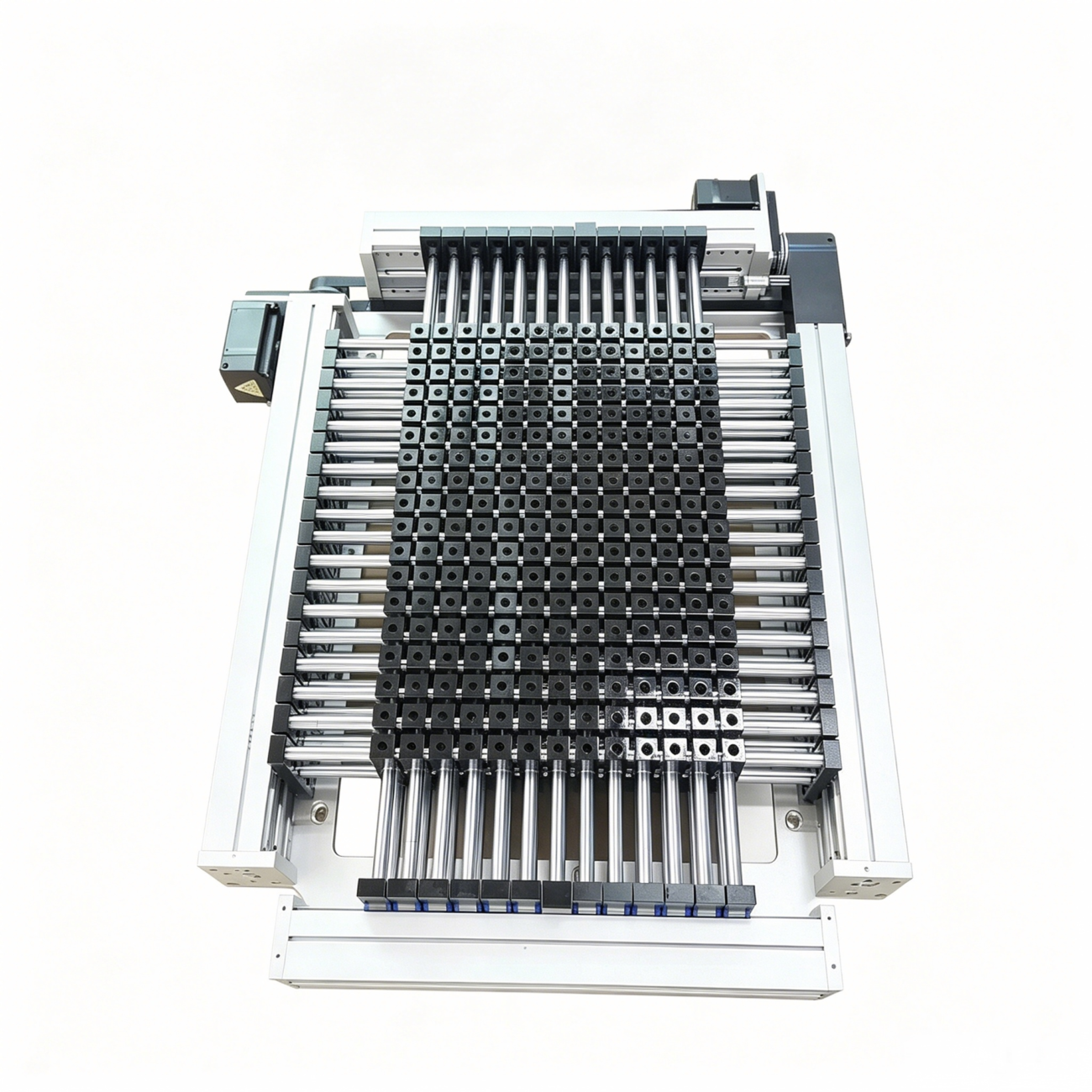
One of the common applications for variable pitch technology is multi-position pick-and-place.
For example, 20 products can be handled simultaneously using 20 tooling positions.
The variable pitch module adjusts the spacing between the positions before the next process.
The robot, gantry, or other motion system can then move the complete tooling assembly while the variable pitch module controls the relative spacing between individual positions.
This separation of functions can simplify the design of multi-position handling equipment.
Applications
The HCY Variable Pitch Module can be considered for a range of automation applications, including:
Multi-Position Pick-and-Place
Multiple products can be handled simultaneously when the required tooling arrangement falls within the module’s operating specifications.
Electronics Manufacturing
Compact components often require controlled spacing during transfer, assembly, or inspection.
Automated Assembly
Multiple components can be positioned simultaneously before entering an assembly station.
Inspection Systems
Products may need to be separated or grouped to match the requirements of a vision or measurement process.
Packaging Automation
Different packaging stages may require different product spacing.
Robotic End-of-Arm Tooling
A variable pitch module can be integrated with grippers or vacuum tooling to adjust the spacing between multiple pickup positions.
HCY Supports Customized Variable Pitch Solutions
Not every automation project has the same pitch range, number of positions, tooling, or motor requirements.
For this reason, HCY supports customized Multi-Station Variable Pitch Module
Customization can be evaluated for parameters such as:
Slider quantity
Pitch range
Slider arrangement
Module dimensions
Drive mode
Motor configuration
Sensor configuration
Tooling interface
Mounting method
Product handling requirements
Application-specific mechanical requirements
For example, a project may require:
10 sliders instead of 20
or:
Pitch range of 10–40 mm instead of 8–60 mm
or:
A customized tooling interface for vacuum cups or grippers
These requirements can be evaluated as part of the engineering design process.
The purpose of customization is not simply to change one specification. The complete motion system should be considered so that the pitch mechanism, drive, tooling, load, and control system work together.
What Information Does HCY Need for a Custom Solution?
For a customized variable pitch project, the following information is useful:
Information
Example
Slider quantity
20
Minimum pitch
8 mm
Maximum pitch
60 mm
Product dimensions
Customer specification
Product weight
Customer specification
Tooling type
Vacuum / Gripper / Custom
Tooling weight
Customer specification
Cycle time
Customer specification
Pitch changes per cycle
Customer specification
Required repeatability
Customer specification
Required pitch accuracy
Customer specification
Drive preference
Stepper / Servo
Sensor requirement
Optional
Installation orientation
Customer specification
The more complete the application information, the easier it is to evaluate the mechanical and drive requirements.
Variable Pitch Module vs. Fixed Pitch Mechanism
A fixed-pitch mechanism is designed around a predetermined spacing.
A variable pitch module is intended for applications where that spacing needs to change.
Requirement
Fixed Pitch
Variable Pitch
Fixed product spacing
Suitable
Suitable
Adjustable spacing
Limited
Designed for this
Multiple product formats
May require mechanical changes
More flexible
Multi-position adjustment
Application dependent
Suitable
Programmable pitch
Limited
Possible with appropriate drive/control
Custom pitch range
Limited
Available depending on design
A fixed-pitch system may be sufficient when the production layout never changes.
A variable pitch system becomes more relevant when the same machine needs to handle different spacing requirements or when the spacing between processes is different.
How to Select a Variable Pitch Module
Before selecting a module, define the application requirements.
1. Number of Sliders
Determine how many products or tooling positions need to move together.
The current HCY configuration provides:
20 sliders
Customized quantities can also be evaluated.
2. Pitch Range
Define the required minimum and maximum pitch.
Current configuration:
8–60 mm
If the required range differs, HCY can evaluate a customized pitch configuration.
3. Product and Tooling Clearance
The nominal pitch does not define the actual clearance between adjacent products.
At small pitch values, check the dimensions of:
Product
Gripper
Vacuum cup
Mounting plate
Sensor
Cable
This is particularly important when operating close to the 8 mm minimum pitch.
4. Load and Inertia
Calculate the total moving mass, including:
Products
Tooling
Sliders
Mounting components
The motor selection should then be evaluated against acceleration, deceleration, cycle time, and inertia.
5. Accuracy and Repeatability
Define the required process tolerance.
The current HCY specification is:
Repeatability: ±0.02 mm
Pitch accuracy: ±0.15 mm
6. Drive Configuration
Choose between:
57 stepper motor
200 W servo motor
400 W servo motor
The final selection depends on the actual motion profile.
Frequently Asked Engineering Questions
What is the pitch range of the HCY Variable Pitch Module?
The current configuration provides an 8–60 mm pitch range. Other pitch ranges can be evaluated for customized applications.
How many sliders does the module have?
The current configuration uses 20 sliders. HCY can evaluate customized slider quantities according to the machine layout.
What is the repeatability?
The specified repeatability is ±0.02 mm.
What is the pitch accuracy?
The specified pitch accuracy is ±0.15 mm.
What motors are available?
The current drive options include a 57 stepper motor, 200 W servo motor, and 400 W servo motor.
Can HCY customize the variable pitch module?
Yes. HCY accepts customized variable pitch requirements. Slider quantity, pitch range, drive configuration, sensor arrangement, tooling interface, and other application-specific requirements can be evaluated.
Can the module be customized for a different pitch range?
Yes. The current configuration is 8–60 mm, but HCY can evaluate other pitch ranges according to the application.
Can the number of sliders be customized?
Yes. The current configuration uses 20 sliders, while different slider quantities can be evaluated for specific automation requirements.
Is the sensor included?
The original sensor is optional.
Can the module be used with robotic grippers or vacuum tooling?
The module can be integrated with application-specific tooling such as mechanical grippers and vacuum cups, provided that the tooling dimensions, load, inertia, and motion requirements are compatible with the selected configuration.
HCY Variable Pitch Module: Technical Summary
Item
Current Configuration
Module type
Variable Pitch Module Slider
Slider quantity
20 pcs
Pitch range
8–60 mm
Repeatability
±0.02 mm
Pitch accuracy
±0.15 mm
Slider height
±0.1 mm
Input torque
≥0.8 Nm
Sensor
Optional
Drive
57 stepper / 200 W servo / 400 W servo
Customization
Available
Conclusion
The main purpose of a variable pitch module is to adjust the spacing between multiple tooling or product positions as part of an automated process.
The current HCY configuration combines 20 sliders with an 8–60 mm pitch range, ±0.02 mm repeatability, and ±0.15 mm pitch accuracy. Stepper and servo drive options are available, and the sensor configuration is optional.
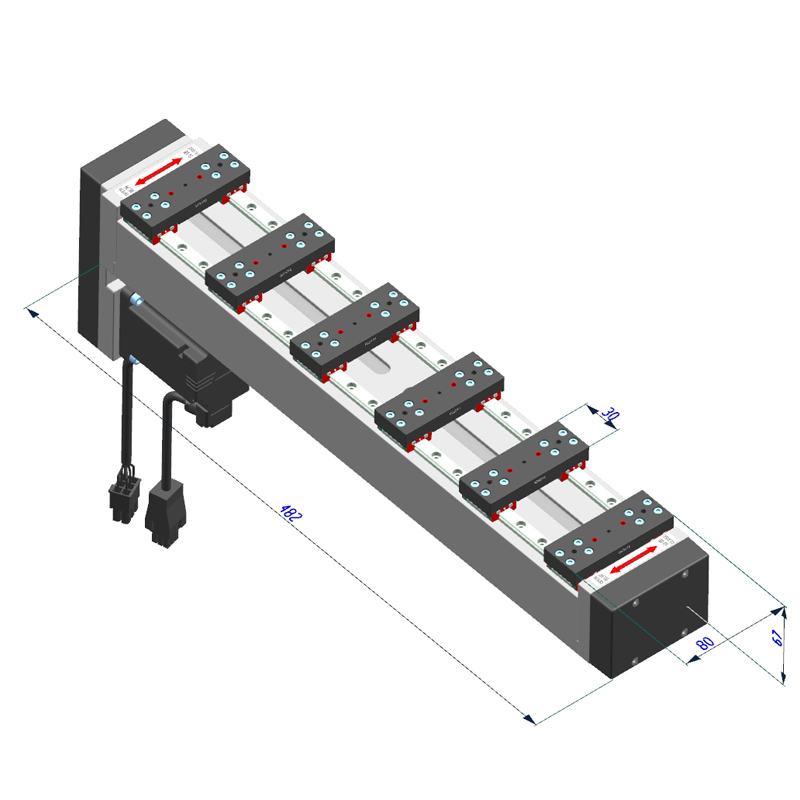
For applications that do not match the standard configuration, HCY can evaluate customized variable pitch solutions. Slider quantity, pitch range, drive configuration, tooling interface, sensor arrangement, and other application requirements can be considered during the engineering process. Dimensions
If you are designing a multi-position pick-and-place, assembly, inspection, packaging, or material-handling system, providing the required number of positions, pitch range, product dimensions, product weight, tooling information, and cycle time allows the variable pitch solution to be evaluated against the actual machine requirements.
Related Technical Topics
How Does a Variable Pitch Module Work?
How to Select a Variable Pitch Module
Variable Pitch vs. Fixed Pitch Mechanism
Variable Pitch Gripper for Robotic Pick-and-Place
Servo vs. Stepper Motor for Variable Pitch Applications
HCY Automation delivers integrated solutions across motion control, linear motion, robotics, machine vision, pneumatic systems, and precision gearboxes to help global manufacturers build smarter, faster, and more reliable production lines. Our engineering team helps you select and integrate the right motion control, robotics, and automation components for your specific application.