Production Servo Motor Cost Estimation and Pricing Guide
When companies plan industrial automation projects, one of the most common questions is: What is the cost of a production servo motor?
The answer depends on many technical factors, including motor power, torque output, speed range, encoder accuracy, environmental protection level, control system requirements, and manufacturer quality.
The cost of a production servo motorcan range from approximately $50 for basic compact units to more than $15,000 for fully customized industrial systems with advanced controllers, gearboxes, and engineering services.
For most industrial applications, the price of Servo Motors typically falls into these categories:
Servo Motors Category
Typical Price Range
Application Examples
Hobby / Small Servo Motors
$10 – $100
RC systems, education robotics, small devices
Standard Industrial Servo Motors
$100 – $500
CNC machines, packaging equipment, automation systems
Understanding these price levels helps engineers choose the right solution without paying for unnecessary specifications.
HCY Automation provides professional motion control solutions for global industrial customers, offering reliable Servo Motors, servo drives, integrated motors, and customized automation components.
Whether customers need a compact small servo motor or a powerful industrial motion system, HCY Automation helps optimize performance, reliability, and cost efficiency.
What Is the Price Range of Servo Motors?
A frequently searched question is:
What is the price range of servo motors?
The answer varies significantly depending on whether the motor is designed for consumer, commercial, or industrial applications.
Low-Cost Servo Motors: $10-$100
Entry-level Servo Motors are usually compact products designed for educational and hobby applications.
Examples include:
sg90 servo motor
sg90 micro servo motor
micro servo motor 9g
micro servo motor 9g sg90
rc servo motor
remote control servo motor
These products are commonly used in:
RC vehicles
Small robots
DIY automation projects
Educational platforms
For example, the sg90 servo motor specifications usually include:
Parameter
Typical Value
Weight
Around 9g
Voltage
4.8V-6V
Control
PWM
Application
Small robotics and models
A tiny servo motor or mini servo motor provides affordable motion control but is not designed for continuous industrial operation.
Mid-Range Industrial Servo Motors: $100-$500
Most factory automation systems use mid-range Servo Motors.
These products typically include:
Higher torque output
Industrial-grade encoder feedback
Compatible servo drives
Better thermal performance
Applications include:
CNC equipment
Packaging machines
Assembly lines
Textile equipment
Typical products include:
ac servo motor
ac servo motors
dc servo motors
brushless servo motor
These systems provide a balance between performance and cost.
Large automation projects often require customized solutions.
A complete system may include:
Custom Servo Motors
Servo motor controller
Servo motor driver
Servo motor gearbox
Specialized mounting components
Engineering support
Heavy-duty applications include:
Large robotic arms
Automated production lines
Aerospace equipment
Special manufacturing systems
Servo Motor Pricing: Complete Guide to Cost, Performance and Selection
The price of Servo Motors is not determined only by motor size.
Many buyers compare products based only on the motor price, but industrial automation requires evaluating the complete system.
A servo system includes:
Component
Cost Impact
Servo Motor
Main mechanical component
Servo Motor Driver
Controls power delivery
Servo Motor Controller
Generates motion commands
Encoder
Determines accuracy
Cables and Connectors
Installation requirements
Gearbox
Increases torque
Software and Integration
Engineering cost
For example, a motor may appear affordable, but adding a high-performance servo motor drive, controller, and feedback system can significantly increase the final project cost.
Servo Motors Cost Comparison by Motor Technology
Different motor technologies have different price structures.
AC Servo Motors Cost Analysis
AC servo motors represent one of the most popular industrial solutions.
An ac servo motor provides:
High efficiency
Strong torque capability
Excellent speed control
Long service life
Compared with traditional motors, AC servo motors are more expensive because they require:
Precision manufacturing
Encoder systems
Advanced control electronics
Common applications include:
Robotics
CNC machines
Packaging systems
Automated production equipment
DC Servo Motors Cost Analysis
DC servo motors are generally lower-cost compared with advanced AC systems.
A dc servo motor is suitable for:
Small automation equipment
Battery-powered systems
Compact machines
However, traditional brushed systems may require more maintenance.
Modern dc servo motors with improved electronics can provide reliable performance for specialized applications.
Brushless Servo Motors Cost Analysis
A brushless servo motor usually costs more than traditional DC solutions because it uses electronic commutation.
Advantages of brushless servo motors include:
Longer lifetime
Lower maintenance
Better efficiency
Higher reliability
A brushless dc servo motor combines BLDC technology with precise feedback control.
Industrial users often select:
bldc servo motor
brushless dc servo motor
ac brushless servo motors
for applications requiring continuous operation.
Direct Drive and Linear Servo Motor Pricing
Advanced motion applications may require specialized designs.
Linear Servo Motors
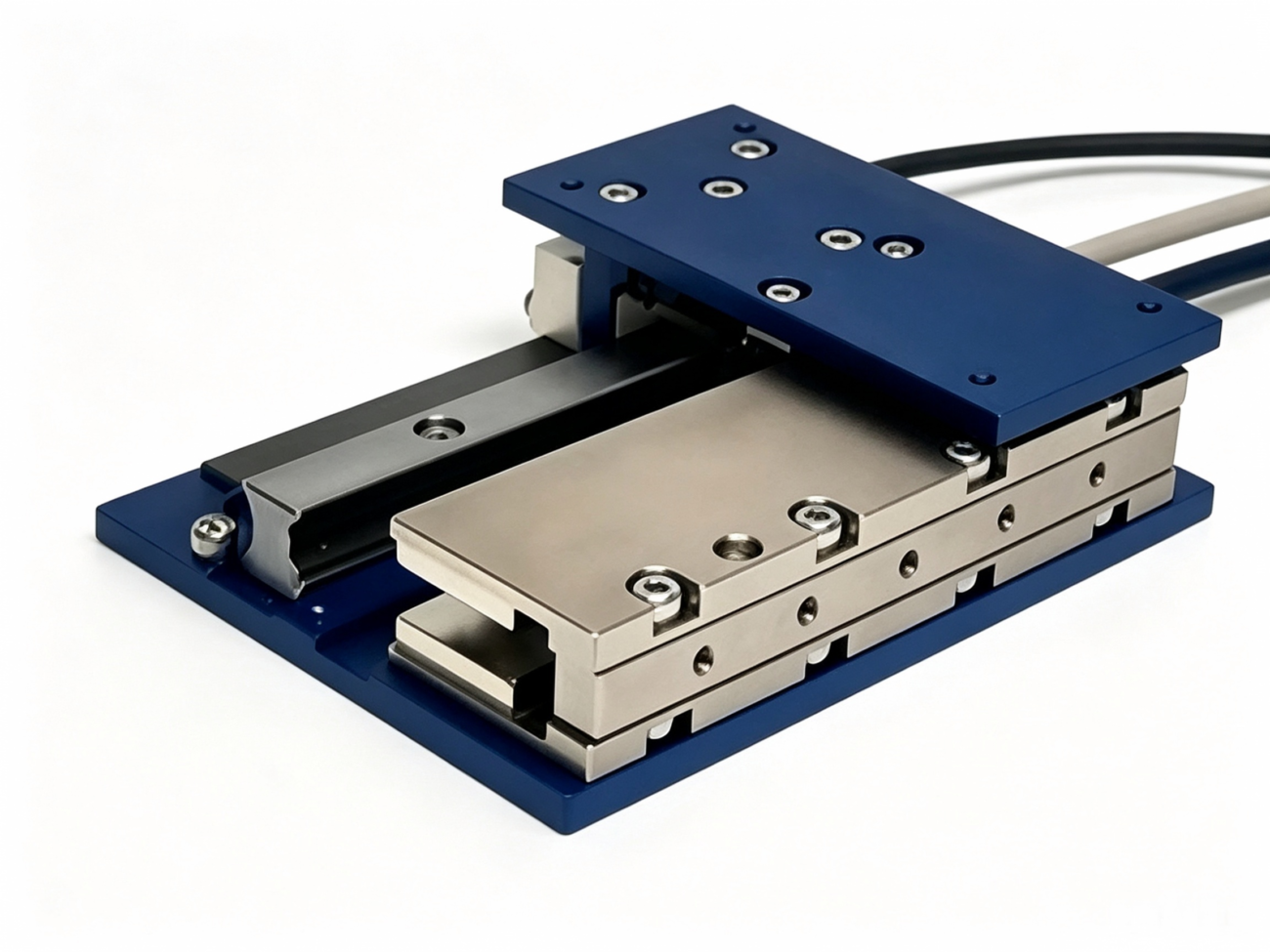
A linear servo motor provides direct linear movement without traditional mechanical transmission.
Applications include:
Semiconductor equipment
Precision stages
Inspection systems
A servo motor linear actuator combines linear motion capability with servo control.
Direct Drive Servo Systems
A direct-drive system eliminates mechanical transmission components.
Advantages:
Higher accuracy
Lower maintenance
Reduced mechanical loss
However, these systems usually have a higher purchase price.
Servo Motor vs Stepper Motor: Cost and Performance Comparison
Many engineers compare:
servo motor vs stepper motor
stepper motor vs servo
stepper vs servo motor
stepper motor vs servo motor
The choice affects both initial cost and long-term performance.
Comparison
Servo Motors
Stepper Motors
Price
Higher
Lower
Feedback
Closed-loop
Usually open-loop
Accuracy
Higher
Moderate
Speed
Higher
Lower at high speed
Efficiency
Better
Lower under variable loads
Maintenance
Lower
Moderate
The difference between servo motor and stepper is mainly feedback control.
A stepper motor moves in predefined steps, while Servo Motors continuously monitor position using an encoder.
For applications requiring:
High precision
High speed
Variable loads
Continuous operation
Servo technology provides better value.
The ongoing discussion of servo vs stepper motor and servo motors vs stepper motors shows that both technologies have their place, but industrial automation increasingly favors servo systems.
Things You Need to Know: Servo Motor Cost Estimation
Before purchasing Servo Motors, buyers should evaluate:
1. Required Power and Torque
Motor power directly affects cost.
A small application may use:
small servo motors
miniature servo motor
Heavy industrial equipment may require:
large servo motor
big servo motor
high torque servo motor
Higher torque requires:
Larger magnets
Stronger bearings
More powerful windings
which increases manufacturing cost.
2. Feedback Accuracy Requirements
The servo motor encoder is one of the biggest pricing factors.
Higher accuracy requires:
Advanced sensors
Better electronics
Precision manufacturing
Industrial systems requiring extremely accurate positioning will cost significantly more.
3. Servo Drive and Controller Requirements
A complete system needs:
servo motor driver
servo motor controller
Motion software
Advanced controllers increase cost but improve:
Stability
Communication
Safety
Productivity
HCY Automation develops complete motion solutions combining high-quality Servo Motors, drives, and control systems to help customers achieve reliable automation performance.
Servo Motor Price Breakdown: 9 Factors That Affect Cost
Understanding the cost of a production servo motor requires more than looking at the motor catalog price. The final quotation depends on mechanical design, electrical performance, feedback technology, environmental requirements, and customization level.
A professional Servo Motor Pricing: Complete Guide to Cost, Performance analysis should evaluate the following nine major factors.
1. Servo Motor Power, Torque and Size
The first factor affecting Servo Motors pricing is the motor’s power rating and torque capability.
Higher power motors require:
Larger stator structures
More copper winding
Stronger permanent magnets
Better thermal management
More robust bearings
For example:
Motor Type
Typical Power Range
Price Influence
Small servo motor
5W-50W
Low cost
Compact industrial servo
50W-400W
Medium cost
Industrial servo motor
400W-3kW
Higher cost
Large servo motor
5kW+
Premium pricing
A high torque servo motor used in industrial robotics or heavy machinery requires stronger mechanical components, increasing manufacturing costs.
A big servo motor designed for heavy automation applications may cost several thousand dollars because of its increased power density and reliability requirements.
2. Encoder Type and Feedback Accuracy
The encoder is one of the most important components in modern Servo Motors.
A basic encoder provides simple position feedback, while advanced absolute encoders provide extremely precise positioning.
Encoder-related cost factors include:
Resolution
Accuracy
Repeatability
Communication protocol
Environmental protection
A high-performance servo motor encoder improves:
Position control
Speed stability
Motion smoothness
However, higher precision directly increases the total system price.
For example:
Standard incremental encoder: lower cost
Absolute encoder: higher cost
High-resolution industrial encoder: premium cost
Precision applications such as semiconductor equipment, medical systems, and aerospace machinery require advanced feedback systems.
3. Servo Motor Driver and Controller Requirements
A complete automation system requires more than a motor.
The servo motor driver controls electrical power, while the servo motor controller manages motion commands.
The cost depends on:
Drive power rating
Control algorithm
Communication interface
Safety functions
Software compatibility
A basic controller may support simple positioning, while advanced controllers provide:
EtherCAT communication
Real-time motion control
AI-assisted tuning
Predictive diagnostics
The cost of a motor driver for servo motor can sometimes equal the motor price itself, especially in high-performance industrial systems.
HCY Automation provides complete motion solutions integrating motors, drives, and controllers to simplify system integration for OEM customers.
4. AC Servo Motors vs DC Servo Motors Pricing
Motor technology also influences cost.
AC Servo Motors
AC servo motors are widely used in industrial automation because they provide:
High efficiency
High speed
Strong torque performance
Low maintenance
Typical applications:
CNC machinery
Robotics
Packaging equipment
Semiconductor systems
Advanced ac brushless servo motors provide excellent reliability for continuous industrial operation.
DC Servo Motors
A dc servo motor generally has a lower initial cost.
However, brushed DC designs may require:
Brush replacement
Additional maintenance
More frequent servicing
Modern dc servo motors remain useful in:
Small automation systems
Laboratory equipment
Special machinery
The choice between servo motor vs dc motor depends on application requirements.
Feature
AC Servo Motors
DC Servo Motors
Efficiency
Higher
Moderate
Maintenance
Lower
Higher
Industrial Usage
Very common
Specialized
Initial Cost
Higher
Lower
5. Environmental Protection and Industrial Ratings
Industrial environments can significantly affect Servo Motors pricing.
A standard motor operating in a clean factory environment costs less than a motor designed for:
Dust exposure
Water resistance
Chemical environments
High temperatures
Continuous vibration
Important specifications include:
IP rating
Temperature range
Corrosion resistance
Shock resistance
For example:
An IP54 servo motor may be suitable for general automation.
An IP67 industrial servo motor requires additional sealing technology and usually costs more.
Industries such as:
Food processing
Pharmaceutical production
Outdoor automation
often require higher protection levels.
6. Gearbox and Mechanical Integration Costs
Many automation systems require additional torque amplification.
A servo motor gearbox allows a motor to handle heavier loads by reducing speed and increasing torque.
A gearbox for servo motor adds cost because it requires:
Precision gears
Better machining accuracy
Additional assembly
Applications requiring gear systems include:
Robotic arms
AGV systems
Heavy industrial machines
A servo gear motor provides an integrated solution combining:
Motor
Gear reducer
Feedback system
This reduces installation complexity but increases initial investment.
7. Motor Design and Customization Requirements
Standard catalog Servo Motors are more affordable because they benefit from mass production.
Customized designs increase costs due to:
Engineering development
Prototype testing
Special tooling
Dedicated production processes
Customization may include:
Special shaft dimensions
Modified mounting structures
Unique wiring requirements
Custom communication protocols
A frameless servo motor is an example of a specialized design used in compact robotic systems.
A customized integrated servo motor may also require additional engineering support.
8. Brand, Quality Control and Technical Support
The manufacturer selected has a major impact on pricing.
Established servo motor manufacturers usually charge more because they provide:
Better quality control
Stable supply chains
Engineering support
Long-term reliability
Industrial buyers often consider:
Warranty period
Replacement availability
Technical service
Product documentation
Low-cost suppliers may provide cheaper products, but downtime risks can create higher long-term costs.
For production environments, reliability is often more valuable than the lowest purchase price.
HCY Automation focuses on providing dependable automation components with strict quality control and engineering support for global industrial customers.
9. Production Volume and Manufacturing Requirements
Quantity directly affects the final price.
Large OEM orders typically receive better pricing because:
Production efficiency improves
Manufacturing setup costs are distributed
Supply chains are optimized
However, small-volume custom orders may require:
Additional engineering fees
Prototype costs
Special testing
The cost of setting up a servo motor plant 2026 is also influenced by production scale, manufacturing equipment, testing facilities, and automation level.
A modern servo motor manufacturing facility requires:
Precision machining equipment
Motor winding systems
Encoder calibration stations
Performance testing equipment
Quality inspection systems
Servo Motors Cost Calculator: How to Estimate Your Budget
Many engineers search:
Servo motor costs calculator?
Although there is no universal calculator, the following formula provides a basic estimation approach:
Estimated Servo System Cost =
Motor Cost + Servo Drive Cost + Controller Cost + Feedback System Cost + Mechanical Accessories + Integration Cost
Example:
Component
Estimated Cost
750W Servo Motor
$300
Servo Drive
$300
Encoder System
Included / $100+
Cables
$50
Gearbox
$300-$800
Installation Support
Variable
Estimated total:
$950-$1,500
This explains why comparing only the motor price can lead to inaccurate budgeting.
Servo Motor Applications and Their Cost Differences
Different industries require different levels of performance.
Robotics Servo Motor Cost
A robot servo motor requires:
High torque density
Fast response
Compact design
Accurate feedback
A servo motor for robotic arm usually costs more than standard industrial motors because robots require precise multi-axis synchronization.
Applications include:
Welding robots
Assembly robots
Collaborative robots
Industrial Sewing Machine Servo Motor Cost
The textile industry commonly uses:
sewing machine servo motor
servo motor sewing machine
industrial sewing machine servo motor
Compared with traditional motors, servo sewing systems provide:
Adjustable speed
Lower energy consumption
Better control
A modern industrial sewing machine with servo motor improves production efficiency.
Air Conditioner Servo Motor Cost
HVAC systems may use an air conditioner servo motor for:
Valve adjustment
Airflow control
Position regulation
These motors usually require:
Compact design
Reliable operation
Long service life
3D Printer and Precision Equipment Applications
Specialized equipment such as:
extrusora impressora 3d servo motor
precision manufacturing systems
requires accurate motion control.
Servo systems provide advantages in:
Layer accuracy
Speed control
Repeatability
Servo Motor Repair and Lifetime Cost Considerations
The purchase price is only part of the total ownership cost.
Maintenance expenses include:
Inspection
Encoder replacement
Bearing service
Electrical testing
Common searches include:
servo motor repair
servo motor repair near me
fanuc servo motor repair
Professional maintenance helps reduce downtime.
A quality servo system can provide years of reliable operation when properly maintained.
Where to Buy Servo Motors: Choosing the Right Supplier for Industrial Applications
After understanding the cost of a production servo motor, the next important decision is selecting the right supplier.
The cheapest quotation does not always represent the lowest total cost. Industrial buyers should evaluate:
Product quality
Technical support
Customization capability
Delivery reliability
After-sales service
A reliable servo motor manufacturer can help customers avoid production interruptions caused by poor-quality components or incorrect system selection.
The main sourcing channels for Servo Motors include:
For companies building industrial machines, purchasing directly from an experienced manufacturer often provides better long-term value.
HCY Automation works with global OEM customers, machine builders, and system integrators to provide professional motion control products and customized automation solutions.
Why Choose HCY Automation for Servo Motors and Motion Control Solutions?
As industrial automation continues to evolve, customers need more than individual components. They need a reliable partner capable of providing complete motion solutions.
HCY Automation focuses on developing and supplying advanced automation products, including:
Servo Motors
Servo drives
Stepper motors
Integrated motors
Motion controllers
Industrial automation components
The company supports customers in industries including:
Robotics
CNC machinery
Packaging equipment
Semiconductor manufacturing
Medical equipment
Textile automation
Smart factory systems
HCY Automation Servo Motors Advantages
High Performance and Precision Control
Modern factories require accurate and stable movement.
HCY Automation servo solutions provide:
High positioning accuracy
Fast dynamic response
Stable torque output
Efficient operation
These characteristics make them suitable for demanding industrial servo motors applications.
Complete Motion System Integration
A complete automation system requires compatibility between:
Motor
Drive
Controller
Encoder
Mechanical transmission
HCY Automation helps customers optimize the entire system instead of selecting isolated components.
This approach reduces:
Integration difficulty
Debugging time
Maintenance problems
Customized OEM and ODM Capability
Different machines require different specifications.
HCY Automation delivers integrated solutions across motion control, linear motion, robotics, machine vision, pneumatic systems, and precision gearboxes to help global manufacturers build smarter, faster, and more reliable production lines. Our engineering team helps you select and integrate the right motion control, robotics, and automation components for your specific application.