High-Precision Linear Motor Modules: How to Choose the Right Supplier
Looking for a reliable linear motor stage supplier? Learn how to evaluate linear motor performance, positioning accuracy, load capacity, customization, and technical support for industrial automation.
Why Choosing the Right Linear Motor Stage Supplier Matters
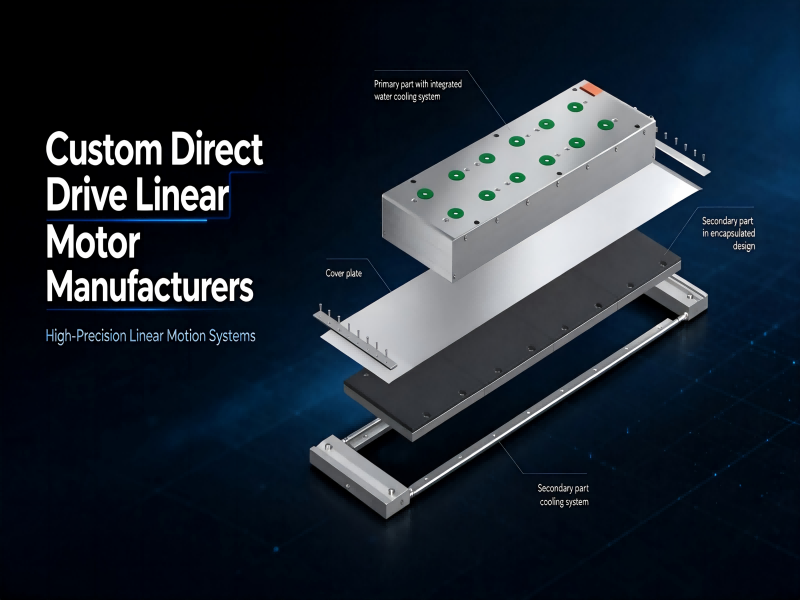
As industrial automation moves toward higher speeds, tighter tolerances, and more flexible production processes, linear motor technology is becoming an increasingly important part of modern motion control systems. Compared with conventional ball screw and belt-driven linear modules, direct drive linear motor stages offer several advantages, including high acceleration, fast response, high repeatability, long travel capability, and reduced mechanical transmission components.
These characteristics make linear motor positioning systems particularly suitable for semiconductor manufacturing, lithium battery production, flat panel display equipment, precision laser processing, electronics assembly, and automated inspection systems.
However, choosing a linear motor stage is not simply about comparing maximum thrust, speed, or positioning accuracy on a specification sheet.
Equipment manufacturers often face several practical challenges:
Different suppliers use different methods to specify peak thrust, continuous thrust, and positioning performance.
The actual positioning repeatability may differ from catalog specifications under real operating conditions.
Standard linear motor modules may not meet specific requirements for payload, stroke, acceleration, or installation space.
Imported motion systems can involve high procurement costs and long delivery lead times.
Insufficient engineering support can increase integration time and commissioning risks.
So, how do you identify a reliable high precision linear motor stage supplier?
At HCY Automation, we believe that the right supplier should offer more than a motor or a positioning platform. It should understand the complete motion application, provide appropriate technical configurations, and support equipment manufacturers throughout the selection and integration process.
This guide explains five important factors to consider when evaluating a linear motor supplier.
1. Evaluate the Core Performance of the Linear Motor Stage
Performance specifications are the starting point of any linear motion selection process. However, individual parameters should always be evaluated in relation to the actual application.
1.1 Thrust: Peak Force vs. Continuous Force
For applications requiring high acceleration or heavy payload handling, thrust is one of the most important parameters.
When evaluating an iron-core linear motor, pay attention to two different specifications:
Peak Force: The maximum thrust available for short periods, typically during acceleration or demanding motion cycles.
Continuous Force: The thrust that the motor can maintain during continuous operation within its specified thermal limits.
Peak force determines the motor’s short-term acceleration capability, while continuous force is more relevant to sustained production requirements.
A supplier that only provides peak thrust without clearly specifying continuous thrust makes it difficult to evaluate the motor’s actual operating capability.
For equipment manufacturers, it is important to calculate the required thrust based on payload mass, acceleration, friction, external resistance, and duty cycle.
1.2 Positioning Accuracy and Repeatability
High precision positioning is another major reason manufacturers choose direct drive linear motor systems.
However, positioning accuracy and repeatability are not the same.
Positioning Accuracy: How closely the actual position approaches the commanded position.
Repeatability: How consistently the system returns to the same position under the same operating conditions.
For precision applications, both parameters matter.
HCY linear motor stages can be configured with optical grating or magnetic scale feedback systems to support high-precision positioning.
Depending on the configuration, the HCY series can achieve repeatability as high as ±0.002 mm (±2 μm).
When comparing suppliers, ask for actual test data and clarify the measurement conditions, including travel distance, payload, speed, temperature, feedback resolution, and installation conditions.
A specification without its testing conditions does not tell the whole story.
1.3 Speed and Acceleration
High speed is one of the main advantages of linear motor technology.
Unlike ball screw systems, which rely on rotary-to-linear mechanical transmission, a direct drive linear motor generates linear force directly.
This eliminates the need for a mechanical transmission mechanism between the motor and the moving platform.
The result can be:
Higher acceleration and deceleration capability.
Faster response to motion commands.
Reduced mechanical backlash.
Improved suitability for high-frequency positioning cycles.
Greater flexibility in high-speed multi-axis applications.
However, maximum speed alone should never determine motor selection.
A linear motor’s achievable speed depends on the payload, acceleration profile, stroke, guide system, motor thrust, feedback system, and thermal management.
Always evaluate speed and acceleration together under your actual operating conditions.
1.4 Payload and Travel Length
Different applications have very different requirements.
A semiconductor inspection system may prioritize micrometer-level repeatability, while a large-format processing machine may require long travel, high payload capacity, and stable motion over an extended working range.
HCY linear motor stages offer configurations with:
Maximum payload capacity: Up to 500 kg.
Maximum operating speed: Up to 4 m/s.
Maximum travel length: Up to 60,000 mm.
Maximum repeatability: Up to ±0.002 mm.
These are maximum capabilities across different configurations, not guaranteed simultaneous operating values for one standard model.
The appropriate configuration should be determined according to the required payload, stroke, speed, accuracy, and operating environment.
2. Understand the Differences Between Linear Motor Technologies
Not all linear motors have the same mechanical structure or operating characteristics.
Two common designs used in industrial automation are iron-core and ironless linear motors.
Iron-Core Linear Motors
Iron-core linear motors use an iron core in the motor coil assembly.
Their main advantages include:
High thrust density.
Strong force output.
High acceleration capability.
Suitability for demanding payload applications.
They are commonly considered for heavy-duty automation equipment, high-speed transfer systems, and applications requiring substantial driving force.
One technical consideration is the magnetic attraction force between the motor components, which can introduce additional mechanical loading and requires appropriate guide rail selection and structural design.
Cogging force may also need to be considered depending on the motor design and application.
Ironless Linear Motors
<PLACEHOLDER FOR IMAGE: Ironless linear motor structure>
Ironless linear motors do not use an iron core in the coil assembly.
Their typical characteristics include:
Very low cogging force.
Smooth motion.
Low moving mass.
High dynamic response.
Good suitability for precision positioning applications.
They are often used in optical inspection, semiconductor equipment, precision measurement, and other applications where smooth motion is particularly important.
Iron-Core vs. Ironless: Which Should You Choose?
Evaluation Factor
Iron-Core
Ironless
Thrust density
Generally higher
Generally lower
Cogging force
May be present
Very low
Magnetic attraction
Present
No comparable iron-core attraction
Payload applications
Well suited to high-force applications
Depends on motor size and configuration
Motion smoothness
Depends on motor design and control
Generally excellent
Typical applications
Heavy-duty automation, high-speed transfer
Precision inspection, optical equipment
Neither technology is universally better.
The right choice depends on the required thrust, payload, positioning performance, motion smoothness, thermal conditions, and overall mechanical design.
A professional linear motor supplier should be able to explain these differences and recommend a suitable solution rather than simply promoting one motor type.
3. Check the Supplier’s Engineering and Customization Capabilities
A reliable linear motor stage supplier should offer more than standard catalog products.
In real automation projects, equipment manufacturers often have specific requirements involving:
Non-standard travel lengths.
Different payload capacities.
Special mounting dimensions.
Multiple moving platforms.
Single-axis or multi-axis configurations.
Customized cable routing and motor installation.
Integration with servo drives and motion controllers.
Special environmental requirements.
A supplier that cannot adapt its products to these conditions may create additional integration work for the equipment manufacturer.
Standard Linear Motor Modules vs. Customized Linear Motor Stages
Standard linear motor modules are suitable for applications with relatively conventional requirements.
However, customized linear motor stages provide greater flexibility when the equipment design requires special dimensions, motion sequences, or multi-axis coordination.
At HCY Automation, we focus on the development, design, and supply of single-axis and multi-axis linear motor modules.
Our engineering capabilities support customized motion platform configurations based on the actual application.
Configurations designed for specified explosion-proof application requirements.
For projects requiring explosion-proof equipment, the applicable protection method, certification, and operating environment must be confirmed during technical evaluation.
Whether you need a single-axis positioning module or a multi-axis direct drive platform, the mechanical configuration and motion performance should be designed around the equipment’s actual requirements.
4. Evaluate Industry Experience and Application Knowledge
A supplier’s technical capability cannot be judged by specifications alone.
Its understanding of real industrial applications is equally important.
Different industries place different demands on linear motion systems.
Semiconductor Manufacturing
Semiconductor equipment requires precise positioning, fast response, and stable motion performance.
Linear motor stages are commonly used in wafer handling, precision inspection, optical alignment, and automated positioning systems.
Key selection considerations include:
Positioning accuracy and repeatability.
Low vibration and smooth motion.
High acceleration.
Thermal stability.
Cleanroom compatibility where required.
Lithium Battery Manufacturing
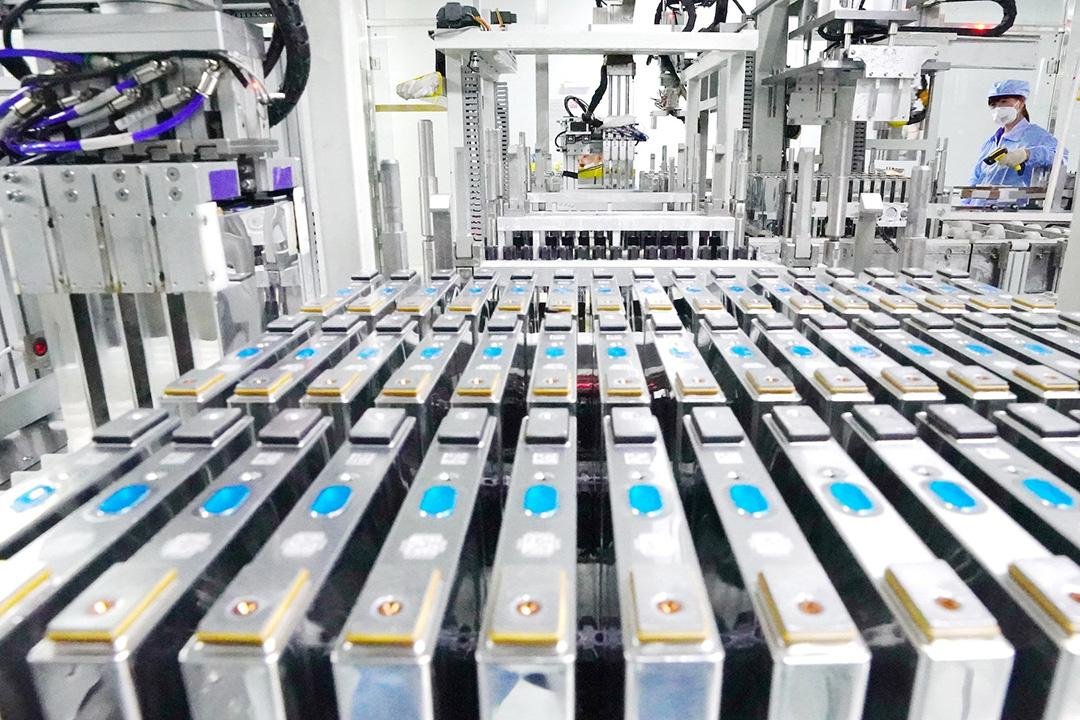
Lithium battery production lines require high-speed material handling, accurate positioning, and continuous operation.
Linear motor systems can support high-speed transfer, automated inspection, precision assembly, and flexible production processes.
For these applications, payload capacity, acceleration, travel length, and production cycle time must be evaluated together.
Flat Panel Display Manufacturing
<PLACEHOLDER FOR IMAGE: Long-stroke linear motor positioning platform for display manufacturing>
Large-format display manufacturing often involves long travel distances and demanding positioning requirements.
Linear motor stages can provide direct drive motion for precision transfer, inspection, and positioning equipment.
The selection process should consider the relationship between stroke, structural rigidity, payload, and motion stability.
Laser Processing and Precision Machining
Laser cutting, laser welding, and precision machining require accurate and coordinated movement.
Multi-axis linear motor platforms can provide high-speed positioning and coordinated motion, making them suitable for demanding processing applications.
Important factors include:
High dynamic response.
Motion interpolation capability.
Positioning repeatability.
Mechanical rigidity.
Compatibility with the machine’s motion control system.
3C Electronics and Automated Inspection
In electronics manufacturing, linear motor stages are used in automated assembly, visual inspection, precision dispensing, and component positioning.
High repeatability and short positioning cycles help improve equipment efficiency and production consistency.
A supplier with experience across different industries is generally better equipped to understand application-specific requirements and recommend appropriate configurations.
5. Consider Delivery, Technical Support, and Total Cost of Ownership
Price is important, but it should not be the only factor in supplier selection.
The actual cost of a linear motor positioning system includes more than its initial purchase price.
Consider the following three areas.
5.1 Delivery and Supply Chain Reliability
Long delivery lead times can delay equipment assembly and affect the entire production schedule.
When evaluating a supplier, ask about:
Product availability and component sourcing.
Production and assembly arrangements.
Standard and customized product lead times.
Project scheduling and delivery commitments.
Spare parts availability.
A supplier with reliable supply chain coordination can help reduce procurement uncertainty.
5.2 Engineering Support and System Integration
A linear motor stage is only one part of a complete motion control system.
The motor, servo drive, feedback device, guide system, mechanical structure, and controller must work together.
Technical support is particularly important during:
Initial product selection.
Mechanical integration.
Servo parameter configuration.
Motion tuning.
System commissioning.
Troubleshooting.
Working with a supplier that understands both mechanical design and electrical motion control can reduce integration difficulties.
5.3 Total Cost of Ownership
A lower purchase price does not always mean a lower project cost.
When comparing suppliers, consider:
Initial equipment investment.
Installation and integration costs.
Maintenance requirements.
Replacement parts.
Production downtime.
Engineering and after-sales support.
The objective should be to find the best balance between performance, reliability, delivery, and long-term operating costs.
6. Why Consider HCY Automation for Your Linear Motor Stage Project?
At HCY Automation, we understand that equipment manufacturers need more than individual motion components.
They need reliable products, appropriate technical configurations, and engineering support that fits their equipment development requirements.
We focus on industrial automation, linear motion, motion control, and precision positioning solutions.
Our linear motor platform capabilities cover high-load, high-speed, high-precision, long-stroke, modular, and customized motion applications.
HCY Linear Motor Stage Capabilities
Parameter
Maximum Capability
Repeatability
Up to ±0.002 mm
Payload
Up to 500 kg
Operating speed
Up to 4 m/s
Travel length
Up to 60,000 mm
Position feedback
Optical grating or magnetic scale
Platform configuration
Single-axis and multi-axis
Customization
Stroke, payload, structure and application requirements
Specifications depend on the selected model and operating configuration. Please contact our engineering team for application-specific performance evaluation.
Beyond linear motor stages, HCY also provides integrated industrial automation and motion control products, including servo and stepper motors, drives, PLCs, motion controllers, linear modules, precision positioning stages, and industrial components.
Our engineering team covers mechanical design, electrical engineering, and automation solutions.
This combination of product resources and engineering capabilities allows us to support equipment manufacturers, system integrators, and industrial customers in developing practical motion solutions.
We do not believe that every application needs the most expensive motor or the highest specification.
The right solution is the one that meets the required performance while keeping the overall equipment design reliable and cost-effective.
7. What Information Should You Prepare Before Contacting a Linear Motor Supplier?
To shorten the selection process, it helps to prepare several basic application details before requesting a quotation.
Required Information
What to Specify
Application
What will the linear motor stage do?
Payload
Total moving mass, including fixtures and workpieces
Travel length
Required stroke in mm
Speed
Target operating speed
Acceleration
Required acceleration or cycle time
Positioning performance
Required accuracy and repeatability
Installation
Horizontal, vertical, or other orientation
Feedback system
Optical grating, magnetic scale, or other requirements
Control system
Preferred servo drive and controller
Environment
Temperature, dust, cleanroom, or special protection requirements
Even if some parameters are not yet confirmed, sharing the available information and equipment drawings can help the supplier conduct an initial feasibility assessment.
This is especially important for customized multi-axis platforms and high-load, long-stroke applications.
Conclusion: Choose a Linear Motor Supplier Based on Engineering Capability, Not Just Specifications
Selecting a high precision linear motor stage supplier is an important decision for any equipment manufacturer developing advanced automation systems.
The key is to look beyond catalog specifications and evaluate the supplier from five perspectives:
Performance: Are thrust, speed, payload, and positioning specifications clearly defined and verifiable?
Technology: Can the supplier recommend the appropriate iron-core or ironless linear motor solution?
Engineering: Can it provide customized single-axis and multi-axis positioning platforms?
Application experience: Does it understand the technical requirements of your industry?
Service and delivery: Can it provide reliable supply coordination and engineering support?
At HCY Automation, we are committed to providing high-performance linear motion and direct drive solutions for industrial automation applications.
Whether you are developing semiconductor equipment, lithium battery production lines, precision laser machines, or automated inspection systems, our team can help evaluate your motion requirements and recommend a suitable linear motor stage configuration.
Looking for a reliable linear motor stage supplier for your next automation project?
Contact HCY Automation to discuss your payload, stroke, speed, positioning requirements, and equipment design.
Our engineering team will help you evaluate the right linear motor solution for your application.
HCY Automation | Industrial Automation | Linear Motion | Motion Control | Precision Positioning
Frequently Asked Questions (FAQ)
1. What should I look for in a high precision linear motor stage supplier?
Look for a supplier with verified performance specifications, engineering design capabilities, customized linear motion solutions, relevant industry experience, reliable delivery arrangements, and technical support.
2. What is the difference between a linear motor stage and a ball screw linear module?
A linear motor stage uses direct electromagnetic force to generate linear motion, eliminating the need for rotary-to-linear mechanical transmission.
A ball screw linear module converts rotary motor motion into linear movement through a screw and nut mechanism.
Linear motors are particularly suitable for high-speed, high-acceleration, high-repeatability, and long-stroke applications, while ball screw modules remain an effective solution for many general-purpose positioning applications.
3. What is the repeatability of a linear motor stage?
Repeatability varies according to the motor, feedback system, mechanical structure, controller, and operating conditions.
High-precision linear motor stages can achieve repeatability in the micrometer range. HCY linear motor stages can achieve repeatability as high as ±0.002 mm under suitable configurations.
4. What is the difference between iron-core and ironless linear motors?
Iron-core linear motors generally provide higher thrust density and are suitable for demanding force and payload requirements.
Ironless linear motors offer very low cogging force and smooth motion, making them suitable for precision applications where motion smoothness is particularly important.
5. Can linear motor stages be customized?
Yes. Depending on the supplier’s engineering capabilities, linear motor stages can be customized in terms of stroke, payload, mounting dimensions, feedback systems, motor configuration, and single-axis or multi-axis arrangements.
HCY supports customized linear motor platform solutions based on specific equipment requirements.
6. What industries use linear motor positioning systems?
Common applications include semiconductor manufacturing, lithium battery production, flat panel display equipment, 3C electronics, laser processing, precision machining, automated inspection, packaging, and material handling.
7. How do I select the right linear motor stage for my application?
Start with the payload, stroke, target speed, acceleration, positioning accuracy, repeatability, and installation orientation.
You should also consider the control system, feedback device, operating environment, and required production cycle time. A supplier’s engineering team can then help determine the appropriate motor and platform configuration.
HCY Automation delivers integrated solutions across motion control, linear motion, robotics, machine vision, pneumatic systems, and precision gearboxes to help global manufacturers build smarter, faster, and more reliable production lines. Our engineering team helps you select and integrate the right motion control, robotics, and automation components for your specific application.