How Much Do Linear Motors Cost? A Complete Price Guide for 2026
Linear Motor Price Guide 2026: Costs, Types & Buying Tips.How much does a linear motor cost in 2026? Explore linear motor price ranges, key cost factors, linear motor stage pricing, and tips for choosing a cost-effective precision motion solution.
How Much Do Linear Motors Cost?
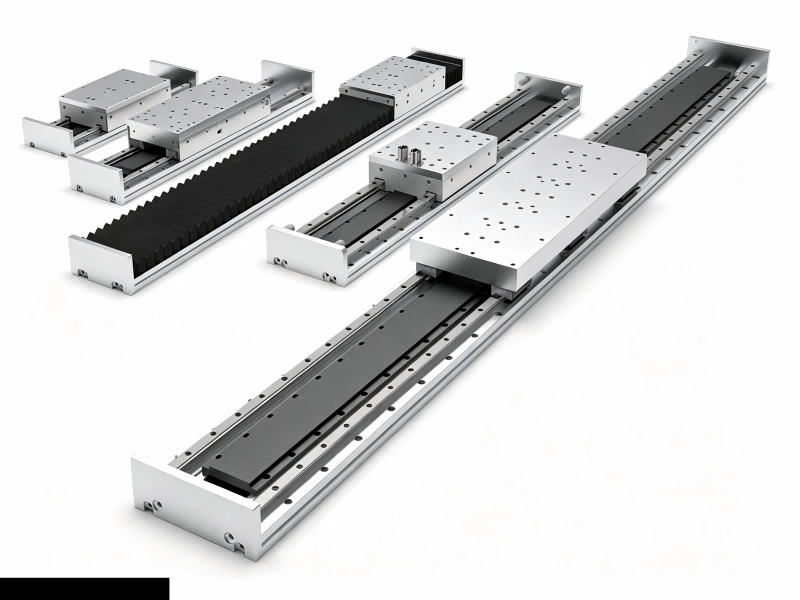
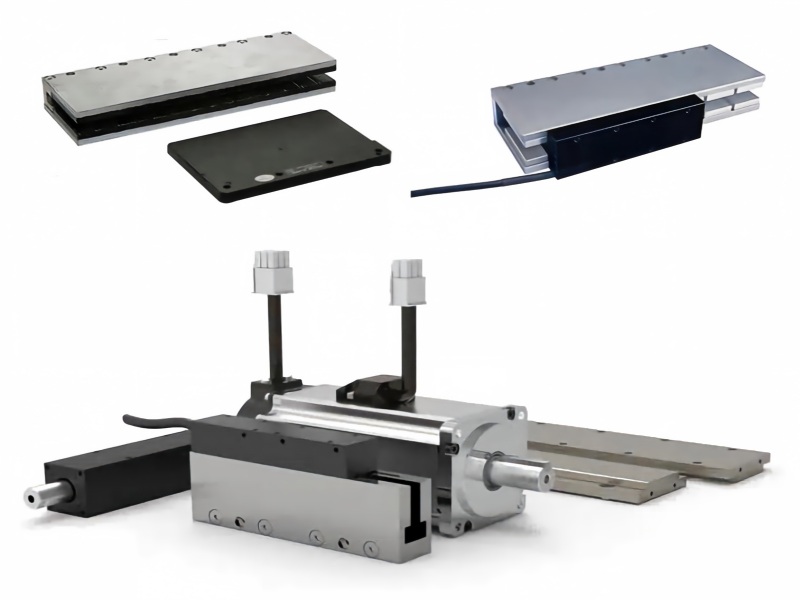
If you are researching linear motor prices, you have probably noticed that the market offers a wide range of options. A compact linear actuator may cost less than $100, while a high-precision linear motor stage for semiconductor manufacturing or precision inspection can cost several thousand dollars or more.
So, how much does a linear motor actually cost?
The answer depends on what you are buying. A standalone motor, a motorized linear module, and a complete precision positioning system are different products with different costs.
For general budgeting, a small electromechanical actuator may cost around $30–$300. A compact voice coil motor or entry-level direct-drive component may fall within a few hundred to over $1,000, depending on its specifications. An industrial linear motor module may cost approximately $500–$5,000, while high-precision positioning stages and customized automation systems can reach $5,000–$20,000 or more.
These figures are indicative budgeting estimates, not verified quotations or universal market prices. Actual pricing varies by supplier, configuration, order quantity, shipping destination, and performance requirements.
For buyers comparing linear motor manufacturers, the most useful question is not simply which product has the lowest price. It is which solution delivers the required speed, accuracy, reliability, and service life without unnecessary cost.
1. Linear Motor Price Range: What Should You Expect?
Before requesting a quotation, it helps to understand the typical budget for different types of linear motion products.
The following ranges are illustrative estimates for initial project planning in 2026. They are not live supplier prices, and the product categories are not directly interchangeable.
Product Type
Indicative Price Range (USD)
Typical Applications
Small lead screw actuator or linear stepper motor
$30–$300
Compact automation, laboratory equipment, small positioning tasks
Voice coil motor
$100–$1,500+
Fine adjustment, optical focusing, short-stroke motion
Linear motor for industrial motion systems
$300–$2,000+
Pick-and-place equipment, inspection machines, automated production
Prices can exceed these ranges when a system requires long travel, high payload capacity, advanced feedback devices, multi-axis integration, environmental protection, or specialized accuracy specifications.
One important distinction: a lead screw actuator or linear stepper motor is not the same as a direct-drive linear motor. They can serve similar motion functions, but their mechanical structures, performance characteristics, and pricing models differ.
When comparing quotes, always confirm whether the quoted price covers the motor alone, a complete mechanical axis, or a fully integrated positioning system.
2. Why Do Linear Motor Prices Vary So Much?
Two products described as linear motors may have very different prices. This is usually the result of differences in design, materials, manufacturing, motion performance, and system integration.
Motor Type and Magnetic Design
The motor’s electromagnetic structure is one of the first factors affecting cost.
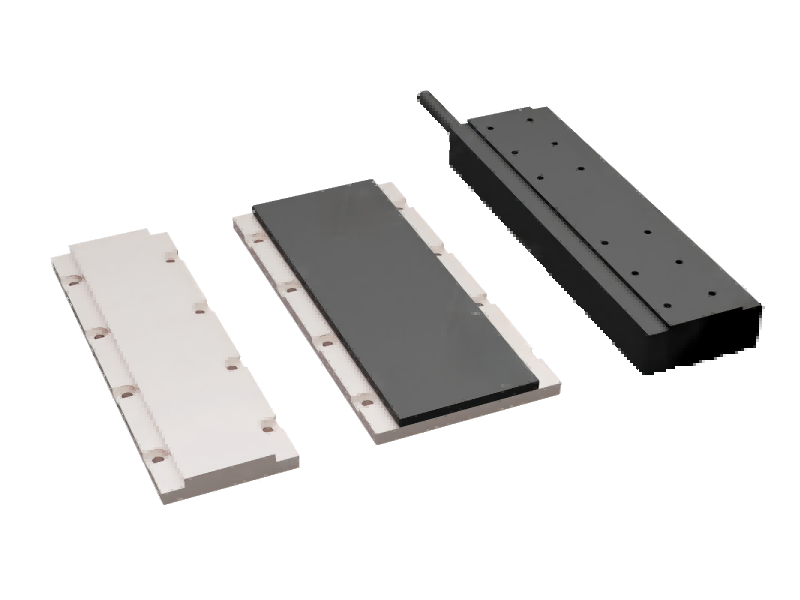
Iron-core linear motors
Iron-core linear motors are often suitable for applications requiring relatively high thrust and strong force density. Their magnetic design can make them an economical option for demanding industrial motion applications.
However, they can produce cogging force, which may affect smooth movement at low speeds or during precision positioning.
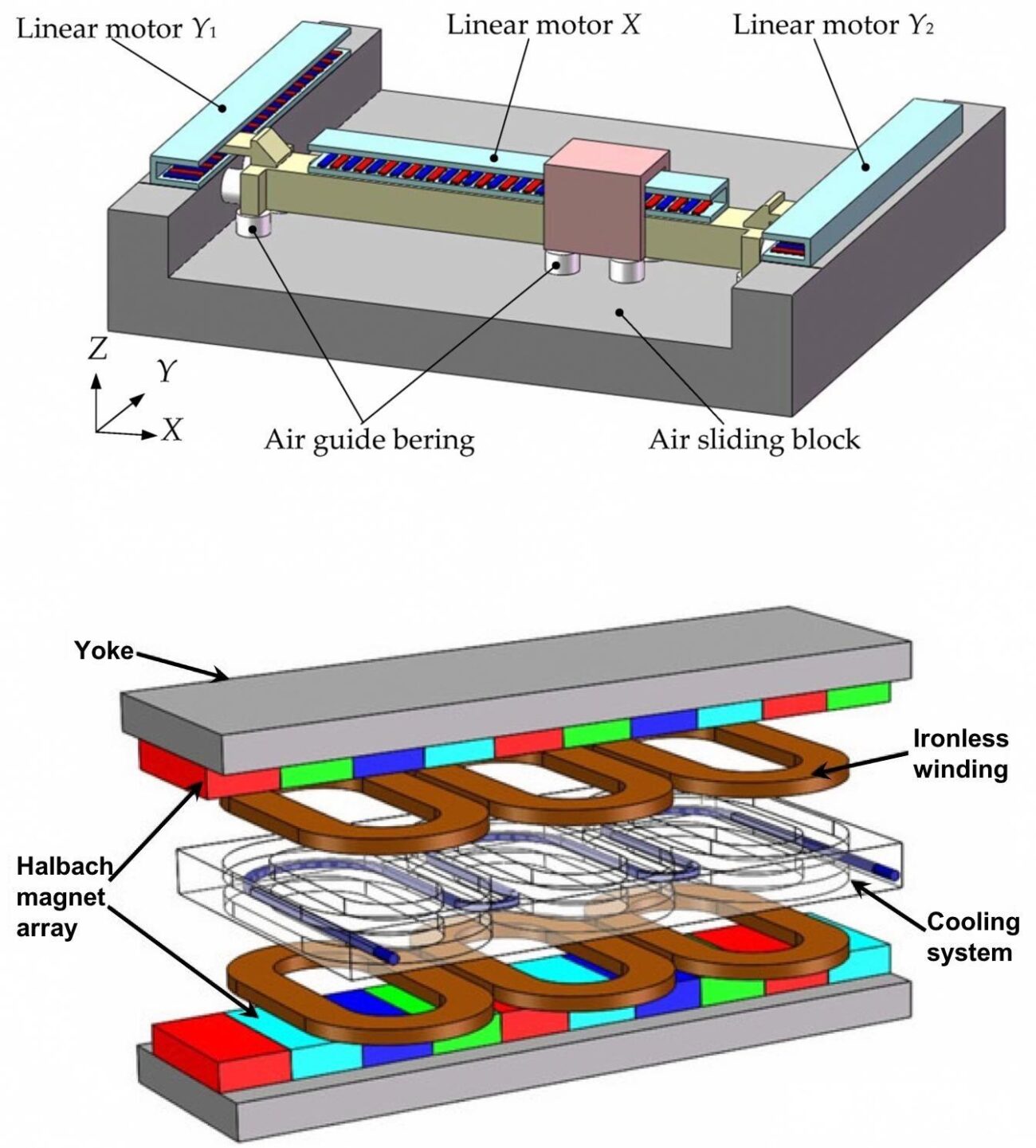
Ironless linear motors
Ironless linear motors are designed to minimize cogging force and provide smooth, responsive motion. They are often considered for optical systems, semiconductor equipment, metrology, and other applications where motion uniformity is important.
Their cost depends on the magnetic assembly, coil design, thermal management, and required performance.
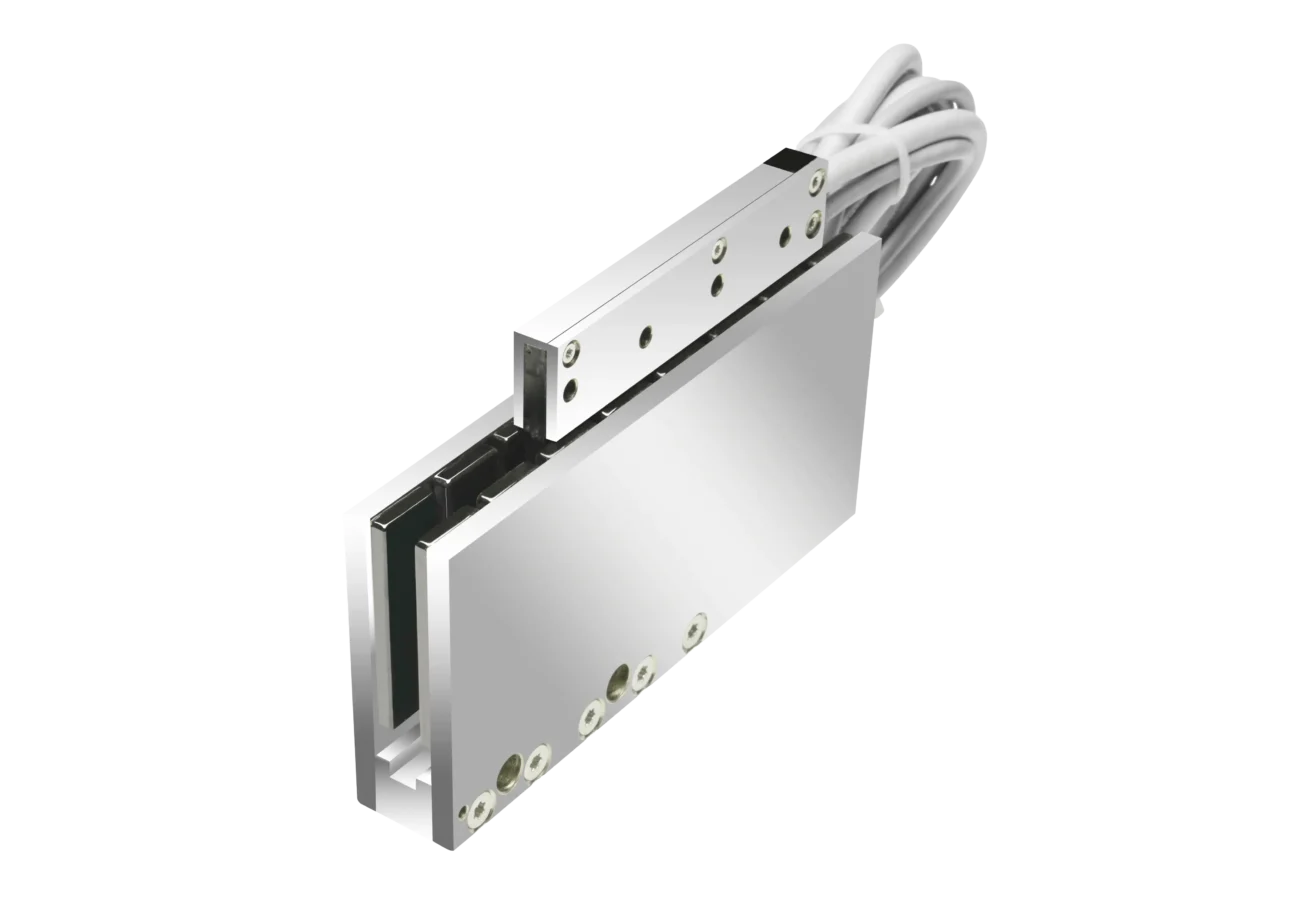
U-channel linear motors
U-channel designs offer a compact arrangement that can be useful in space-constrained automation equipment. Depending on the configuration, they can provide a practical balance between smooth motion, integration convenience, and overall system cost.
The best motor type depends on your application. Paying for an advanced design that your machine does not need may increase the budget without improving production results.
Travel Length, Thrust, and Acceleration
Longer travel, higher thrust, and greater acceleration generally increase the total system cost.
A short-stroke positioning axis for an inspection sensor has very different requirements from a high-speed transfer system moving a heavy workpiece.
When requesting a quote, provide the following information:
Required travel length
Moving payload and mounting orientation
Maximum speed and acceleration
Continuous and peak thrust requirements
Duty cycle and operating hours
Expected positioning and repeatability performance
These details help suppliers select a suitable motor instead of oversizing the system.
Positioning Accuracy and Feedback System
Positioning accuracy is another major factor in linear motor stage pricing.
An application that only requires general positioning may work with a relatively simple feedback arrangement. Precision inspection, optical alignment, and semiconductor equipment may require a higher-performance encoder, better mechanical geometry, thermal stability, and advanced motion control.
It is also important to distinguish between positioning accuracy, repeatability, resolution, and straightness. They describe different aspects of motion performance and should not be treated as interchangeable specifications.
For example, a quoted repeatability of ±5 μm does not automatically mean the system has an absolute positioning accuracy of ±5 μm.
If a supplier advertises high precision, ask how it was measured, under what operating conditions, and whether the result applies to the motor alone or the complete assembled stage.
Materials and Manufacturing Quality
Permanent magnets, copper windings, insulation systems, mechanical components, and assembly processes all contribute to the final price.
A reliable comparison should consider more than the material specification on paper. Magnetic consistency, winding quality, thermal performance, mechanical tolerances, and quality control can influence long-term operating stability.
For precision positioning systems, guideway alignment, mounting surface quality, encoder installation, and calibration can be just as important as the motor itself.
A low initial price may not represent good value if the product requires frequent adjustment, generates excessive heat, or fails to maintain its specified performance.
3. The Hidden Costs of a Linear Motor System
One of the most common mistakes in purchasing a linear motor is comparing the motor price with the price of a complete linear motor stage.
A direct-drive motor is only one part of a motion system.
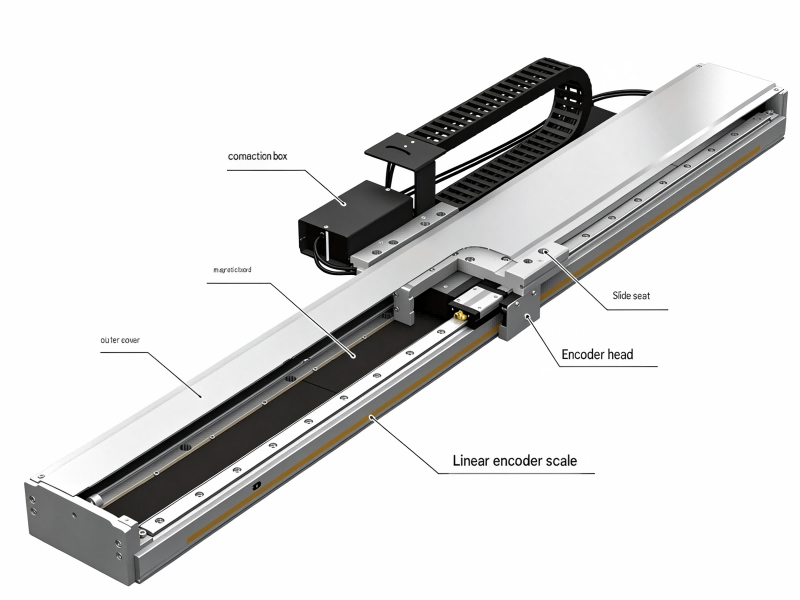
Depending on the application, the complete package may include:
Motor and magnetic track: The electromagnetic components that generate linear motion.
Linear guideways and mechanical base: The structure supporting the moving load.
Linear encoder: The feedback device used to measure position.
Servo drive and motion controller: The electronics responsible for controlling speed, force, and position.
Cooling system: Air or liquid cooling when required by the thermal load.
Cables and connectors: Power, feedback, and control connections.
Assembly and calibration: Mechanical alignment, parameter tuning, and performance verification.
Integration and commissioning: Engineering work needed to connect the system to the customer’s equipment.
Not every application needs all these components. A standard motor can be appropriate for an experienced engineering team that already has compatible mechanics and controls. A complete linear motor module may be more convenient when reducing integration time is a priority.
When evaluating a quotation, ask for an itemized breakdown. This makes it easier to identify missing components and compare suppliers on an equivalent basis.
4. Linear Motor vs. Ball Screw: Which Is More Cost-Effective?
A frequent question among automation engineers is whether a linear motor is worth the additional investment compared with a ball screw drive.
There is no universal winner. The right choice depends on speed, acceleration, travel, precision, maintenance, and production requirements.
Comparison Factor
Linear Motor
Ball Screw Drive
Mechanical transmission
Direct drive
Mechanical screw transmission
High-speed motion
Often advantageous
Limited by screw design and critical speed
High acceleration
Often well suited
Depends on screw, load, and mechanical design
Backlash
No screw backlash in the direct-drive transmission
Depends on nut design, preload, and wear
Maintenance
Fewer transmission components, but still requires appropriate guideway and system maintenance
Screw and nut may require lubrication and maintenance
General CNC equipment, transfer axes, conventional automation
A linear motor can be a strong choice when high dynamic performance, smooth motion, or frequent rapid movements are critical. A ball screw may be more economical for applications with moderate speed requirements and less demanding dynamic performance.
However, comparing only the purchase price can be misleading.
For a production machine operating multiple shifts, cycle time, maintenance, downtime, and achievable throughput can have a greater financial impact than the initial price difference.
A practical evaluation should compare the total cost of ownership over the expected service life, not just the purchase order value.
5. How to Choose a Cost-Effective Linear Motor Stage
Finding the lowest linear motor price is not necessarily the best purchasing strategy. The goal is to match system performance to actual application requirements.
Step 1: Define Your Motion Requirements
Start with the essential operating parameters:
Stroke and overall installation space
Maximum speed and acceleration
Payload and external forces
Required positioning accuracy and repeatability
Operating cycle and expected service life
Environmental conditions, including dust, humidity, and temperature
These specifications establish the technical basis for selecting a motor and mechanical platform.
Step 2: Choose the Right Motor Architecture
Determine whether your application needs an iron-core, ironless, or U-channel linear motor.
Consider thrust, cogging force, thermal behavior, installation constraints, and motion smoothness together rather than selecting a motor based on one parameter.
Step 3: Decide Between a Standard Module and a Custom Stage
A standard linear motor module may reduce engineering time and simplify procurement.
A custom linear motor stage may be more suitable when the machine has unusual dimensions, specific mounting interfaces, multiple axes, special cable routing, or demanding precision requirements.
Customization does not automatically mean a higher total cost. A well-designed custom solution can reduce additional machining, adaptation, and integration work. However, non-recurring engineering, testing, and low-volume manufacturing may increase the initial investment.
The best option depends on the degree of customization and the expected production volume.
Step 4: Verify Performance Before Ordering
Ask the supplier for relevant technical documentation, including motor specifications, encoder details, thermal limits, and test conditions.
For a precision application, request measurement results for the assembled system rather than relying exclusively on individual component specifications.
Where practical, conduct a sample evaluation under representative operating conditions.
Step 5: Compare Total Project Cost
A useful comparison includes the initial purchase price, engineering effort, installation, commissioning, maintenance, and potential downtime.
For OEMs and machine builders, supplier responsiveness and the ability to support future design changes can also affect project cost.
A slightly higher initial investment may be justified if it reduces integration risk and improves production reliability.
6. Custom Linear Motor Stage Pricing: What Should Buyers Know?
Custom linear motor stages are commonly used when standard products cannot meet a machine’s mechanical or performance requirements.
Typical customization requests include:
Non-standard travel lengths and platform dimensions
Higher payload capacity or special mounting orientations
Specific repeatability or straightness requirements
Multi-axis positioning systems
Encoder and controller compatibility
Cooling, cable management, or environmental adaptations
Integration with existing automation equipment
The price of a custom stage depends on the complexity of the design, component selection, required accuracy, manufacturing volume, and validation process.
For example, a compact custom axis with standard feedback components may be relatively straightforward to develop. A multi-axis platform with advanced metrology requirements, thermal management, and specialized mechanical structures may require substantially more engineering and testing.
Before requesting a quote, prepare a basic application specification. Even preliminary information about the stroke, payload, speed, accuracy, and installation space can help a supplier provide a more relevant estimate.
7. Linear Motor Market Trends in 2026
Demand for precision motion technology continues to be shaped by developments in industrial automation, electronic manufacturing, semiconductor equipment, optical inspection, and advanced machine building.
Several purchasing trends are particularly relevant to linear motor buyers.
Higher Precision and Faster Production Cycles
Manufacturers are looking for motion systems that support shorter cycle times while maintaining consistent positioning performance.
This increases the importance of acceleration, settling time, thermal stability, and feedback quality—not simply maximum travel speed.
Greater Demand for Integrated Motion Solutions
Machine builders increasingly evaluate complete motion axes rather than individual motor components.
Integrated mechanical platforms, compatible feedback devices, and coordinated control solutions can simplify engineering and reduce commissioning work.
More Application-Specific Engineering
Different industries have different requirements for payload, cleanliness, vibration, environmental protection, and positioning accuracy.
As a result, suppliers that can support application engineering and custom platform development may be better positioned to serve specialized equipment projects.
Greater Focus on Total Cost of Ownership
Purchasing decisions increasingly consider energy use, maintenance, downtime, production throughput, and service support alongside the initial purchase price.
For buyers, this makes transparent technical specifications and measurable performance data especially valuable.
These trends do not mean every linear motor is becoming more expensive or that all applications require a premium system. Standard modules remain practical for many projects, while advanced custom stages serve applications with more demanding requirements.
8. How HCY Automation Helps Balance Linear Motor Price and Performance
Choosing a linear motor stage involves more than finding a supplier with an attractive quotation. The solution must match the machine’s mechanical layout, motion profile, precision requirements, and production environment.
HCY Automation focuses on customized linear motor platforms and precision motion control solutions for applications that require a tailored approach.
With more than 13 years of experience in non-standard linear motor platform customization, HCY Automation supports customers in evaluating design options and balancing performance with project budget.
Depending on the application, the engineering process may involve:
Reviewing travel, payload, speed, and positioning requirements
Evaluating suitable linear motor and platform configurations
Adapting mechanical dimensions and mounting interfaces
Assessing feedback, drive, and control requirements
Identifying opportunities to simplify integration and avoid unnecessary specifications
For example, an electronic assembly machine may need a compact, responsive axis with reliable repeatability, while a precision inspection system may place greater emphasis on motion smoothness, stability, and measurement performance.
These applications should not necessarily use the same configuration. Matching the platform to the actual operating requirements helps avoid paying for performance that the machine does not need.
For projects requiring a customized solution, buyers can discuss their technical requirements with HCY Automation and request a configuration-based quotation.
Where relevant, reviewing comparable application installations or arranging a technical discussion can also help customers understand how a proposed solution may perform in their equipment.
The objective is to achieve a practical balance between precision, reliability, integration effort, and overall project cost.
9. Frequently Asked Questions About Linear Motor Prices
How much does a linear motor cost?
A small linear actuator may cost around $30–$300, while industrial linear motor modules may cost several hundred to several thousand dollars. High-precision positioning stages and customized systems can cost $5,000–$20,000 or more.
These are indicative planning ranges, not guaranteed market quotations. The actual price depends on the product type, specifications, configuration, and supplier.
Why are some linear motors much more expensive than others?
Price differences usually reflect motor architecture, thrust, travel, encoder performance, mechanical construction, cooling requirements, manufacturing quality, and system integration. A complete precision stage costs more than a standalone motor because it includes additional mechanical and control components.
Is a linear motor more expensive than a ball screw?
A linear motor system may have a higher initial cost, particularly when high-performance feedback and control components are required. A ball screw drive may be more economical for conventional positioning applications.
The better choice depends on the motion requirements and total cost of ownership.
How much does a precision linear motor stage cost?
A precision linear motor stage may fall within an indicative range of $2,000–$10,000 or more. Customized systems with specialized mechanical structures, advanced feedback, multi-axis integration, or demanding validation requirements can exceed this range.
The required positioning accuracy and the scope of the complete system are major pricing factors.
Can I get a customized linear motor platform within my budget?
In many cases, yes. The first step is to define the essential performance requirements and identify which features are genuinely necessary.
A supplier can then evaluate alternative configurations, standard components, and customized mechanical designs to find a suitable balance between cost and performance.
What information is needed for a linear motor quotation?
Prepare the required stroke, payload, speed, acceleration, positioning accuracy, repeatability, duty cycle, installation dimensions, and operating environment. Also specify whether you need a motor only, a complete linear axis, or a fully integrated positioning platform.
The more complete the information, the easier it is to obtain a useful and comparable quotation.
Final Thoughts: Focus on Value, Not Just Linear Motor Price
Linear motor prices vary because the products serve different purposes and offer different levels of performance.
A compact actuator, an industrial linear motor module, and a high-precision positioning platform should not be evaluated using the same purchasing criteria.
Before making a decision, clarify the required motion performance, confirm what is included in the quotation, verify the supplier’s test data, and compare the expected total cost of ownership.
For standard automation tasks, a well-matched standard module may provide excellent value. For specialized machinery, a customized linear motor stage may offer better integration and a more suitable performance profile.
Looking for a linear motor stage for your next project? Contact HCY Automation with your stroke, payload, speed, and accuracy requirements to discuss a suitable configuration and request a quotation.
HCY Automation delivers integrated solutions across motion control, linear motion, robotics, machine vision, pneumatic systems, and precision gearboxes to help global manufacturers build smarter, faster, and more reliable production lines. Our engineering team helps you select and integrate the right motion control, robotics, and automation components for your specific application.