Linear Motor Applications:How Direct Drive Motion Technology Is Transforming Modern Industries
Why Linear Motors Are Becoming the Future of Precision Motion
In today’s era of smart manufacturing, automation, and intelligent devices, motion control technology has become one of the most important foundations behind industrial innovation. From semiconductor production lines and medical imaging equipment to smart home devices and optical inspection systems, industries are demanding faster, more accurate, and more reliable motion solutions.
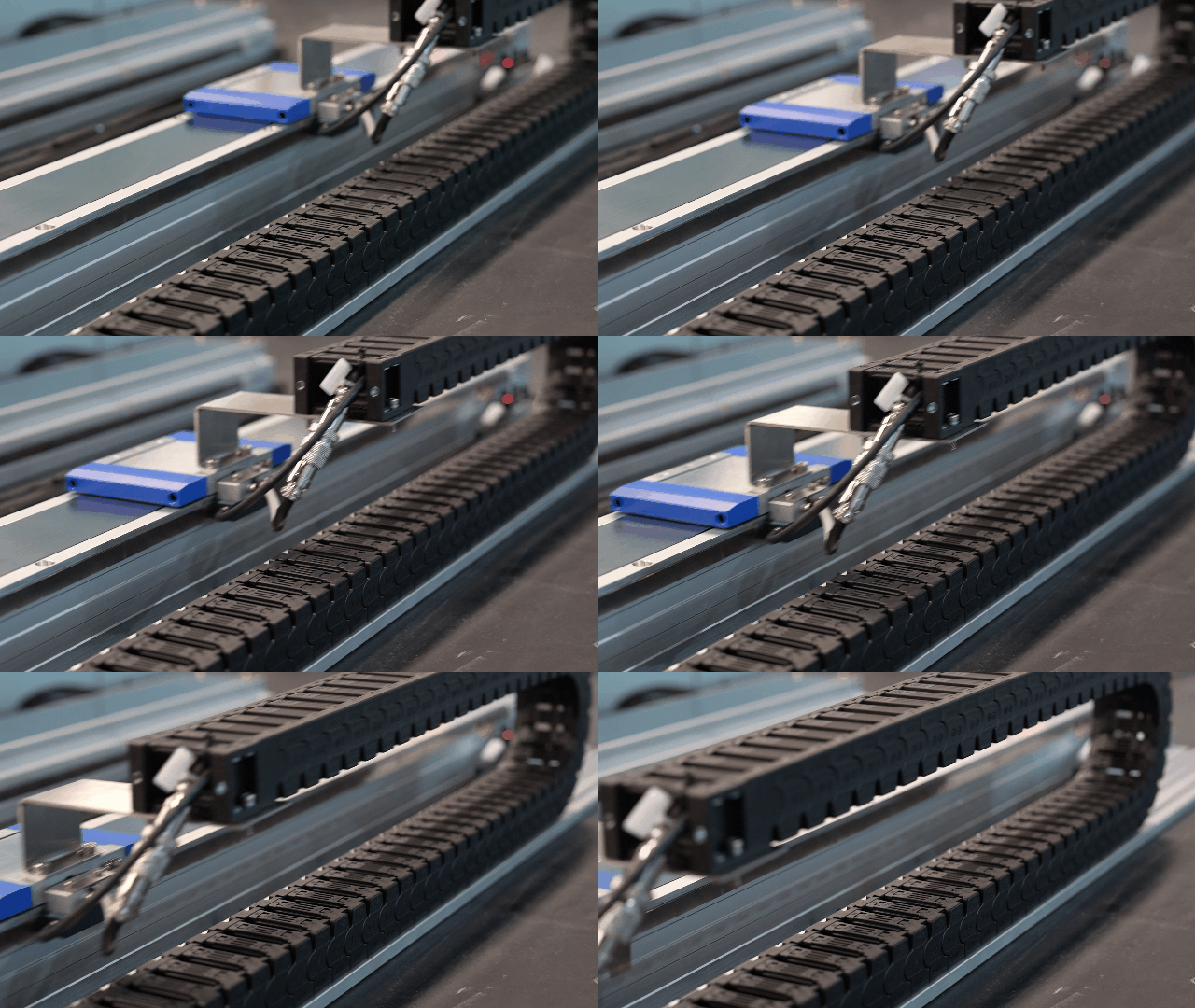
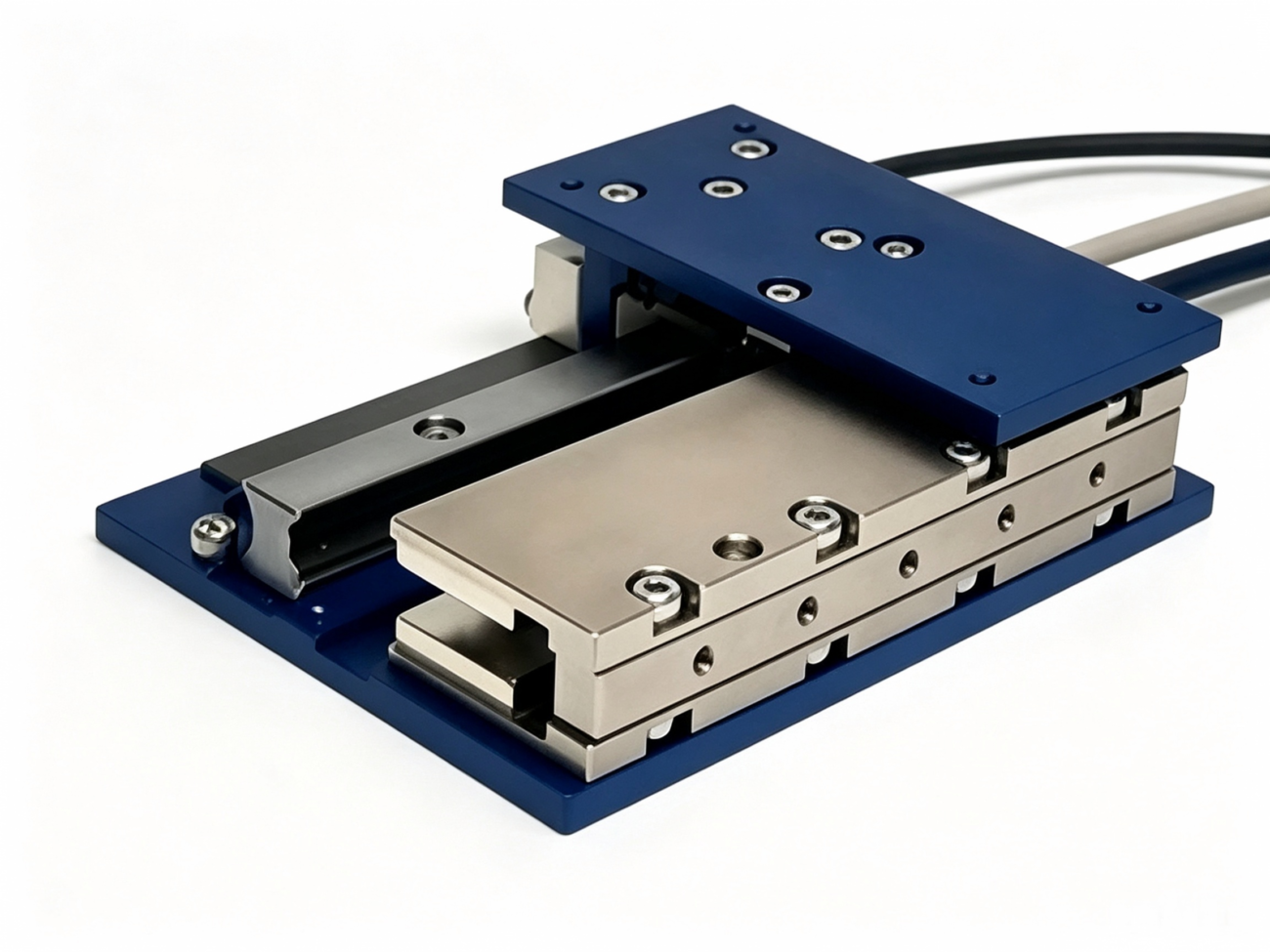
Alinear motoris a revolutionary direct-drive motion technology that converts electrical energy directly into linear mechanical motion without requiring intermediate transmission components such as gears, belts, or ball screws.
Unlike traditional rotary motors that generate rotational movement and require mechanical mechanisms to convert rotation into linear motion, linear motors produce straight-line motion directly. This unique design provides higher precision, faster response, lower mechanical wear, and improved system reliability.
Today, linear motors are widely used in precision automation, robotics, semiconductor equipment, medical devices, optical systems, smart consumer products, and next-generation industrial machines.
What Is a Linear Motor and How Does It Work?
A linear motor can be understood as a traditional rotary motor that has been “unrolled” into a flat structure.
In a conventional rotary motor:
The rotor rotates around an axis
The stator remains stationary
Mechanical transmission converts rotation into linear movement
In a linear motor:
The magnetic field structure is arranged in a straight line
The mover and stator generate electromagnetic force directly
Electrical energy is transformed into linear motion
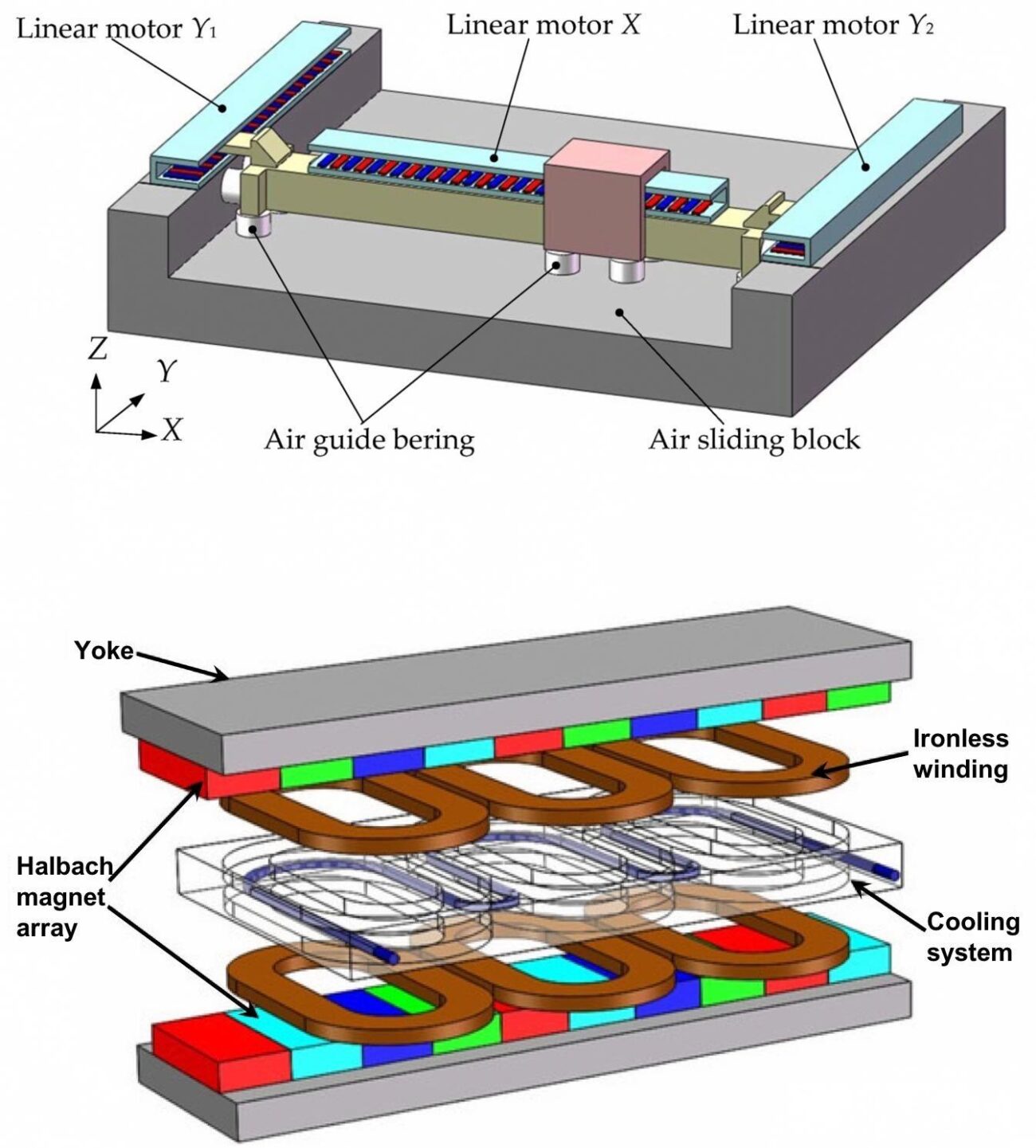
A typical linear motor system consists of:
Magnetic track (secondary part)
Moving coil or mover (primary part)
Servo controller
Position feedback sensor
Similar to brushless rotary motors, linear motors operate without direct mechanical contact between moving and stationary components, reducing friction and improving motion performance.
Why Are Linear Motors Replacing Traditional Motion Systems?
For modern automated equipment requiring compact designs and high efficiency, direct-drive linear motors provide significant advantages.
2. Ultra-High Positioning Accuracy
Precision is one of the most important requirements in industries such as semiconductor manufacturing, optics, robotics, and medical equipment.
Traditional transmission systems may suffer from:
Screw deformation
Mechanical backlash
Transmission errors
Linear motors generate motion directly through electromagnetic force, reducing intermediate errors.
Benefits include:
Micron-level positioning capability
Excellent repeatability
High dynamic accuracy
Smooth motion control
This makes linear motors ideal for applications requiring extremely precise positioning, including wafer inspection, optical alignment, laboratory automation, and high-speed pick-and-place systems.
3. Fast Response Speed and High Dynamic Performance
Because linear motors have no mechanical transmission delay, they provide:
Faster acceleration
Higher travel speed
Rapid direction changes
Excellent servo response
This makes them suitable for high-speed automation equipment where every millisecond affects production efficiency.
Typical applications include:
Electronic component placement machines
High-speed inspection equipment
Industrial robots
Packaging automation systems
Modern precision manufacturing increasingly depends on high-performance motion systems to improve productivity and product quality.
4. Low Maintenance and Long Service Life
A traditional mechanical drive system experiences continuous wear between components.
Linear motors operate with minimal mechanical contact, resulting in:
Lower friction
Less vibration
Reduced wear
Longer operational life
Because there are fewer moving mechanical parts, maintenance requirements are significantly reduced.
For industries requiring 24/7 operation, such as semiconductor factories and automated production lines, linear motors provide excellent reliability.
5. Strong Environmental Adaptability
Modern linear motors can be designed for challenging industrial environments.
With protective sealing and epoxy encapsulation technology, linear motors can operate in:
Cleanrooms
Dust environments
Humid environments
Industrial production areas
This makes them suitable for:
Semiconductor manufacturing
Medical laboratories
Food packaging equipment
Precision inspection systems
Major Applications of Linear Motors Across Industries
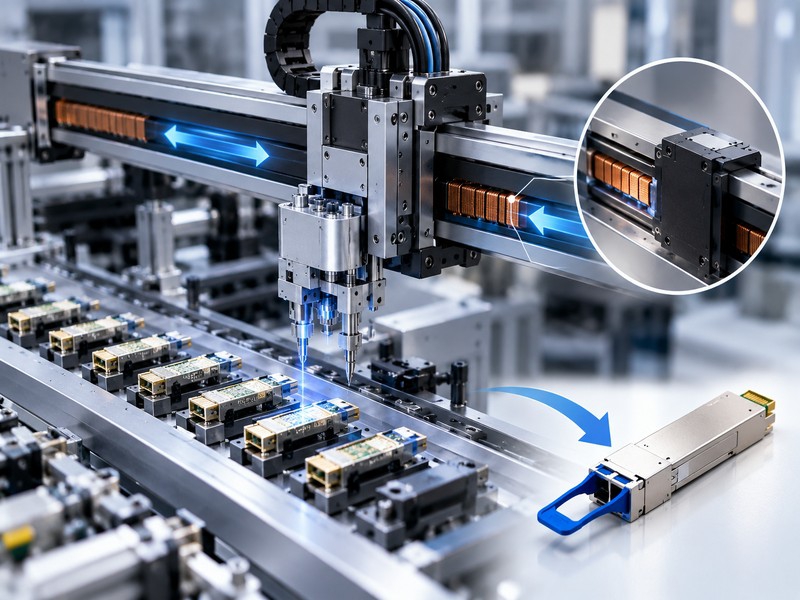
1. Semiconductor and Electronics Manufacturing
The semiconductor industry requires extremely precise motion control.
During wafer processing, inspection, and electronic assembly, even tiny positioning errors can affect product quality.
Linear motor technology will continue playing an important role in these applications.
Conclusion: Linear Motors Are Driving the Next Generation of Motion Technology
From semiconductor factories to smart homes, linear motors are redefining how machines move.
Their advantages include:
✔ Direct-drive structure ✔ High positioning accuracy ✔ Fast response speed ✔ Low maintenance requirements ✔ Long service life ✔ Strong environmental adaptability
As industries continue moving toward intelligent automation and precision manufacturing, linear motors will become an increasingly important solution for advanced motion systems.
Whether for semiconductor equipment, medical devices, optical systems, robotics, or smart consumer products, linear motor technology represents the future of high-performance motion control.
HCY Automation delivers integrated solutions across motion control, linear motion, robotics, machine vision, pneumatic systems, and precision gearboxes to help global manufacturers build smarter, faster, and more reliable production lines. Our engineering team helps you select and integrate the right motion control, robotics, and automation components for your specific application.