Linear Motor VS Servo Motor: Differences, Pros, Cons & Applications
In industrial automation and motion control, linear motors and servo motors are two technologies frequently considered for precision motion applications.
But what is the difference between a linear motor and a servo motor? Which one offers better speed and positioning accuracy? And which solution should you choose for semiconductor equipment, 3C electronics, laser processing, medical equipment or high-speed automation?
The most important difference is simple:
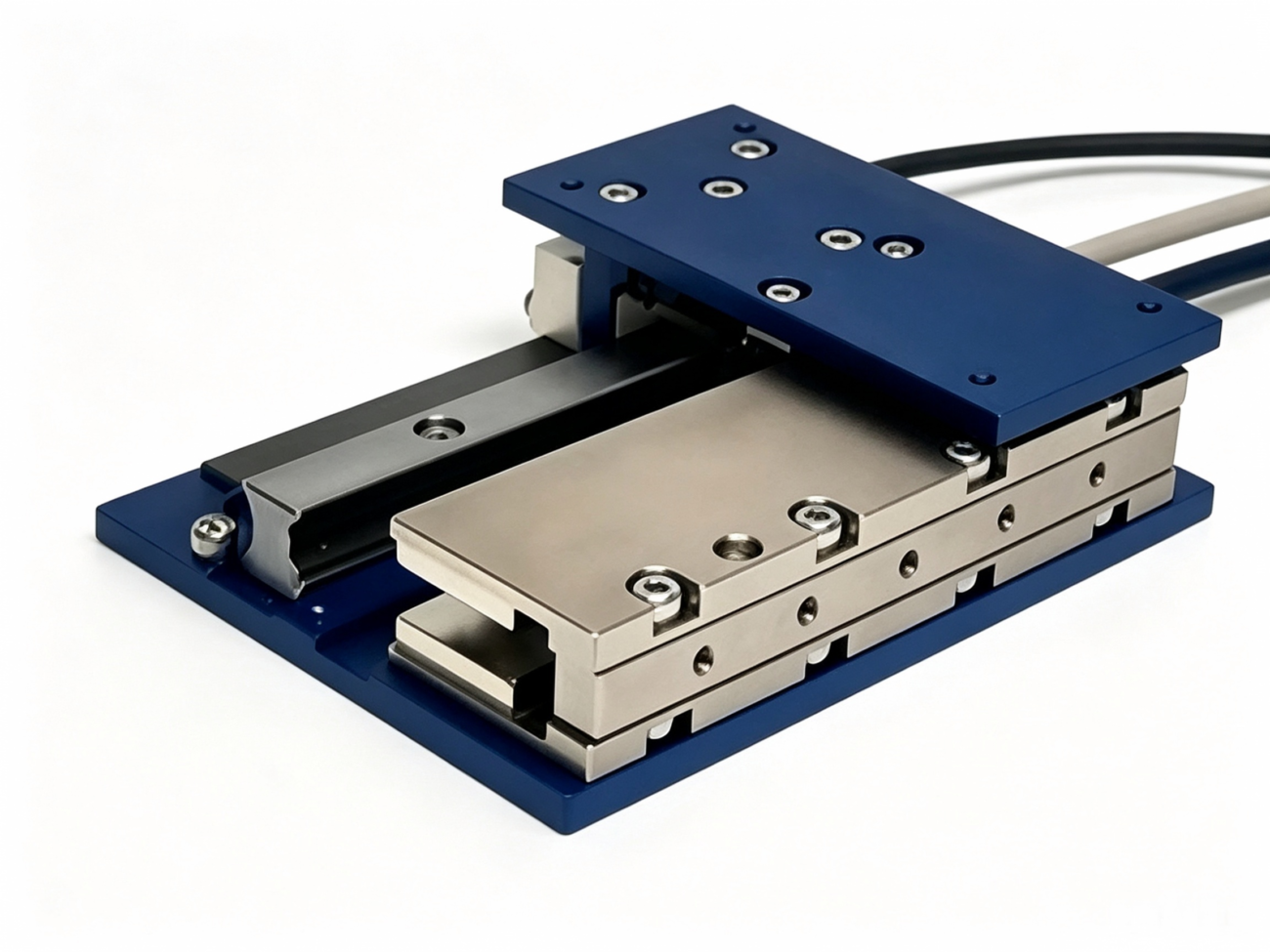
A linear motor generates linear motion directly, while a conventional rotary servo motor typically requires a ball screw, belt, rack-and-pinion or other mechanical transmission to convert rotary motion into linear movement.
This difference in drive architecture can significantly affect machine speed, acceleration, positioning performance, maintenance requirements and overall system design.
There is, however, one important technical distinction:linear motor and servo motor are not mutually exclusive concepts. A linear motor can itself operate as a linear servo motor when combined with position feedback and a servo drive.
Therefore, for most industrial linear-motion applications, the more useful comparison is:
Direct-Drive Linear Motor vs. Rotary Servo Motor + Mechanical Transmission
Let’s compare the two technologies across three key dimensions: working principle, performance and applications.
1. Working Principle: Direct Drive vs. Mechanical Transmission
The fundamental difference between a linear motor and a conventional rotary servo system lies in how force is transferred to the load.
How Does a Servo Motor Produce Linear Motion?
A conventional servo motor generates rotary motion.
When linear movement is required, additional mechanical components are typically used to convert rotation into linear displacement.
A common configuration is:
Servo Motor → Coupling → Ball Screw → Nut → Linear Stage
Servo Motor → Gearbox / Rack and Pinion → Linear Motion
This architecture is mature, reliable and widely used throughout industrial automation.
However, every additional transmission component can introduce factors such as:
Mechanical backlash
Friction
Elastic deformation
Additional inertia
Transmission losses
Mechanical wear
Lubrication requirements
Potential maintenance points
These effects become increasingly important as machine builders pursue higher speed, acceleration and positioning performance.
How Does a Linear Motor Work?
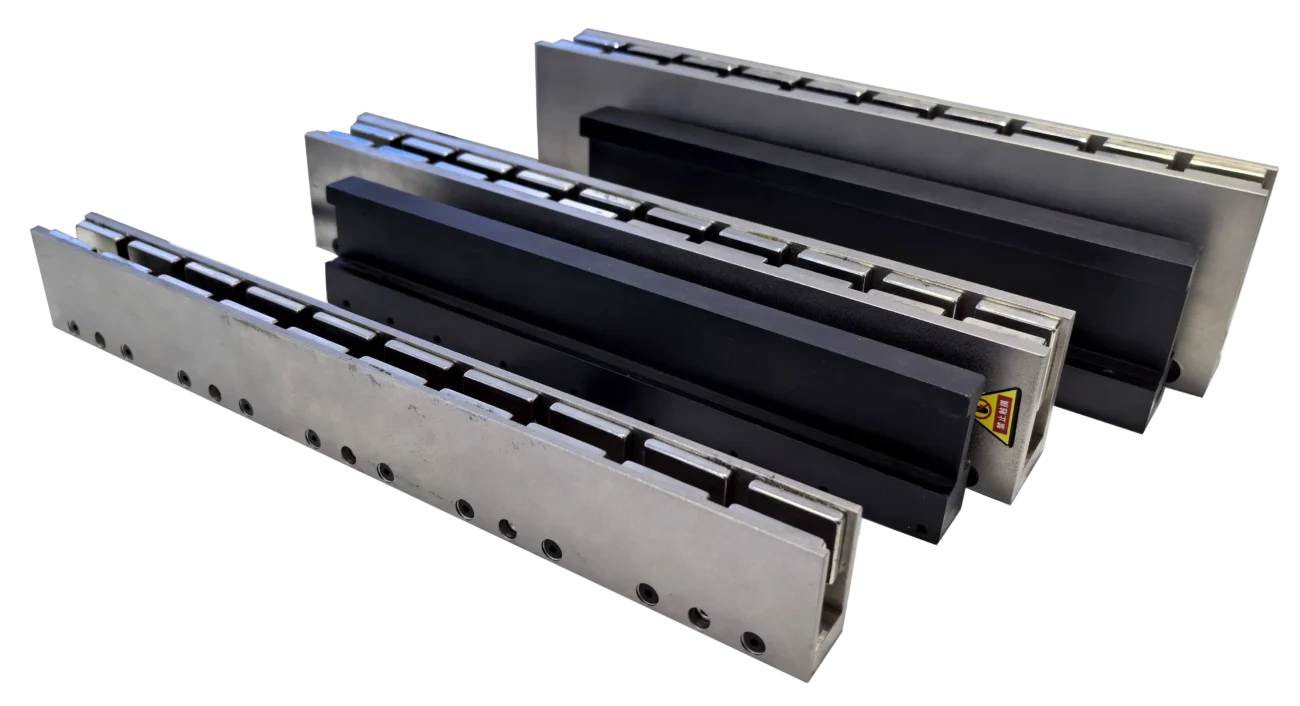
A linear motor eliminates the rotary-to-linear conversion stage.
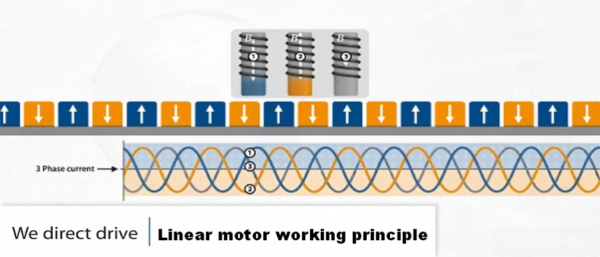
Instead of producing rotational torque, electromagnetic force directly generates thrust along a linear path.
The drive architecture becomes much simpler:
Linear Motor → Load
You can think of a conventional servo motor as a runner who first runs in a circle and then relies on a transmission mechanism to convert that movement into a straight line.
A linear motor is more like a sprinter starting directly on a straight track.
There is no ball screw, timing belt or gearbox between the motor and the load.
2. Linear Motor vs. Servo Motor: Performance Comparison
Direct drive affects more than mechanical structure. It can influence speed, acceleration, positioning accuracy, repeatability, maintenance and machine dynamics.
Linear Motor vs. Servo Motor: Key Differences, Applications & How to Choose
In industrial automation and motion control, linear motors and servo motors are two technologies frequently considered for precision motion applications.
But what is the difference between a linear motor and a servo motor? Which one offers better speed and positioning accuracy? And which solution should you choose for semiconductor equipment, 3C electronics, laser processing, medical equipment or high-speed automation?
The most important difference is simple:
A linear motor generates linear motion directly, while a conventional rotary servo motor typically requires a ball screw, belt, rack-and-pinion or other mechanical transmission to convert rotary motion into linear movement.
This difference in drive architecture can significantly affect machine speed, acceleration, positioning performance, maintenance requirements and overall system design.
There is, however, one important technical distinction: linear motor and servo motor are not mutually exclusive concepts. A linear motor can itself operate as a linear servo motor when combined with position feedback and a servo drive.
Therefore, for most industrial linear-motion applications, the more useful comparison is:
Direct-Drive Linear Motor vs. Rotary Servo Motor + Mechanical Transmission
Let’s compare the two technologies across three key dimensions: working principle, performance and applications.
1. Working Principle: Direct Drive vs. Mechanical Transmission
The fundamental difference between a linear motor and a conventional rotary servo system lies in how force is transferred to the load.
How Does a Servo Motor Produce Linear Motion?
A conventional servo motor generates rotary motion.
When linear movement is required, additional mechanical components are typically used to convert rotation into linear displacement.
A common configuration is:
Servo Motor → Coupling → Ball Screw → Nut → Linear Stage
Other systems may use:
Servo Motor → Belt → Linear Stage
or:
Servo Motor → Gearbox / Rack and Pinion → Linear Motion
This architecture is mature, reliable and widely used throughout industrial automation.
However, every additional transmission component can introduce factors such as:
Mechanical backlash
Friction
Elastic deformation
Additional inertia
Transmission losses
Mechanical wear
Lubrication requirements
Potential maintenance points
These effects become increasingly important as machine builders pursue higher speed, acceleration and positioning performance.
How Does a Linear Motor Work?
A linear motor eliminates the rotary-to-linear conversion stage.
Instead of producing rotational torque, electromagnetic force directly generates thrust along a linear path.
The drive architecture becomes much simpler:
Linear Motor → Load
You can think of a conventional servo motor as a runner who first runs in a circle and then relies on a transmission mechanism to convert that movement into a straight line.
A linear motor is more like a sprinter starting directly on a straight track.
There is no ball screw, timing belt or gearbox between the motor and the load.
2. Linear Motor vs. Servo Motor: Performance Comparison
Direct drive affects more than mechanical structure. It can influence speed, acceleration, positioning accuracy, repeatability, maintenance and machine dynamics.
Here is a quick comparison:
Feature
Direct-Drive Linear Motor
Rotary Servo + Mechanical Transmission
Motion
Direct linear motion
Rotary motion converted to linear motion
Ball Screw Required
No
Often
Mechanical Backlash
Essentially eliminated from drive transmission
Depends on transmission
Speed
Excellent for high-speed linear motion
High, but transmission dependent
Acceleration
Very high potential
Transmission dependent
Dynamic Response
Excellent
Very good
Positioning Accuracy
Excellent with appropriate feedback
Excellent with proper system design
Repeatability
Excellent
Excellent
Mechanical Wear
Low in drive transmission
Screw, belt, gear and coupling can wear
Long Stroke
Highly suitable
Depends on transmission design
Maintenance
Fewer transmission components
More mechanical components
Vertical Axis
Requires additional consideration
Often easier to implement
Thermal Management
Important
Usually easier to isolate motor heat
Initial Investment
Typically higher
Typically lower
Best Fit
High-speed, high-dynamic precision motion
General-purpose industrial motion
Let’s examine the major differences.
Positioning Accuracy and Repeatability
For precision manufacturing, positioning accuracy is often one of the most important selection criteria.
In a conventional servo-driven linear axis, motion passes through several components:
Motor → Coupling → Ball Screw → Nut → Load
The final positioning performance can therefore be influenced by screw pitch error, backlash, friction, elastic deformation, thermal expansion and mechanical wear.
A linear motor directly drives the load and eliminates the mechanical backlash associated with the rotary-to-linear transmission.
When combined with a high-resolution linear encoder, a properly designed linear motor system can achieve micron-level or even higher positioning performance depending on the complete system configuration.
This makes linear motors particularly attractive for applications such as:
Semiconductor inspection
Wafer handling
Precision assembly
Optical inspection
Electronics manufacturing
Metrology equipment
Precision positioning stages
It is important to note that a linear motor is not automatically more accurate than every servo-driven system.
Final machine accuracy also depends on encoder resolution, guideway accuracy, structural rigidity, servo tuning, thermal stability, moving mass and control architecture.
Speed and Acceleration
Another major advantage of direct-drive linear motors is their potential for high speed and high acceleration.
In ball-screw-driven servo systems, maximum linear speed can be influenced by screw length, screw diameter, critical rotational speed, bearing arrangement and vibration.
Linear motors eliminate the rotating screw entirely.
As a result, they are particularly suitable for machines requiring:
High-speed reciprocating motion
Rapid acceleration and deceleration
Frequent direction changes
Short positioning cycles
High production throughput
Long-stroke high-speed movement
Depending on the motor and system configuration, industrial linear motor systems can achieve linear speeds of several meters per second.
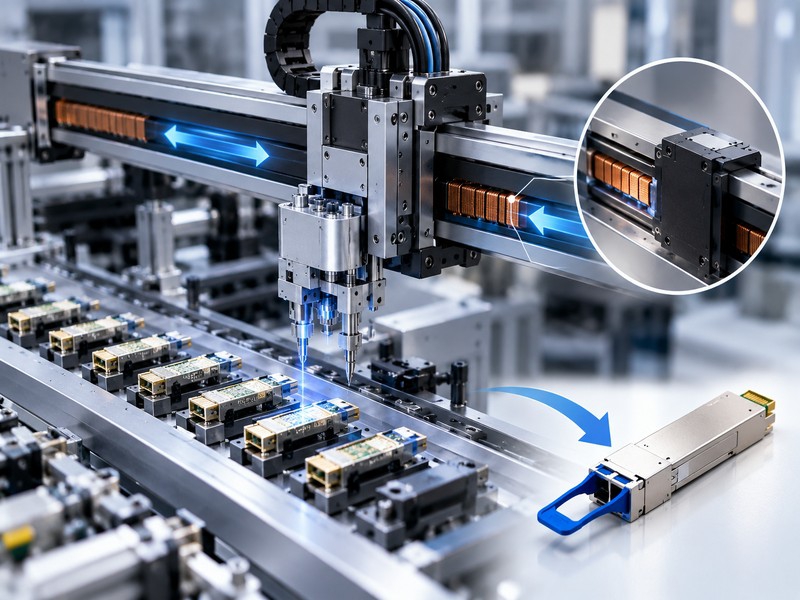
This makes direct-drive technology particularly attractive for 3C electronics production, semiconductor equipment, laser processing, logistics automation and high-speed assembly lines.
Mechanical Backlash
Mechanical backlash becomes particularly noticeable when an axis frequently changes direction.
Because a direct-drive linear motor does not require a ball screw, gearbox or belt to generate linear motion, transmission backlash can essentially be eliminated.
This can improve:
Positioning repeatability
Motion reversal
Settling time
Contouring
High-frequency reciprocating motion
For precision automation, eliminating an entire source of mechanical error can be more valuable than simply increasing motor power.
Maintenance and Long-Term Operating Cost
A conventional servo-driven linear system may contain:
Ball screws
Bearings
Couplings
Timing belts
Gearboxes
Rack-and-pinion mechanisms
Depending on the application, these components may require lubrication, adjustment, inspection or eventual replacement.
A direct-drive linear motor eliminates many of these transmission components.
This can reduce mechanical wear and routine transmission maintenance, particularly in high-duty-cycle applications.
However, linear motors are not completely maintenance-free.
The guideway, encoder, cable management system and cooling components still require appropriate inspection, and the motor should be protected from contaminants such as metal chips, dust, coolant and foreign particles.
Therefore, total cost of ownership should be evaluated over the entire machine lifecycle rather than based only on the initial motor price.
3. Applications: When Should You Choose a Linear Motor?
Neither technology is universally better.
The right choice depends on what your machine needs to accomplish.
Consider a Conventional Servo Motor When:
A rotary servo system can be an excellent choice when:
Machine cost is a major consideration
Required speed and acceleration are moderate
Ultra-high positioning performance is unnecessary
Mechanical reduction is beneficial
The application requires rotary motion
The machine uses a conventional vertical axis
The existing mechanical architecture is based on ball screws or belts
Conveyors, general automation equipment and many conventional machine tools can therefore continue to benefit from servo motor technology.
Consider a Linear Motor When:
A direct-drive linear motor becomes particularly attractive when your application requires:
High positioning accuracy
High repeatability
High acceleration
High linear speed
Rapid dynamic response
Frequent reciprocating motion
Short cycle times
Minimal transmission backlash
Long travel
Reduced mechanical transmission maintenance
For applications where every millisecond and every micron matters, direct drive can provide a significant engineering advantage.
Typical Linear Motor Applications
Semiconductor Equipment
Semiconductor manufacturing and inspection demand exceptional positioning stability and repeatability.
Applications such as wafer handling, inspection stages, packaging equipment and precision positioning platforms can benefit from direct-drive motion because mechanical transmission backlash is eliminated.
For these applications, HCY Automation can provide linear motor solutions adapted to demanding precision-motion requirements, including configurations designed for cleaner operating environments.
3C Electronics Manufacturing
Smartphones, tablets, displays, cameras and other consumer electronics require increasingly precise assembly processes.
Typical applications include:
Screen alignment and bonding
Camera module assembly
Precision dispensing
Component inspection
High-speed pick-and-place
Automated testing
Linear motors combine high acceleration with precision positioning, making them particularly suitable for production lines where both cycle time and accuracy matter.
Laser Cutting and Laser Processing
Laser systems often require continuous high-speed movement combined with precise trajectory control.
Direct-drive linear motors eliminate the limitations associated with rotating long ball screws and can provide rapid acceleration and smooth high-speed positioning.
Typical applications include:
Laser cutting
Laser marking
Laser welding
Precision laser processing
Optical positioning
Logistics and High-Speed Sorting
In logistics automation, throughput directly affects productivity.
Linear motor systems can support rapid reciprocating motion and frequent acceleration/deceleration, making them suitable for high-speed sorting and material-handling applications.
Long-travel linear motor configurations can also be developed for applications requiring extended motion ranges.
Medical and Laboratory Equipment
Medical and laboratory automation can place additional requirements on noise, smoothness, precision and reliability.
Linear motor solutions can be optimized for applications requiring:
Smooth motion
Low noise
Precise positioning
Reduced mechanical transmission wear
Application-specific motor and motion-system design is therefore particularly important in this sector.
Why Choose HCY Automation Linear Motors?
Choosing the right linear motor is not simply about selecting a motor from a catalog.
The motor needs to match the machine’s load, thrust, stroke, speed, acceleration, positioning accuracy, duty cycle, installation space and operating environment.
This is where HCY Automation focuses its engineering capabilities.
1. Optimized High-Thrust Design
HCY linear motors can be engineered with optimized stator winding and electromagnetic designs to provide high thrust density for demanding industrial applications.
For machine builders, higher thrust density can help achieve:
Faster acceleration
Higher machine throughput
Compact system design
Better performance with heavier moving loads
For HCY models verified to provide up to 20% higher thrust density than the applicable comparison baseline, the specific test conditions and reference model should be provided in the technical documentation.
This keeps the performance claim technically transparent for professional customers.
2. Thermal Management for Continuous Operation
Heat directly affects precision.
This is particularly important in linear motor systems because the heat-generating components may be positioned close to the precision motion stage.
HCY therefore emphasizes thermal management in linear motor design, helping maintain stable performance during continuous industrial operation.
For applications operating in elevated ambient temperatures or requiring long duty cycles, cooling and thermal design can be customized according to the machine’s operating conditions.
Where applicable, HCY can also provide validated operating-temperature data for specific configurations.
3. Application-Specific Customization
Different industries require different motion solutions.
HCY Automation can develop linear motor configurations according to specific application requirements, including:
Semiconductor Industry → Precision and contamination-sensitive configurations
Medical Equipment → Smooth and low-noise motion solutions
Laser Equipment → High-dynamic motion and precise trajectory control
Logistics Automation → Long-stroke and high-duty-cycle solutions
Rather than forcing every machine into one standard motor configuration, HCY can adapt the motor and motion solution around the customer’s application.
How to Select the Right Linear Motor
Before selecting a linear motor, define these parameters:
Selection Parameter
Why It Matters
Payload
Determines required moving force
Stroke
Determines travel length
Continuous Force
Determines continuous operating capability
Peak Force
Important during acceleration
Maximum Speed
Defines velocity requirement
Acceleration
Determines dynamic performance
Positioning Accuracy
Determines feedback and mechanical requirements
Repeatability
Critical for repetitive precision processes
Duty Cycle
Influences thermal sizing
Installation Orientation
Horizontal/vertical design differs
Environment
Dust, temperature and contamination matter
Available Space
Determines motor and stage dimensions
If you are unsure which motor size or configuration is appropriate, provide HCY Automation with your:
Choose a direct-drive linear motor if you prioritize:
High speed + high acceleration + high positioning performance + rapid response + minimal backlash + reduced transmission maintenance.
For ordinary conveyors and general automation equipment, a conventional servo system may provide excellent value.
For semiconductor inspection, 3C electronics assembly, wafer handling, laser processing, precision inspection and high-speed automation, a linear motor deserves serious consideration.
And when the application requires a customized combination of speed, precision, thrust, stroke and environmental adaptation, HCY Automation can provide an application-specific linear motor solution.
Frequently Asked Questions About Linear Motors and Servo Motors
What is the main difference between a linear motor and a servo motor?
A linear motor generates linear force directly. A conventional rotary servo motor generates rotational motion and normally requires a ball screw, belt, rack-and-pinion or another mechanical mechanism when linear movement is required.
Is a linear motor a servo motor?
It can be. “Linear motor” describes the motor’s motion architecture, while “servo” refers to closed-loop control. A linear motor combined with position feedback and a servo drive can operate as a linear servo motor.
Is a linear motor more accurate than a servo motor?
A direct-drive linear motor eliminates transmission backlash and can provide extremely high positioning performance when combined with a high-resolution linear encoder. However, final accuracy depends on the complete system, including feedback resolution, guideway accuracy, machine rigidity, thermal stability and servo tuning.
Why are linear motors suitable for high-speed automation?
Linear motors drive the load directly without using a ball screw or other rotary-to-linear transmission. This removes several mechanical limitations and makes high acceleration, rapid response and frequent reciprocating movement possible.
Does a linear motor require a ball screw?
No. A direct-drive linear motor produces linear thrust directly and therefore does not need a ball screw to convert rotary motion into linear movement.
What are the disadvantages of linear motors?
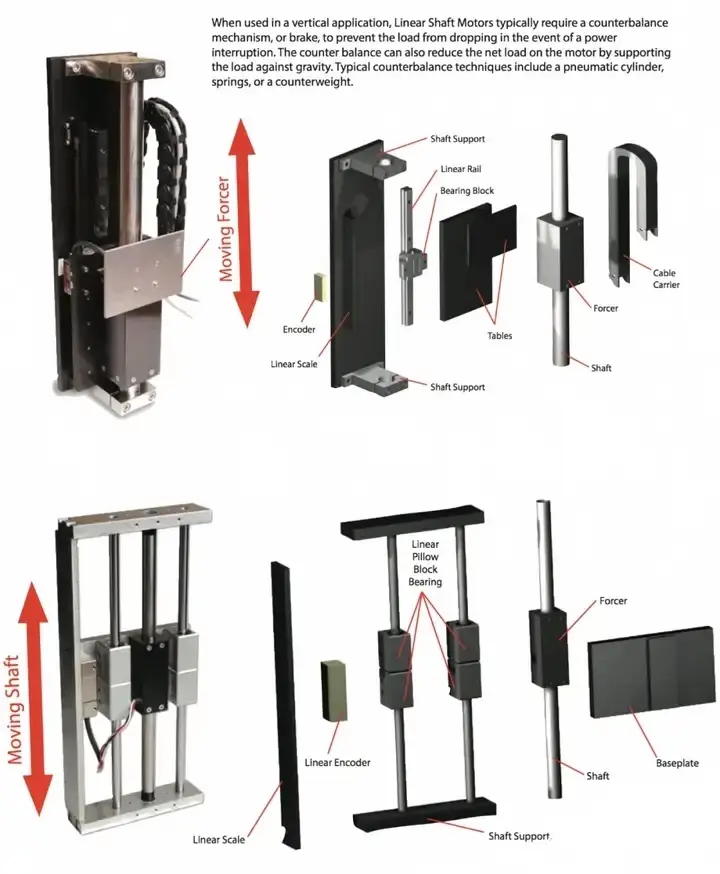
Potential considerations include higher initial investment, thermal management requirements, contamination protection, more demanding servo tuning and additional safety considerations for vertical axes.
What industries use linear motors?
Linear motors are widely suited to semiconductor equipment, electronics manufacturing, laser processing, precision inspection, medical equipment, machine tools, packaging, logistics automation and other high-performance motion applications.
How do I choose the right HCY linear motor?
Start by defining your required stroke, payload, continuous and peak force, maximum speed, acceleration, positioning accuracy, repeatability, duty cycle, installation orientation and operating environment.
Send these parameters to HCY Automation, and our engineering team can help you evaluate a suitable linear motor configuration.
Upgrade Your Machine with HCY Linear Motion Technology
When machine performance is limited by mechanical transmission, simply upgrading to a larger conventional motor may not solve the underlying problem.
Direct-drive linear motion eliminates the rotary-to-linear transmission stage, providing a fundamentally different approach to high-performance machine design.
Whether you are developing a:
Semiconductor inspection machine
3C electronics assembly line
Laser processing system
Precision positioning platform
Medical automation system
High-speed sorting machine
Custom industrial automation system
HCY Automation can help you evaluate a linear motor solution based on your actual application requirements.
HCY Automation delivers integrated solutions across motion control, linear motion, robotics, machine vision, pneumatic systems, and precision gearboxes to help global manufacturers build smarter, faster, and more reliable production lines. Our engineering team helps you select and integrate the right motion control, robotics, and automation components for your specific application.