Why Are Coreless Linear Motor Modules Better for Ultra-Precision Processing? How coreless linear motor technology improves motion smoothness, positioning accuracy
Discover why coreless linear motor stages are ideal for ultra-precision machining, laser processing, semiconductor inspection, and high-speed motion control.
When machining tolerances become tighter, even small motion disturbances can affect the final result. A slight vibration during laser cutting, a positioning deviation during semiconductor inspection, or an uneven movement during precision dispensing can lead to inconsistent product quality.
This is why more equipment manufacturers are turning to coreless linear motor stages for ultra-precision machining and advanced motion control.
Unlike conventional rotary motor systems that rely on screws, belts, or other mechanical transmission components, a linear motor generates motion directly along a straight path. A coreless design takes this a step further by removing the iron core from the motor’s moving coil assembly, significantly reducing cogging forces and magnetic attraction between the motor components.
The result is exceptionally smooth motion, fast dynamic response, and precise trajectory control.
But does a coreless linear motor stage always outperform other linear motion solutions? And which applications benefit most from its design?
Let’s look at the engineering principles, practical advantages, and selection factors that matter most.
1. What Is a Coreless Linear Motor Stage?
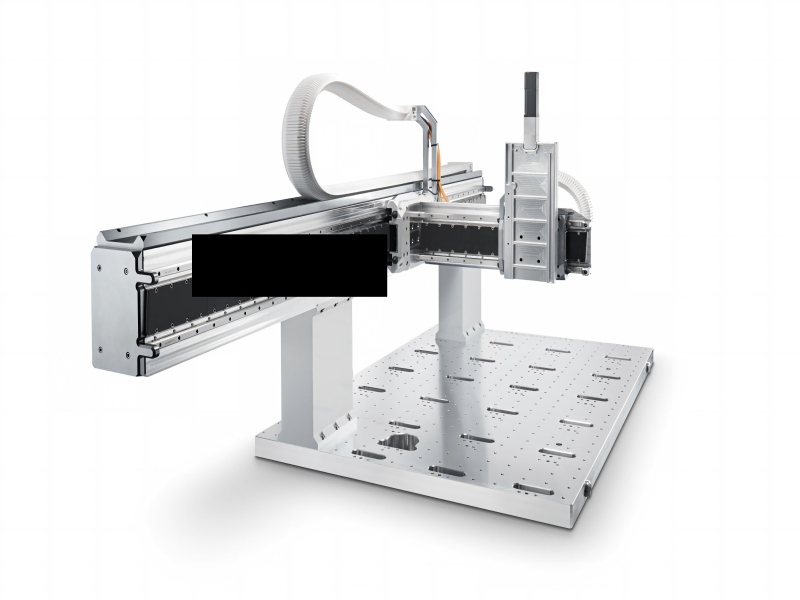
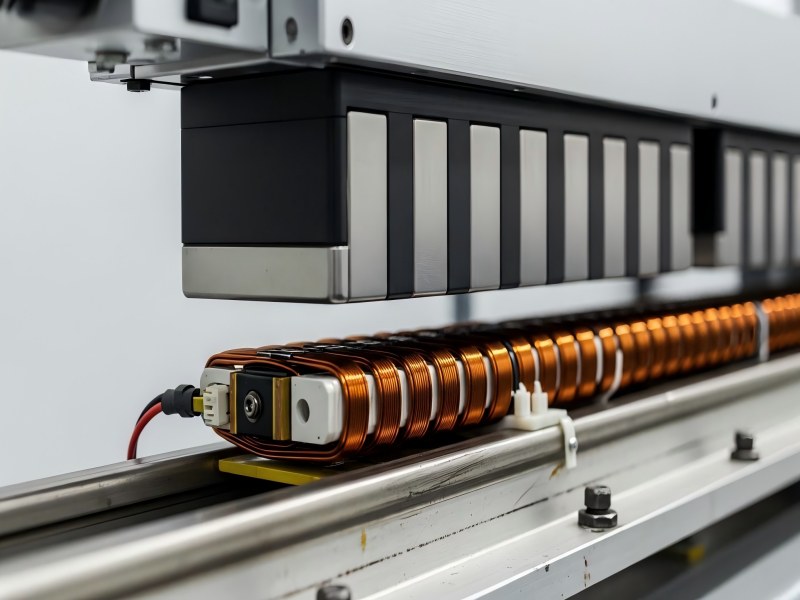
A coreless linear motor stage is a direct-drive positioning system that combines a coreless linear motor with mechanical guidance, position feedback, and motion control components.
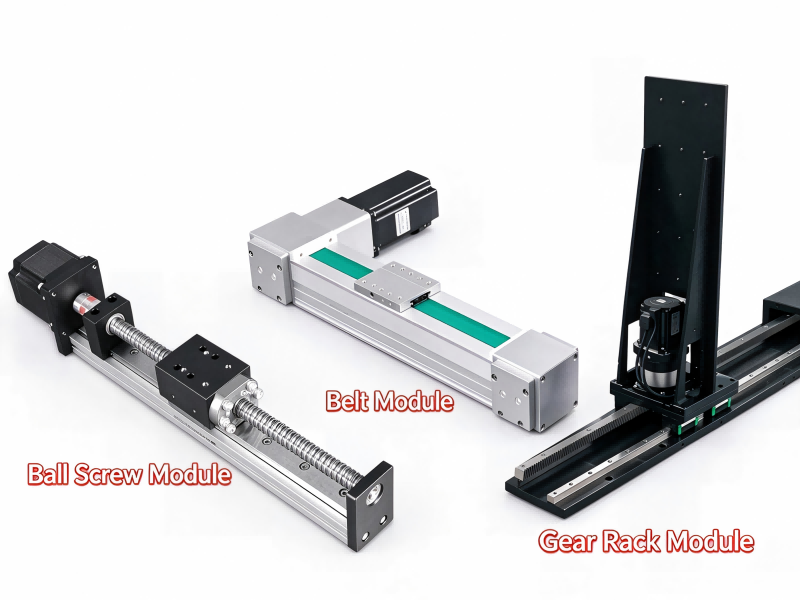
Instead of converting rotary motion into linear movement, the motor produces thrust directly along the travel axis. This eliminates the need for a conventional ball screw or belt transmission between the motor and the load.
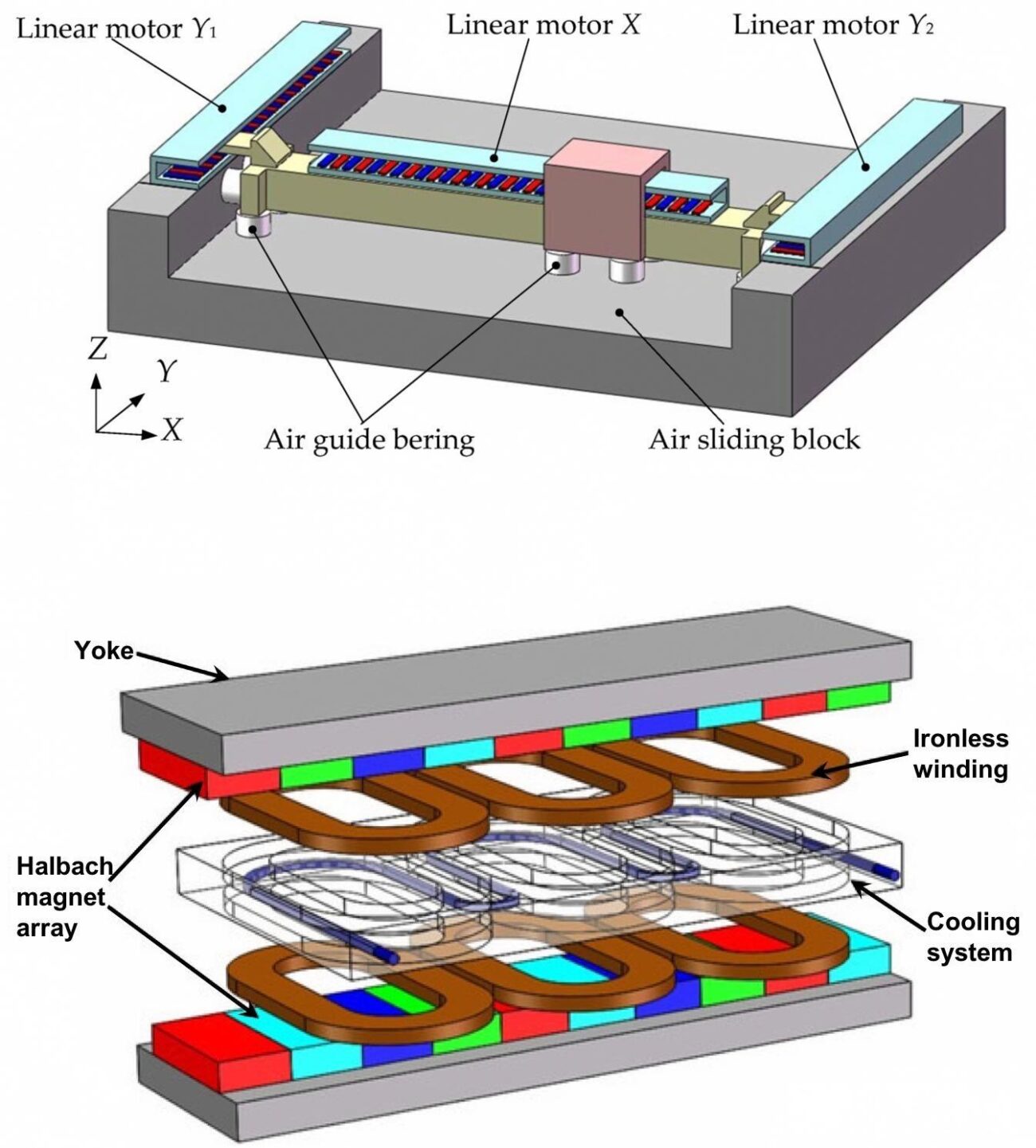
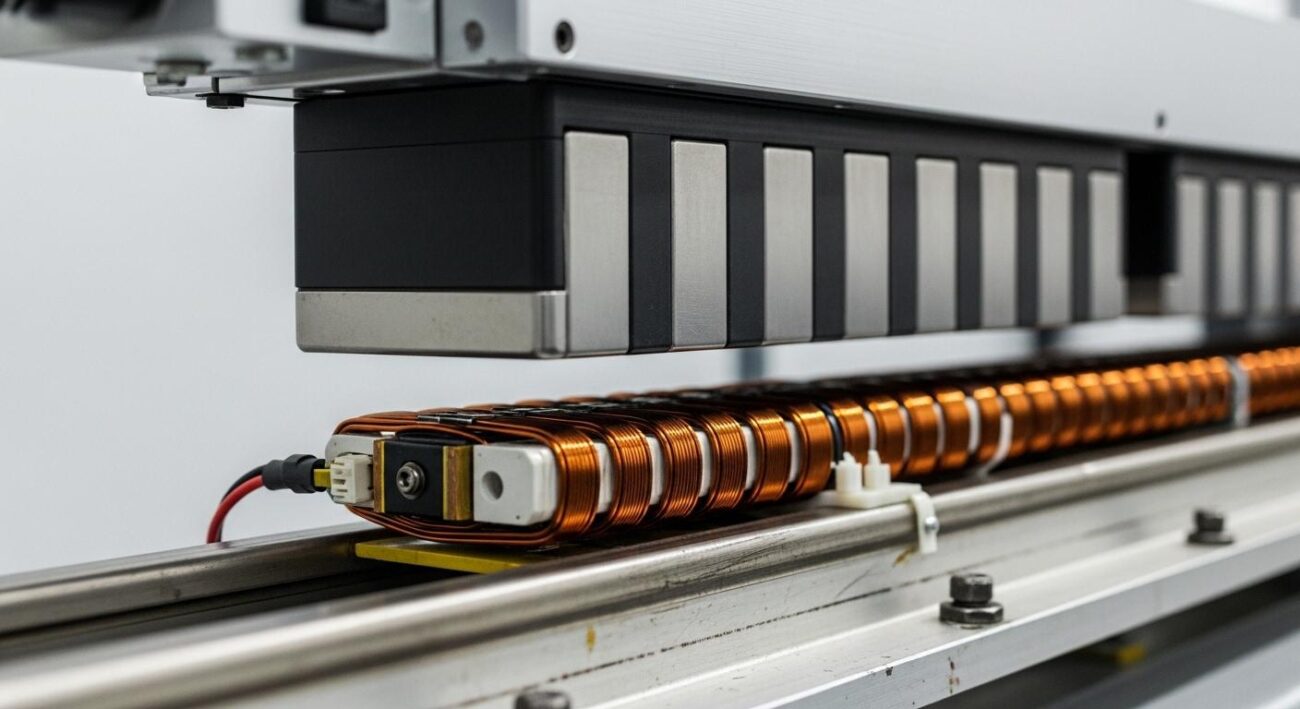
In a typical ironless linear motor, the coil assembly moves within a magnetic field generated by a permanent magnet track. The coil assembly contains no iron core, reducing magnetic interaction forces that can cause uneven movement.
A complete linear motor stage may include:
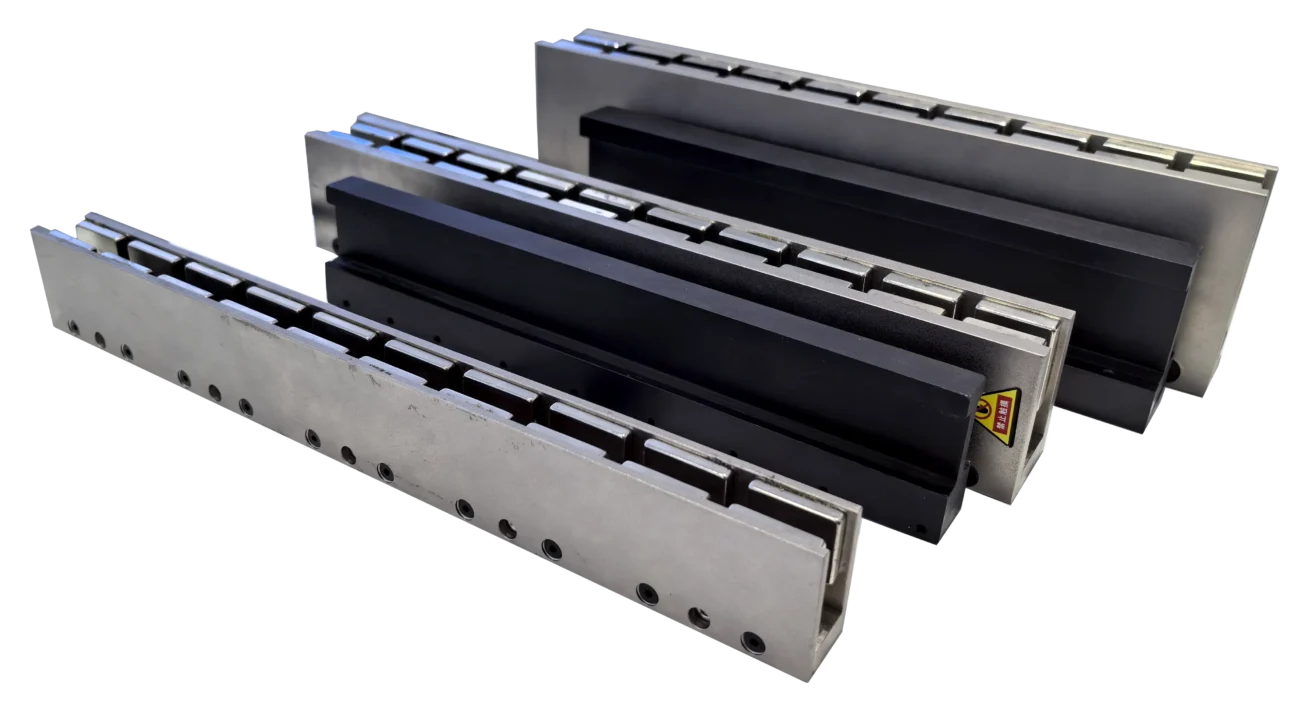
An ironless linear motor for direct thrust generation.
Precision linear guides for load support and straightness.
A linear encoder for position feedback.
A servo drive and motion controller for closed-loop positioning.
A mounting base and optional cable management system.
The motor generates motion, while the encoder, controller, and mechanical structure work together to achieve the required positioning performance.
An important distinction: Motor design alone does not determine the accuracy of the entire linear stage. Encoder resolution, guideway quality, structural stiffness, thermal behavior, controller tuning, and installation conditions all influence the final result.
2. Why Coreless Linear Motors Excel in Ultra-Precision Applications
2.1 No Cogging Forces for Smoother Motion
One of the most important advantages of a coreless linear motor is its low cogging force.
In iron-core motors, the interaction between the iron teeth and permanent magnets can create periodic variations in magnetic force. These variations may produce small thrust fluctuations, particularly at low speeds or during fine positioning.
A coreless motor eliminates the iron core from the coil assembly, substantially reducing this source of cogging.
Why does this matter?
In applications such as laser micromachining, precision inspection, and micro-assembly, smooth motion is essential. Small force disturbances can affect the consistency of scanning speed, settling behavior, and trajectory following.
A coreless linear motor stage is therefore particularly suitable for applications requiring:
Smooth low-speed movement.
Fine positioning and repeatable motion.
Reduced force ripple during scanning.
Stable movement along complex trajectories.
Sensitive inspection and measurement operations.
The practical benefit is not simply quieter operation. It is better control over how the machine moves throughout the working process.
2.2 High Dynamic Response for Faster Production Cycles
Ultra-precision manufacturing is not just about reaching a target position. The system must also accelerate, decelerate, and settle accurately within a limited cycle time.
Coreless linear motors typically feature a lightweight moving coil assembly. With less moving mass, the system can achieve high acceleration and rapid changes in velocity when appropriately sized and controlled.
Because the motor drives the load directly, there is also no ball screw or belt transmission introducing additional mechanical inertia, backlash, or compliance.
This makes coreless linear motor stages attractive for:
High-speed laser scanning and positioning.
Semiconductor wafer inspection.
Electronic component placement.
Precision dispensing and bonding.
High-throughput optical measurement.
For equipment manufacturers, the objective is to shorten nonproductive travel and positioning time without sacrificing accuracy.
However, maximum acceleration depends on motor thrust, moving mass, guideway capacity, structural stiffness, and servo tuning. A lightweight motor does not automatically guarantee a faster machine; the complete motion system must be designed around the required duty cycle.
2.3 High Positioning Accuracy and Repeatability
In ultra-precision machining, positioning accuracy and repeatability are closely related but different performance measures.
Positioning accuracy describes how closely the actual position matches the commanded position. Repeatability describes how consistently the system returns to the same position under comparable conditions.
A coreless linear motor stage supports both through direct drive, low cogging forces, and closed-loop feedback.
When combined with a high-resolution linear encoder and a properly tuned servo control system, the stage can provide precise position control without the backlash and transmission errors associated with many mechanical drive systems.
This is especially valuable in applications involving repeated point-to-point movement or continuous trajectory tracking.
Typical applications include:
Laser cutting of fine features.
Micro-machining and precision engraving.
Optical inspection and metrology.
Semiconductor alignment and handling.
High-accuracy component assembly.
Some specialized linear motor stages are designed for repeatability in the micrometer or submicrometer range. Actual performance must be verified against the manufacturer’s specifications and the complete operating conditions.
When comparing products, look beyond encoder resolution. Check the specified positioning accuracy, repeatability, straightness, settling time, and measurement method.
2.4 Reduced Mechanical Wear and Lower Transmission Maintenance
Traditional linear motion systems often depend on a chain of mechanical components to transfer force from the motor to the load.
Ball screws contain rolling contact elements. Belt-driven systems rely on belt tension and material properties. Couplings and other transmission parts may introduce additional compliance or require maintenance.
A direct-drive linear motor removes the need for these transmission components.
This can reduce backlash-related errors, eliminate ball screw or belt replacement, and simplify the drive system.
For manufacturers operating equipment across multiple shifts, these advantages can help reduce maintenance requirements and improve long-term motion consistency.
Nevertheless, a linear motor stage is not maintenance-free. Linear guides, bearings, cables, cooling systems, and other supporting components still require appropriate inspection and servicing.
2.5 Flexible Motion Design for Compact Equipment
A coreless linear motor stage can offer a compact, low-profile motion arrangement, depending on its mechanical configuration.
This is useful when equipment designers need to fit precise motion axes into restricted installation spaces.
Depending on the selected design, manufacturers can configure:
Different travel lengths.
Customized mounting interfaces.
Single-axis or multi-axis motion systems.
Different payload and acceleration requirements.
Encoder and feedback configurations.
Integrated motion solutions for specialized machinery.
For OEMs developing custom automation equipment, this flexibility helps match the motion platform to the machine layout rather than redesigning the entire machine around a standard actuator.
Longer travel can also be achieved through appropriately engineered magnet tracks and mechanical structures. However, achievable travel, straightness, thermal stability, and structural performance must be evaluated for the complete assembly.
3. Why Coreless Linear Motor Stages Are Ideal for Laser Processing
Laser processing places demanding requirements on motion systems. The stage must follow programmed paths accurately while maintaining consistent velocity and minimizing disturbances that could affect the processed feature.
A coreless linear motor stage is well suited to these requirements because of its smooth thrust characteristics, direct drive, and high dynamic response.
Consistent Motion for Better Processing Quality
During laser cutting, engraving, drilling, or surface treatment, fluctuations in movement can influence the energy delivered per unit length.
A stable trajectory helps maintain consistent processing conditions, particularly when the laser and motion controller are properly synchronized.
Low cogging force is beneficial when the stage needs to move smoothly through small features, sharp changes in direction, or slow scanning segments.
Faster Acceleration for Complex Trajectories
Laser processing frequently involves short travel distances, frequent direction changes, and repeated acceleration and deceleration.
The low moving mass of a coreless motor can help the stage respond quickly to motion commands. When the machine structure and servo system are designed accordingly, this can improve cycle time without compromising trajectory control.
Precise Positioning for Fine Features
Applications such as micro-drilling, fine-line cutting, and precision engraving require accurate coordination between the laser beam and the workpiece.
A linear encoder provides real-time position feedback, allowing the controller to correct motion errors and follow the commanded path.
The final machining quality still depends on other factors, including laser characteristics, optical alignment, material properties, thermal deformation, and process parameters.
For this reason, the best laser motion system is one in which the motor, encoder, controller, mechanical structure, and laser process are engineered as a complete solution.
4. Coreless vs. Iron-Core Linear Motors: Which Is Better?
Both coreless and iron-core linear motors are used in industrial automation. The right choice depends on the required thrust, motion smoothness, thermal conditions, and application.
Comparison
Coreless linear motor
Iron-core linear motor
Coil structure
No iron core in the coil assembly
Iron core incorporated into the coil assembly
Cogging force
Very low by design
Can be higher due to magnetic interaction
Magnetic attraction
No comparable iron-core attraction at the coil assembly
Can produce substantial attraction between the motor components
Moving mass
Often lower
Often higher, depending on design
Thrust capability
Suitable for many precision and high-dynamic applications
Often advantageous for high-thrust applications
Motion smoothness
Excellent at low speed and during fine positioning
Depends on motor design and force-ripple characteristics
Thermal management
Coil heat removal requires careful design
Thermal performance depends on the motor’s magnetic and mechanical structure
High-thrust automation, machining, and demanding industrial motion
Neither design is universally superior.
An iron-core motor may be the better choice when high continuous thrust or force density is the priority. A coreless motor is often preferred when smooth motion, low cogging, and fine trajectory control are more important.
The decision should be based on measured system performance rather than motor construction alone.
5. Key Applications Beyond Laser Processing
The advantages of coreless linear motor stages extend across several advanced manufacturing sectors.
Semiconductor Manufacturing
Semiconductor inspection and handling systems require precise positioning, stable scanning, and reliable repeatability.
Coreless linear motor stages can support wafer inspection, optical measurement, alignment, and selected precision handling applications.
For cleanroom installations, material selection, particle generation, cable management, and thermal design must also meet the process requirements.
Electronics and 3C Manufacturing
Smartphone assembly, PCB inspection, precision dispensing, and electronic component handling often involve rapid movement between closely spaced positions.
High dynamic response and smooth motion can help improve throughput while maintaining consistent placement and inspection results.
Precision Optical Inspection
Optical measurement systems may require slow, controlled scanning to capture accurate images or dimensional data.
Low cogging force and precise feedback control help minimize motion disturbances that could affect image acquisition or measurement consistency.
Medical and Laboratory Equipment
Automated analytical instruments and precision positioning systems benefit from repeatable movement and compact mechanical integration.
Coreless linear motors can be useful when smooth motion and precise control are priorities, subject to the equipment’s specific safety, cleanliness, and thermal requirements.
Scientific Testing and Research
In selected dynamic testing and research systems, linear motors provide programmable motion profiles and rapid response.
Applications involving cyclic loading or high-frequency excitation require careful evaluation of force capability, cooling, structural resonance, and control bandwidth. A coreless design is not automatically the best solution for every high-load fatigue-testing application.
6. What Should You Consider When Selecting a Coreless Linear Motor Stage?
Choosing the right stage requires more than comparing rated thrust or encoder resolution. The motor and the mechanical system must meet the actual application requirements.
Step 1: Define the Required Travel and Payload
Determine the effective stroke, moving mass, workpiece weight, and any external forces acting on the axis.
These parameters establish the basic motor and guideway requirements.
Step 2: Calculate Acceleration and Duty Cycle
Consider the required travel time, maximum velocity, acceleration, deceleration, and operating frequency.
A motor that meets peak thrust requirements may still be unsuitable if it cannot maintain the required continuous force or thermal performance.
Step 3: Set Positioning and Repeatability Targets
Define the required positioning accuracy and repeatability based on the process tolerance.
For demanding applications, also evaluate straightness, flatness, settling time, velocity ripple, and following error.
Step 4: Evaluate Thermal Management
Coreless motors eliminate iron-core losses in the coil assembly, but the windings still generate resistive heat.
Because the coil assembly lacks an iron core that could otherwise provide a thermal conduction path, heat removal deserves particular attention.
Depending on the application, thermal management may involve conductive mounting, forced-air cooling, or liquid cooling.
Temperature changes can also affect the mechanical structure and positioning stability, so thermal behavior should be evaluated under realistic operating conditions.
Step 5: Check Encoder and Controller Compatibility
The encoder, servo drive, and motion controller must support the required feedback resolution, control bandwidth, communication interface, and synchronization functions.
High encoder resolution alone does not guarantee high positioning accuracy. The entire feedback and control loop must be properly configured.
Step 6: Confirm Mechanical Integration
Check mounting dimensions, guideway arrangement, cable routing, environmental conditions, and available installation space.
For customized equipment, confirm whether the supplier can adapt stroke length, mounting interfaces, feedback options, and other configuration details.
A well-selected coreless linear motor stage should satisfy the complete motion profile while providing sufficient margin for thermal stability, mechanical stiffness, and long-term operation.
7. Frequently Asked Questions About Coreless Linear Motor Stages
Q1: Why is a coreless linear motor suitable for ultra-precision machining?
A coreless linear motor has no iron core in its coil assembly, substantially reducing cogging forces and magnetic attraction at the moving coil. This helps produce smooth motion and precise trajectory control. When combined with a high-quality encoder, rigid mechanical guidance, and a well-tuned controller, it can support demanding precision machining and inspection applications.
Q2: Are coreless linear motors more accurate than ball screws?
They can offer advantages because direct drive eliminates screw-related backlash and transmission errors. However, actual system accuracy depends on encoder quality, mechanical alignment, thermal stability, controller tuning, and load conditions. A properly designed ball screw system can also achieve high accuracy and may be more economical for certain applications.
Q3: Can a coreless linear motor stage achieve submicrometer positioning?
Some specialized systems can be designed for submicrometer-level positioning or repeatability. Achieving this in practice depends on the encoder, mechanical structure, temperature stability, control system, and measurement conditions. Always verify the manufacturer’s specified performance rather than relying on encoder resolution alone.
Q4: Do coreless linear motors generate heat?
Yes. Electrical current flowing through the motor windings generates resistive heat. Although removing the iron core eliminates certain magnetic losses, it does not eliminate winding losses. Appropriate thermal design is essential for continuous operation and high-precision positioning.
Q5: Are coreless linear motor stages suitable for high-speed laser cutting?
Yes. Their low cogging force, lightweight moving assembly, and direct-drive architecture make them attractive for high-speed laser processing and precision scanning. The final performance depends on the required thrust, travel, mechanical stiffness, servo tuning, and synchronization with the laser system.
Q6: When should I choose an iron-core linear motor instead?
Consider an iron-core linear motor when high thrust or force density is a primary requirement and the system can accommodate its magnetic attraction and cogging characteristics. Compare the complete motion system’s thrust, thermal performance, positioning requirements, and operating conditions before making a decision.
Conclusion: Build a More Precise Motion System with the Right Linear Motor Stage
Ultra-precision machining requires more than a motor that moves quickly. It demands smooth motion, accurate positioning, stable trajectory tracking, and predictable performance over extended operating periods.
A coreless linear motor stage offers a compelling combination of low cogging force, high dynamic response, direct drive, and flexible mechanical integration. These characteristics make it particularly attractive for laser processing, semiconductor inspection, precision optical measurement, and advanced electronic manufacturing.
The key is to match the motor architecture to the real demands of the application.
By evaluating thrust, acceleration, positioning accuracy, thermal behavior, encoder performance, and mechanical stiffness together, equipment manufacturers can select a linear motion solution that balances precision, productivity, and long-term reliability.
Looking for a coreless linear motor stage for your next precision automation project? Contact our engineering team to discuss your required travel, payload, acceleration, positioning accuracy, and installation dimensions. We can help evaluate a suitable linear motor configuration for your application.
Suggested image alt text: Coreless linear motor stage for ultra-precision machining and laser processing
HCY Automation delivers integrated solutions across motion control, linear motion, robotics, machine vision, pneumatic systems, and precision gearboxes to help global manufacturers build smarter, faster, and more reliable production lines. Our engineering team helps you select and integrate the right motion control, robotics, and automation components for your specific application.