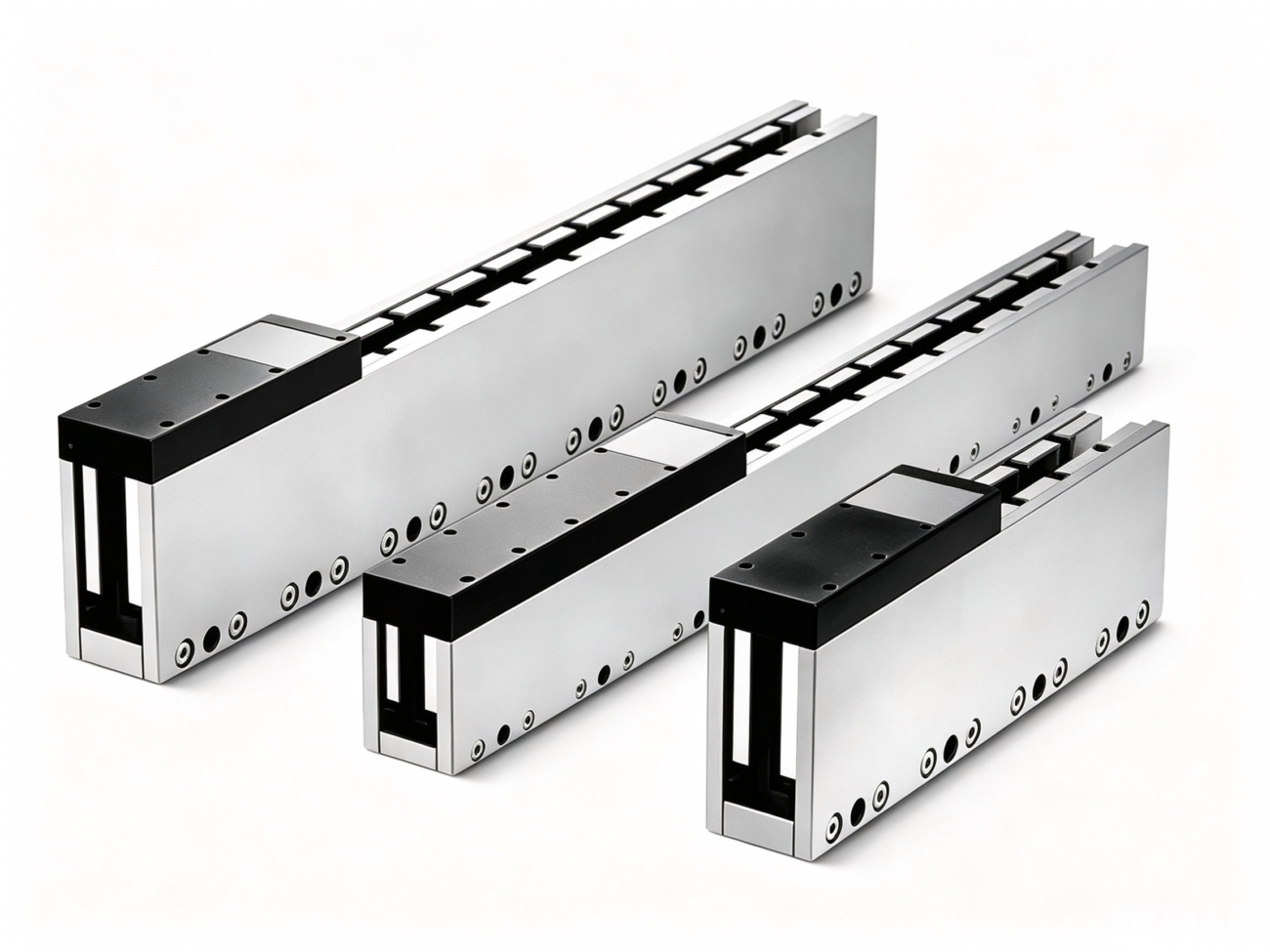
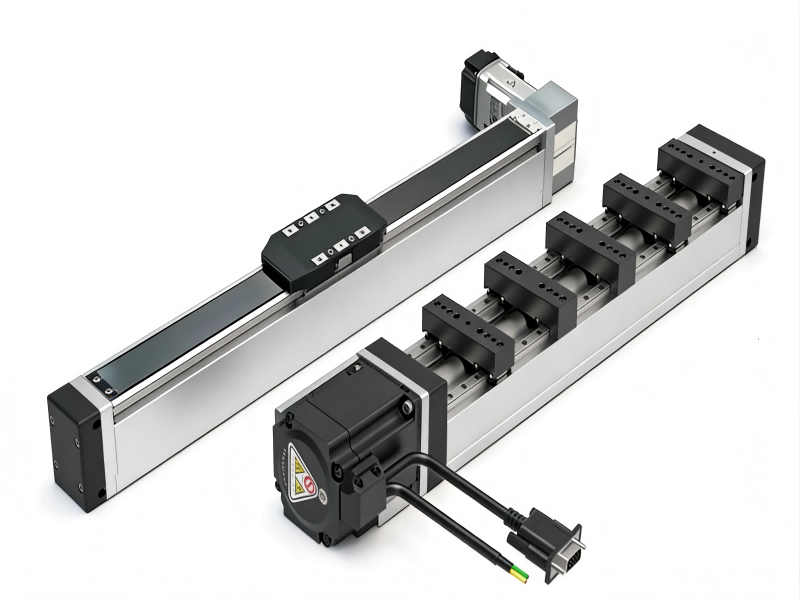
What Is a Linear Actuator? Definition & Core Working Principle of Linear Actuators
A linear actuator is a mechanical‑electrical device that converts different forms of input energy into controllable reciprocating straight‑line motion, delivering precise push‑pull force and accurate displacement control for automated systems.
Traditional mechanical designs transform rotary motor movement into linear travel through transmission structures, while advanced direct‑drive versions generate linear force without intermediate mechanical conversion. A complete linear actuator system consists of four core modules:
Power Source: Electric motor, air compressor or hydraulic pump
Control & Feedback Unit: Servo controller, encoder, position sensor with PID closed‑loop correction
Output Executor: Sliding table, push rod or moving carriage
How Does A Linear Actuators Work? Step-by-Step Breakdown
Understanding the internal mechanics helps engineers specify the right component and helps DIY builders troubleshoot their projects. Here is the exact energy conversion chain inside a typical electric linear actuator:
Step 1: Power Input
Electricity enters the system—typically 12V DC, 24V DC, or 48V DC for industrial models. The voltage energizes the motor stator, creating an electromagnetic field.
Step 2: Rotary Motion Generation
The motor’s rotor begins to spin. Depending on the application, this could be a:
Servo motor (closed-loop accuracy with feedback)
Brushed DC motor (cost-effective, simple control)
Brushless DC (BLDC) motor (longer life, higher efficiency)
Stepper motor (precise incremental positioning)
Step 3: Gear Reduction
The motor’s high-speed, low-torque output passes through a gearbox. This reduces speed while multiplying torque—a critical trade-off. Higher gear ratios generate more thrust but slower travel speeds
Step 4: Screw-to-Linear Conversion
The gearbox output rotates a lead screw, ball screw, or roller screw:
Lead screw actuators: Cost-effective, self-locking, ideal for lighter loads and intermittent duty.
Roller screw actuators: Extremely high thrust and load capacity for heavy machinery and presses .
Step 5: Nut Travel & Rod Extension
Because the nut is constrained from rotating (usually by the actuator housing), it can only move linearly along the screw thread. This pushes or pulls the actuator rod, delivering the final straight-line motion.
Step 6: Feedback & Control (Smart Actuators)
Modern actuators integrate Hall effect sensors, optical encoders, or potentiometers to provide real-time position, speed, and force data. Advanced models feature Phase Index™ sensors that retain position even after power loss—eliminating the need for re-homing
Types of Linear Actuators: Electric vs. Hydraulic vs. Pneumatic
Type
Power Source
Best For
Key Advantage
Main Limitation
Electric
DC/AC motor
Robotics, medical, smart home, automation
Precision, quiet, easy digital control, low maintenance
Lower force density than hydraulic
Hydraulic
Pressurized fluid
Construction, heavy lifting, marine
Massive force, high power density
Requires pump, reservoir, piping; leak risk
Pneumatic
Compressed air
Packaging, assembly lines, food processing
Fast, simple, affordable
Poor precision; air compressibility causes positioning instability
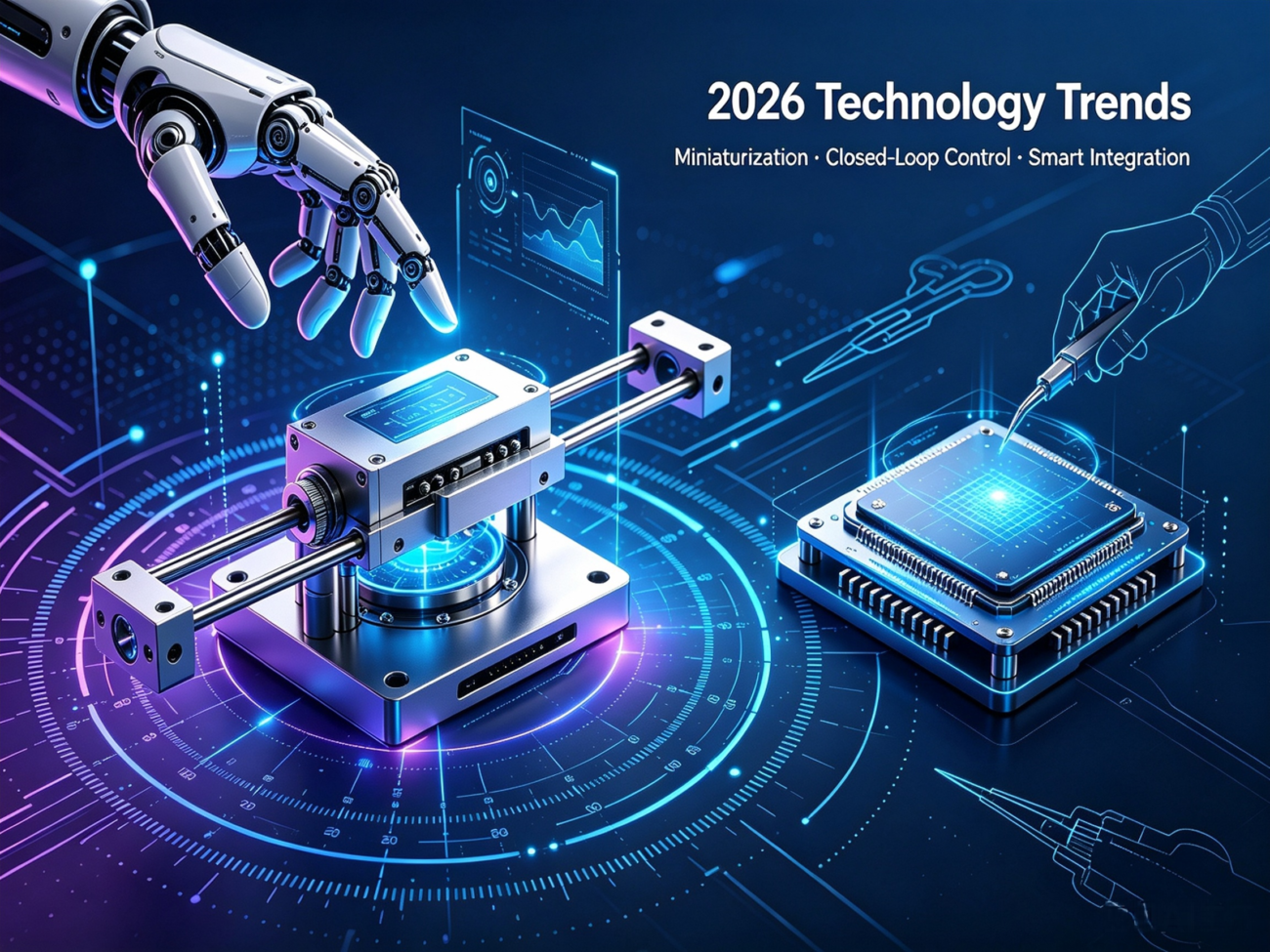
2026 Trend Alert: The market is rapidly shifting toward electric actuators with IoT connectivity. Manufacturers are embedding wireless sensors and predictive maintenance algorithms directly into actuator assemblies, enabling real-time diagnostics and adaptive control via industrial networks
Performance Comparison of Different Linear Actuator Solutions
Actuator Type
Precision
Speed
Load Thrust
Typical Application
Ball‑screw Electric Actuator
±1 μm ~ ±0.01 mm
Medium
Medium‑high
Precision automation, testing platforms
Belt‑driven Electric Actuator
±0.05 mm
High
Medium
Long‑stroke logistics, packaging lines
Pneumatic Actuator
±1‑5 mm
Very High
Light‑medium
Quick‑switch assembly stations
Hydraulic Actuator
±0.1‑1 mm
Medium
Ultra‑high
Heavy‑duty presses, construction machinery
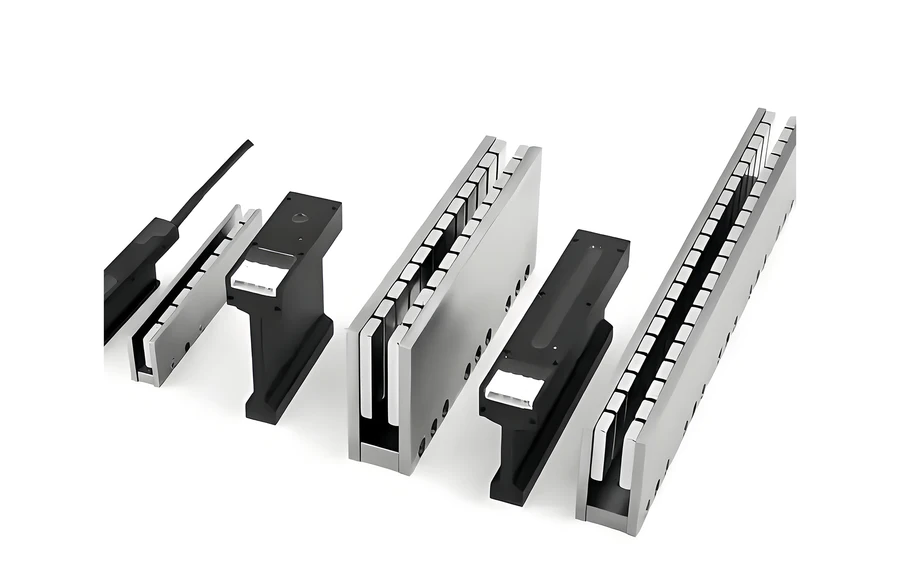
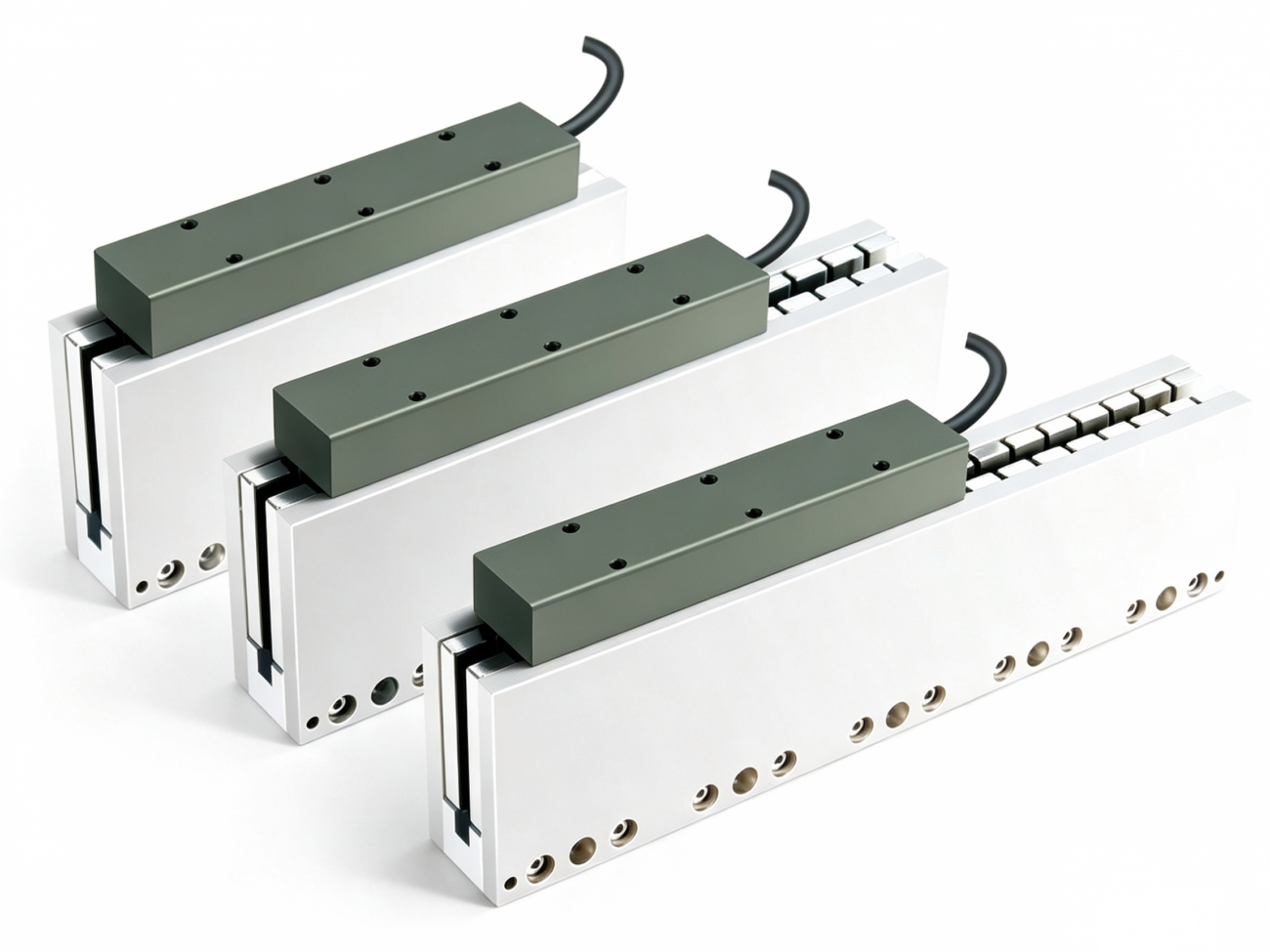
Linear Motor Actuator
Sub‑micron
Ultra‑high
Custom
Semiconductor packaging, laser processing
Key Specifications Every Buyer Must Understand
When selecting a linear actuator for your project—whether you’re sourcing for industrial automation or building a DIY smart desk—these parameters determine performance and longevity:
1. Stroke Length
The maximum distance the actuator rod can extend or retract. Governed by screw and shaft length. Match this exactly to your application’s travel requirements.
2. Force / Load Capacity
Dynamic load: Force while moving
Static load: Force held when stationary (important for self-locking applications)
3. Speed (Travel Rate)
Typically measured in mm/s. Remember: higher speed = lower force due to gear ratio physics.
4. Duty Cycle
The percentage of time the actuator can operate before needing to cool down. Exceeding the duty cycle causes overheating and premature failure
5. IP Rating
Ingress Protection rating indicates dust and water resistance. IP54 suits indoor office environments; IP65 or higher is required for outdoor, agricultural, or marine applications.
Top 7 Trending Applications of Linear Actuators in 2026
Based on Google Search Trends, social media engagement, and industry demand data, these are the hottest actuator application areas driving traffic and buyer interest right now:
1. Electric Standing Desks & Ergonomic Workstations
The work-from-home revolution continues to fuel demand for smooth, quiet height-adjustable desks. Compact 24V linear actuators with anti-collision sensors dominate this category.
2. Robotics & Collaborative Cobots
Search momentum for “linear actuator for robotics” consistently outpaces other queries, peaking in early 2026
CT scanners, patient lifts, hospital beds, and surgical robots rely on sterile, vibration-free linear motion. The trend toward home healthcare is driving demand for quiet, reliable 12V actuators.
4. Smart Home & IoT Integration
Automated windows, skylights, TV lifts, and kitchen cabinet systems are trending on TikTok and Instagram Reels under hashtags like #SmartHome and #HomeAutomation. WiFi-enabled actuators controllable via Alexa/Google Home are viral favorites.
5. Solar Panel Tracking Systems
Dual-axis solar trackers use linear actuators to follow the sun, maximizing energy harvest. The renewable energy boom makes this a high-growth B2B segment.
6. Automotive & EV Applications
Power liftgates, seat adjusters, and charging port actuators are standard in modern vehicles. The EV market demands lightweight, energy-efficient electric actuators over traditional hydraulic systems.
7. Agricultural Automation
Automated greenhouse vents, livestock feeders, and precision irrigation gates use waterproof IP65 actuators to withstand harsh outdoor conditions.
Control Interface: EtherCAT, Profinet, servo closed‑loop compatibility
Operating Duty Cycle and Service Life
Frequently Asked Questions (FAQ)
What is the difference between linear actuator and linear motor?
Linear actuators generally refer to screw‑or‑belt‑driven mechanical transmission structures; linear motors are direct‑drive electromagnetic actuators without intermediate transmission parts for ultra‑high precision and dynamic performance.
What is the basic working principle of a linear actuator?
A linear actuator converts the rotational motion of a motor into straight-line motion through a screw-and-nut mechanism. As the screw turns, the nut travels along its threads, pushing or pulling the actuator rod in a controlled linear path
How does an electric linear actuator differ from a hydraulic one?
Electric actuators use a motor and screw mechanism for precise, clean, digitally controllable motion. Hydraulic actuators use pressurized fluid to generate enormous force but require complex pump systems and carry leak risks. Electric is preferred for precision; hydraulic for extreme force
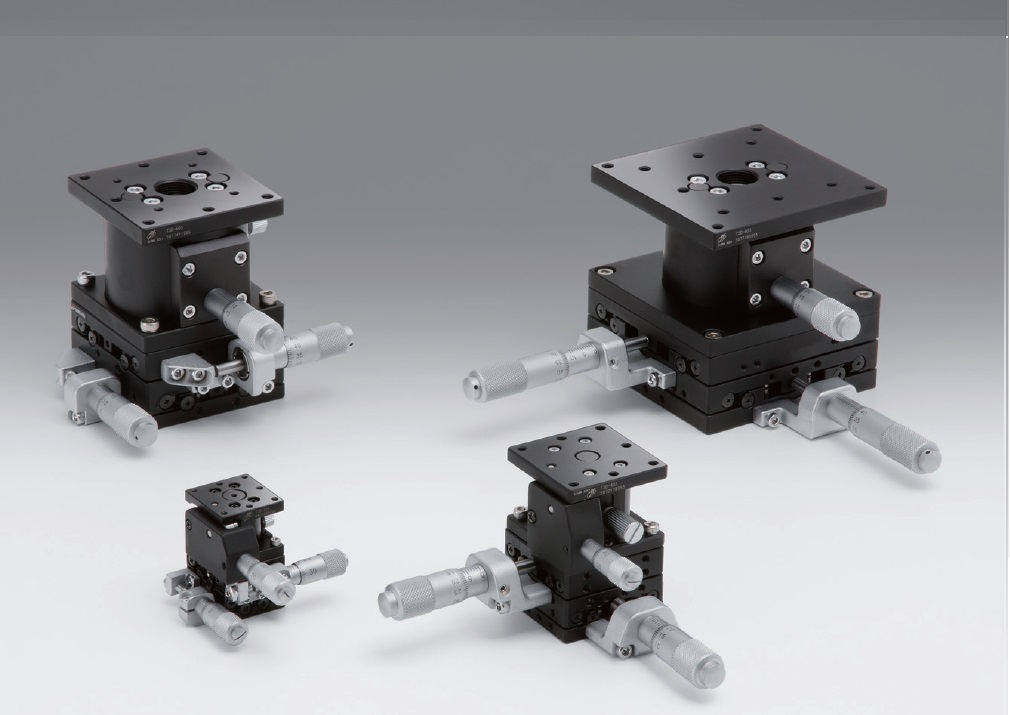
Can ball‑screw linear actuators reach micron‑level positioning?
Yes. High‑grade ball‑screw stages with closed‑loop servo control can achieve repeat accuracy up to ±1 μm for precision‑critical industrial applications.
Can a linear actuator hold a position without power?
Many lead screw actuators are self-locking due to the friction angle of the threads—they resist back-driving when power is removed. Ball screws may require a brake to hold position under load.
110V/220V AC: Heavy-duty machinery where DC power isn’t available
Why is my linear actuator overheating?
Overheating usually means the duty cycle is being exceeded. Actuators are rated for intermittent operation (e.g., 20% duty cycle = 2 minutes on, 8 minutes off). Continuous operation requires a higher-duty motor or external cooling solutions.
What IP rating do industrial linear actuators require?
Standard workshop‑use models adopt IP54 dust‑proof and splash‑proof grade; outdoor or harsh‑environment equipment requires IP65 / IP67 sealed protection.
Conclusion
Linear actuators are deceptively simple devices with profoundly versatile applications. Whether you’re an automation engineer specifying components for a robotic assembly line, a medical device designer prioritizing precision and sterility, or a DIY maker building the ultimate smart desk, understanding how a linear actuator works empowers you to choose the right solution.
In 2026, the convergence of electric actuation, IoT connectivity, and AI-driven control is transforming these mechanical workhorses into intelligent motion systems. The brands and builders who master both the physics and the digital integration will lead the next wave of automation innovation.
Ready to spec your next project? [Browse our full catalog of electric linear actuators] or [download our free actuator selection calculator] to match stroke, force, and speed to your exact requirements, HCY AUTOMATION supplies custom micron‑precision linear translation stages for global manufacturers.
HCY Automation delivers integrated solutions across motion control, linear motion, robotics, machine vision, pneumatic systems, and precision gearboxes to help global manufacturers build smarter, faster, and more reliable production lines. Our engineering team helps you select and integrate the right motion control, robotics, and automation components for your specific application.