Linear Actuator vs Regular Actuator: The 2026 Ultimate Guide to Precision Motion Control
What Is a Linear Actuator? Definition & Working Principle
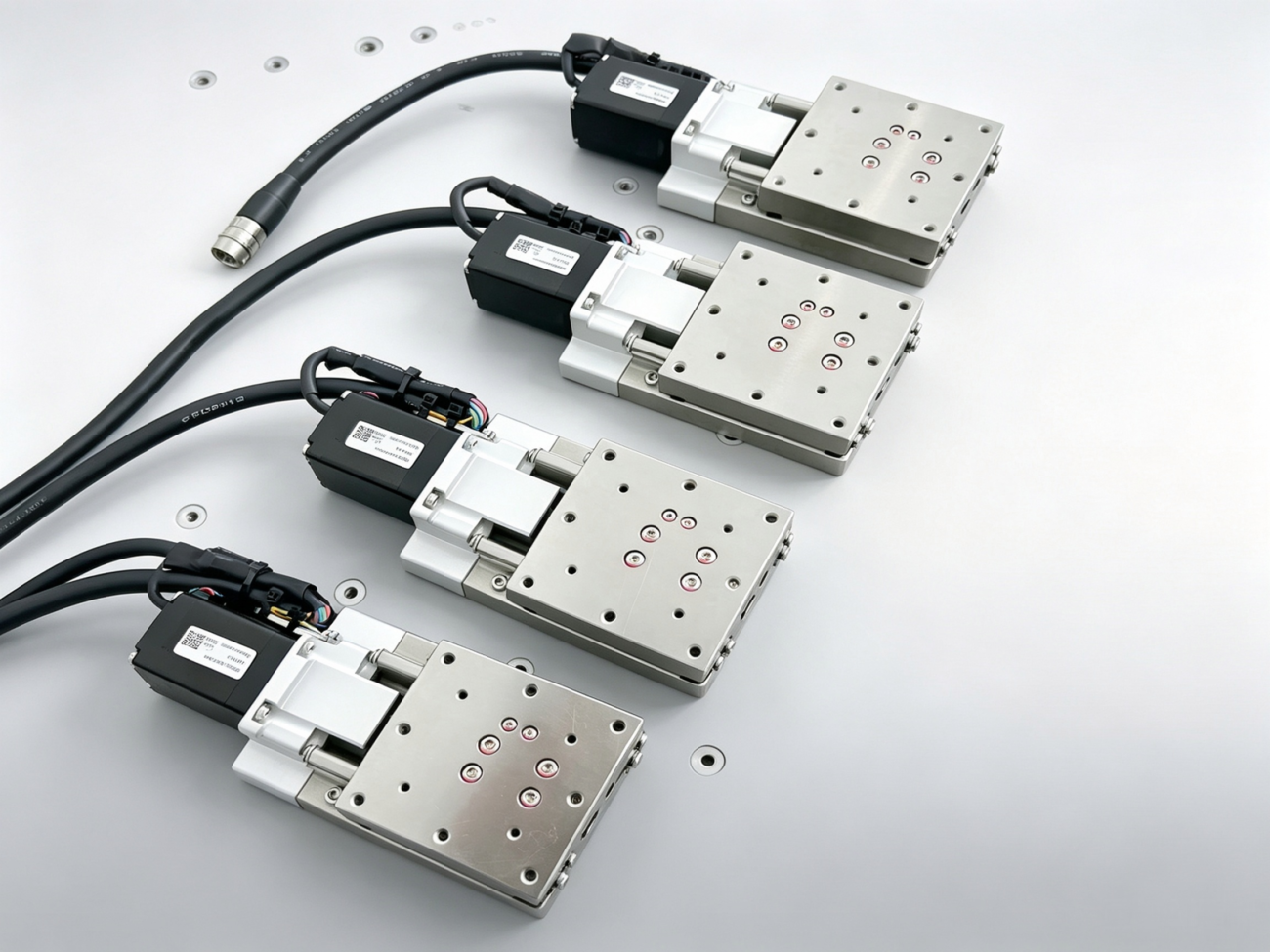
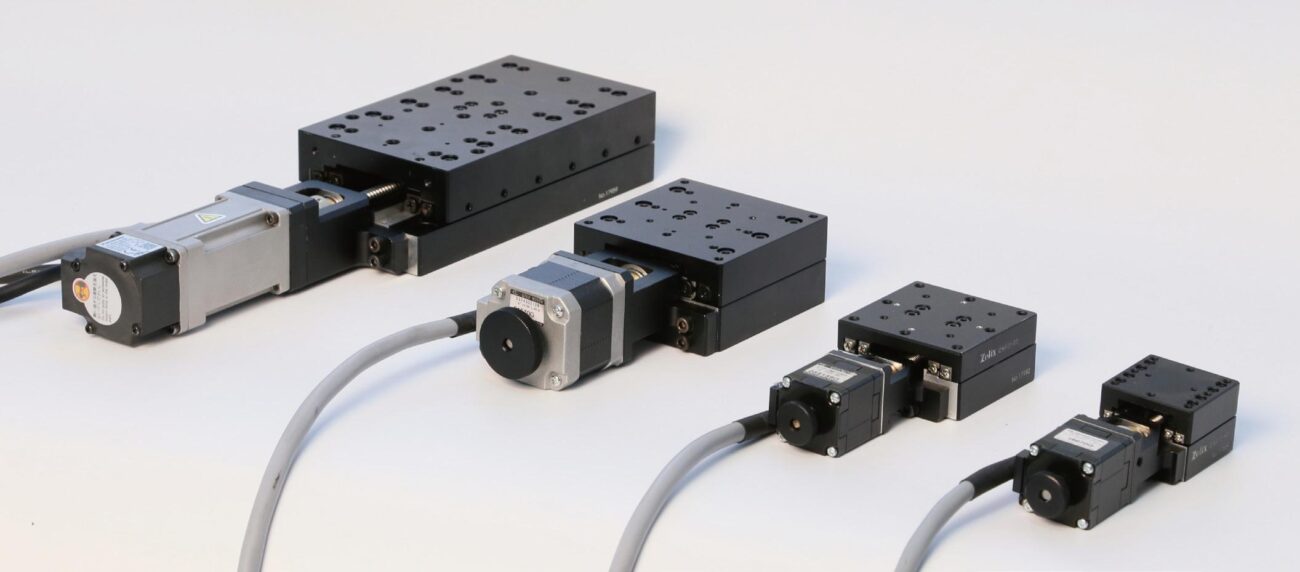
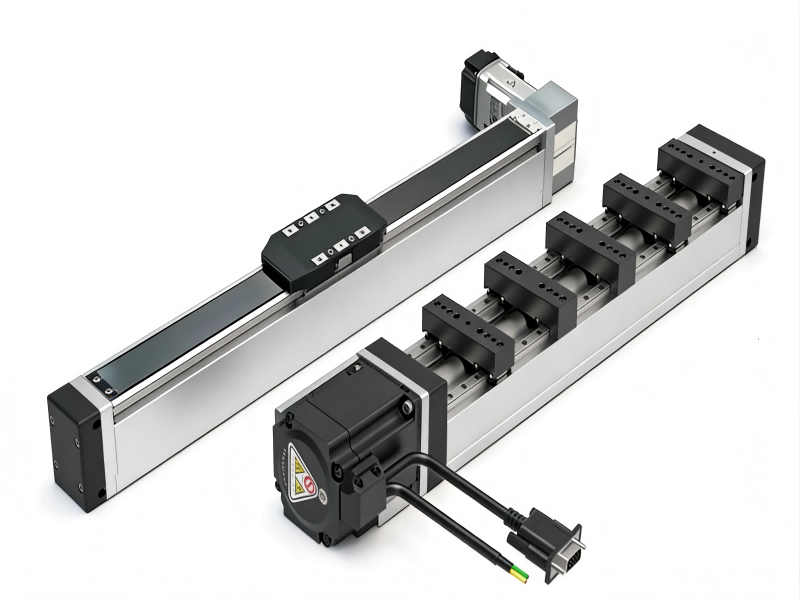
Alinear actuator is a device that converts rotational motion into straight-line (push/pull) motion. At its core, an electric motor drives a mechanical transmission system—typically a ball screw, lead screw, roller screw, or belt-and-pulley—to move a load along a fixed axis.
Key Components:
Motor (DC, AC, stepper, or servo)
Screw or belt mechanism (ball screw for precision, belt for speed)
Nut and carriage (translates rotation to linear travel)
Guide rails & limit switches (ensure accurate positioning and safety)
Unlike pneumatic cylinders that struggle with mid-stroke positioning, electric linear actuators can stop accurately at any point along their travel range, making them indispensable for precision automation.
Why Your Choice of Actuator Defines Automation Success
In the era of Industry 4.0, smart manufacturing, and surgical robotics, motion control is no longer just about “making things move”—it is about moving them with micron-level precision, zero backlash, and absolute reliability.
If you are designing an automated production line, a robotic surgery platform, or a semiconductor wafer handling system, one fundamental question arises: Should you choose a linear actuator or a rotary actuator?
While rotary actuators have dominated traditional automation for decades, linear actuators are experiencing explosive demand across high-growth sectors. According to Market Research Future, the global linear actuator market is projected to grow from $2.62 billion in 2025 to $3.92 billion by 2035, driven by smart technology integration and energy efficiency trends.
This guide breaks down everything engineers, procurement managers, and automation enthusiasts need to know—from core mechanics to 2026’s hottest applications.
What Is a Rotary Actuator? Definition & Working Principle
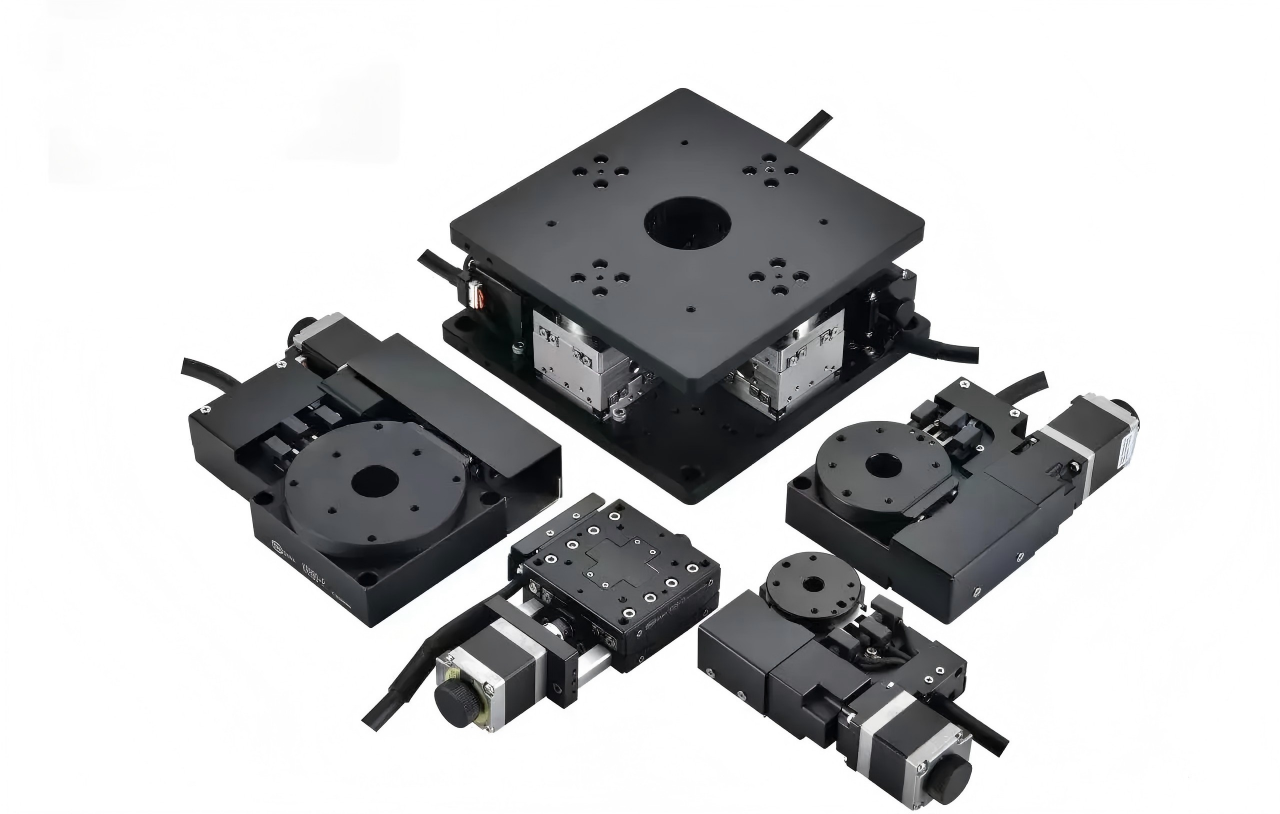
A rotary actuator (often referred to as a “standard” or “conventional” actuator in general contexts) converts energy into circular motion around a fixed axis. The most common example is an electric motor—when current flows through the stator, the rotor spins continuously or incrementally.
Key Features:
Continuous or limited rotation (90°, 180°, 360°, or infinite)
High torque output, especially with gear reductions
Hollow shaft designs available for cable routing
No stroke length limitation—can spin indefinitely
Rotary actuators excel in applications requiring torque-driven angular movement, such as robot joints, conveyor diverters, and valve actuation.
Linear Actuator vs Rotary Actuator: Head-to-Head Comparison
Feature
Linear Actuator
Rotary Actuator
Motion Type
Straight line (push/pull)
Circular/Angular rotation
Precision
Extremely high (micron-level repeatability)
Moderate (depends on encoder resolution)
Travel Distance
Fixed stroke length (limited)
Unlimited / continuous rotation
Mounting Complexity
Simple—no angle calculation needed
Requires angular positioning calibration
Maintenance
Low to none (sealed designs)
Low to none
Backlash
Minimal (ball/roller screw)
Possible in gear trains
Bandwidth/Responsiveness
Slightly reduced due to motion conversion
Higher in direct-drive configurations
Best For
Precision positioning, lifting, pushing, medical devices
Robot joints, mixing, continuous rotation
5 Competitive Advantages of Linear Actuators
1. Unmatched Precision & Repeatability
Linear actuators—especially those using ball screws or roller screws—offer positioning accuracy down to microns. This makes them the go-to choice for semiconductor wafer handling, optical inspection, and CNC machining where tolerance is everything.
2. Superior Stability & Vibration Control
Because linear actuators move along a single axis with no rotational inertia, they produce minimal vibration and noise. This is critical for medical imaging equipment, laboratory automation, and cleanroom environments where even micro-vibrations can ruin a process.
3. Extended Service Life
With fewer wearing parts and no need for complex gear reduction systems, linear actuators—particularly electromechanical models—offer longer operational lifespans than systems combining rotary motors with external linear conversion mechanisms. The motion is direct, reducing mechanical stress.
4. Energy Efficiency & Smart Integration
2026’s market trend is clear: smart, energy-efficient actuators are winning. Modern linear actuators integrate seamlessly with IoT platforms, feature energy-recuperation drives, and consume power only when moving—unlike hydraulic systems that require constant pump operation.
5. Clean, Quiet, & Compact
Electromechanical linear actuators eliminate hydraulic fluid leaks and compressor noise. Their compact form factor fits into tight spaces—essential for miniature medical devices, smart home furniture, and aerospace control surfaces.
When Rotary Actuators Still Win
Despite the linear actuator surge, rotary actuators remain unbeatable in specific scenarios:
Robot Joint Articulation: Industrial and collaborative robots rely on rotary actuators (servo motors with harmonic drives) for multi-axis articulation.
High-Torque, Low-Speed Applications: Gear-reduced rotary actuators deliver massive torque in a small package, ideal for heavy industrial valves and flight simulators.
Cost-Sensitive, High-Speed Automation: When precision is secondary to speed and budget, standard rotary motor systems often offer a lower total cost of ownership.
2026’s Hottest Applications: Where Linear Actuators Are Dominating Social Media & Search Trends
Linear actuators are the “muscles” behind robotic surgery. They control the precise movement of surgical instruments, enabling sub-millimeter accuracy in procedures like laparoscopic surgery and spine navigation. Adjustable hospital beds, patient lifts, and automated drug delivery systems all depend on quiet, hygienic linear motion.
As the global chip race intensifies, semiconductor fabs demand ultra-precise, contamination-free motion. Ball-slide linear actuators with non-magnetic construction are used in wafer handling, probe stations, and lithography systems where magnetic interference must be zero.
Aerospace applications require actuators that perform flawlessly under extreme temperatures, vibration, and vacuum. Linear actuators control UAV payload doors, satellite solar panel deployment, and aircraft cabin systems—all while minimizing weight and maximizing reliability.
The EV revolution is driving massive demand for linear actuators in battery cell stacking, electrode pressing, and module assembly. Precise force and position control ensure consistent cell quality—a critical factor in battery safety and energy density.
From motorized standing desks to automated window systems and ergonomic furniture, miniature linear actuators are making homes and offices smarter, more comfortable, and more energy-efficient.
Market Intelligence: Why Linear Actuator Demand Is Surging in 2026 , linear actuator market size 2026
The numbers tell a compelling story:
Metric
Value
2025 Global Market Size
$2.62 Billion
2035 Projected Market Size
$3.92 Billion
CAGR (2025–2035)
4.11%
Fastest-Growing Segment
Electric Linear Actuators
Top Growth Drivers
Smart tech integration, energy efficiency, Industry 4.0
Meanwhile, the linear servo actuator market alone is projected to reach $67.11 billion in 2025 with a robust CAGR of 6.37%, fueled by medical devices, semiconductor manufacturing, and aerospace investments.
How to Choose: A Buyer’s Decision Framework
Before diving into specifications, follow this proven framework used by top automation engineers in 2026:
Step
Decision Point
Why It Matters
1
Define Load & Force Requirements
Determines structural integrity and safety margins
2
Calculate Required Stroke Length
Defines physical envelope and travel distance
3
Set Speed & Acceleration Targets
Impacts motor sizing, cycle time, and precision
4
Specify Accuracy & Repeatability
Separates commodity actuators from precision-grade systems
5
Map Environmental Conditions
IP rating, temperature, and contamination resistance
6
Choose Drive Technology
Ball screw, belt, rack & pinion, or pneumatic
7
Evaluate Supplier Tier
Balances cost, customization, support, and lead time
2026 Selection The Right Drive Technology
Application
Recommended Type
Why
CNC Machining
Ball Screw
Precision + rigidity
Pick-and-Place (long travel)
Belt Drive
Speed + stroke length
Gantry/Robot Transport
Rack & Pinion
Unlimited travel + high load
Simple Push/Pull (low cost)
Pneumatic
Lowest initial cost
Semiconductor Wafer Handling
Ball Screw (non-magnetic)
Sub-micron, contamination-free
Surgical Robotics
Mini Ball Screw / Piezo
Precision + compact + quiet
Choose a Linear Actuator if:
✅ Your application requires precise linear positioning (e.g., CNC, medical, semiconductor)
✅ You need mid-stroke stopping capability (unlike pneumatic cylinders)
✅ Clean, quiet, maintenance-free operation is mandatory
✅ You are building smart, IoT-connected automation
✅ The load needs to be pushed, pulled, lifted, or positioned in a straight line
Choose a Rotary Actuator if:
✅ Your application requires continuous or angular rotation (e.g., robot joints, mixers)
✅ You need high torque in a compact package
✅ The motion path is circular or infinite
✅ Cost and speed matter more than absolute linear precision
How to Choose a Linear Actuator 2026?
The 7-Step Linear Actuator Selection
Frequently Asked Questions (FAQ)
Q1: What is the main difference between a linear actuator and a rotary actuator?
A: A linear actuator produces straight-line (push/pull) motion, while a rotary actuator produces circular or angular motion around a shaft. Linear actuators are ideal for precision positioning; rotary actuators excel at continuous rotation and torque output.
Q2: Can a rotary motor be converted into a linear actuator?
A: Yes. In fact, most electric linear actuators use a rotary motor as the power source, coupled with a motion conversion mechanism such as a ball screw, lead screw, belt and pulley, or rack and pinion to translate rotation into linear movement.
Q3: Which actuator type offers the highest precision?
A: Piezoelectric linear actuators offer nano-positioning precision with virtually zero heat emission, making them ideal for scientific and semiconductor applications. For most industrial uses, ball screw and roller screw electromechanical linear actuators provide the best precision-to-cost ratio.
Q4: Are linear actuators more expensive than rotary actuators?
A: Initial costs for precision linear actuators can be higher than basic rotary motors. However, linear actuators often reduce total cost of ownership through lower maintenance, higher energy efficiency, and elimination of external conversion mechanisms (like gearboxes + lead screws).
Q5: What industries use linear actuators the most in 2026?
A: The fastest-growing sectors are medical devices & surgical robotics, semiconductor manufacturing, aerospace & UAVs, EV battery production, and smart home/office automation.
Q6:Are linear actuators better than regular actuators?
It depends on application scenarios. Linear actuators excel in precision, stability and durability for high-end precision tasks, while regular actuators are more cost-effective and suitable for basic high-speed rotation scenarios.
Q7:Can linear actuators replace rotary actuators?
Not fully. Linear actuators specialize in linear push-pull motion, while rotary actuators are irreplaceable for continuous rotational motion tasks. The two are complementary in industrial applications.
Q8:What industries use linear actuators the most?
Medical devices, aerospace, semiconductor manufacturing, high-end robotics, and precision automation equipment are the top industries adopting linear actuators.
Conclusion: The Future Is Linear (But Rotary Still Matters)
The automation landscape of 2026 is being reshaped by demands for precision, cleanliness, and smart connectivity—all domains where linear actuators shine. From the operating room to the semiconductor cleanroom, from EV gigafactories to smart homes, linear motion control is becoming the backbone of next-generation technology.
That said, rotary actuators are not going anywhere. They remain the workhorses of angular motion, powering the joints of industrial robots, the valves of process plants, and the rotors of countless machines.
The key is choosing the right tool for the right job. By understanding the fundamental differences, market trends, and application requirements outlined in this guide, you can make an informed decision that maximizes performance, minimizes downtime, and future-proofs your automation investment.
Ready to upgrade your motion control system? Explore our full range of precision linear actuators engineered for medical, semiconductor, and aerospace applications—or contact our engineering team for a custom solution tailored to your specifications.
HCY Automation delivers integrated solutions across motion control, linear motion, robotics, machine vision, pneumatic systems, and precision gearboxes to help global manufacturers build smarter, faster, and more reliable production lines. Our engineering team helps you select and integrate the right motion control, robotics, and automation components for your specific application.