The 2026 Complete Guide for Engineers, Buyers & Robotics Developers
Linear actuators are classified into four core types by driving principle: electric (most versatile, 12V–48V DC or AC, with screw/belt/rack mechanisms), hydraulic (extreme force up to hundreds of tons), pneumatic (fast but low precision), and mechanical (manual or cam-driven). In 2026, electric actuators dominate due to IoT integration and AI-driven predictive maintenance. Emerging sub-types like planetary roller screws (now mass-produced at φ1.5mm), piezoelectric ceramic actuators (sub-micron resolution), and direct-drive linear motors are reshaping robotics, semiconductor equipment, and humanoid joints.
Why Understanding Actuator Types Matters in 2026
The global robotics and automation actuators market hit $37.91 billion in 2026, up 15.2% year-over-year
But the real explosion is in humanoid robotics: the humanoid robot actuator segment is forecast to grow from $150 million in 2024 to $9.86 billion by 2031 at an 80.0% CAGR
A typical humanoid robot uses about 30 joint actuators—16 rotary and 14 linear—with Tesla’s Optimus packing more than 28 body actuators alone. Joint actuators account for more than 30% of the BOM in high-config humanoids and over 50% in basic builds
Choosing the wrong actuator type doesn’t just mean poor performance—it can mean project failure. This guide breaks down every major category, sub-type, and 2026 technology trend you need to know
The 4 Core Types of Linear Actuators by Driving Principle
1. Electric Linear Actuators (Electromechanical)
The market leader. Electric linear actuators convert electrical energy into mechanical linear motion using a motor (DC, AC, stepper, or servo) coupled with a mechanical transmission system
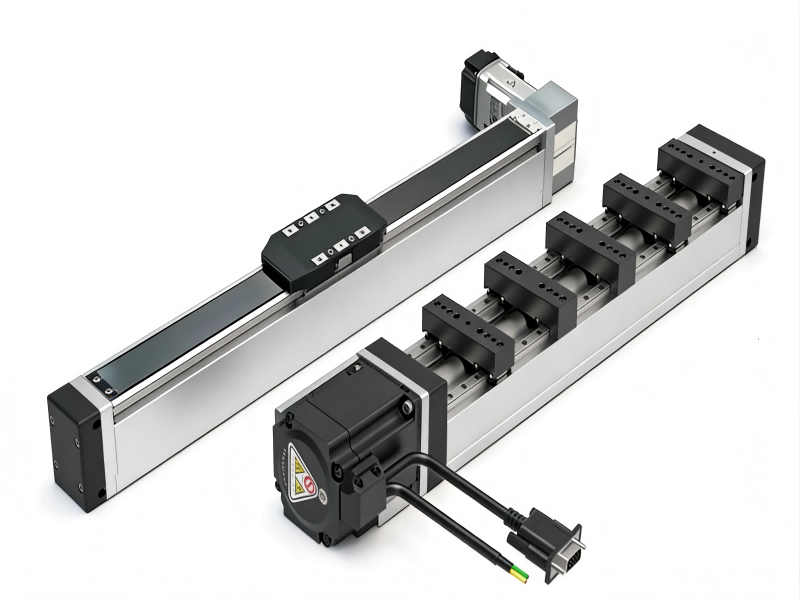
How it works: An electric motor rotates a screw or belt mechanism. A nut or carriage, prevented from rotating, travels along the screw axis, producing push/pull linear motion.
Key advantages:
Precise position, speed, and force control
Clean operation (no hydraulic fluid or compressed air)
Easy integration with PLCs, IoT, and AI-driven control systems
Low maintenance and quiet operation
Common configurations:
Rod-style actuators: Traditional extending/retracting rod design
Track actuators: Slider moves along a fixed track (no extending rod)
Feedback actuators: Built-in Hall sensors, potentiometers, or encoders for closed-loop control
Industrial actuators: Heavy-duty housings, higher IP ratings, continuous-duty motors
Voltage options:
12V DC: Automotive, marine, portable DIY, solar tracking
24V DC: Industrial automation, standing desks, medical equipment (most common standard)
48V DC: High-speed industrial and robotics applications
110V/220V AC: Heavy-duty machinery without DC infrastructure
2. Hydraulic Linear Actuators
For extreme force. Hydraulic actuators use pressurized incompressible fluid (typically oil) to drive a piston within a cylinder
How it works: A hydraulic pump forces fluid into one side of a cylinder, pushing the piston rod outward. Reversing flow direction retracts the rod.
Key advantages:
Massive force output (up to hundreds of tons)
Exceptional power-to-size ratio
Smooth motion under heavy loads
Limitations:
Requires pump, reservoir, valves, and piping infrastructure
Risk of fluid leaks and contamination
Higher maintenance and not suitable for clean environments (medical/food)
Positioning accuracy typically 0.1–1 mm
Best for: Construction equipment, heavy presses, aerospace, mining, and agricultural machinery
3. Pneumatic Linear Actuators
For speed and simplicity. Pneumatic actuators use compressed air to move a piston within a cylinder
How it works: Compressed air enters one port of the cylinder, pushing the piston. Exhaust air exits through the opposite port. Direction is controlled by solenoid valves.
Key advantages:
Very fast operation (up to 10 m/s)
Simple, rugged design
Inexpensive initial cost
Safe in explosive atmospheres (no sparks)
Limitations:
Low positioning precision (typically two-point or limited proportional control)
Air compressibility causes positioning instability under varying loads
Requires clean, dry compressed air supply
Energy inefficient due to compressor losses
Best for: Packaging lines, pick-and-place systems, clamping, and assembly automation where speed matters more than precision
For fixed trajectories and manual control. Mechanical actuators rely on external power input—typically manual (hand wheel, crank) or coupled to a separate motor—using cams, linkages, or screw mechanisms to convert motion
Key characteristics:
No independent power source
Emphasis on reliability and deterministic motion paths
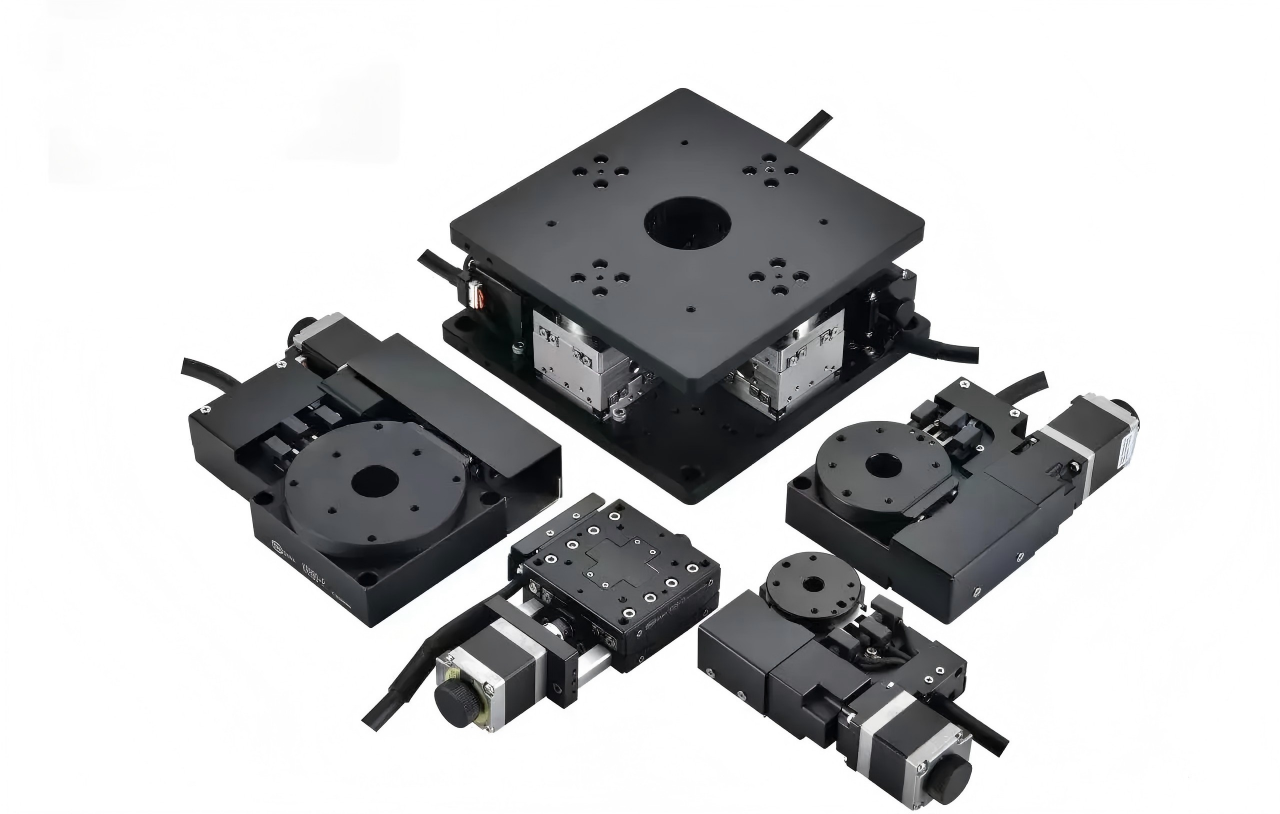
Common in lab equipment, clamps, fixtures, and precision positioning stages
Electric Actuator Sub-Types: The Deep Dive (2026 Update)
Electric actuators are where 90% of innovation is happening. Here’s the complete breakdown by transmission mechanism, motor type, and specialized architecture.
CNC, robotics, medical imaging, semiconductor equipment
Planetary Roller Screw
Very High
High
Very High
No
Heavy machinery, humanoid robot joints, presses, aerospace
Rack and Pinion
Medium
Very High
Medium
No
Long stroke, high-speed automation, valve actuation
Belt Drive
Medium
Very High
Low
No
Long stroke, light load, high-speed pick-and-place
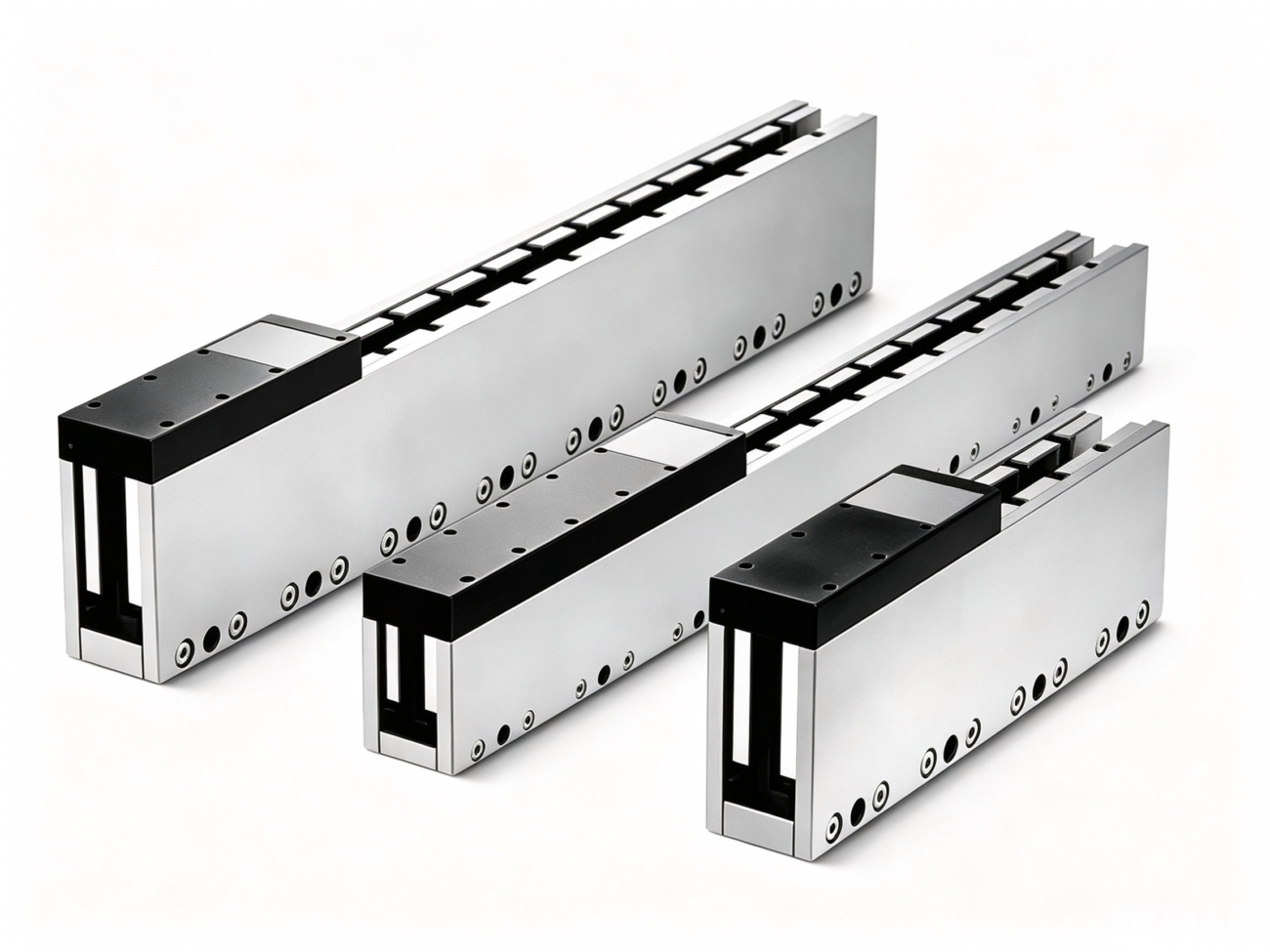
Linear Motor (Direct Drive)
Ultra-High
Ultra-High
Medium
No
Semiconductor lithography, 3D printing, ultra-precision stages
*Ball screws can back-drive under load unless fitted with a brake.
Planetary Roller Screws: The 2026 Breakthrough
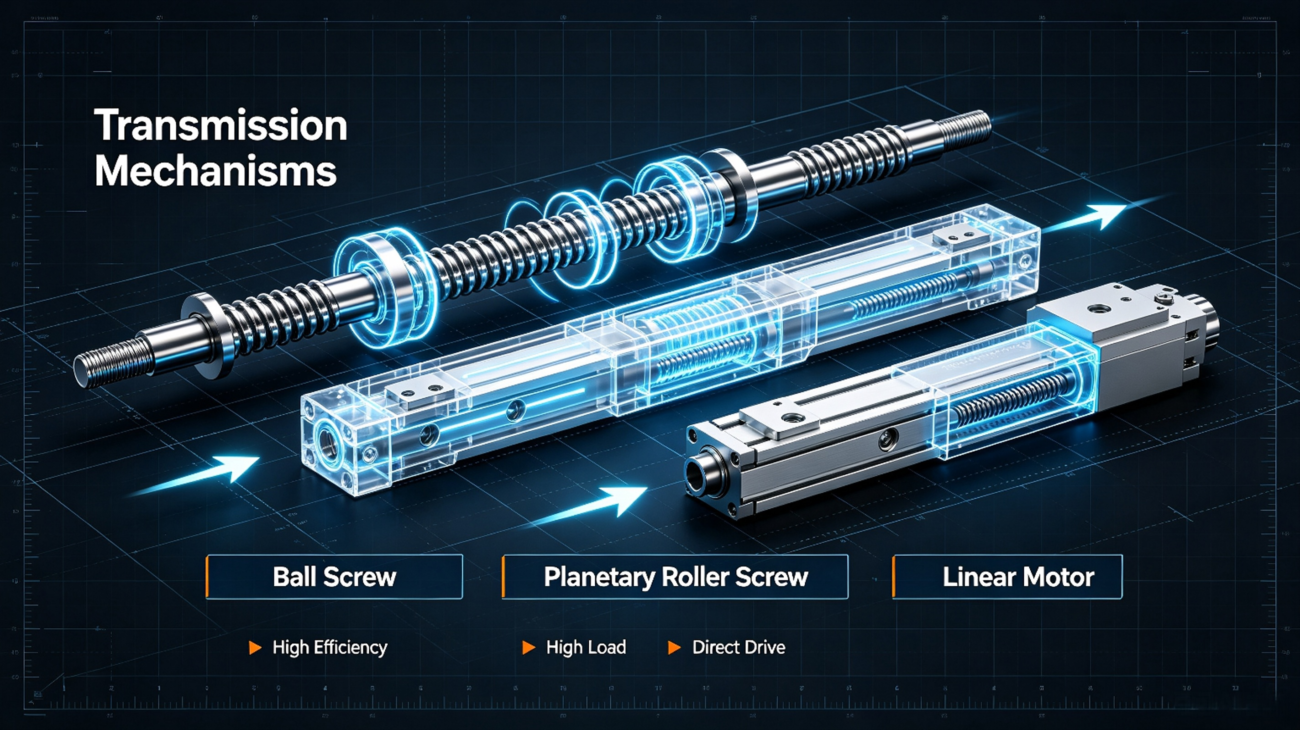
Planetary roller screws are experiencing explosive demand in humanoid robotics. Unlike ball screws, roller screws use threaded rollers instead of balls, distributing load across more contact points.
2026 milestone: Mass production of φ1.5mm diameter planetary roller screws is now reality, enabling ultra-compact actuator designs for robotic dexterous hands and micro-medical devices. These deliver 5x the load capacity and impact resistance of equivalent ball screws
Feature patented damping and slow-release mechanisms
Critical for medical beds, patient lifts, and accessibility equipment where uncontrolled descent poses safety risks
Quick Comparison Chart for Actuator Selection
Actuator Type
Peak Force
Position Accuracy
Running Speed
System Complexity
Electric Servo Actuator
Medium‑High
±0.01 mm
Medium‑High
Medium
Hydraulic Actuator
Ultra‑High
0.1–1 mm
Medium
Very High
Pneumatic Actuator
Medium
Two‑point limit only
Very High
Medium
Mechanical Actuator
Customized
Low
Low
Low
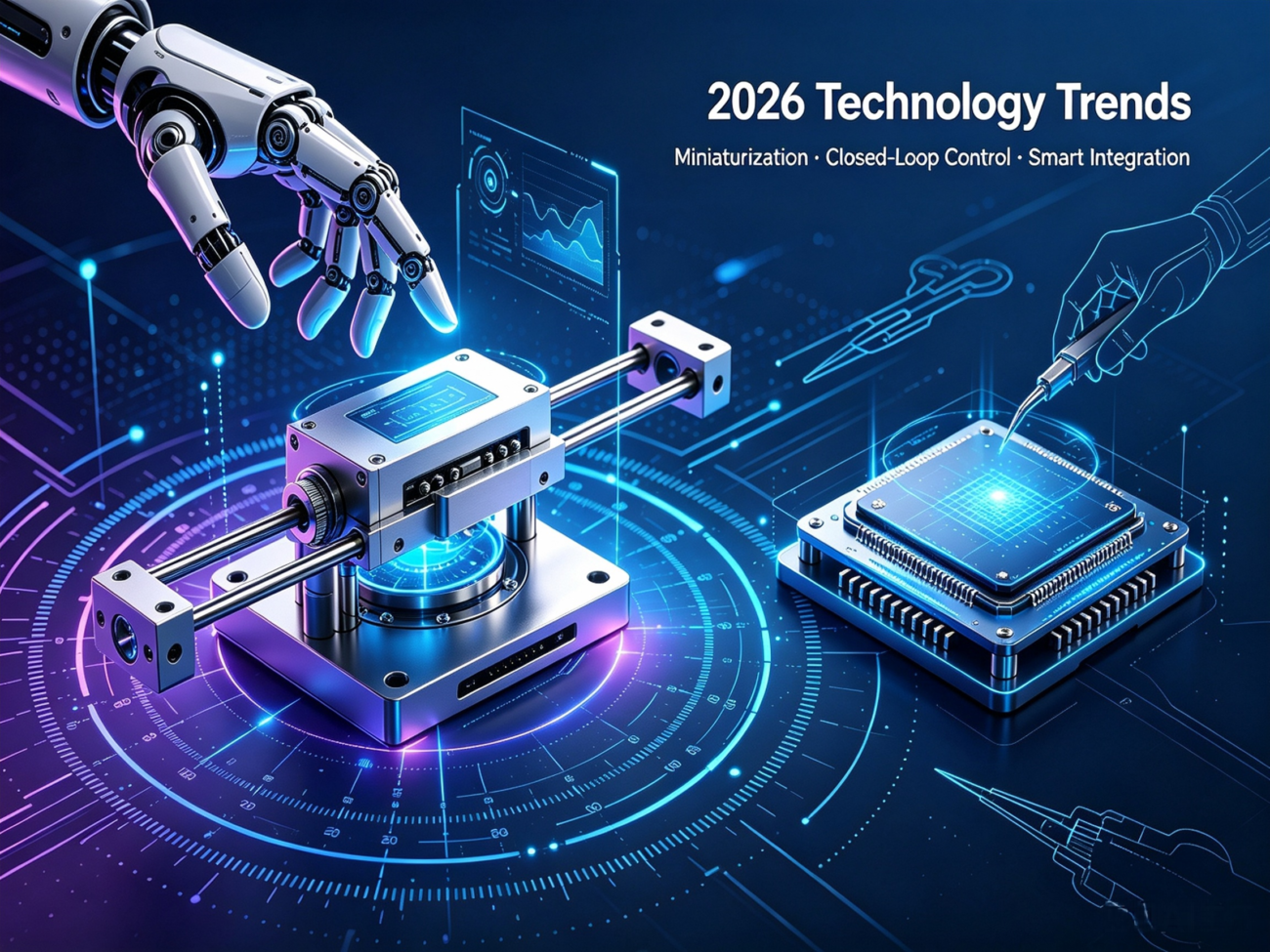
2026 Technology Trends Reshaping the Actuator Landscape
Trend 1: Extreme Miniaturization
The humanoid robot dexterous hand market is exploding—from $815 million in 2024 to a projected $10.3 billion by 2031 at 40.4% CAGR
. This is driving demand for actuators under 2 mm in diameter, with φ1.5mm planetary roller screws now in mass production.
Trend 2: AI-Enhanced Motion Control
Self-learning actuators with embedded AI chips are entering the market. These systems can:
Auto-tune PID parameters in real-time
Predict maintenance needs before failure
Adapt force/speed profiles based on load changes
Trend 3: Closed-Loop Precision
Repeat positioning accuracy of ±0.01 mm is now standard in mid-tier electric actuators. High-end servo systems achieve ±10 arc seconds with dual-encoder designs
Trend 4: Power Density Race
Next-generation humanoid actuators target power density above 100 Nm/kg with force control accuracy below 1% of rated torque
Application Matrix: Which Actuator for Which Job?
Application
Recommended Type
Why
Standing desk / ergonomic furniture
24V DC electric, lead screw
Quiet, clean, precise height adjustment
Humanoid robot leg joints
Planetary roller screw + servo motor
8,000N+ thrust, impact resistance, compact
Robotic dexterous hand
Coreless motor + micro roller screw / tendon drive
Ultra-compact, high RPM, low torque ripple
CNC machine tool
Ball screw + servo motor
High precision, repeatability, rigidity
Semiconductor wafer handling
Linear motor or piezoelectric
Sub-micron precision, zero contamination risk
Medical imaging (CT/MRI bed)
Electric actuator with feedback + safety release
Smooth, vibration-free, patient safety
Construction equipment
Hydraulic cylinder
Extreme force, rugged environment tolerance
Packaging line
Pneumatic cylinder
Fast, simple, cost-effective for repetitive motion
Solar panel tracking
12V/24V DC electric, lead screw
Low maintenance, weather-resistant, precise
Wire-by-wire vehicle chassis
Integrated smart electric cylinder
Real-time force feedback, fail-safe, compact
How to Choose the Right Linear Actuator: 2026 Buyer’s Framework
Step 1: Define Load Requirements
Dynamic load: Force needed while moving
Static load: Force held when stationary
Apply a 1.5x–2.0x safety margin to rated specifications
Step 2: Determine Stroke & Speed
Stroke length = total travel distance required
Speed (mm/s) vs. force trade-off: higher gear ratios = more force, less speed
Step 3: Select the Transmission
Need self-locking? → Trapezoidal lead screw
Need precision + speed? → Ball screw
Need extreme load + compact? → Planetary roller screw
Need ultra-long stroke? → Belt drive or rack and pinion
Need ultimate precision + speed? → Linear motor
Step 4: Match the Motor
Basic on/off control: Brushed DC
Long life + efficiency: Brushless DC
Open-loop positioning: Stepper
Closed-loop precision + dynamics: Servo motor
Step 5: Specify Environmental Protection
Indoor office: IP44–IP54
Outdoor / washdown: IP65–IP67
Explosive atmosphere: ATEX-certified pneumatic or specialized electric
Step 6: Evaluate Control & Intelligence Needs
Simple 2-wire polarity reversal?
Position feedback (potentiometer / Hall / encoder)?
Multi-actuator synchronization?
IoT connectivity and predictive maintenance?
Frequently Asked Questions (FAQ)
What are the main types of linear actuators?
The four core types are electric (electromechanical), hydraulic, pneumatic, and mechanical. Electric actuators are the most versatile and fastest-growing category, with sub-types including lead screw, ball screw, planetary roller screw, belt drive, rack and pinion, and linear motor configurations
What is the difference between a ball screw and a planetary roller screw actuator?
Ball screws use recirculating ball bearings between the screw and nut, offering high precision and efficiency. Planetary roller screws use threaded rollers instead of balls, distributing load across more contact points for 5x higher load capacity and impact resistance in a similar footprint. Roller screws are preferred for heavy-duty and humanoid robotics applications.
When should I choose a linear motor over a ball screw?
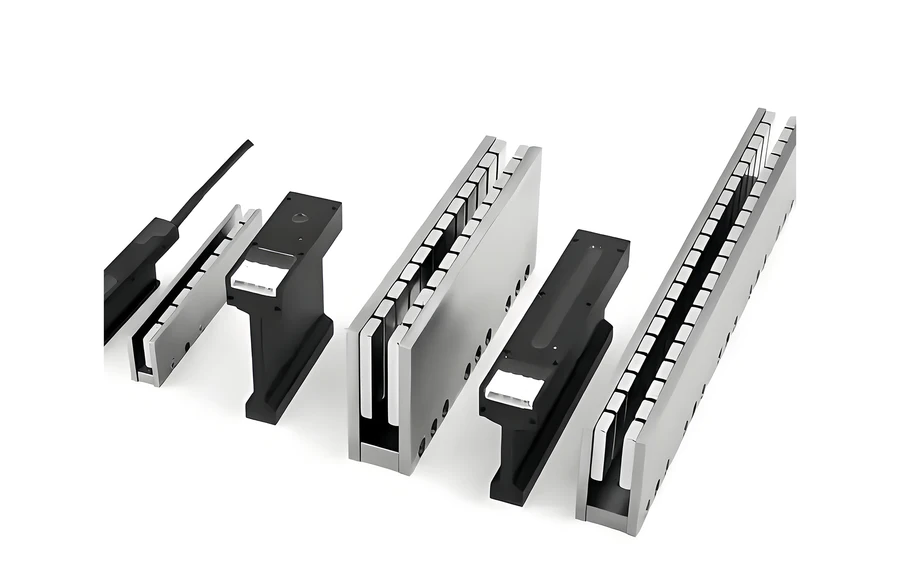
Choose a linear motor when you need ultra-high speed (up to 10 m/s), extreme acceleration (up to 10 g), sub-micron positioning accuracy, and zero backlash. Choose a ball screw when you need higher force at lower cost, self-locking capability, or holding force without continuous power
What actuator type is best for humanoid robots?
Humanoid robots typically use a mix: rotary actuators (frameless motor + harmonic reducer) for shoulder/hip joints, andlinear actuators(planetary roller screw + servo motor) for leg extension/compression and spine articulation. Tesla’s Optimus uses 14 rotary and 14 linear body actuators
Are hydraulic actuators obsolete?
No. While electric actuators are replacing hydraulics in many applications due to cleanliness and precision, hydraulic actuators remain irreplaceable for extreme force applications (hundreds of tons) such as construction, mining, and heavy industrial presses.
What is an integrated smart electric cylinder?
A 2026-leading design that combines motor, transmission, encoder, force sensor, temperature sensor, and communication electronics (EtherCAT/CANopen/IoT) into a single sealed unit. This enables real-time diagnostics, predictive maintenance, and adaptive control without external controllers.
How small can linear actuators get in 2026?
Mass-produced planetary roller screws are now available at φ1.5mm diameter. Coreless motor assemblies for robotic fingers range from Φ8–12mm, enabling human-level dexterity in compact robotic hands
Conclusion
The linear actuator landscape in 2026 is defined by three forces: extreme miniaturization (φ1.5mm roller screws for robotic hands), intelligent integration (AI-enabled smart cylinders with embedded sensors), and the humanoid robotics boom (80% CAGR driving unprecedented demand).
Whether you’re specifying actuators for a CNC machine, designing the next generation of humanoid robots, or sourcing components for medical equipment, understanding the four core types—and their sub-variants—is no longer optional. It’s the foundation of modern motion control.
The winners in this space won’t just know the difference between a ball screw and a roller screw. They’ll know when to trade force for speed, when linear motors beat mechanical transmission, and how to integrate IoT intelligence into every motion axis.
Ready to specify your next actuator? [Browse our electric actuator catalog] or [download our free actuator selection calculator] to match transmission type, motor, and environmental rating to your exact application.
HCY Automation delivers integrated solutions across motion control, linear motion, robotics, machine vision, pneumatic systems, and precision gearboxes to help global manufacturers build smarter, faster, and more reliable production lines. Our engineering team helps you select and integrate the right motion control, robotics, and automation components for your specific application.