Linear actuators have become essential components in modern automation systems, robotics, and industrial machinery. Whether you’re designing a CNC machine, upgrading manufacturing equipment, or building a custom automation solution, understanding the cost structure of linear actuators is crucial for budget planning and making informed purchasing decisions. The price variation in the market can be significant, ranging from affordable entry-level units to high-precision industrial systems.
Linear actuator costs typically range from 50 to 10,000+ depending on type, precision, load capacity, stroke length, and drive mechanism. Basic electric cylinders start around 100-300; ballscrew actuators range from 500 to 3,000, while high-precision linear motor stages can exceed $5,000-10,000 for industrial applications.
In this guide, we’ll break down the factors that influence linear actuator pricing, compare different types and their cost ranges, and help you understand what you’re paying for when investing in these critical motion control components.
A Practical Cost Breakdown
If you’ve ever tried to budget for a motion control project, you know the frustration. You search online for linear actuator costs and find prices ranging from $50 to well over $10,000. That’s not exactly helpful when you’re putting together a project quote or trying to justify capital expenditure to management. The truth is, linear actuators aren’t a one-size-fits-all product, and the pricing reflects that reality.
So, how much do linear actuators cost? For most industrial applications, expect to spend between $200 and $5,000 per axis. Basic electric cylinders start at around $100 to $300. Mid-range ball screw actuators typically cost between $500 and $3,000. High-end linear motor stages typically run from $3,000 to $10,000 or more. The final number depends on your precision needs, load requirements, stroke length, and what’s included in the package.
Below, we’ll walk through exactly what drives these prices up or down, so you can make a smarter purchasing decision without overpaying or under-specifying.
What Drives Linear Actuator Price Up or Down?
The biggest cost factors are the drive mechanism, precision grade, load capacity, and stroke length. Get any of these or risk wasting money or ending up with an actuator that can’t do the job.
Drive Mechanism Makes the Biggest Difference
This category is where most of the cost variation comes from. Here’s the reality:
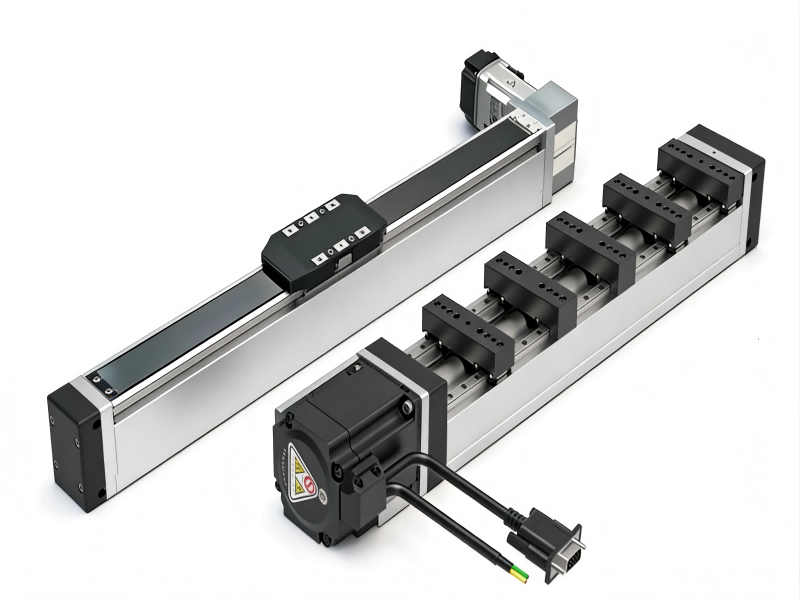
Belt-driven systems are the most affordable option for longer strokes and high-speed applications. They work well when you don’t need extreme positioning accuracy. A high-precision belt actuator designed for industrial automation can handle speeds that ball screw systems simply can’t match, all at a lower price point.
Ball screw actuators cost more because they’re harder to manufacture. Ground screws with tight tolerances don’t come cheap. But if your application demands repeatability under ±0.05mm, the ball screw actuator is usually where you land. They handle higher loads better and offer excellent rigidity.
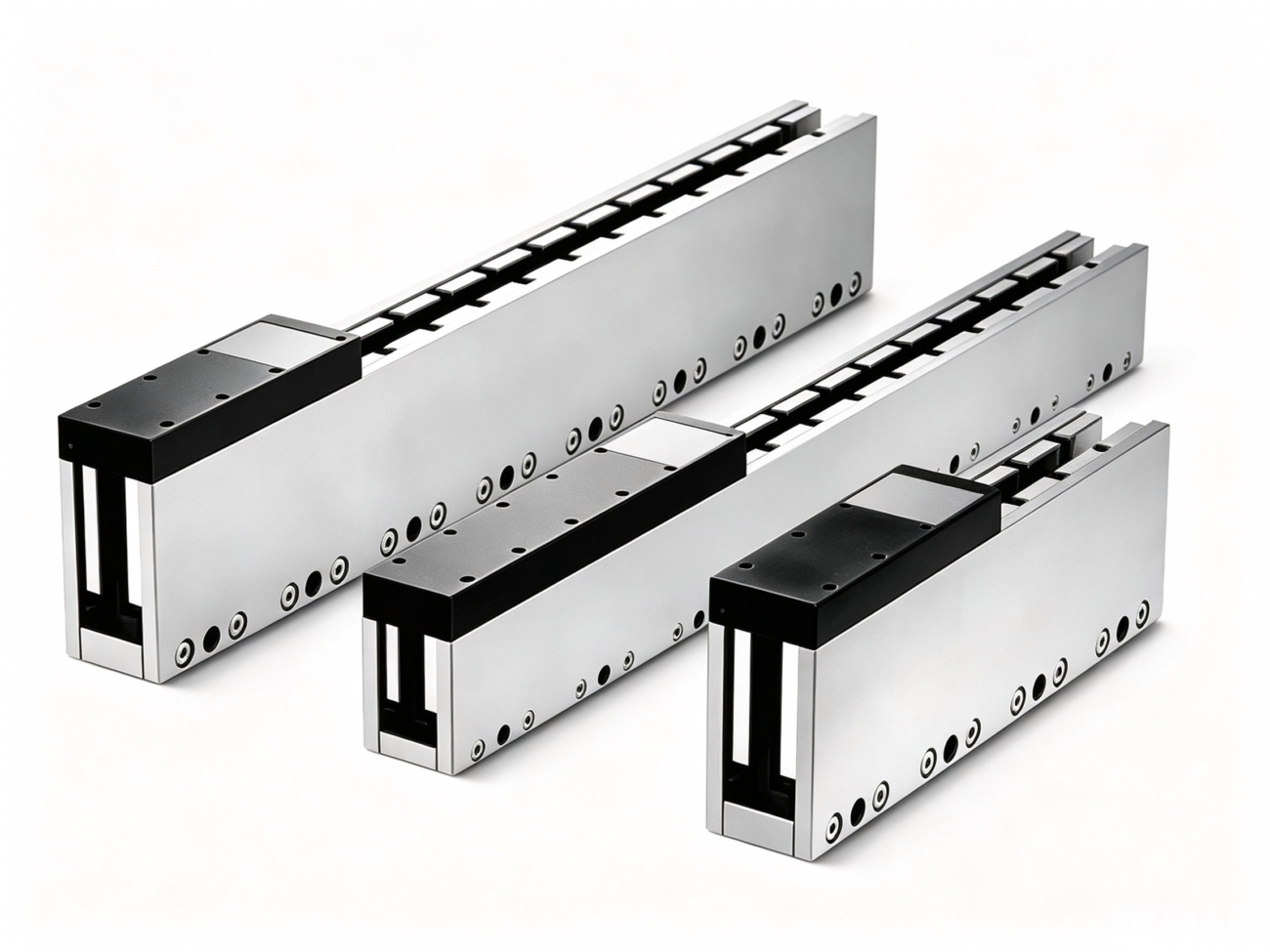
Linear motor stages sit at the top of the price ladder. No mechanical transmission means no backlash, no wear parts, and incredible speed. But you’re paying for that performance. These are typically reserved for semiconductor, inspection, or high-cycle-rate applications where nothing else will do.
Precision Costs Real Money
There’s a reason we keep coming back to precision. Jumping from ±0.1mm to ±0.01mm repeatability doesn’t just mean a better lead screw. It means tighter machining tolerances on every component, better guide rails, higher-resolution encoders, and more rigorous quality testing. That cascading effect on manufacturing cost is why a dust-free ball screw linear stage built for precision motion control costs significantly more than a general-purpose unit with identical stroke length.
Load and Stroke Length
These two factors scale cost in predictable ways. Doubling your load capacity means beefier rails, larger diameter screws, bigger motors, and more robust housings. Every 100mm of additional stroke adds roughly 10-15% to the price because you need longer rails, screws, and support structures.
The practical takeaway? Don’t over-spec. If your actual payload is 15kg, you don’t need an actuator rated for 100kg. That extra capacity isn’t free.
What Do Different Types of Linear Actuators Actually Cost?
Prices vary widely by type, but here’s a realistic breakdown based on what industrial buyers actually pay in 2025.
Actuator Type
Typical Stroke
Price Range
Best For
Electric Cylinder
50-300mm
$100-1,500
Pressing, clamping, basic positioning
Belt-Driven Module
200-3000mm
$400-4,500
High-speed pick-and-place, long travel
Ball Screw Module
100-1000mm
$500-5,000
CNC, precision assembly, robotics
Linear Motor Stage
100-1500mm
$3,000-12,000
Semiconductor, inspection, high-cycle
Embedded Screw Module
50-500mm
$300-2,000
Space-constrained OEM applications
A few things worth noting about these numbers. First, they don’t include motors, drivers, or controllers unless stated. A complete system with a servo drive can add $300-1,500 to the total. Second, these are single-unit prices. Order 10 or more, and you’ll typically see 15-25% discounts.
Where the Sweet Spot Is for Most Buyers
For the majority of industrial automation projects, ball screw linear motion modules in the $800-2,500 range deliver the best balance of precision, load capacity, and value. They’re precise enough for most manufacturing tasks, robust enough for continuous duty, and affordable enough to deploy across multiple axes without blowing the budget.
What Hidden Costs Should You Watch For?
The actuator itself typically accounts for only 50-65% of your total project cost. Controllers, cables, mounting hardware, and installation labor add up fast, and too many buyers are surprised by these expenses.
Here’s what you might miss when budgeting:
Control electronics are the biggest hidden cost. A stepper driver runs $50-200, but a servo drive with positioning capability costs $300-1,500. If you need coordinated multi-axis motion, a dedicated motion controller will add another $1,000-5,000.
Cables and connectors seem trivial until you need shielded motor cables, encoder feedback cables, and cable carriers for moving applications. Budget $100-400 per axis.
Mounting and integration takes more time than most people expect. Even with a straightforward single-axis installation, you should plan for 4-8 hours of mechanical and electrical work. Multi-axis systems with PLC integration can take days.
Protective accessories matter in real factory environments. Bellows covers ($80-400), dust seals, and environmental protection add cost but prevent premature failure that would cost far more in downtime.
A Realistic Total Cost Example
Say you need a single-axis ball screw actuator with a 400 mm stroke and ±0.02 mm repeatability for a precision assembly station:
Ball screw actuator: $1,800
Servo motor and drive: $900
Cables and connectors: $200
Mounting hardware: $150
Installation and commissioning: $500
Protective bellows: $120
Total: approximately $3,670
That’s more than double the actuator cost alone. Knowing this upfront prevents ugly budget surprises later.
How Do You Choose the Right Manufacturer Without Overpaying?
The manufacturer can reduce theose affects price by 30-60%, but cheaper doesn’t always mean worse value. The key is matching the manufacturer tier to your actual application requirements.
The Manufacturer Landscape
The market breaks down into three rough tiers:
Premium brands (mostly European and Japanese) charge top dollar but deliver exceptional precision, documentation, and support. If you’re building a machine that needs to run 24/7 for five years with minimal maintenance, the premium the those effects’often pays for itself.
Mid-tier manufacturers offer the best value for most industrial applications. These are established companies with proven products, reasonable quality control, and competitive pricing. You won’t get the absolute tightest tolerances, but for 80% of applications, you don’t need them.
Budget manufacturers serve prototype development, non-critical applications, and cost-sensitive high-volume projects. Quality can vary significantly, so verify specifications independently and test samples before committing to large orders.
Direct vs. Distributor Pricing
Buying directly from linear module manufacturers saves 15-25% on larger orders, but you’ll deal with minimum order quantities and longer lead times. Distributors charge more per unit but offer convenience, local stock, and smaller quantities. For one-off projects, distributors make sense. For production quantities, go direct.
Volume Matters More Than You Think
Quantity
Typical Discount
1-2 units
List price
5-10 units
10-18% off
11-25 units
18-25% off
50+ units
25-40% off
If you know you’ll need multiple axes across several projects over the next year, consolidating purchases into fewer, larger orders can save thousands.
How Can You Cut Costs Without Cutting Corners?
The most effective cost reduction strategy is eliminating over-specification. Most buyers spend 20-40% more than necessary because they spec tighter precision, higher load capacity, or longer stroke than the application actually requires.
Right-Size Your Specifications
Ask yourself these questions honestly:
Does this axis genuinely need ±0.01mm repeatability, or would ±0.05mm work? Relaxing this single spec can save 40%.
Is the specified load capacity based on actual calculations or a rough guess with an excessive safety margin?
Can the machine design be adjusted to reduce required stroke length by 100-200mm?
Does the application truly need servo control, or would a stepper with closed-loop feedback suffice?
Pick the Right Technology
Don’t default to ball screw actuators for everything. Belt-driven systems cost 30-40% less for long-stroke applications and provide superior speed. If your process needs 2000mm of travel with ±0.2mm accuracy at high speed, a belt module outperforms a ball screw solution at a fraction of the cost.
Conversely, don’t cheap out on precision axes. Using a $500 actuator where a $2,000 ball screw actuator for CNC applications is needed will result in scrap parts, rework, and eventual replacement. That short-term saving will cost you more over time.
Think About Total Cost of Ownership
A cheaper actuator that needs replacement every two years costs more than a quality unit lasting eight years. Factor in:
Replacement part availability and cost
Maintenance requirements (lubrication intervals, wear part replacement)
Downtime cost when the actuator fails
Energy efficiency differences between drive types
Understanding Import Costs and HS Code Classification
**If you’re sourcing internationally, the *linear module HS code* (typically 8466.93 or 8483.40) determines your import duty rate, usually 0-5%.** But duties are just one piece of the import cost puzzle.
Total landed cost for international purchases typically adds 10-20% beyond the factory price.
Customs duties: 0-5% depending on classification and destination
Sea freight: 5-12% of hardware value (air freight: 15-25%)
Customs brokerage: $100-500 per shipment
Currency exchange fees: 1-3%
The practical advice? Work with a customs broker to get proper classification before your first large order. Incorrect HS codes can result in overpaid duties or, worse, customs holds that delay your project by weeks.
Conclusion
Linear actuator pricing makes a lot more sense once you understand what you’re actually paying for. The drive mechanism, precision grade, load capacity, and stroke length account for most of the variation. Hidden costs from controllers, cables, installation, and accessories typically add 40-80% to the bare actuator price.
The smartest approach is straightforward: define your actual requirements carefully, resist the temptation to over-specify, choose the right technology for each axis, and consider total ownership cost rather than just the purchase price. Do that, and you’ll find that linear actuators deliver excellent value for the automation capability they provide.
Frequently Asked Questions
How long should a linear actuator last in a typical industrial application?
Most quality industrial actuators are designed for 10,000 to 20,000 hours of operation, which translates to roughly 5 to 10 years under normal single-shift conditions. Service life depends heavily on how well the actuator is sized for the application. Operating consistently at 30-50% of rated capacity, along with proper lubrication and environmental protection, dramatically extends useful life. Ball screw actuators will eventually develop backlash as the recirculating balls wear, but this degradation is gradual and predictable. Linear motor systems, having no mechanical wear components in the drive train, can last significantly longer when guide rail maintenance is maintained.
Is it worth buying refurbished or surplus linear actuators?
For non-critical applications, prototyping, or test fixtures, refurbished actuators from reputable sources can save 40-60% and still provide perfectly acceptable performance. The key risks are unknown usage history, potential internal wear that isn’t visible externally, and limited or no warranty coverage. Always request detailed inspection reports and test data before purchasing refurbished units. For production machinery where downtime is costly, new actuators with a full manufacturer warranty are almost always the better investment.
Can I mix actuator brands in a multi-axis system?
Technically yes, but it adds integration complexity. Different manufacturers use different mounting standards, motor interfaces, and feedback protocols. Using a single supplier for all axes simplifies mechanical integration, ensures consistent performance characteristics, and usually qualifies you for better volume pricing. The exception is when different axes have dramatically different requirements, such as a high-precision ball screw for the Z-axis and an economical belt drive for a long-travel X-axis, where the cost savings of mixing technologies outweigh the integration overhead.
HCY Automation delivers integrated solutions across motion control, linear motion, robotics, machine vision, pneumatic systems, and precision gearboxes to help global manufacturers build smarter, faster, and more reliable production lines. Our engineering team helps you select and integrate the right motion control, robotics, and automation components for your specific application.