Ironcore vs ironless linear motor performance comparison
When choosing a linear motor for an industrial automation or precision motion system, one of the most important decisions is whether to use an iron-core linear motor or an ironless linear motor.
Although both technologies convert electrical energy directly into linear motion, their structural designs are fundamentally different. An iron-core linear motor uses a laminated iron core to concentrate magnetic flux and generate high electromagnetic force. An ironless linear motor eliminates the iron core and uses a lightweight coil assembly, offering low moving mass, virtually no cogging force, and exceptionally smooth motion.
The result is not that one technology is universally better than the other. Instead,iron-core and ironless linear motors are optimized for different motion requirements.
Iron-core motors are typically attractive when high continuous thrust, high force density, rigidity, and cost efficiency are priorities. Ironless motors are often preferred when low moving mass, high acceleration, excellent positioning smoothness, and minimal force ripple are critical.
This guide explains the differences between iron-core and ironless linear motors, compares their performance characteristics, and explores which technology is better suited to applications ranging from heavy-duty machinery to semiconductor manufacturing and high-precision automation.
What Is an Iron-Core Linear Motor?
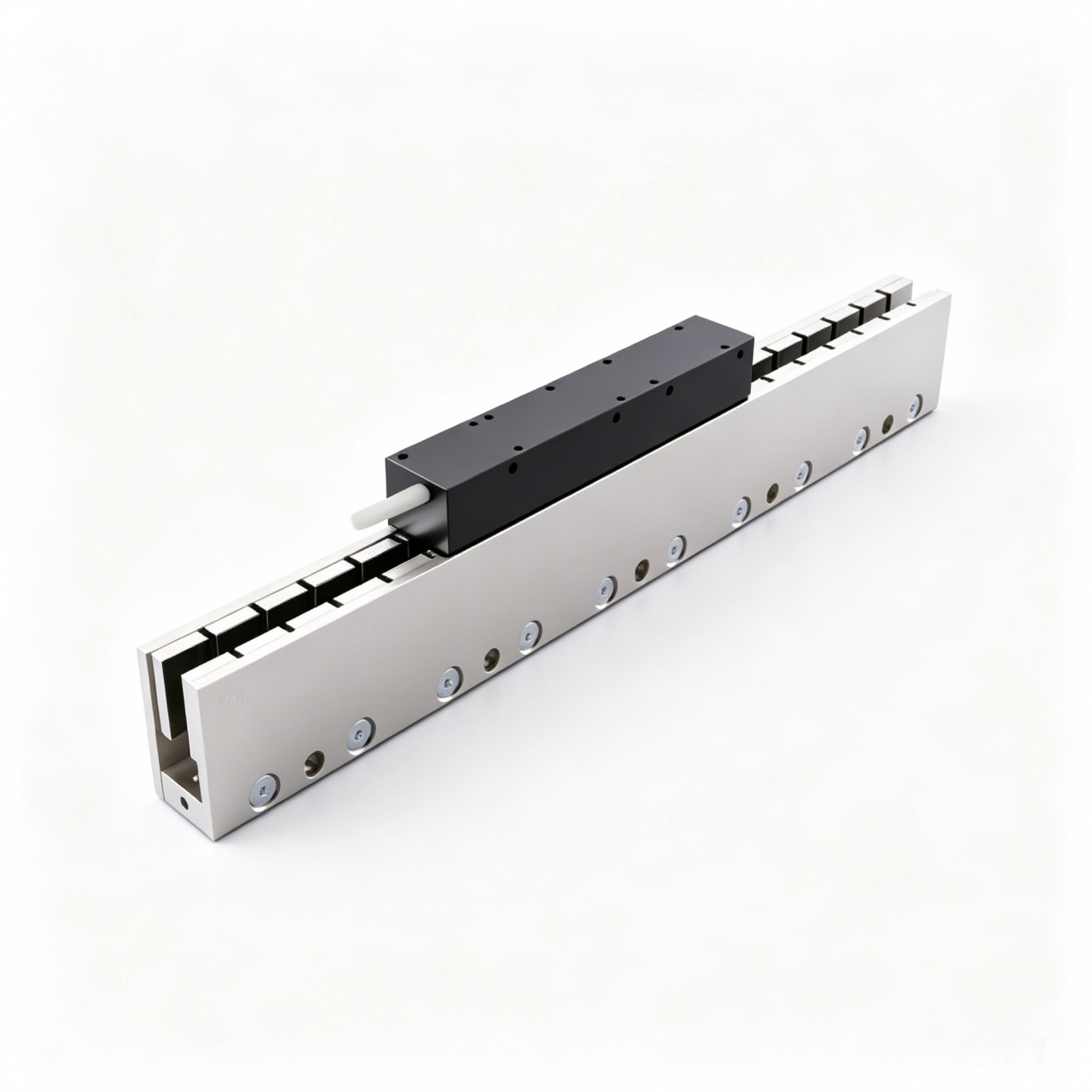
An iron-core linear motor incorporates a magnetic iron core into its moving or active part. The motor coil is typically wound around a laminated electrical-steel core.
The iron core provides a low-reluctance magnetic path, allowing the magnetic field generated by the permanent magnets and windings to interact more effectively. This magnetic-flux concentration enables the motor to produce substantial electromagnetic thrust within a relatively compact package.
The laminated construction of the core also helps reduce eddy-current losses compared with a solid metal core.
Key advantages of iron-core linear motors
High continuous and peak thrust
High force density
Strong electromagnetic coupling
Good thermal conduction through the motor structure
High stiffness for demanding industrial applications
Competitive cost-to-thrust ratio
Suitable for heavy loads and high-force motion
Because of these characteristics, iron-core linear motors are widely considered for industrial automation, machine tools, material handling, heavy-duty positioning systems, and other applications requiring substantial linear force.
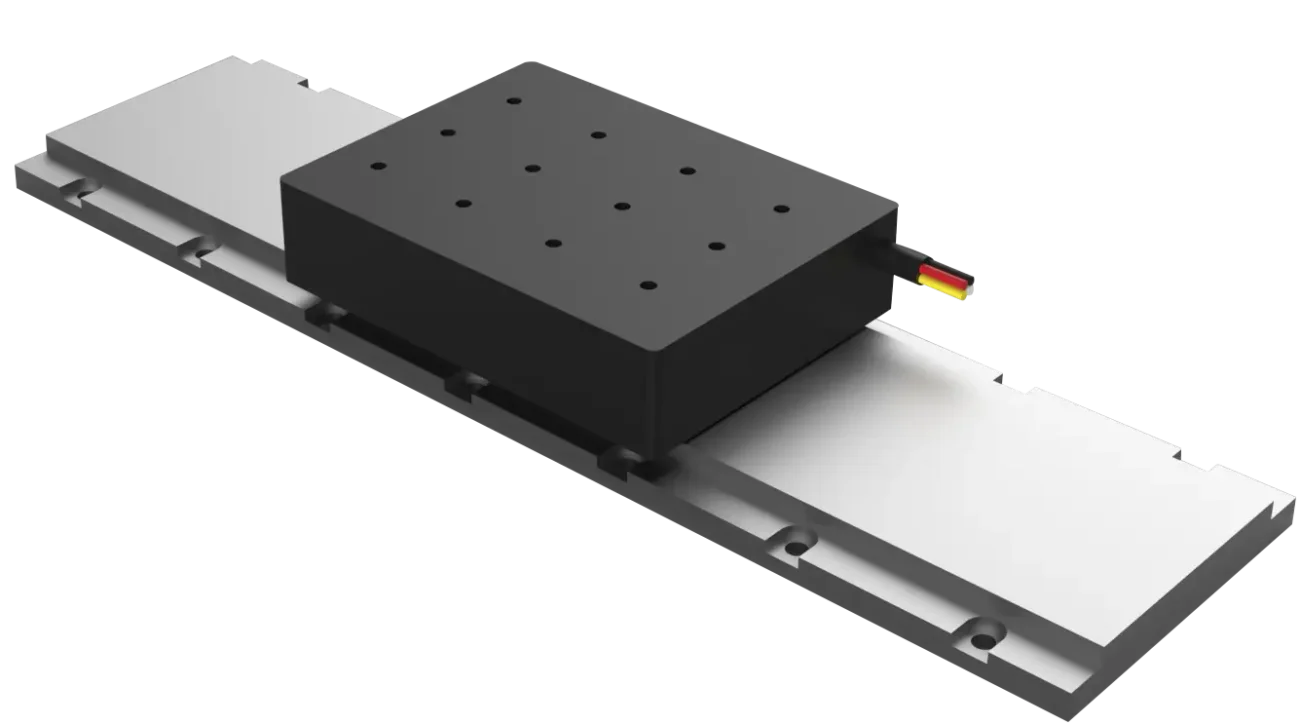
Instead of winding the coil around a laminated steel core, the windings are typically formed into a lightweight, flat coil structure and encapsulated in materials such as epoxy.
The absence of iron dramatically reduces the mass of the moving component and eliminates the magnetic attraction associated with an iron-core design.
This architecture also removes the primary source of cogging force caused by the interaction between the iron teeth and permanent-magnet field.
Key advantages of ironless linear motors
Extremely low moving mass
Virtually zero cogging force
Very smooth motion
Excellent low-speed performance
High acceleration potential
Excellent positioning accuracy
Low force ripple
No iron-core hysteresis losses in the coil assembly
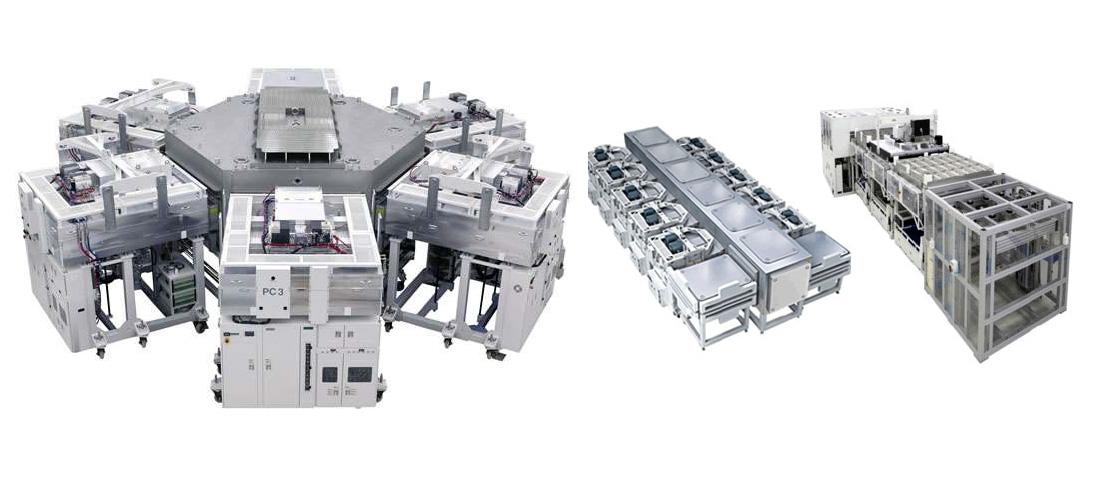
These characteristics make ironless linear motors particularly attractive for semiconductor equipment, inspection systems, optical equipment, laboratory automation, precision stages, electronics manufacturing, and other high-precision motion applications.
Iron-Core vs. Ironless Linear Motor: The Core Difference
The most fundamental difference is simple:
Iron-core linear motors use magnetic iron to concentrate flux and increase thrust density, while ironless linear motors eliminate the iron core to reduce moving mass and magnetic disturbances.
This structural difference affects almost every major performance parameter, including thrust, acceleration, cogging force, heat generation, system stiffness, and positioning performance.
Parameter
Iron-Core Linear Motor
Ironless Linear Motor
Motor structure
Coil with iron core
Coreless coil assembly
Moving mass
Higher
Much lower
Thrust density
Generally higher
Generally lower
Acceleration
Good
Excellent
Cogging force
Present
Virtually zero
Magnetic attraction
Significant
Very low/negligible
Motion smoothness
Good
Excellent
Continuous thrust
Excellent
Good
Thermal management
Generally easier
Requires careful design
Positioning performance
High
Extremely high
Heavy-load capability
Excellent
Application dependent
Precision applications
Good
Excellent
Heavy machinery
Excellent
Less common
Semiconductor equipment
Application dependent
Excellent
The actual performance of a linear motor depends on its electromagnetic design, magnet configuration, winding technology, cooling system, drive electronics, mechanical structure, and operating conditions. Therefore, the table should be viewed as a general technology comparison rather than an absolute rule.
1. Thrust: Why Iron-Core Motors Have an Advantage
Thrust is one of the biggest differences between the two technologies.
The iron core provides a low-reluctance magnetic path and helps concentrate magnetic flux around the active windings. As a result, an iron-core linear motor can generate high electromagnetic force from a relatively compact motor package.
This makes the technology particularly attractive for applications where high force density and continuous thrust are important.
For example, industrial machinery may need to move a heavy workpiece, cutting tool, gantry, or production assembly while maintaining stable acceleration and positioning.
In these situations, the additional moving mass of an iron-core motor may be less important than its ability to deliver high thrust.
Why choose iron-core for high-force applications?
An iron-core design can provide:
Higher available thrust
High continuous force
High peak force
Strong electromagnetic coupling
Compact force-producing components
For heavy-duty automation, this can translate into a more compact and cost-effective motion system.
2. Acceleration: Why Ironless Motors Can Be Extremely Fast
Acceleration depends not only on motor force but also on moving mass.
A simplified relationship is:
Acceleration = Force / Moving Mass
This means that reducing the mass of the moving assembly can significantly increase acceleration when sufficient motor force is available.
Ironless linear motors take advantage of this principle.
Because the coil assembly does not contain a heavy iron core, the moving mass can be substantially reduced compared with an equivalent iron-core configuration.
The result can be:
Higher acceleration
Faster deceleration
Shorter settling time
Reduced mechanical inertia
Faster positioning cycles
For high-speed pick-and-place machines, semiconductor inspection equipment, precision stages, and electronic manufacturing systems, these characteristics can be more valuable than maximum thrust density.
3. Cogging Force: A Major Advantage of Ironless Linear Motors
One of the most important concepts when comparing linear motors is cogging force.
Cogging force is a periodic disturbance associated with the interaction between permanent magnets and ferromagnetic teeth or iron structures.
In an iron-core motor, this magnetic interaction can generate force ripple as the motor moves.
Although modern motor design and control technologies can significantly reduce its effects, cogging remains an important consideration for applications requiring extremely smooth motion.
An ironless linear motor eliminates the iron-to-magnet interaction responsible for traditional cogging behavior.
Therefore, ironless designs can provide exceptionally smooth movement, especially at low speeds.
Why does low cogging matter?
Low cogging force is valuable when a machine must perform:
Precision scanning
Micrometer-level positioning
Optical inspection
Wafer handling
Semiconductor inspection
Fine dispensing
Laser processing
Measurement and metrology
In these systems, even small periodic disturbances can affect positioning accuracy, surface quality, inspection results, or process repeatability.
4. Moving Mass: Ironless Motors Are Designed for Dynamic Motion
Moving mass has a direct influence on acceleration, deceleration, settling time, and overall dynamic response.
An iron-core motor places a relatively heavy magnetic and structural component in the moving assembly.
An ironless motor instead uses a lightweight coil structure.
This makes the ironless architecture particularly suitable for applications where the motor must rapidly reverse direction or execute frequent short-distance movements.
For example, a precision stage may repeatedly move a few millimeters, stop, settle, and move again thousands of times during a production cycle.
In such applications, reducing moving mass can have a major impact on machine throughput.
5. Heat Dissipation: An Important Engineering Trade-Off
Thermal management is one area where the choice is more complicated.
Every linear motor generates heat as electrical current passes through its windings. The ability to remove that heat directly affects continuous thrust and motor lifetime.
Iron-core motors generally have a relatively strong thermal path through their metal structure. The iron core and surrounding mechanical components can help conduct heat away from the windings.
Ironless motors do not have this same iron thermal mass and conduction path.
Therefore, their thermal design may require greater attention to:
Coil construction
Cooling plates
Forced-air cooling
Liquid cooling
Duty cycle
Current density
Ambient temperature
Thermal interface materials
This does not mean ironless motors cannot generate high continuous force. Rather, thermal performance must be evaluated as part of the complete motor and machine design rather than judged solely by the motor architecture.
6. Magnetic Attraction: Another Fundamental Difference
Iron-core motors can generate significant normal magnetic attraction between the coil assembly and the magnet track.
This attraction can increase the mechanical load placed on bearings, guides, and structural components.
In some designs, the mechanical structure must therefore be engineered to withstand substantial normal forces.
Ironless motors largely eliminate this issue because there is no ferromagnetic iron core interacting with the permanent-magnet array.
This can simplify the mechanical design of precision stages and reduce unwanted loading on linear guides.
7. Positioning Accuracy and Motion Smoothness
Both iron-core and ironless linear motors can achieve extremely high positioning accuracy when combined with high-resolution feedback systems and properly designed servo drives.
However, the absence of cogging and reduced moving mass gives ironless motors an inherent advantage in applications where smooth, predictable motion is critical.
The motor itself is only one part of the accuracy equation.
Actual positioning performance also depends on:
Linear encoder resolution
Servo control algorithms
Mechanical stiffness
Bearing quality
Structural vibration
Thermal expansion
Feedback bandwidth
Drive current control
Machine calibration
Therefore, selecting an ironless motor does not automatically guarantee higher system accuracy. The complete motion-control architecture matters.
Iron-Core vs. Ironless Linear Motor: Which One Should You Choose?
There is no universal winner.
The correct choice depends on the application’s primary requirement.
Choose an iron-core linear motor when:
High thrust is the top priority
The machine must move heavy loads
Continuous force is important
High force density is required
Cost per unit of thrust matters
The application involves heavy industrial equipment
The additional moving mass is acceptable
Typical applications include:
Machine tools
Industrial automation
Heavy-duty gantries
Material handling
Packaging machinery
Large-format motion systems
Industrial positioning equipment
Choose an ironless linear motor when:
High acceleration is required
Low moving mass is important
Extremely smooth motion is needed
Cogging force must be minimized
Precision positioning is critical
Rapid short-stroke movement is required
The application is sensitive to magnetic attraction
Typical applications include:
Semiconductor manufacturing
Wafer inspection
Precision stages
Optical equipment
Metrology
Electronics manufacturing
Laboratory automation
High-speed pick-and-place equipment
Iron-Core vs. Ironless Linear Motor for Semiconductor Manufacturing
Semiconductor manufacturing is one of the clearest examples of where ironless linear motors can provide significant advantages.
Modern semiconductor equipment often requires a combination of:
High positioning accuracy
Fast acceleration
Low vibration
Smooth scanning
Excellent repeatability
Low force ripple
Controlled thermal behavior
An ironless architecture can help achieve these objectives because the moving coil is lightweight and virtually free from traditional cogging effects.
For wafer inspection and precision scanning systems, smooth motion is particularly important because the motion profile can directly influence measurement quality and throughput.
Iron-Core Linear Motors for Heavy Industrial Automation
On the other side of the application spectrum are heavy industrial machines.
Large automation platforms may need to move hundreds of kilograms or more while maintaining high productivity.
In these cases, high thrust and force density often take priority over minimizing moving mass.
An iron-core linear motor can therefore be a compelling solution.
Its ability to produce substantial electromagnetic force in a compact structure makes it suitable for demanding industrial motion systems where acceleration requirements are moderate but continuous force requirements are high.
Are Ironless Linear Motors Always More Precise?
No.
This is a common misconception.
Ironless linear motors have characteristics that are favorable for precision motion, especially low cogging force and low moving mass. However, overall system accuracy depends on much more than the motor itself.
A high-precision motion system typically combines:
Linear motor + high-resolution encoder + servo drive + precision guideway + rigid mechanical structure + thermal management + advanced motion control
If any one of these components is poorly designed, the overall positioning performance can suffer.
Therefore, it is more accurate to say that ironless linear motors provide an excellent foundation for precision motion systems, rather than claiming that every ironless motor is automatically more accurate than every iron-core motor.
Iron-Core vs. Ironless Linear Motor: Performance Is About Trade-Offs
The key engineering trade-off can be summarized as follows:
Iron-core = high force and force density
Ironless = low moving mass and smooth precision motion
Neither architecture should be evaluated in isolation.
A system designer should consider the complete operating profile:
What is the moving load?
What acceleration is required?
What is the required travel distance?
What is the duty cycle?
How much continuous thrust is required?
What positioning accuracy is needed?
Is cogging force acceptable?
What are the thermal constraints?
What type of linear guide is being used?
What is the required machine throughput?
Answering these questions usually makes the motor selection much clearer.
Iron-Core vs. Ironless Linear Motor: A Quick Decision Guide
Application Requirement
Recommended Technology
Heavy payload
Iron-core
High continuous thrust
Iron-core
High force density
Iron-core
Cost-sensitive high-force systems
Iron-core
Very high acceleration
Ironless
Low moving mass
Ironless
Minimal cogging
Ironless
Ultra-smooth motion
Ironless
Semiconductor equipment
Ironless
Precision inspection
Ironless
Large industrial gantry
Iron-core
High-speed precision stage
Ironless
General industrial automation
Either, depending on load and dynamics
The Future of Linear Motor Technology
As industrial automation becomes faster, more precise, and increasingly intelligent, linear motors are becoming an important alternative to conventional mechanical transmission systems.
Compared with traditional ball screws, belts, and rack-and-pinion mechanisms, direct-drive linear motors can eliminate mechanical transmission components and provide direct electromagnetic force generation.
This can reduce backlash-related issues, simplify the transmission chain, and enable high-speed dynamic control.
At the same time, trends such as:
Semiconductor miniaturization
Smart manufacturing
Industry 4.0
High-speed automation
Machine vision
Precision robotics
Advanced packaging
EV battery manufacturing
High-speed inspection
are increasing demand for both high-force and high-precision linear motion technologies.
This means that iron-core and ironless linear motors are not competing technologies in a simple winner-takes-all market. They address different engineering priorities and are likely to coexist across increasingly diverse industrial applications.
Frequently Asked Questions About Iron-Core and Ironless Linear Motors
What is the main difference between an iron-core and an ironless linear motor?
The primary difference is the motor’s magnetic structure. An iron-core linear motor uses a ferromagnetic core to concentrate magnetic flux and generate high thrust, while an ironless linear motor uses a coreless coil assembly to reduce moving mass and eliminate traditional cogging effects.
Which linear motor has higher thrust?
In general, iron-core linear motors can provide higher thrust density and are often better suited to heavy-load applications. Actual thrust depends on motor size, magnetic circuit design, current, cooling, and operating conditions.
Which is better for high-speed positioning?
Ironless linear motors are often preferred for high-speed positioning because their low moving mass enables high acceleration and rapid dynamic response.
Which linear motor has less cogging?
Ironless linear motors have virtually no traditional cogging force because they eliminate the iron teeth that interact with the permanent-magnet field.
Are ironless linear motors better for semiconductor equipment?
They are often an excellent choice because semiconductor equipment can require high acceleration, smooth scanning, low vibration, and highly repeatable positioning.
Are iron-core linear motors cheaper?
Iron-core linear motors can offer a favorable cost-to-thrust ratio, particularly for applications requiring substantial force. However, total system cost depends on the motor, cooling, mechanical structure, guideways, servo drive, encoder, and application requirements.
Which linear motor should I choose?
Start with the application’s required thrust, moving mass, acceleration, duty cycle, positioning accuracy, thermal conditions, and motion smoothness. Choose iron-core when high force and heavy-load capability dominate; choose ironless when low moving mass, high acceleration, and extremely smooth precision motion are more important.
Final Takeaway
The choice between an iron-core linear motor and an ironless linear motor ultimately comes down to the application’s priorities.
If your system requires high thrust, high force density, continuous load capability, and economical heavy-duty performance, an iron-core linear motor is often the stronger candidate.
If your system requires low moving mass, high acceleration, virtually zero cogging force, smooth motion, and precision positioning, an ironless linear motor may be the better solution.
The most important point is not to ask which technology is universally superior, but rather:
Which linear motor architecture best matches the load, acceleration, precision, thermal, and dynamic requirements of your machine?
Understanding this distinction allows engineers to select the right motor architecture for everything from heavy industrial automation to semiconductor manufacturing and next-generation precision motion systems.
HCY Automation delivers integrated solutions across motion control, linear motion, robotics, machine vision, pneumatic systems, and precision gearboxes to help global manufacturers build smarter, faster, and more reliable production lines. Our engineering team helps you select and integrate the right motion control, robotics, and automation components for your specific application.