Multi-Axis Motion Systems vs. Stacked Single-Axis Modules: Which Saves More on Project Costs?
Compare multi-axis motion systems and stacked single-axis modules to understand hardware costs, integration expenses, maintenance, and total cost of ownership in industrial automation.
When designing an automated production line, one question often comes up early in the project:
Should you build a multi-axis motion system by stacking individual linear modules, or invest in a fully integrated multi-axis solution?
At first glance, combining several standard single-axis linear modules seems like the more affordable option. The components are readily available, the initial purchase price is often lower, and engineers have more flexibility in selecting individual axes.
But once installation, motion control, calibration, maintenance, and production downtime enter the equation, the cost comparison becomes less straightforward.
A lower component price does not always mean a lower project cost.
For manufacturers working in semiconductor equipment, electronics assembly, battery production, precision machining, and industrial automation, the real challenge is finding a motion system that delivers the required performance without unnecessary engineering expense.
Let’s look at where the money actually goes.
1. Single-Axis vs. Multi-Axis Motion Systems: What’s the Difference?
Before comparing costs, it’s important to understand how these two approaches work.
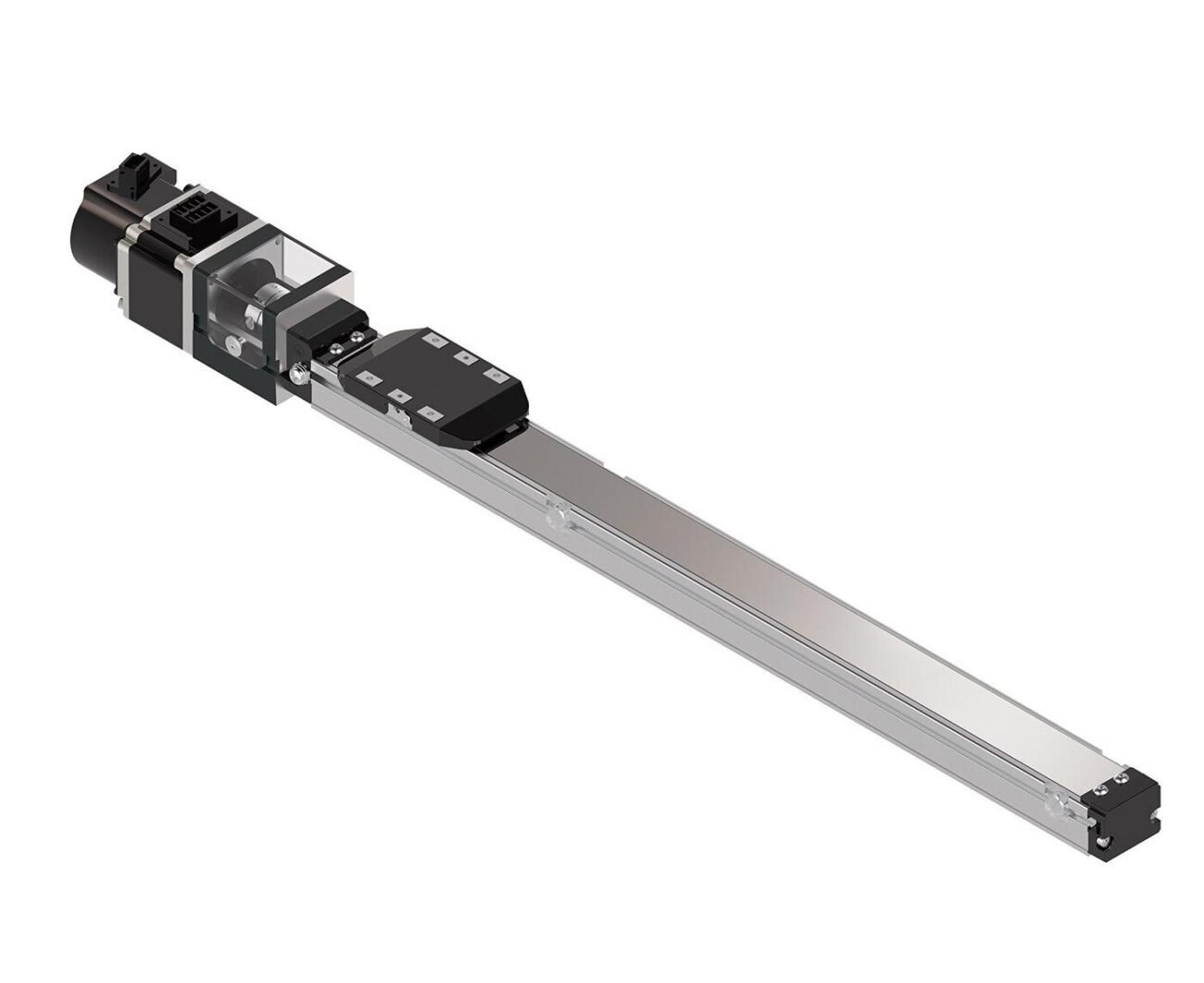
Single-Axis Linear Modules: Simple, Flexible, and Cost-Effective
A single-axis linear module moves a load along one straight path, typically referred to as the X, Y, or Z axis.
Depending on the application, it may use a ball screw, timing belt, rack-and-pinion mechanism, or direct-drive linear motor.
These systems are widely used for:
Material feeding and transfer
Automated inspection
Cutting and positioning
Pick-and-place operations along a fixed path
Long-stroke industrial transportation
Their main advantage is simplicity.
With fewer mechanical interfaces and a relatively straightforward control architecture, a single-axis system is generally easier to install, commission, and maintain.
For an application that only requires one direction of movement, adding more axes rarely makes economic sense.
However, production processes don’t always stay that simple.
Multi-Axis Motion Systems: Built for Coordinated Movement
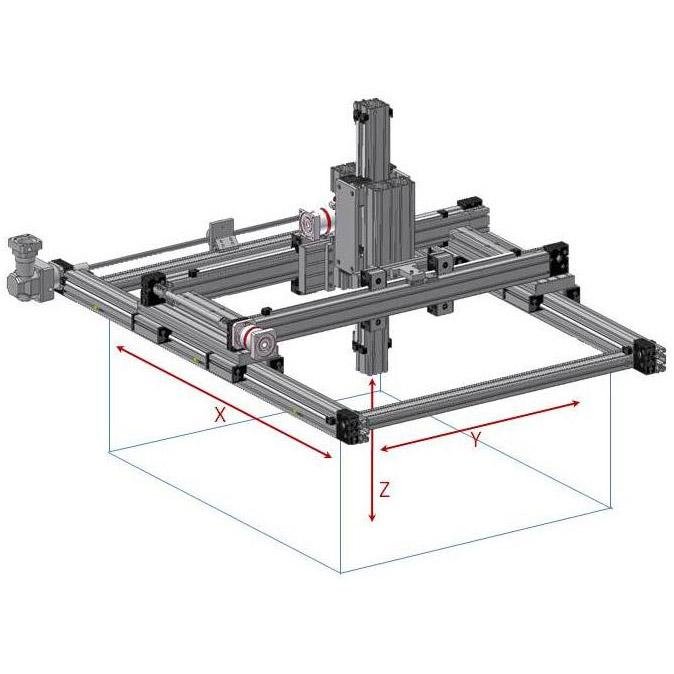
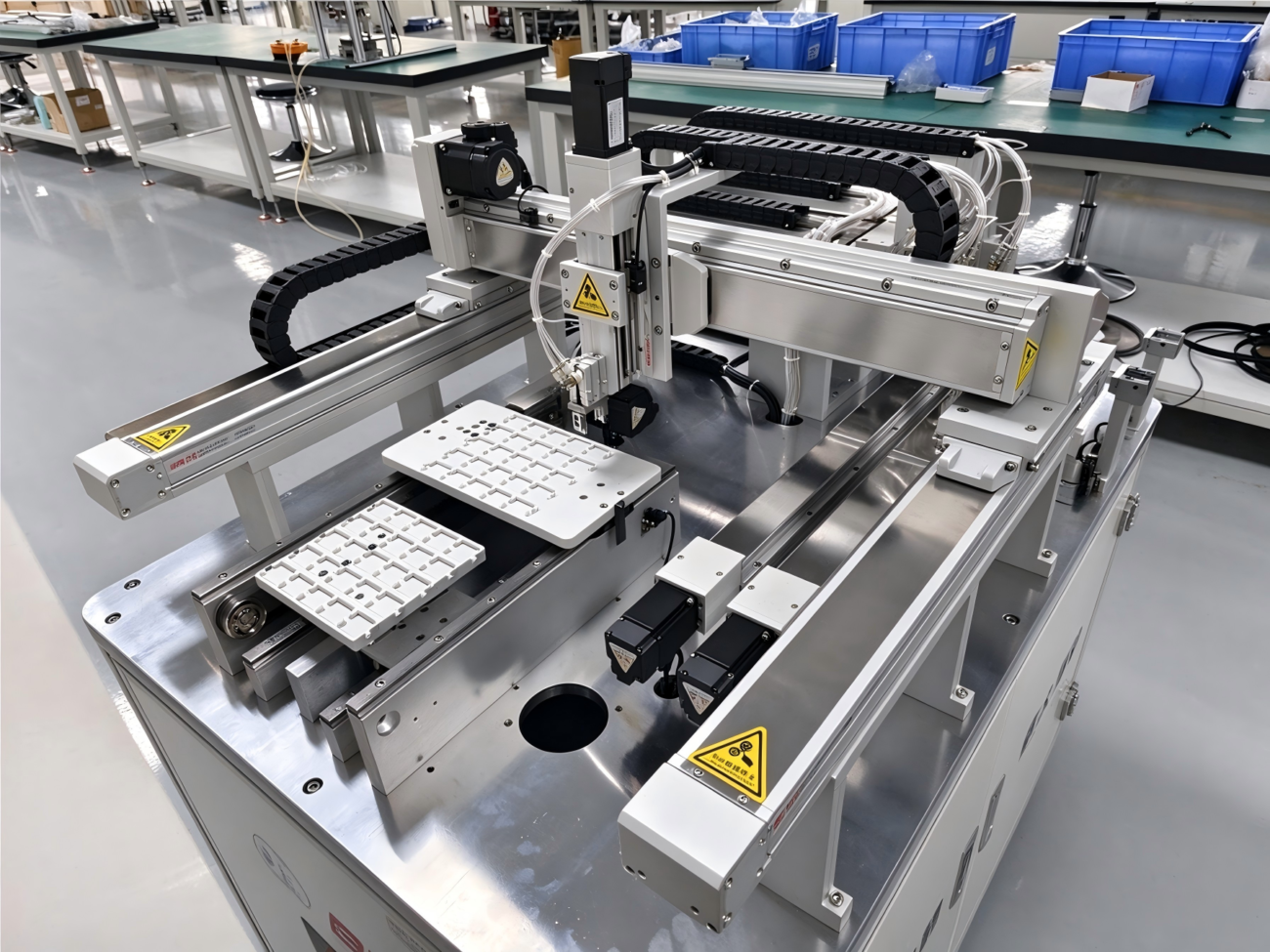
A multi-axis motion system combines two or more controlled axes to move a tool, product, or sensor across a plane or within a three-dimensional workspace.
Common configurations include:
XY systems for planar positioning
XZ systems for horizontal transfer and vertical lifting
XYZ gantry systems for three-dimensional positioning
Multi-axis Cartesian systems for coordinated automation
These systems are commonly found in semiconductor handling, automated assembly, machine vision, dispensing, laser processing, and precision manufacturing.
An integrated multi-axis platform is engineered as a complete system, considering mechanical stiffness, payload distribution, axis alignment, cable routing, and motion synchronization.
That system-level approach can reduce integration risks, particularly in demanding high-speed or high-precision applications.
But does it justify the higher upfront investment?
For many machine builders, the initial hardware budget is the first consideration.
Purchasing standard single-axis modules separately can be attractive because each axis can be selected according to its own travel, load, and accuracy requirements.
For example, an engineer building an XYZ positioning system might choose a long-travel X-axis, a shorter Y-axis, and a compact Z-axis.
This modular approach can avoid unnecessary specifications and may reduce initial component spending.
However, the cost of the linear modules is only one part of the system.
Illustrative cost comparison
Qualitative comparison only. Actual costs depend on system design, supplier scope, and performance requirements.
A stacked configuration can remain the cheaper option when the motion requirements are straightforward and the engineering team already has the necessary integration experience.
The equation changes when the project requires complex trajectories, tight tolerances, high acceleration, or multiple synchronized axes.
3. The Hidden Costs of Stacking Single-Axis Linear Modules
The biggest cost difference between a modular assembly and an integrated multi-axis system often appears after the purchase order has been issued.
Mechanical Alignment and Structural Rigidity
Stacking linear stages introduces additional mounting interfaces.
Each interface contributes to the overall mechanical behavior of the machine, including stiffness, vibration, deflection, and alignment.
If the supporting structure is not designed properly, these effects can reduce positioning accuracy and repeatability under load.
Engineers may need additional brackets, reinforced mounting plates, alignment procedures, or structural modifications.
Those requirements add material and labor costs that may not appear in the original hardware quotation.
Motion Control and Synchronization
Moving three independent axes is not necessarily difficult.
Making them move together accurately at high speed can be a different challenge.
A coordinated XYZ motion system may require:
Multi-axis motion controllers
Servo drive configuration
Interpolated trajectory planning
Position feedback integration
Collision avoidance and safety logic
Motion tuning and validation
For simple point-to-point operations, standard control solutions may be sufficient.
For high-speed dispensing, precision scanning, or continuous-path processing, integration effort can increase significantly.
Cable Management and System Integration
Cable routing is easy to underestimate.
As the number of moving axes increases, so does the complexity of routing power cables, encoder connections, sensors, pneumatic lines, and other services.
Poorly designed cable management can lead to interference, premature cable wear, unexpected downtime, and additional maintenance.
A properly engineered multi-axis platform can address these issues during the initial design phase.
Troubleshooting and Supplier Coordination
When linear modules, drives, controllers, and mechanical structures come from different suppliers, diagnosing a system-level problem can take longer.
An integrated solution from a single supplier may simplify technical support and accountability.
This doesn’t mean stacked modules are inherently unreliable. It means integration responsibility needs to be considered as part of the project cost.
4. Total Cost of Ownership: The Number That Actually Matters
For industrial automation projects, Total Cost of Ownership (TCO) is usually a better decision metric than hardware price alone.
A useful calculation is:
TCO=Hardware Cost+Engineering and Integration+Installation and Commissioning+Maintenance and Downtime+Energy and Operating Costs
Consider a hypothetical XYZ automation project with two possible configurations.
■ StackedIntegrated ■
This simplified model excludes financing, residual value, and discounted cash flows. Annual costs should include realistic maintenance, downtime, and energy assumptions. Values are hypothetical, not HCY quotations. Copy cost comparison
The important takeaway is not that one configuration always wins.
It’s that engineering hours, commissioning time, and operating reliability can outweigh the initial difference in hardware cost.
For production equipment expected to operate continuously over several years, even modest reductions in downtime can have a meaningful financial impact.
5. When Stacked Single-Axis Modules Are the Better Investment
An integrated multi-axis platform is not necessary for every application.
Stacked single-axis modules can be the more economical choice when:
The motion sequence is relatively simple. Applications involving independent positioning or straightforward point-to-point movements may not require advanced coordinated motion.
Standard components meet the performance requirements. If existing linear modules already provide sufficient load capacity, travel, speed, and repeatability, additional customization may add little value.
The engineering team has integration experience. Machine builders with proven mechanical designs and established motion control software can often assemble modular systems efficiently.
Future reconfiguration is important. Individually selected axes may be easier to replace or adapt when machine layouts change, provided the interfaces are standardized.
For these applications, modularity itself can be a cost-saving advantage.
6. When an Integrated Multi-Axis Motion System Saves More
Integrated multi-axis systems become especially attractive when system performance depends on how the axes work together.
High-Speed Pick-and-Place Automation
High-speed material handling requires more than fast individual axes.
Acceleration, payload stability, settling time, and synchronized motion all affect the production cycle.
A properly designed multi-axis gantry can help minimize unnecessary movement and reduce vibration during rapid positioning.
Precision Inspection and Semiconductor Equipment
In semiconductor manufacturing, electronics inspection, and precision measurement, small positioning errors can affect process consistency.
System stiffness, thermal behavior, feedback resolution, and control performance all matter.
An integrated design allows these factors to be evaluated together rather than treating each axis as an isolated component.
Custom XYZ Gantry Systems
Some applications require unusual travel dimensions, asymmetric loads, compact installation spaces, or specialized mounting arrangements.
Trying to fit standard modules into these constraints can lead to additional brackets, oversized components, or complicated machine layouts.
A custom XYZ gantry system can be designed around the actual workspace and process requirements.
Long-Stroke and Heavy-Duty Automation
Large-format manufacturing and material transfer systems introduce additional challenges, including structural deflection, cable management, and moving mass.
A system-level design can help select the right mechanical structure and drive technology for the required stroke, load, and duty cycle.
In these situations, integrated engineering may provide more value than simply minimizing the purchase price of individual axes.
7. Linear Motor vs. Ball Screw vs. Belt Drive: Drive Technology Also Affects Cost
Choosing between stacked modules and an integrated platform is only part of the decision.
The drive mechanism can have an equally important impact on performance, maintenance, and lifecycle cost.
Drive technology
Main advantages
Typical considerations
Ball screw actuator
High thrust, controlled positioning, mature technology
Screw speed limits, lubrication, wear
Belt-driven linear module
Economical long travel, relatively lightweight
Belt stretch, stiffness, positioning requirements
Rack-and-pinion system
Long stroke, scalable structure, heavy-duty applications
Backlash management, lubrication, gear wear
Direct-drive linear motor
High acceleration, no mechanical transmission backlash, precise dynamic control
Higher initial cost, feedback, thermal management
Why Direct-Drive Linear Motors Are Worth Considering
A direct-drive linear motor generates linear motion without relying on a rotating screw or belt transmission.
By eliminating intermediate mechanical transmission components, it can reduce backlash-related errors and transmission wear.
Linear motor systems are particularly useful in applications requiring rapid acceleration, frequent direction changes, high positioning repeatability, and smooth motion.
However, direct-drive technology is not automatically the cheapest or most accurate solution in every application.
Actual performance depends on the encoder, guide system, structural stiffness, controller tuning, thermal conditions, and operating environment.
For engineers evaluating a high-speed multi-axis platform, these factors should be considered together.
8. Frequently Asked Questions (FAQ)
Q1: Is a multi-axis motion system cheaper than stacking single-axis linear modules?
Not always. Stacked single-axis modules often have a lower initial hardware cost, especially for simple positioning applications. However, integrated multi-axis motion systems can reduce engineering, alignment, commissioning, and maintenance expenses. For complex automation projects, the integrated solution may deliver a lower total cost of ownership (TCO).
Q2: Can I build an XYZ gantry system using three single-axis linear modules?
Yes. An XYZ gantry system can be built by combining three single-axis linear modules. However, successful integration requires careful consideration of structural rigidity, payload distribution, axis alignment, motion synchronization, and cable management. Simply stacking three modules does not guarantee the positioning accuracy or dynamic performance required for precision automation.
Q3: What are the main advantages of an integrated multi-axis motion system?
An integrated multi-axis motion system offers coordinated movement, optimized mechanical design, simplified integration, and potentially faster commissioning. These advantages are particularly valuable in high-speed pick-and-place automation, semiconductor manufacturing, precision inspection, and automated assembly.
Q4: When should I choose single-axis linear modules instead of a multi-axis system?
Single-axis linear modules are often the most cost-effective choice for applications involving straightforward linear positioning, material feeding, or independent point-to-point movement. If standard modules meet your travel, payload, speed, and accuracy requirements, a modular solution may avoid unnecessary customization costs.
Q5: Are direct-drive linear motors better than ball screw actuators for multi-axis automation?
It depends on the application. Direct-drive linear motors are well suited for high-speed motion, rapid acceleration, smooth positioning, and applications requiring minimal mechanical transmission backlash. Ball screw actuators remain a practical choice for many high-thrust and cost-sensitive applications. The best solution depends on travel distance, load, precision requirements, duty cycle, and overall project budget.
Q6: How can manufacturers reduce the total cost of a linear motion system?
Start by defining the actual motion requirements, including payload, travel distance, positioning accuracy, cycle time, and operating environment. Avoid overspecifying individual axes, evaluate integration and maintenance costs, and compare complete system solutions rather than component prices alone. A properly engineered motion platform can help reduce unnecessary expenses throughout the equipment lifecycle.
Q7: When is a custom multi-axis linear motion system worth the investment?
Customization becomes valuable when standard motion modules cannot meet specific application requirements, such as unusual travel dimensions, limited installation space, high acceleration, heavy payloads, or demanding positioning accuracy. A custom multi-axis system can optimize mechanical structure, drive technology, and motion control around the production process, potentially reducing integration risks and long-term operating costs.
Q8: What information is needed to select the right multi-axis linear motion system?
Engineers should define the number of axes, travel distance, payload, maximum speed, acceleration, positioning accuracy, repeatability, duty cycle, and installation environment. Control interfaces, available mounting space, and application-specific requirements are also important.
HCY Automation develops customized single-axis and multi-axis linear motor solutions for high-speed, high-precision, long-stroke, and heavy-load industrial applications.
Planning your next automation project? Contact HCY Automation to discuss your motion requirements and find the right balance between performance and project cost.
HCY Automation delivers integrated solutions across motion control, linear motion, robotics, machine vision, pneumatic systems, and precision gearboxes to help global manufacturers build smarter, faster, and more reliable production lines. Our engineering team helps you select and integrate the right motion control, robotics, and automation components for your specific application.