AI‑driven demand triggers optical & photonic packaging supply bottlenecks. Explore actionable strategies to ease capacity constraints, shorten lead‑times and stabilize your photonics project delivery.
The Growing Structural Supply Crisis in Optical & Photonic Packaging
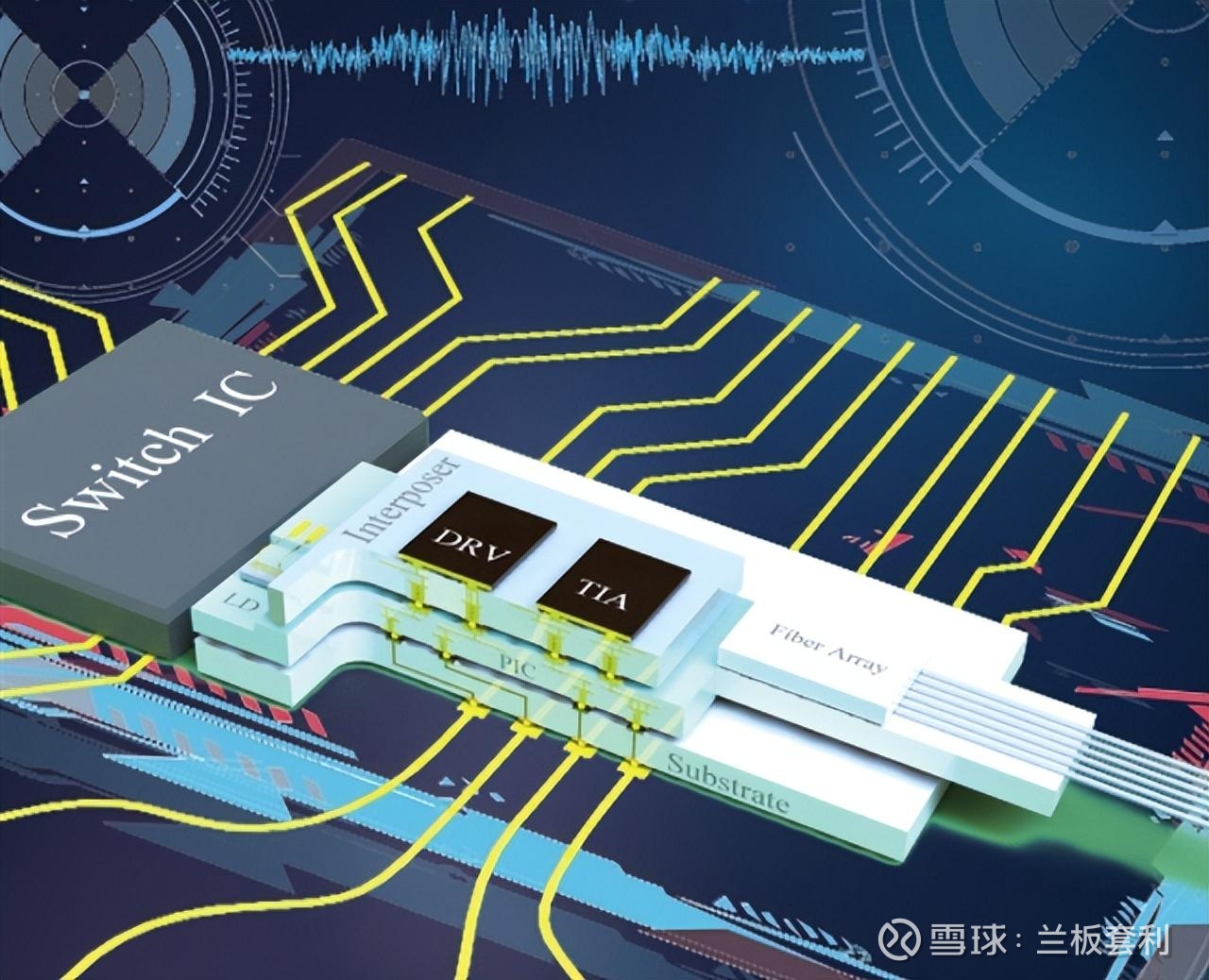
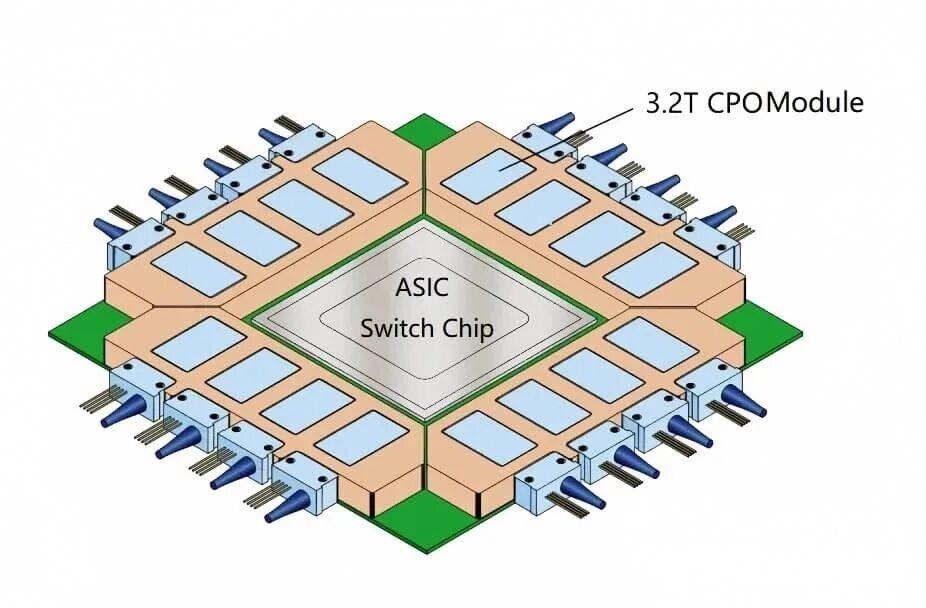
AI hyperscale data‑center expansion has exploded demand for high‑speed optical interconnects, including 800G/1.6T transceivers, silicon photonics (SiPh) modules and Co‑Packaged Optics (CPO) products. Optical packaging has become the critical bottleneck slowing down mass deployment, far beyond simple temporary material stock‑outs.
Unlike conventional semiconductor packaging, photonic packaging demands sub‑micron precision for optical alignment between lasers, waveguides, fiber arrays and photodetectors. Nanometer‑level misalignment causes extra coupling loss and invalidates finished modules, pushing yield and volume‑scaling challenges to manufacturers.
Three root‑causes drive the ongoing stage‑wise supply shortage:
Key component concentration risk: Core parts such as EML lasers, WDM filters, high‑precision ceramic ferrules are concentrated among very few global vendors. Lead‑times frequently stretch to 12‑24 weeks under peak AI‑driven demand.
Advanced packaging capacity competition: CPO and heterogeneous photonic integration compete for limited 2.5D/3D packaging resources together with high‑performance AI chips, creating capacity pre‑allocation pressure for small‑to‑mid‑size customers.
Low mass‑production yield barriers: Active optical alignment remains slow‑cycle. Passive alignment manufacturing workflows are still maturing, restricting fast capacity ramp‑up even when wafer input is sufficient.
Project teams frequently face staggered, stage‑by‑stage shortages: wafer substrate delays first, then assembly capacity crunches, followed by testing bottlenecks, instead of one‑time complete stock‑out. This phased shortage pattern makes traditional inventory buffering less effective.
Why the Shortage Is Happening: The Perfect Storm in 5 Acts
Act 1: AI Data Centers Are Eating the Supply Chain
AI clusters consume several times more fiber per project than traditional enterprise data centers. 800G and early 1.6T optical modules are pulling demand forward at a 2.6x annual growth rate for InP-based devices. n Every GPU rack needs optical interconnects. Every optical interconnect needs a transceiver. Every transceiver needs alignment during assembly. The math is brutal.
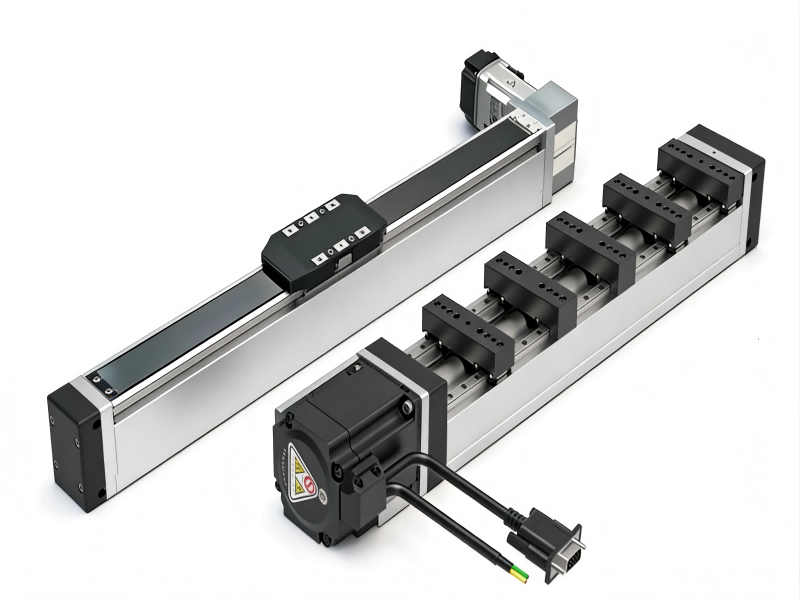
CPO integrates optics directly onto switch ASICs, requiring multichannel fiber array https://hcyautomation.com/product-category/linear-motion-module/precision-linear-stages/alignment instead of single-fiber coupling. A single CPO engine may have 16, 32, or 64 optical channels. Aligning them all simultaneously demands 6-DOF stages with real-time optical feedback — the most supply-constrained category of equipment.
Act 3: Upstream Materials Are Constrained
Both EML and CW lasers rely on InP substrates, meaning diversifying from one laser type to the other does not escape the material bottleneck — it just redistributes it.
Meanwhile, mSAP (modified semi-additive process) PCBs — the exclusive substrate for 1.6T+ modules — face a three-year capacity crunch due to equipment delivery delays and yield optimization timelines.
Act 4: Equipment Itself Has Equipment Problems
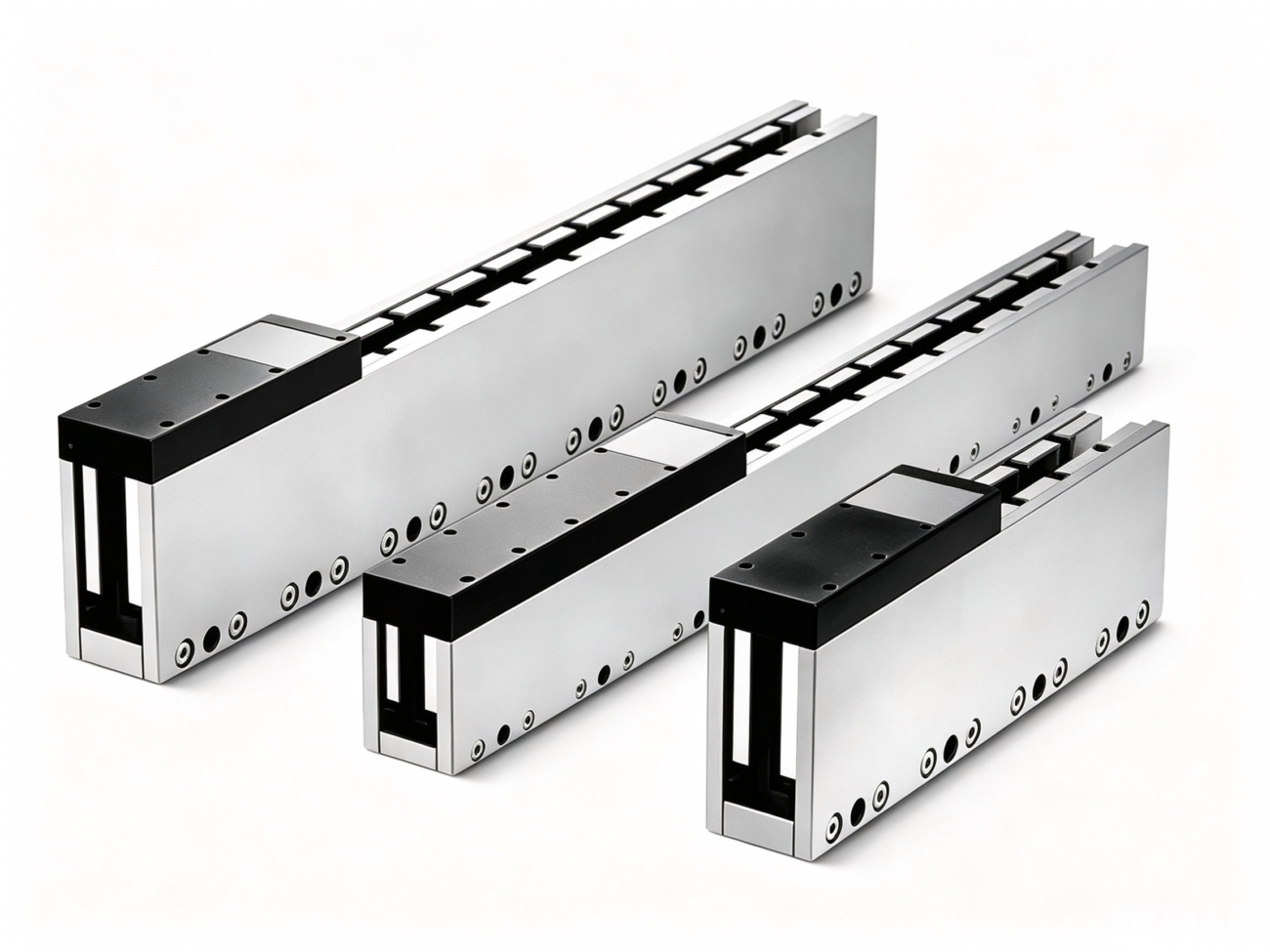
The specialized testing and characterization equipment for silicon photonics is limited, and the machines that make the alignment stages depend on the same rare-earth magnets, high-precision ball screws, and encoder components that are shared across semiconductor and automation industries. When AI server demand spikes, those shared components get allocated elsewhere.
Act 5: The Talent Gap
The photonics industry faces a critical shortage of skilled personnel with expertise in both optics and semiconductor manufacturing. Without enough technicians to operate, maintain, and calibrate alignment equipment, even installed capacity sits underutilized.
7 Battle-Tested Solutions to the Optical Packaging Stage Shortage
Solution 1: Deploy Active Alignment Automation — From Minutes to Seconds
The traditional approach to multichannel CPO alignment is painstakingly slow. A collaborative solution developed by Aerotech, Santec, and Senko — called PICAlign™ — combines high-precision motion control with real-time optical instrumentation to reduce fiber array alignment time from minutes to mere seconds.
What this means for you: If you are still aligning CPO channels manually or with legacy semi-automated stages, you are not just slow — you are burning throughput capacity that your competitors are capturing with automated platforms.
Action item: Audit your current alignment cycle time. If a single CPO engine takes more than 30 seconds for full array optimization, you are a candidate for automation upgrade.
Solution 2: Optimize Passive Alignment — When Active Is Overkill
Not every application needs active alignment. A novel V-groove passive alignment methodology — optimizing UV glue dispensing position, lid bonding location, and end separation control — has demonstrated coupling loss improvement from 11.46 dB to 2.68 dB, a 50–70% efficiency gain over prior passive methods.
When to use it: Mid-volume 10G/25G/100G transceivers, cost-sensitive PON modules, and applications where ±1 µm tolerance is acceptable. Passive alignment eliminates the need for motorized stages, power meters, and feedback loops — freeing up scarce active alignment capacity for high-margin 800G/1.6T products.
Action item: Segment your product portfolio. Route low-precision, high-volume SKUs to optimized passive alignment lines. Reserve active alignment for premium CPO and silicon-photonics products.
SENKO’s latest detachable connectors enable “plug-and-play” capability at the chip level. Unlike traditional permanent fiber pigtailing, modularity allows for:
Wafer-level testing without committing expensive optical engines to permanent assembly
Field replaceability — a failed connector can be swapped without scrapping the entire module
Supply chain decoupling — connectors and alignment stages can be sourced from different vendors
Action item: Evaluate whether your current transceiver design locks you into a single alignment-and-bonding workflow. A modular connector strategy can reduce alignment stage dependency by 30–50%.
Solution 4: Diversify Suppliers and Embrace Nearshoring
The Fiber Broadband Association’s supply chain white paper identifies supplier diversification and capacity build-out / nearshoring as top-tier mitigation strategies.
In practice, this means:
Dual-source critical stages: Qualify at least two vendors for every motorized and piezo alignment platform. If Vendor A quotes 20 weeks, Vendor B may have stock.
Regional inventory hubs: Work with suppliers that maintain finished-goods inventory in your region — not “available from factory” promises that translate to ocean freight delays.
Nearshore EMS partnerships: If your primary assembly is in China, qualify backup capacity in Vietnam, Thailand, or Mexico. The “China+N” strategy is not just geopolitical risk management — it is supply-chain resilience.
Action item: Map your alignment stage supply chain to Tier 2 (component) and Tier 3 (raw material) levels. Identify single-source dependencies and create a 90-day qualification plan for alternates.
Solution 5: Shift From Just-in-Time to Strategic Inventory
The era of lean, just-in-time (JIT) inventory is over for photonics equipment. Leading operators are now maintaining expanded safety stock of alignment stages, spare actuators, and controller modules.
The new rule: If a component has a lead time longer than your customer’s tolerance for delay, it is no longer a “just-in-time” item. It is a strategic inventory item.
Best practices:
ABC analysis: Classify alignment stages by criticality. A-items (piezo/6-DOF) get 6-month safety stock. B-items (motorized XYZ) get 3-month buffers.
Vendor-managed inventory (VMI): Negotiate consignment stock agreements where the supplier owns the inventory until you consume it.
Equipment pooling: For R&D and NPI environments, consider shared-equipment pools or lease-to-own models instead of capital purchases.
Solution 6: Close the Skills Gap — Build, Don’t Buy, Your Workforce
The photonics workforce shortage is structural, not cyclical. Research published in Applied Optics emphasizes that solving it requires strengthening community colleges’ links to universities and industry — and specifically targeting “adaptable middle-skilled labor.”
What works:
Equipment donation programs: Donate surplus or demo alignment stages to local community colleges and trade schools. You create a talent pipeline and a future customer base.
Internal certification programs: Train existing manufacturing technicians on photonics alignment fundamentals instead of waiting for external hires.
Cross-training: Semiconductor fab technicians can be upskilled to operate optical alignment equipment in 4–8 weeks with structured curricula.
Action item: Partner with one local technical institution this quarter. Offer a guest lecture, equipment tour, or curriculum review. The ROI on talent pipeline development compounds over 3–5 years.
Solution 7: Drive Standardization and Open Platforms
The lack of standardization in silicon photonics manufacturing is a hidden tax on the entire industry. Unlike electronic ICs, photonics lacks unified design rules, process parameters, and packaging interfaces.
The fix:
Adopt open standards for optical connector interfaces, alignment stage command protocols, and PIC test fixtures.
Demand interoperability from your equipment vendors. A stage that speaks only proprietary code locks you into a single supplier — and their lead times.
Participate in industry consortia like the IEEE Photonics Society, OIF (Optical Internetworking Forum), and regional photonics clusters to push for standardization roadmaps.
Action item: Add “open API / standardized command set” to your alignment stage RFQ checklist. Reject vendors that cannot provide Python, LabVIEW, and REST API interfaces.
Your 90-Day Action Plan: From Crisis to Control
Timeline
Action
Owner
Deliverable
Week 1–2
Audit current alignment stage inventory and lead times
Supply Chain
Gap analysis report
Week 3–4
Qualify 2nd-source vendors for top 3 stage SKUs
Procurement
Approved vendor list (AVL) update
Week 5–6
Segment product portfolio for passive vs. active alignment
Engineering
Routing decision matrix
Week 7–8
Pilot PICAlign™ or equivalent automated alignment on one line
Manufacturing
Cycle time reduction report
Week 9–10
Negotiate VMI or safety stock agreements with primary suppliers
Procurement
Signed contracts
Week 11–12
Launch internal technician upskilling program
HR / Engineering
Training curriculum v1.0
Frequently Asked Questions (FAQ)
What is causing the optical packaging stage shortage?
A perfect storm of AI-driven demand for 800G/1.6T transceivers, co-packaged optics (CPO) complexity, InP substrate constraints, mSAP PCB capacity bottlenecks, shared component competition with EV and industrial automation sectors, and a critical shortage of skilled photonics technicians.
For mid-volume, lower-precision applications (10G–100G, PON), optimized passive alignment can achieve acceptable coupling efficiency (2–4 dB loss) without motorized stages. For 800G/1.6T, CPO, and silicon photonics, active alignment remains mandatory. The smart strategy is segmentation: route products to the lowest-cost alignment method that meets spec.
What is the fastest way to reduce alignment cycle time?
Active alignment automation — specifically multichannel array alignment platforms like PICAlign™ — can reduce alignment time from minutes to seconds per device. For a production line running 500+ units per hour, this is the single highest-ROI upgrade available.
Should I stockpile alignment stages?
Yes — selectively. Move away from pure just-in-time inventory for A-critical items (piezo, 6-DOF, active workstations) with lead times exceeding 12 weeks. Maintain 3–6 months of safety stock or negotiate VMI agreements. For manual and basic motorized stages, standard JIT remains viable.
How do modular connectors help with the stage shortage?
Modular, detachable connectors allow wafer-level testing and field replacement without permanent bonding. This reduces the number of alignment operations per finished module and decouples your process from single-source alignment-bonding workflows.
Is nearshoring really necessary?
If your entire optical packaging capacity is concentrated in one region, you are one customs delay, tariff change, or logistics disruption away from a line shutdown. Nearshoring (Vietnam, Thailand, Mexico, Eastern Europe) adds redundancy. It is not about replacing your primary footprint — it is about survival insurance.
What role does workforce development play?
A stage sitting on your factory floor with no one qualified to operate it is just expensive sculpture. The photonics skills gap is projected to worsen as government localization initiatives expand. Proactive training — internal upskilling and community college partnerships — is a 3–5 year competitive moat.
How can I reduce optical packaging lead‑time risk?
Dual‑source suppliers, adopt mature packaging architectures, implement phased demand forecasting, and build early joint process collaboration with packaging manufacturers.
Is CPO packaging capacity shortage temporary?
Advanced CPO photonic packaging will remain tight through 2027‑2028 because capacity ramp‑up requires capital equipment investment and long‑time yield tuning. Transitional routes like LPO can ease short‑term pressure.
The Shortage Is Real, But Solvable
The optical packaging stage shortage is not a temporary blip. It is a structural consequence of the AI revolution colliding with a supply chain built for a slower, simpler era. The companies that thrive in 2026 and beyond will not be the ones with the best technology alone — they will be the ones that:
Automate alignment to multiply throughput
Optimize passive alignment to conserve active capacity
Modularize designs to reduce stage dependency
Diversify suppliers and regionalize capacity
Stock strategically instead of praying for JIT miracles
Train technicians faster than the competition
Standardize to avoid vendor lock-in
The shortage is the problem. These seven solutions are the playbook. The only question is whether you execute before your competitors do.
HCY Automation delivers integrated solutions across motion control, linear motion, robotics, machine vision, pneumatic systems, and precision gearboxes to help global manufacturers build smarter, faster, and more reliable production lines. Our engineering team helps you select and integrate the right motion control, robotics, and automation components for your specific application.