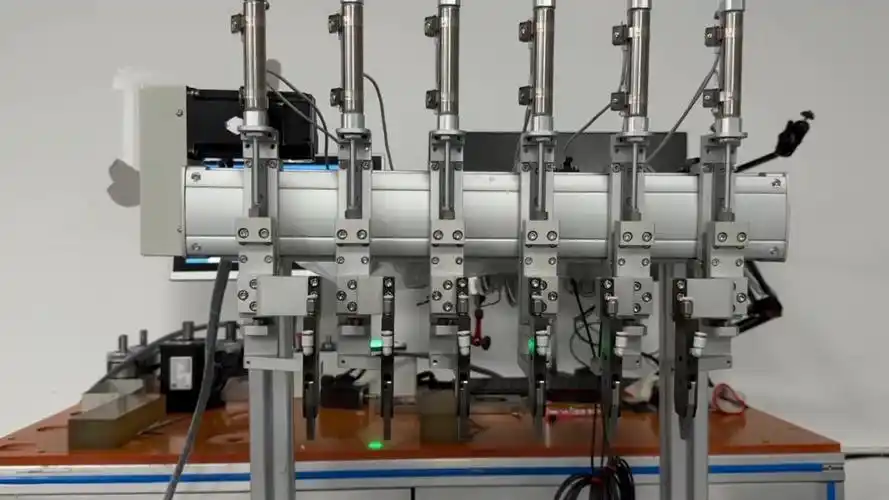
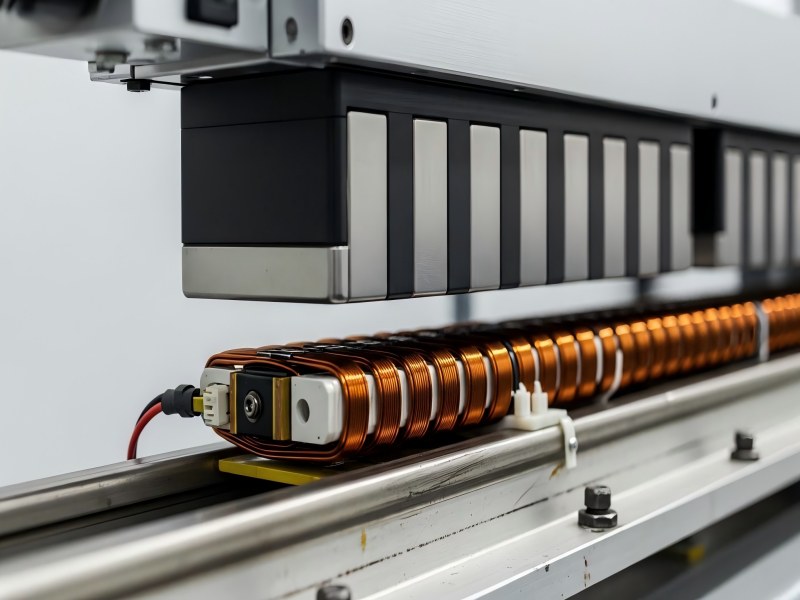
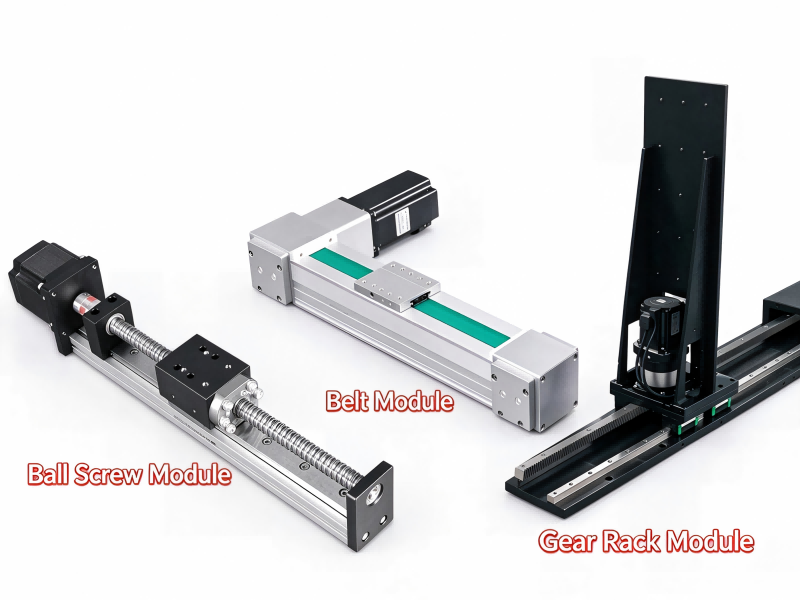
In automated assembly and material handling, it is common to pick several parts at the same time and then change their spacing before placing them into the next station. A variable pitch module are widely used in custom automation equipment for multiple products, pick-and-place, assembly, packaging and product spacing. Explore 6 common variable pitch mechanisms, their applications and advantages. Instead of moving every part individually, the module changes the center-to-center distance of multiple grippers, suction cups or fixtures in one coordinated motion. the variable pitch mechanism can also be integrated with a linear motion system or linear actuator to complete spacing adjustment, positioning and product transfer within the same machine cycle.
The incoming parts may have a 20 mm pitch, for example, while the assembly fixture requires 40 mm. In another application, the parts may need to move from a compact arrangement into a larger tray, or from a single row into a two-dimensional array.
Depending on the product layout and required movement, variable pitch mechanisms can be built in several different ways. The following are six structures commonly used in automation equipment.
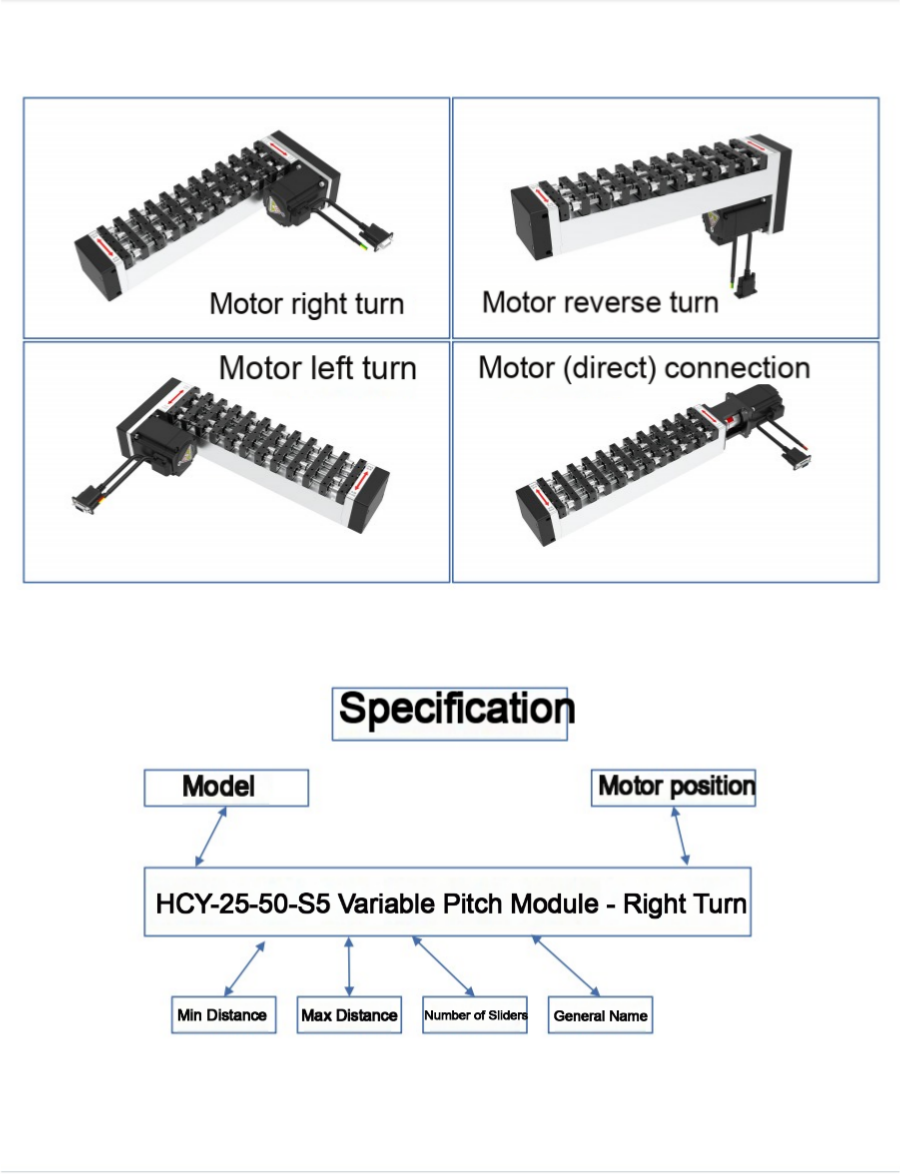
1. Equal-Pitch Variable Pitch Module
This is the most common type of variable pitch module.
During movement, the center distance between adjacent positions remains equal. The entire group expands or contracts together.
For example:
20-20-20-20 mm → 40-40-40-40 mm
The actual pitch can be designed according to the product and fixture requirements. For this reason, this type is also commonly used when adjustable or continuously variable spacing is required.
The structure is relatively straightforward and is suitable for applications where multiple products are arranged at the same pitch.
Typical applications include:
- Multi-part pick and place
- Tray loading and unloading
- Packaging equipment
- Automated assembly
- Injection molded part handling
- Electronics manufacturing
- Battery production
If all parts need to move from one equal spacing to another equal spacing, this is usually the first structure to consider.
2. Unequal-Pitch Variable Pitch Module
Some products are not arranged at equal distances in the final fixture.
For example, four parts may initially be positioned at the same pitch, but the target positions could be:
30 mm / 45 mm / 70 mm
In this case, an equal-pitch mechanism cannot achieve the required final positions.
An unequal-pitch module is designed according to the actual center positions of each station. Each gripper or fixture can therefore reach its specified position after the pitch-changing movement.
This structure is more application-specific.
For design evaluation, we normally need a 2D drawing showing:
- Initial center positions
- Final center positions
- Number of stations
- Product dimensions
- Required movement
- Available installation space
The mechanism can then be designed according to these coordinates.
Unequal-pitch modules are useful for special trays, irregular fixtures and assembly processes where the product positions are determined by the downstream equipment.
3. Rotary Variable Pitch Module
A linear pitch change is not always enough.
In some machines, the product or gripper also needs to change its angular position during the spacing adjustment.
A rotary variable pitch module combines these two movements.
The cam shaft or central mechanism remains fixed while the external structure and tooling positions rotate according to the designed trajectory. This allows the grippers to reach a specified spacing at a specified angle.
This type of mechanism can be used when the process requires both:
Pitch change + angular positioning
Typical applications include rotary assembly machines, circular product layouts, packaging equipment and special-purpose assembly systems.
The main advantage is that the required angular and spacing movements can be incorporated into one mechanical structure instead of using separate mechanisms.
4. Roller-Type Variable Pitch Module
The roller-type structure uses a different transmission principle.
The outer shaft sleeve can be designed as a hollow structure. Follower bearings move along grooves machined into the center shaft, while a belt or other drive mechanism rotates the external structure.
As the bearing follows the groove, the rotational movement is converted into the required displacement of each station.
In simple terms:
Rotary input → bearing follows groove → controlled pitch movement
The movement of each station is determined by the groove profile.
This structure is suitable for applications requiring repeated and synchronized mechanical movement. Once the motion path has been determined, multiple positions can operate according to the designed mechanical relationship.
It can be used in high-cycle assembly, packaging, sorting and other repetitive handling applications.
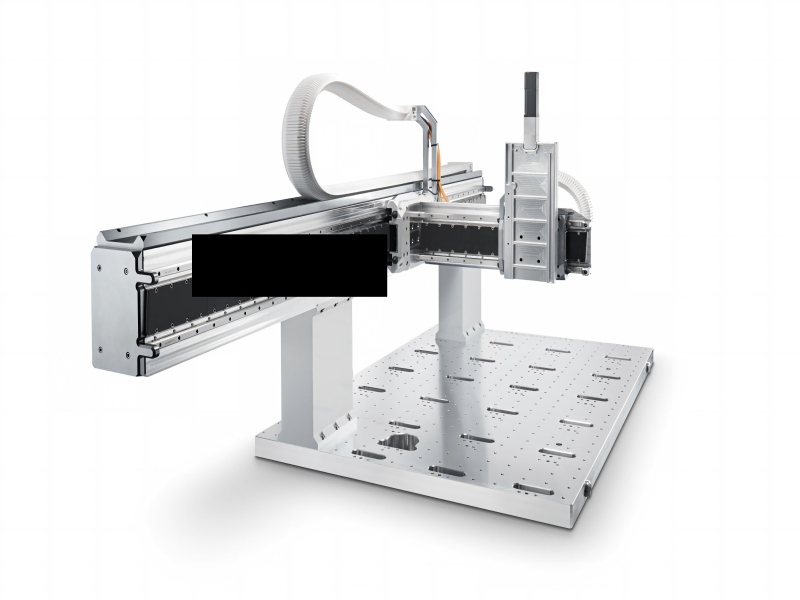
5. Variable Pitch and Transfer Integrated Module
In many machines, changing the product spacing is only one part of the operation.
The products also need to be moved from the pickup position to the next station.
Instead of using one mechanism for pitch adjustment and another mechanism for transfer, the two functions can be integrated into one assembly.
A typical sequence is:
Pick → Change Pitch → Transfer → Place
This reduces the number of separate mechanisms required inside the machine and can make the overall layout more compact.
The structure is particularly useful in applications such as:
- Automated loading and unloading
- Tray handling
- Packaging lines
- Assembly machines
- Injection molding automation
- Multi-part transfer systems
Whether the two movements should be integrated depends on the cycle time, travel distance, load and available machine space.
For some applications, separate axes are more practical. For others, combining transfer and pitch adjustment can simplify the machine considerably.
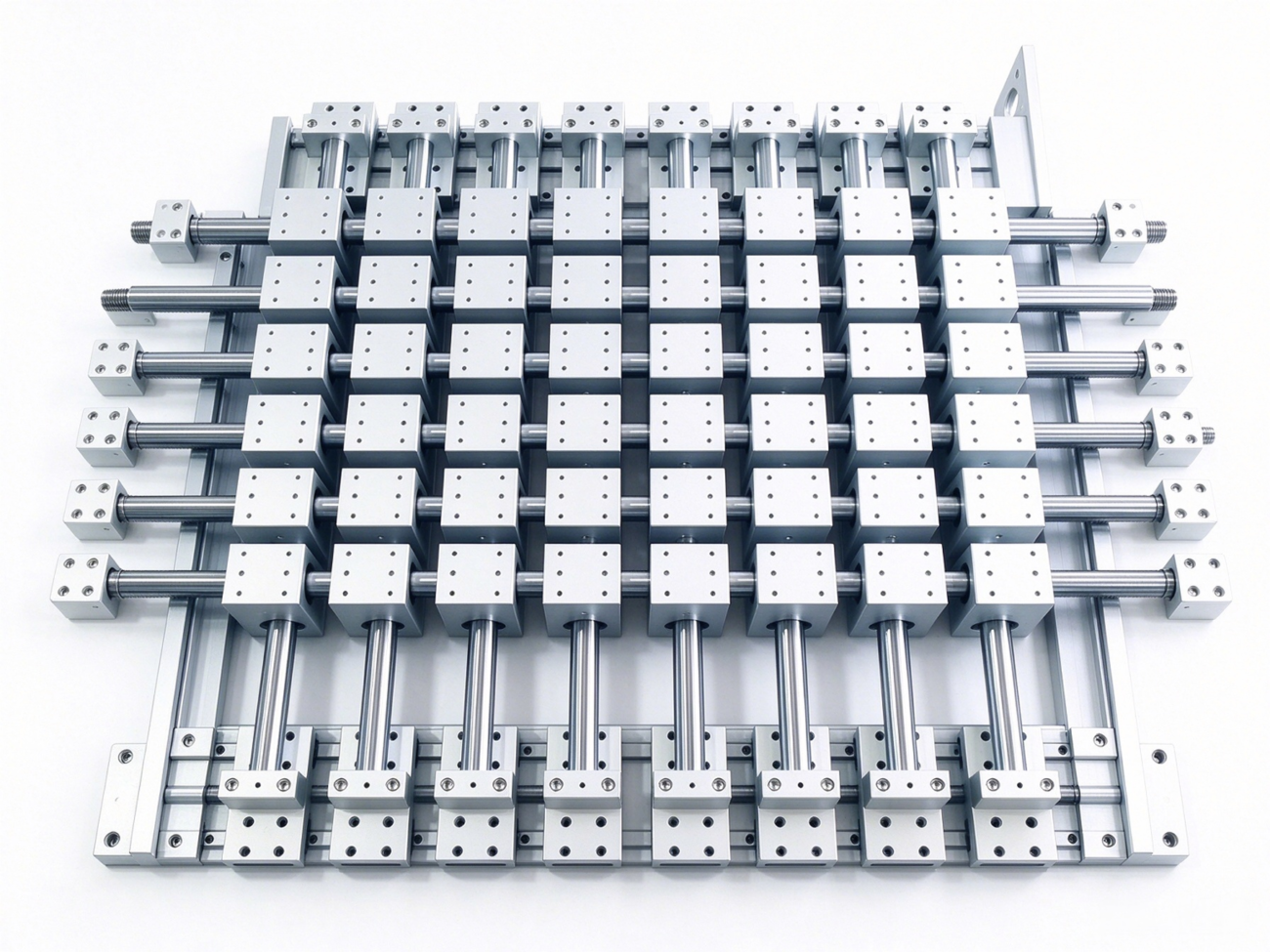
6. XY Two-Directional Variable Pitch Module
A conventional variable pitch module normally changes spacing along one axis.
For products arranged in rows and columns, however, spacing may need to change in both the X and Y directions.
An XY variable pitch system can be built by combining multiple pitch-changing mechanisms. Depending on the design, the intermediate sections can be connected using bushings or linear bearings so that the complete array expands or contracts in two directions.
For example, a compact product array can be changed into a larger array:
X direction: 20 mm → 40 mm
Y direction: 25 mm → 50 mm
This is useful when several products need to be picked from one matrix layout and placed directly into another.
Typical applications include battery components, electronic parts, medical consumables, molded plastic parts, packaging products and other multi-cavity layouts.
The main benefit is that an entire product array can be repositioned together rather than moving each part separately.
How Do We Select the Right Structure?
There is no single variable pitch structure that is suitable for every machine.
The first thing we normally look at is not the module itself, but the product positions before and after movement.
For a new application, the following information is particularly useful:
Product size and weight
Number of positions
Initial center distance
Final center distance
Equal or unequal spacing
Required stroke
Cycle time
Installation space
Gripping method
Required positioning accuracy
For an unequal-pitch or XY application, a simple 2D drawing showing the initial and final center coordinates is usually the clearest way to communicate the requirement.
Once these parameters are known, we can determine the appropriate mechanical structure, guide arrangement, drive method and tooling interface.
Why Variable Pitch Modules Are Useful in Automation
The main purpose of a variable pitch module is simple: match the product spacing between two different processes.
But in an actual automation machine, this can eliminate several unnecessary handling steps.
Instead of:
Pick → Place → Reposition → Pick Again → Transfer → Place
the process may be simplified to:
Pick → Change Pitch → Place
For multi-position handling, the difference becomes more significant because several products can be repositioned at the same time.
Variable pitch mechanisms are therefore commonly considered when designing automated assembly, robotic handling, tray loading, packaging and other multi-part handling systems.
The final design, however, should always follow the actual product and process rather than forcing a standard module into an unsuitable application.
Custom Multi-Position Modules from HCY Automation
HCY Automation provides custom multi-position modules and variable pitch mechanisms for different automation applications.
We can customize the number of stations, initial and final pitch, movement direction, module size, tooling interface and drive arrangement according to your specific requirements.
Solutions can include equal-pitch, unequal-pitch, rotary, roller-type, pitch-and-transfer integrated, XY two-directional and other customized multi-position mechanisms.
If you have a project that requires multiple products to be picked, spaced, transferred or repositioned at the same time, send us your product drawing, dimensions, initial and final positions, cycle time and application requirements.
Tell us what the products need to do, and we can discuss the right multi-position module for your machine.
Contact HCY Automation to discuss your custom application.