How Does Variable Pitch Module Work? Types, Design & Applications
Learn how variable pitch modules and grippers work, including cam, timing belt, linkage, screw and servo-driven designs for pick-and-place, battery, semiconductor and packaging automation.
In modern automation, picking up multiple parts is often easy. The real challenge is what happens next.
Imagine a robotic gripper picking eight components from a tray where each part is spaced 20 mm apart. The next process, however, requires those same components to be positioned 40 mm apart.
A conventional fixed-pitch gripper cannot make that spacing change automatically.
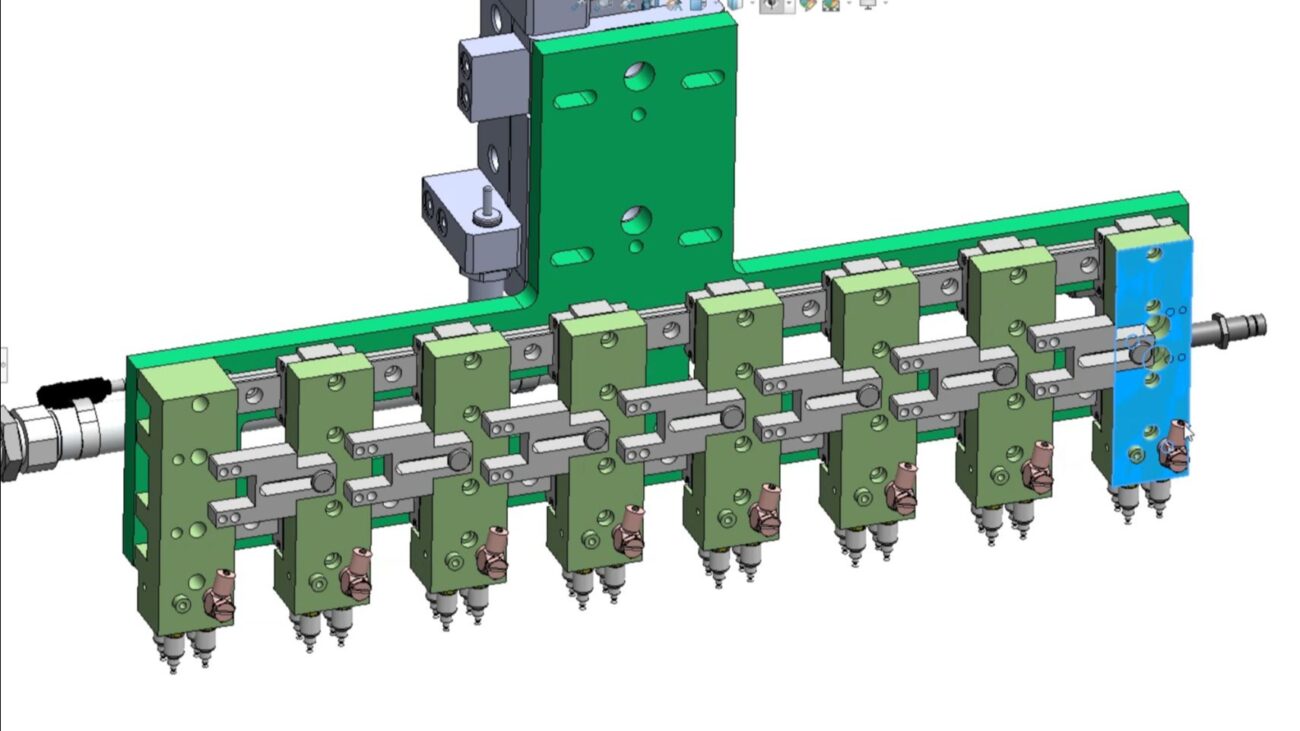
Instead of using a separate actuator for every gripper, a variable pitch mechanism can expand or reduce the spacing between multiple grippers, suction cups, fixtures, inspection heads, or other end effectors in a coordinated motion.
This capability makes Pitch Changer Automation increasingly useful in robotic pick-and-place systems, battery manufacturing, electronics assembly, semiconductor handling, packaging machines, tray loading, inspection equipment, and flexible automation lines.
So how does a variable pitch module actually work?
This guide explains the operating principle, common mechanical designs, servo control, accuracy considerations, applications, selection criteria, and the differences between cam, timing-belt, linkage, and screw-driven variable pitch systems.
What Is a Variable Pitch Module?
A variable pitch module, also called a pitch-changing module, adjustable pitch module, variable pitch gripper mechanism, or pitch adjustment mechanism, is a mechanical system designed to change the distance between two or more moving stations.
Those stations may carry:
Vacuum suction cups
Pneumatic grippers
Mechanical fingers
Inspection probes
Dispensing heads
Battery handling tools
Semiconductor handling tools
Assembly fixtures
Product carriers
The fundamental purpose is simple:
Pick at one pitch → change the spacing → place at another pitch.
For example:
20 mm pitch → 40 mm pitch
or
100 mm pitch → 50 mm pitch
A more advanced system may support several programmed spacing configurations instead of only two fixed positions.
This is especially valuable in flexible manufacturing because the pitch of incoming products frequently does not match the pitch required by the next process.
How Does a Variable Pitch Module Work?
At its most basic level, a variable pitch module converts actuator motion into a controlled relative displacement between multiple sliders.
A typical system contains four functional elements:
1. Drive System
The drive provides the energy required to change pitch.
Common drive sources include:
Servo motors
Stepper motors
Pneumatic cylinders
Electric cylinders
Ball screws or lead screws
Servo motors are especially useful when the pitch needs to be electronically adjustable.
2. Pitch-Changing Mechanism
This is the mechanical heart of the system.
Depending on the design, it may use:
Cam grooves
Timing belts and pulleys
Linkages
Scissor mechanisms
Lead screws
Ball screws
Differential motion mechanisms
The mechanism determines how actuator movement is distributed among the individual stations.
3. Linear Guide System
Precision linear guides and sliders constrain the moving stations so they travel along the intended direction.
Without adequate guidance, the system may experience:
Lateral movement
Vibration
Binding
Positioning errors
Uneven spacing
For this reason, guide rigidity and manufacturing accuracy are critical to overall variable pitch performance.
4. Position Feedback and Control
Advanced variable pitch systems may use:
Servo encoders
Optical sensors
Proximity sensors
Limit switches
Linear encoders
Feedback allows the PLC or motion controller to verify position and coordinate the pitch-changing movement with the rest of the automation cycle.
A Simple Variable Pitch Motion Example
Consider a robotic end-of-arm tool equipped with six suction cups.
The robot picks six electronic components from a tray at a pitch of:
30 mm
The assembly fixture requires:
50 mm
During the transfer cycle, the variable pitch module expands the six suction cups simultaneously.
The process becomes:
Pick at 30 mm → Expand → Reach 50 mm → Place
The robot therefore does not need to place the parts individually.
This is one of the main reasons variable pitch tooling can improve throughput in multi-part handling applications.
5 Common Types of Variable Pitch Mechanisms
There is no single mechanical architecture used by every variable pitch module.
The correct mechanism depends on speed, payload, pitch range, positioning accuracy, available installation space, cycle life, and whether the pitch needs to be programmable.
1. Cam-Groove Variable Pitch Mechanism
The cam-groove mechanism is one of the most common approaches for synchronized multi-position pitch adjustment.
A plate or cylindrical cam contains specially designed grooves.
Each moving slider contains a cam follower that travels inside one of these grooves.
When the cam plate moves—or when a cylindrical cam rotates—the followers are forced along their respective paths.
As a result, the sliders move closer together or farther apart.
Why Cam Mechanisms Work Well
The motion relationship is mechanically encoded into the cam geometry.
One actuator can therefore control several stations simultaneously.
Advantages can include:
Compact structure
Synchronized movement
High cycle speeds
Repeatable mechanical motion
One actuator for multiple stations
The main limitation is flexibility.
Once a mechanical cam profile has been manufactured, its fundamental motion relationship is largely fixed.
Changing the required pitch range or motion relationship may require a different cam or mechanical redesign.
Best Applications
Cam variable pitch mechanisms are particularly suitable for:
High-volume production
Repetitive pick-and-place
Packaging machinery
Electronics handling
Fixed product families
High-speed cyclic automation
2. Timing-Belt Variable Pitch Mechanism
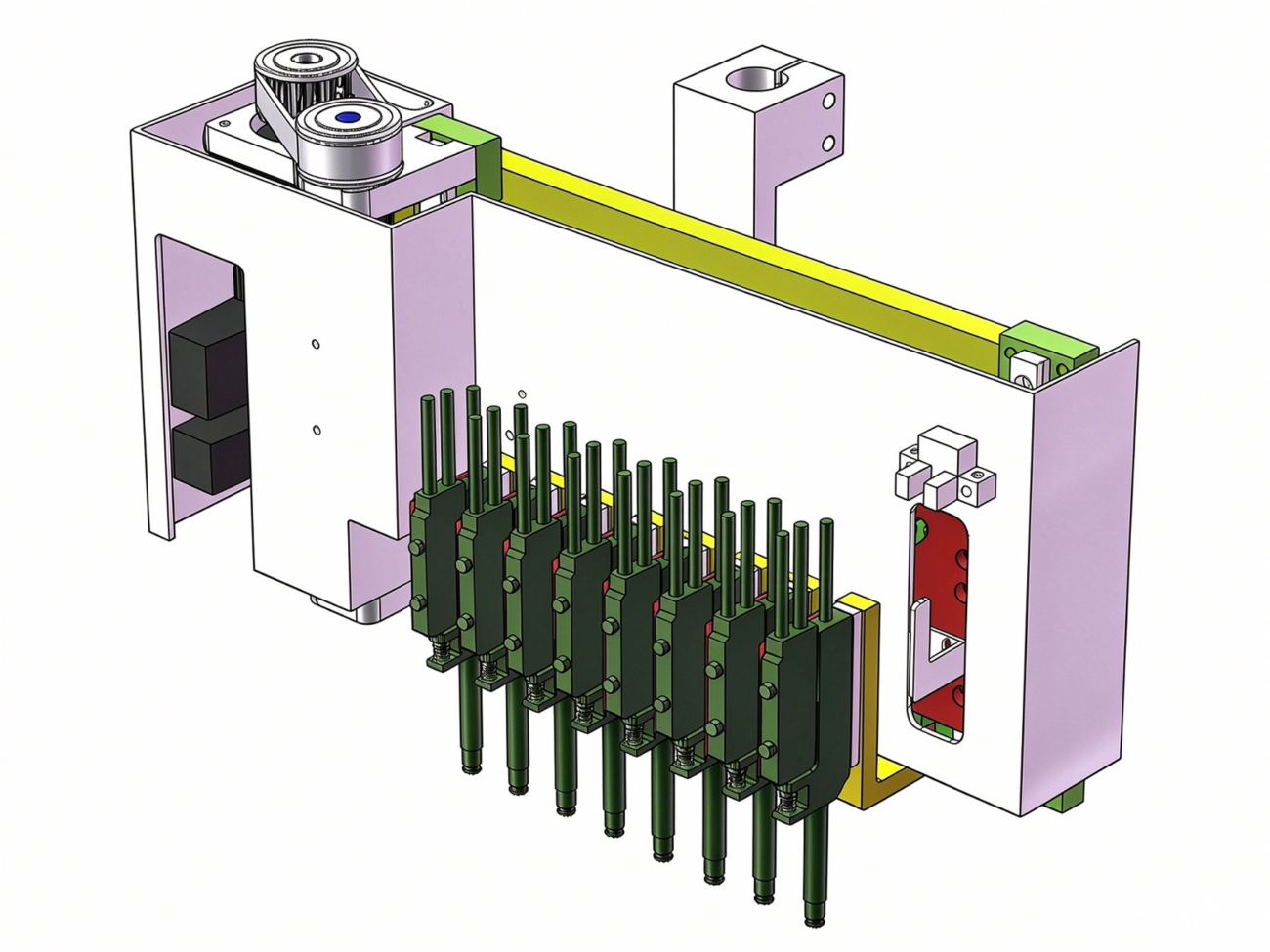
A timing-belt variable pitch system uses toothed belts and pulleys to distribute motion between multiple sliders.
Because the timing belt engages mechanically with the pulley teeth, the system can transmit motion without the intentional slip associated with ordinary friction belt drives.
By arranging pulleys, belt paths, attachment points, and transmission ratios appropriately, one drive can generate coordinated movement across several positions.
Servo-driven timing-belt mechanisms can also provide electronically controlled pitch adjustment.
Advantages
High operating speed
Relatively simple construction
Low moving mass
Quiet operation
Good synchronization
Suitable for long strokes
Cost-effective for many automation applications
Limitations
Belt tension, belt elasticity, pulley quality, bearing condition, and assembly tolerances can affect long-term positioning performance.
For high-precision applications, proper tensioning and maintenance are therefore important.
Best Applications
Timing-belt variable pitch modules are widely suited to:
Packaging automation
Pick-and-place machines
Electronics assembly
Tray loading
Material handling
High-speed lightweight applications
3. Linkage or Scissor-Type Variable Pitch Mechanism
A linkage-based variable pitch mechanism uses interconnected arms to expand or contract several stations simultaneously.
The principle is similar to a pantograph or scissor mechanism.
When the center or end of the linkage is driven, the geometry causes the connected sliders to move together.
This creates symmetrical pitch expansion or contraction.
Advantages
One actuator can move many stations
Compact collapsed dimensions
Large expansion ratio
Naturally synchronized movement
Relatively simple mechanical principle
Limitations
Linkages contain multiple joints.
Clearance and wear at those joints can influence accuracy over time, particularly in applications requiring very high positioning precision.
Best Applications
Linkage variable pitch mechanisms work well for:
Multi-gripper EOAT
Packaging
Sorting systems
Tray transfer
Medium-accuracy pick-and-place
Applications requiring a large pitch expansion ratio
4. Screw-Driven Variable Pitch Mechanism
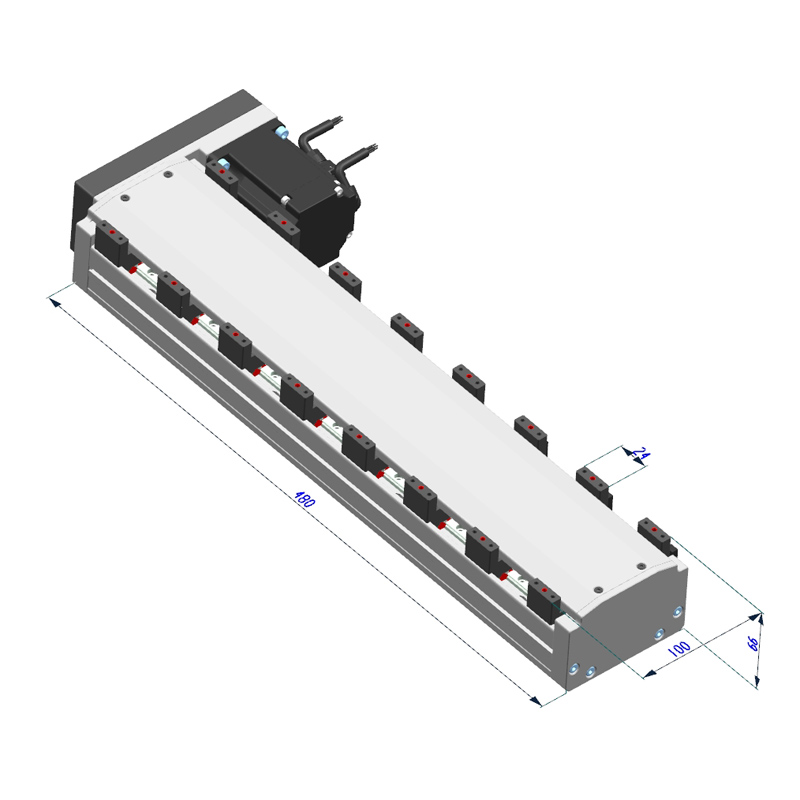
Screw-driven systems convert rotary motor motion into controlled linear displacement.
A common example is a left-hand/right-hand screw arrangement.
When the screw rotates, two nuts move in opposite directions.
One moves left while the other moves right.
The result is symmetrical opening or closing around a center point.
Advantages
High rigidity
Good positioning accuracy
Strong load capacity
Precise motion control
Excellent holding capability
Limitations
Compared with lightweight belt or cam mechanisms, screw systems may have:
Higher moving inertia
Lower maximum cycle speed
More complex lubrication requirements
Higher cost
Best Applications
Screw-driven variable pitch modules are well suited to:
Precision assembly
Inspection equipment
Higher-load applications
Precision positioning
Battery production equipment
Semiconductor equipment where the specific system design permits
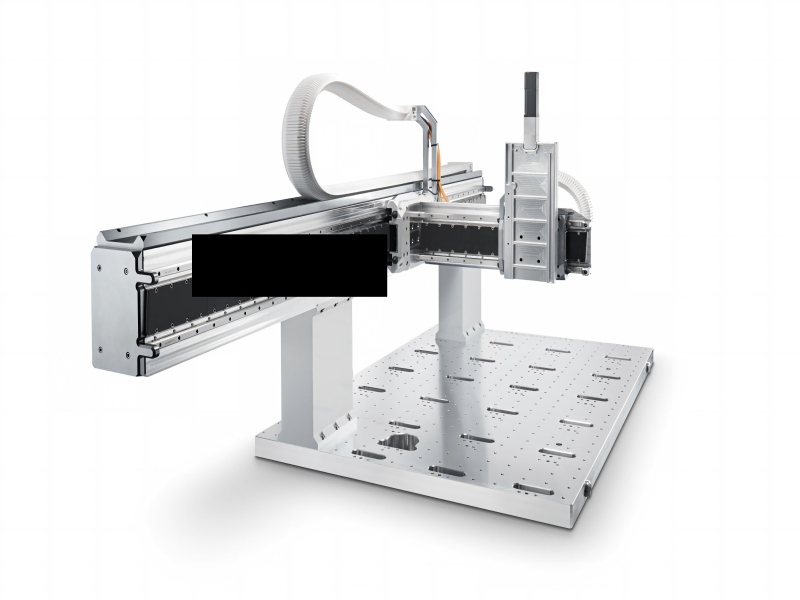
5. Servo-Programmable Variable Pitch System
For flexible manufacturing, servo-controlled variable pitch systems provide another major advantage:
The pitch can be changed through software.
Instead of relying exclusively on fixed mechanical stops, the servo motor moves to programmed positions defined by a PLC or motion controller.
For example:
Product A: 30 mm pitch
Product B: 42 mm pitch
Product C: 55 mm pitch
Product D: 70 mm pitch
The operator can select the product recipe, and the machine automatically adjusts the pitch.
Electronic and programmable pitch control has been used in variable-pitch pick-and-place systems to provide adjustable positioning without relying only on fixed mechanical stops.
Advantages
Programmable pitch
Fast product changeover
Multiple recipes
Closed-loop position feedback
Easy integration with PLCs
Suitable for flexible manufacturing
Limitations
The additional flexibility comes with:
Higher initial cost
More complex controls
Greater commissioning requirements
More demanding servo tuning
Cam vs Timing Belt vs Servo: Which Variable Pitch Mechanism Is Better?
There is no universally “best” design.
The right architecture depends on the application.
Mechanism
Speed
Precision Potential
Flexibility
Load Capability
Typical Cost
Best For
Cam Groove
High
High
Low–Medium
Medium
Medium
High-speed repetitive production
Timing Belt
High
Medium–High
Medium–High
Medium
Low–Medium
Fast pick-and-place
Linkage/Scissor
High
Medium
Low–Medium
Medium
Low–Medium
Large synchronized expansion
Screw Drive
Medium
High
High
High
Medium–High
Precision and heavier loads
Servo-Programmable
Medium–High
High
Very High
Depends on transmission
High
Flexible manufacturing
The mechanism should therefore be selected around the production requirement rather than a single specification.
Is a Cam Variable Pitch Mechanism More Durable Than a Timing-Belt System?
This is a common engineering question.
The answer depends heavily on the operating conditions.
A properly designed cam mechanism can offer excellent cycle life because the pitch relationship is mechanically constrained.
However, the cam follower, groove surface, bearings, lubrication, acceleration, and contact stresses all affect service life.
Timing-belt systems eliminate some sliding contact but introduce other wear factors, including:
Belt fatigue
Tooth wear
Belt tension changes
Pulley alignment
Bearing wear
For extremely repetitive high-speed motion with a fixed pitch relationship, a properly engineered cam system can be very attractive.
For applications requiring easier adjustment, longer travel, or programmable operation, a timing-belt or servo-based system may provide greater flexibility.
Durability should therefore be evaluated using:
load + acceleration + cycle rate + duty cycle + lubrication + environment + maintenance, rather than mechanism type alone.
How Accurate Is a Servo-Driven Variable Pitch Module?
A servo motor by itself does not determine the final positioning accuracy.
This is an important distinction.
System accuracy depends on the complete mechanical chain:
Servo motor → transmission → pitch mechanism → linear guide → tooling → workpiece
Potential error sources include:
Gear or screw backlash
Belt elasticity
Cam machining error
Bearing clearance
Guide accuracy
Structural deformation
Assembly tolerances
Thermal expansion
Tooling deflection
Payload variation
The servo encoder may detect motor position extremely accurately while the actual gripper position still contains mechanical error.
For this reason, buyers should not evaluate a variable pitch module only by servo encoder resolution.
Ask instead for:
Positioning accuracy
Repeatability
Pitch accuracy
Backlash
Payload at rated speed
Maximum acceleration
Cycle-life test data
These specifications provide a much more realistic picture of system performance.
Why Variable Pitch Modules Matter in Flexible Automation
Modern manufacturing is moving away from equipment designed for only one product.
Factories increasingly need to produce multiple SKUs using the same automation line.
A fixed mechanical gripper may require tooling changes whenever product dimensions change.
A programmable variable pitch system can reduce that requirement.
Select recipe → Automatically adjust pitch → Start production
This is especially valuable in industries with frequent product changes.
Variable Pitch Modules in 3C Electronics Manufacturing
Consumer electronics manufacturing requires extremely fast handling of small, lightweight, and often delicate components.
Typical applications include:
Smartphone components
Camera modules
Connectors
Small PCB assemblies
Electronic housings
Precision molded components
A multi-position variable pitch gripper can pick several components simultaneously and rearrange their spacing before assembly or inspection.
Important requirements include:
Compact dimensions
Low vibration
Low moving mass
High repeatability
Fast acceleration
Short changeover time
Because electronics products change rapidly, programmable pitch adjustment can also help equipment builders support multiple product generations using the same automation platform.
Variable Pitch Modules in EV Battery and Lithium-Ion Battery Manufacturing
Battery manufacturing is another important application.
Different battery cells, modules, trays, inspection fixtures, and assembly stations may use different center-to-center spacing.
A variable pitch system can carry several:
Grippers
Vacuum cups
Inspection probes
Electrical test contacts
Positioning fixtures
and adjust their spacing simultaneously.
This can support operations such as:
Cell handling
Module assembly
Battery tray loading
Inspection
Sorting
Transfer between process stations
Battery production equipment often operates at high duty cycles, making reliability, lubrication, rigidity, contamination control, and preventive maintenance especially important.
Variable Pitch Modules in Semiconductor Automation
Semiconductor and precision electronics handling present another set of challenges.
Products may be small, fragile, contamination-sensitive, and high-value.
Variable pitch mechanisms can be used to transfer components between carriers or process stations with different spacing.
Possible applications include:
Package handling
Tray-to-tray transfer
Inspection
Sorting
Test handling
Precision pick-and-place
For clean manufacturing environments, the design may require special attention to:
Particle generation
Lubricant selection
Surface treatment
Cable management
Wear debris
Cleanroom-compatible components
A standard industrial module should not automatically be assumed to be cleanroom compatible. Cleanroom suitability needs to be verified for the specific product and required cleanliness class.
Variable Pitch Modules in Packaging Machines
Packaging lines frequently process multiple product sizes.
Different products may require different spacing during:
Feeding
Grouping
Cartoning
Tray loading
Case packing
Sorting
Robotic pick-and-place
A variable pitch mechanism allows multiple products to be collected at one spacing and released at another.
For high-speed packaging applications, designers generally prioritize:
Low moving mass
High acceleration
High cycle life
Fast pitch adjustment
Reliable synchronization
Easy maintenance
Timing-belt, cam, and linkage mechanisms are therefore commonly considered depending on the required motion profile.
How to Select a Variable Pitch Module
Choosing a variable pitch module based only on maximum stroke or advertised accuracy is a mistake.
The complete operating condition should be considered.
Before requesting a quotation, define the following:
Number of Stations
How many grippers, suction cups, or tooling positions need to move?
Minimum Pitch
What is the smallest required center-to-center distance?
Maximum Pitch
What is the largest required center-to-center distance?
Payload
Calculate both:
Payload per slider
Total moving mass
Remember to include tooling mass.
Required Accuracy and Repeatability
Do not use “high precision” as the specification.
Define an actual tolerance.
Cycle Time
How quickly must the module move from minimum pitch to maximum pitch?
Duty Cycle
Will the system operate occasionally, one shift per day, or continuously?
Installation Space
Consider:
Module width
Height
Stroke envelope
Cable routing
Motor location
Maintenance access
Operating Environment
Specify whether the equipment will operate in:
General industrial environments
Cleanrooms
Dusty environments
High-humidity environments
Battery manufacturing areas
Food or pharmaceutical production
Control Requirements
Determine whether you need:
Two fixed pitch positions
Multiple mechanical positions
Continuously programmable pitch
PLC recipe control
Servo feedback
External position verification
These factors often determine the most appropriate mechanism.
Common Variable Pitch Module Selection Mistakes
Mistake 1: Assuming Higher Accuracy Is Always Better
Ultra-high accuracy usually increases cost.
If the process tolerance is ±0.2 mm, purchasing a system designed for a much tighter tolerance may provide little practical benefit.
Specify what the application actually requires.
Mistake 2: Looking Only at Purchase Price
Initial purchase cost is only part of total ownership cost.
Also consider:
Maintenance
Replacement parts
Downtime
Belt or bearing replacement
Lubrication
Calibration
Product scrap
Engineering support
A lower-cost mechanism that requires frequent maintenance may ultimately cost more than a properly engineered solution.
Mistake 3: Comparing Only Catalog Specifications
Two modules with similar catalog specifications may perform very differently under real dynamic loads.
Ask suppliers about testing conditions and whether published values apply at:
Full payload
Maximum speed
Maximum acceleration
Maximum extension
Mistake 4: Ignoring Moving Tool Mass
The module does not move only the product.
It may also move:
Grippers
Vacuum generators
Sensors
Brackets
Pneumatic fittings
Cables
All of this contributes to inertia.
Mistake 5: Ignoring Long-Term Repeatability
A new mechanism may perform well during initial testing.
The more important question for production equipment is:
Will it maintain acceptable pitch accuracy after millions of cycles?
This is why cycle-life testing and preventive maintenance planning matter.
Variable Pitch Module Maintenance
Even a precision variable pitch mechanism requires maintenance.
Keep Linear Guides Clean
Dust, debris, and manufacturing particles can increase wear and affect smooth motion.
Maintain Correct Lubrication
Follow the manufacturer’s specified grease or lubricant and service interval.
Avoid mixing incompatible lubricants.
Check Timing-Belt Tension
For belt-driven systems, inspect:
Belt tension
Tooth wear
Pulley alignment
Belt tracking
Inspect Cam Followers
For cam systems, monitor:
Follower bearings
Cam surface wear
Lubrication
Abnormal contact marks
Monitor Position Accuracy
Periodically verify actual gripper spacing against the commanded or nominal pitch.
Increasing error can indicate:
Bearing wear
Belt elongation
Loose fasteners
Guide wear
Backlash
Structural deformation
Predictive maintenance is much cheaper than discovering pitch error through rejected products.
Mechanical Variable Pitch vs Programmable Variable Pitch
One of the most important decisions is whether the application requires mechanically defined pitch or software-defined pitch.
Mechanical systems such as fixed cam profiles can be extremely effective when the machine repeatedly performs the same motion.
The mechanism itself defines the movement.
Programmable servo systems offer much greater flexibility.
The pitch can be stored as part of a product recipe and changed without replacing the main pitch-changing components.
Variable pitch technology is increasingly connected with broader trends in smart manufacturing.
Future systems are likely to combine mechanical pitch adjustment with:
Servo motion control
Machine vision
Robot motion planning
Automatic product recognition
Digital product recipes
Condition monitoring
Predictive maintenance
AI-assisted production optimization
Imagine a robotic handling cell where a vision system identifies the incoming product, the PLC loads the correct recipe, and the servo variable pitch gripper automatically adjusts its spacing before the robot reaches the placement station.
No manual pitch adjustment.
No dedicated tooling change.
No long setup procedure.
That is the direction flexible automation is moving toward.
Frequently Asked Questions About Variable Pitch Modules
What is a variable pitch module?
A variable pitch module is a mechanical or electromechanical device that changes the spacing between multiple grippers, suction cups, fixtures, or other moving stations. It is commonly used in automated pick-and-place, assembly, packaging, inspection, and material handling equipment.
How does a variable pitch gripper work?
A variable pitch gripper uses a mechanical transmission—such as a cam, timing belt, linkage, screw, or servo-controlled mechanism—to move several grippers closer together or farther apart while maintaining controlled positioning.
What is the difference between a fixed-pitch and variable-pitch gripper?
A fixed-pitch gripper maintains the same spacing between gripping positions. A variable-pitch gripper can change that spacing during the machine cycle, allowing products to be picked at one pitch and placed at another.
Which is better: cam or timing-belt variable pitch?
Cam systems are attractive for fast, repetitive motion with a well-defined pitch relationship. Timing-belt systems can provide high speed, relatively low moving mass, and greater layout flexibility. The better choice depends on payload, cycle speed, required accuracy, pitch range, and maintenance requirements.
Can a variable pitch module use a servo motor?
Yes. Servo motors are widely applicable where programmable positioning, recipe-based product changeover, or closed-loop motion control is required.
Can one motor control multiple grippers?
Yes. This is one of the main advantages of many variable pitch mechanisms. A properly designed cam, linkage, belt, or transmission system can coordinate several moving stations from a single actuator.
Can variable pitch modules handle unequal spacing?
Yes, but it depends on the mechanism. Some systems are designed primarily for equal-pitch expansion and contraction, while specially designed cams or independently programmable mechanisms can create unequal spacing patterns.
What industries use variable pitch modules?
Common applications include consumer electronics, lithium-ion batteries, EV battery manufacturing, semiconductor equipment, packaging machinery, automated assembly, inspection, tray handling, sorting, and robotic pick-and-place systems.
What information is needed to select a variable pitch module?
At minimum, define the number of stations, minimum and maximum pitch, payload, stroke, speed, acceleration, cycle time, required repeatability, installation space, operating environment, and control method.
HCY Automation delivers integrated solutions across motion control, linear motion, robotics, machine vision, pneumatic systems, and precision gearboxes to help global manufacturers build smarter, faster, and more reliable production lines. Our engineering team helps you select and integrate the right motion control, robotics, and automation components for your specific application.