Linear Module VS Linear Motor: How to Choose the Right Linear Motion System for Industrial Automation?
Linear Module VS Linear Motor — Which One Fits Your Application?
In modern industrial automation, linear motion systems are everywhere — from semiconductor inspection equipment and precision assembly machines to packaging lines and robotic automation systems.
When engineers select a linear drive solution, two technologies are often compared:
Linear modules (linear actuators)
Linear motor systems
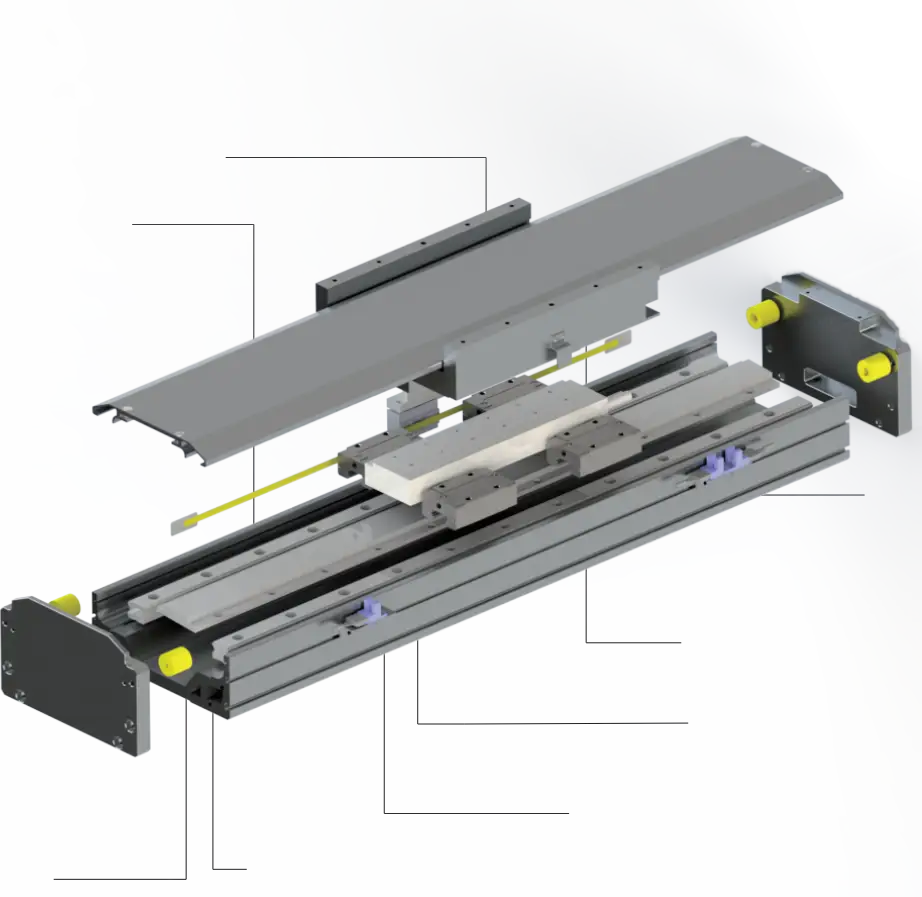
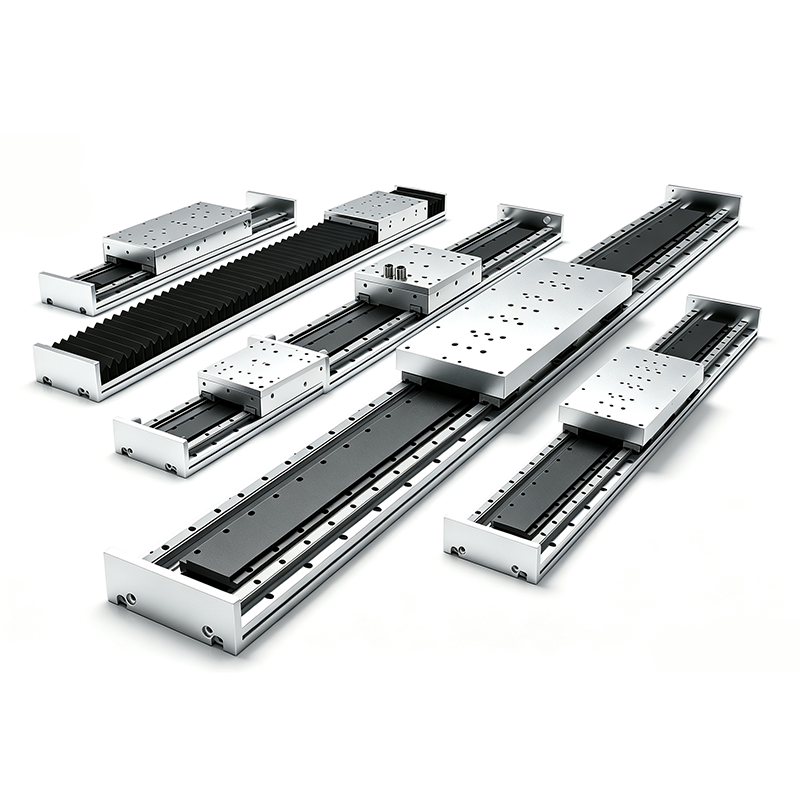
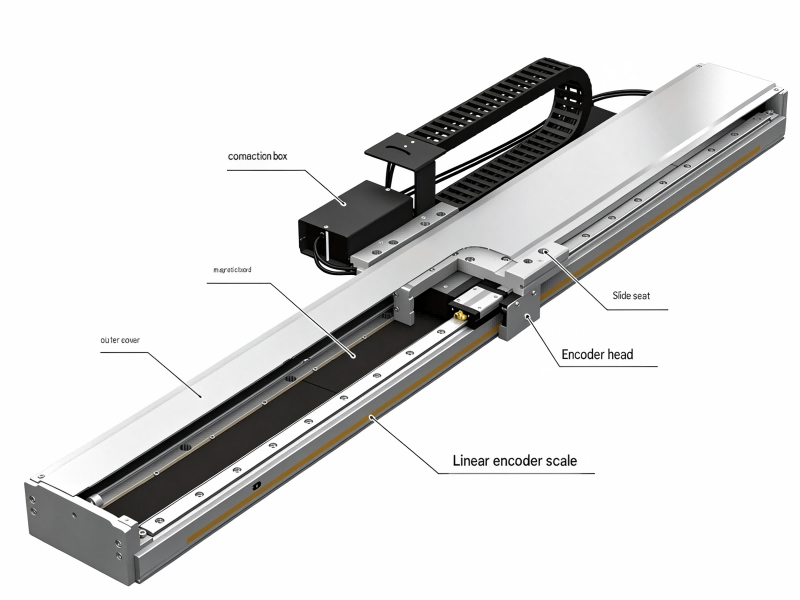
At first glance, they may look almost identical. Both usually include an aluminum housing, linear guide rails, a moving carriage, motor drive components, and protective covers. However, their motion principles are completely different.
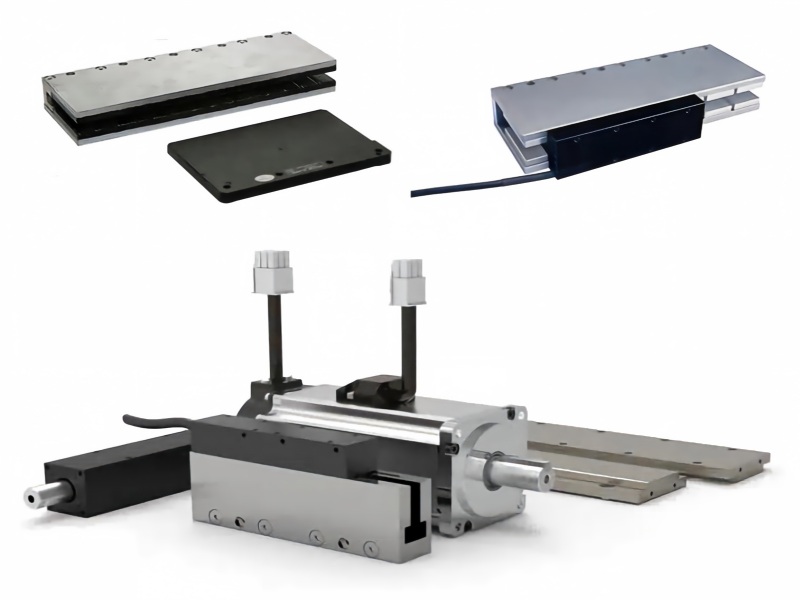
A linear motor provides direct-drive linear motion, converting electrical energy directly into mechanical movement without mechanical transmission components.
A linear module uses a mechanical transmission mechanism, such as a ball screw or timing belt, to convert rotary motor motion into linear movement.
Choosing between a linear motor and a linear module depends on key factors including speed, accuracy, load capacity, stroke length, maintenance requirements, and budget.
This article explains the differences between linear motor vs linear module and helps engineers select the right solution for their automation projects.
1. Linear Module VS Linear Motor: Working Principle Difference
How Does a Linear Module Work?
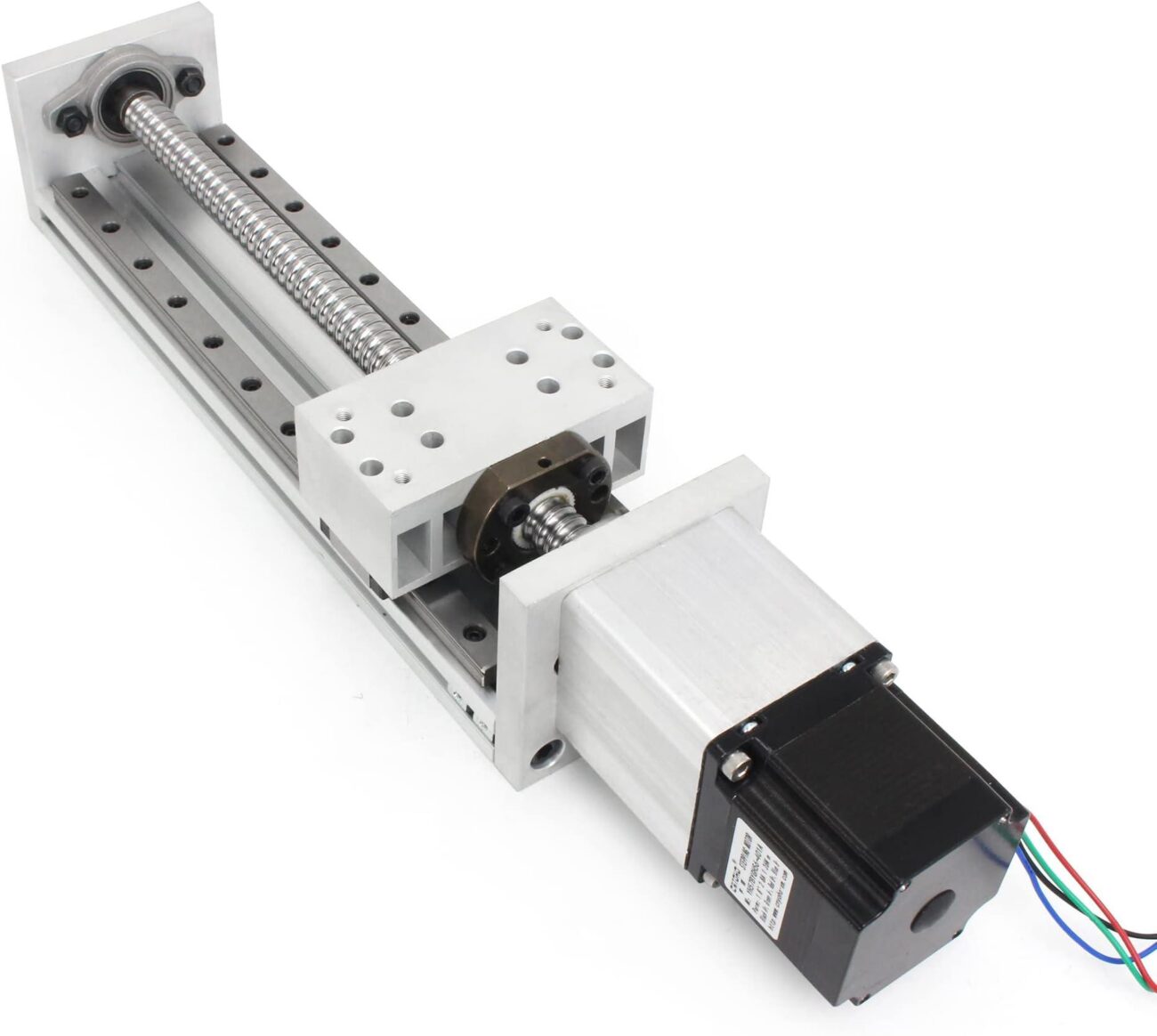
A linear module is a complete linear motion assembly that converts rotary motion into linear movement.
A typical linear module consists of:
Aluminum extrusion frame
Linear guide rail
Ball screw or timing belt
Coupling
Servo motor or stepper motor
Limit sensors
Sliding carriage
The motor rotates, and the transmission mechanism moves the slider along the guide rail.
There are two common types:
Ball Screw Linear Module
A ball screw linear module uses a precision screw mechanism to achieve linear positioning.
Advantages:
High positioning accuracy
High rigidity
Strong load capability
Suitable for precision machining applications
Typical applications:
CNC equipment
Inspection systems
Industrial assembly machines
Precision positioning platforms
Belt Driven Linear Module
A belt driven linear module uses a timing belt to achieve long-distance movement.
Advantages:
Long stroke capability
High travel speed
Lower cost
Simple structure
Typical applications:
Material handling
Pick and place systems
Packaging automation
Conveyor positioning systems
How Does a Linear Motor Work?
A linear motor is a direct-drive motion system.
Unlike traditional actuators, it does not require:
Ball screws
Belts
Couplings
Gear transmission systems
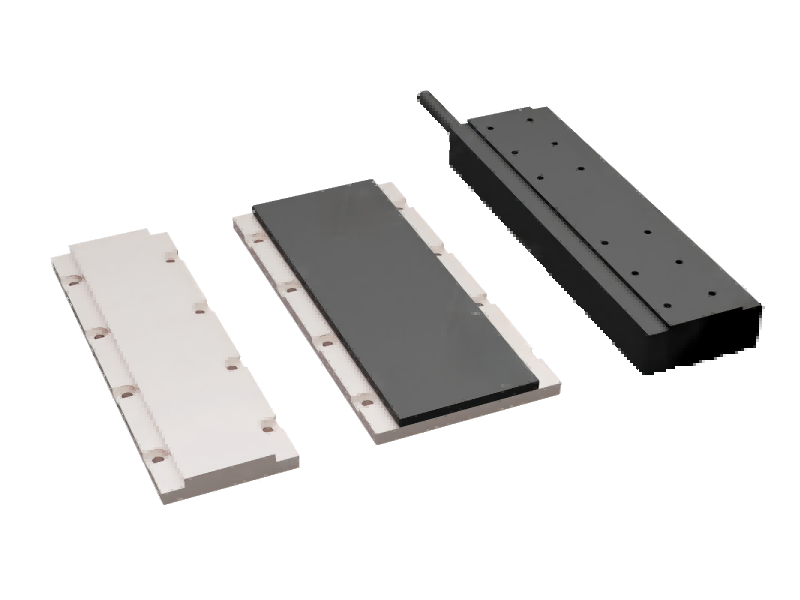
The motor directly generates linear force through electromagnetic interaction between the magnetic field and mover.
The basic structure includes:
Magnetic track
Linear motor coil assembly
Linear encoder
Linear guide rail
Motion controller
The electrical energy is directly converted into linear mechanical motion.
Because there is no intermediate transmission mechanism, a linear motor offers:
Lower mechanical inertia
Faster response
Higher acceleration
Better dynamic performance
2. Speed and Acceleration Comparison
Speed is one of the biggest differences between linear motors and traditional linear modules.
Linear Motor: High-Speed Direct Drive Solution
Linear motors are designed for applications requiring:
Extremely high speed
Rapid acceleration
Fast positioning cycles
Typical performance:
Speed: up to several meters per second
Acceleration: several G levels
Instant response during acceleration and braking
Since there is no screw rotation limit or belt tension issue, linear motors maintain stable performance at high speed.
Common applications:
Semiconductor equipment
Laser processing machines
High-speed inspection systems
Precision automation platforms
Linear Module: Practical Industrial Motion Solution
Linear modules provide reliable performance for most automation applications.
However, speed is limited by mechanical components:
Ball Screw Module Limitations:
Screw critical speed limitation
Mechanical friction
Rotating inertia
Belt Module Limitations:
Belt vibration
Elastic deformation
Positioning stability at high acceleration
For standard factory automation, these limitations are usually acceptable.
3. Positioning Accuracy Comparison
Linear Motor Accuracy Advantages
A linear motor eliminates mechanical transmission errors caused by:
Screw backlash
Belt stretching
Coupling errors
Mechanical wear
Therefore, it delivers excellent:
Positioning accuracy
Repeatability
Dynamic response
High-end linear motor systems can achieve micron-level positioning performance.
They are widely used in:
Semiconductor manufacturing
Optical inspection
Medical equipment
Precision measurement systems
Linear Module Accuracy Performance
Linear modules offer different accuracy levels depending on the transmission type.
Ball Screw Linear Module:
Best choice when:
High precision is required
Heavy loads exist
Cost efficiency is important
Belt Linear Module:
Best choice when:
Long travel distance is needed
Precision requirements are moderate
Speed is more important than accuracy
For most industrial automation equipment, linear modules provide sufficient precision.
4. Noise, Maintenance, and Service Life
Why Are Linear Motors Quieter?
Linear motors have fewer mechanical contact parts.
They do not have:
Screw rotation noise
Belt engagement noise
Gear transmission noise
The main friction source is only from the linear guide system.
Benefits:
Lower operating noise
Less mechanical wear
Reduced maintenance frequency
Linear Module Maintenance Requirements
Because linear modules contain mechanical transmission parts, regular maintenance is required.
For example:
Ball screw modules require:
Lubrication
Screw inspection
Bearing maintenance
Belt modules require:
Belt tension checking
Belt replacement after long-term operation
However, linear modules remain popular because they offer excellent cost-performance balance.
5. Cost Comparison: Linear Motor vs Linear Module
Cost is one of the most important factors in automation design.
Linear Motor System Cost
Linear motors usually have a higher initial investment because they require:
Precision magnetic components
High-performance servo drives
Linear encoders
Advanced motion controllers
They are mainly selected when performance requirements justify the investment.
Linear Module Cost
Linear modules are generally more affordable.
They provide:
Easy installation
Standardized design
Simple maintenance
Wide industrial compatibility
For most automation projects, linear modules offer better economic efficiency.
Linear Motor vs Linear Module: Quick Comparison Table
Feature
Linear Motor
Linear Module
Drive Method
Direct electromagnetic drive
Mechanical transmission
Transmission Parts
None
Ball screw / belt
Speed
Very high
Medium to high
Acceleration
Excellent
Moderate
Accuracy
Extremely high
High to moderate
Load Capacity
Medium
Medium to high
Noise
Very low
Higher
Maintenance
Low
Requires maintenance
Cost
Higher
More economical
Best Application
Precision & high speed
General automation
How to Choose Between Linear Motor and Linear Module?
The right choice depends on your application requirements.
Choose a Linear Motor When:
A linear motor is recommended if you need:
Ultra-high speed movement
High acceleration
Micron-level positioning
Frequent start-stop cycles
Low maintenance operation
Typical industries:
Semiconductor equipment
Electronics manufacturing
Optical inspection
Precision automation
Choose a Ball Screw Linear Module When:
A ball screw module is suitable for:
Heavy loads
High rigidity requirements
Precision machining
Medium-speed positioning
Typical industries:
CNC machines
Industrial assembly
Testing equipment
Choose a Belt Driven Linear Module When:
A belt module is ideal for:
Long stroke movement
Material transfer
High-speed handling
Cost-sensitive automation
Typical industries:
Packaging
Logistics automation
Production lines
The Future Trend of Linear Motion Systems
With the development of smart manufacturing and Industry 4.0, demand for high-performance motion systems continues to grow.
Linear motors are becoming increasingly popular in:
Semiconductor manufacturing
AI equipment production
Robotics
Precision inspection
Meanwhile, linear modules remain the preferred choice for general automation because of their:
Reliability
Cost advantage
Easy integration
The future industrial automation market will not replace one technology with another. Instead, linear motors and linear modules will continue to serve different application requirements.
FAQ: Linear Motor vs Linear ModuleIs a linear motor better than a linear module?Not always. Linear motors provide higher speed and precision, but linear modules are more cost-effective and better for heavy loads and general automation.Which is more accurate, linear motor or ball screw?A linear motor usually provides higher dynamic accuracy because it eliminates mechanical transmission errors. However, high-precision ball screw modules can also achieve excellent positioning accuracy.Are linear motors maintenance-free?Linear motors require less maintenance because they have fewer mechanical transmission components, but linear guides, sensors, and cooling systems still require regular inspection.Why are linear motors expensive?The higher cost comes from precision magnetic components, advanced servo control systems, and high-resolution feedback devices.Which linear actuator is best for industrial automation?The best choice depends on speed, accuracy, payload, stroke length, and operating environment.ConclusionBoth linear motors and linear modules are important linear motion solutions for industrial automation.A linear motor is the ideal choice for applications requiring:
Maximum speedUltra-high precisionFast dynamic response
Not always. Linear motors provide higher speed and precision, but linear modules are more cost-effective and better for heavy loads and general automation.
Which is more accurate, linear motor or ball screw?
A linear motor usually provides higher dynamic accuracy because it eliminates mechanical transmission errors. However, high-precision ball screw modules can also achieve excellent positioning accuracy.
Are linear motors maintenance-free?
Linear motors require less maintenance because they have fewer mechanical transmission components, but linear guides, sensors, and cooling systems still require regular inspection.
Why are linear motors expensive?
The higher cost comes from precision magnetic components, advanced servo control systems, and high-resolution feedback devices.
Which linear actuator is best for industrial automation?
The best choice depends on speed, accuracy, payload, stroke length, and operating environment.
Conclusion
Both linear motors and linear modules are important linear motion solutions for industrial automation.
A linear motor is the ideal choice for applications requiring:
Maximum speed
Ultra-high precision
Fast dynamic response
A linear module is the better solution for:
Cost-effective automation
Higher load applications
Standard industrial positioning
Understanding the differences between linear motor vs linear module allows engineers to select the right motion system, improve equipment performance, and achieve better automation efficiency.
HCY Automation delivers integrated solutions across motion control, linear motion, robotics, machine vision, pneumatic systems, and precision gearboxes to help global manufacturers build smarter, faster, and more reliable production lines. Our engineering team helps you select and integrate the right motion control, robotics, and automation components for your specific application.